
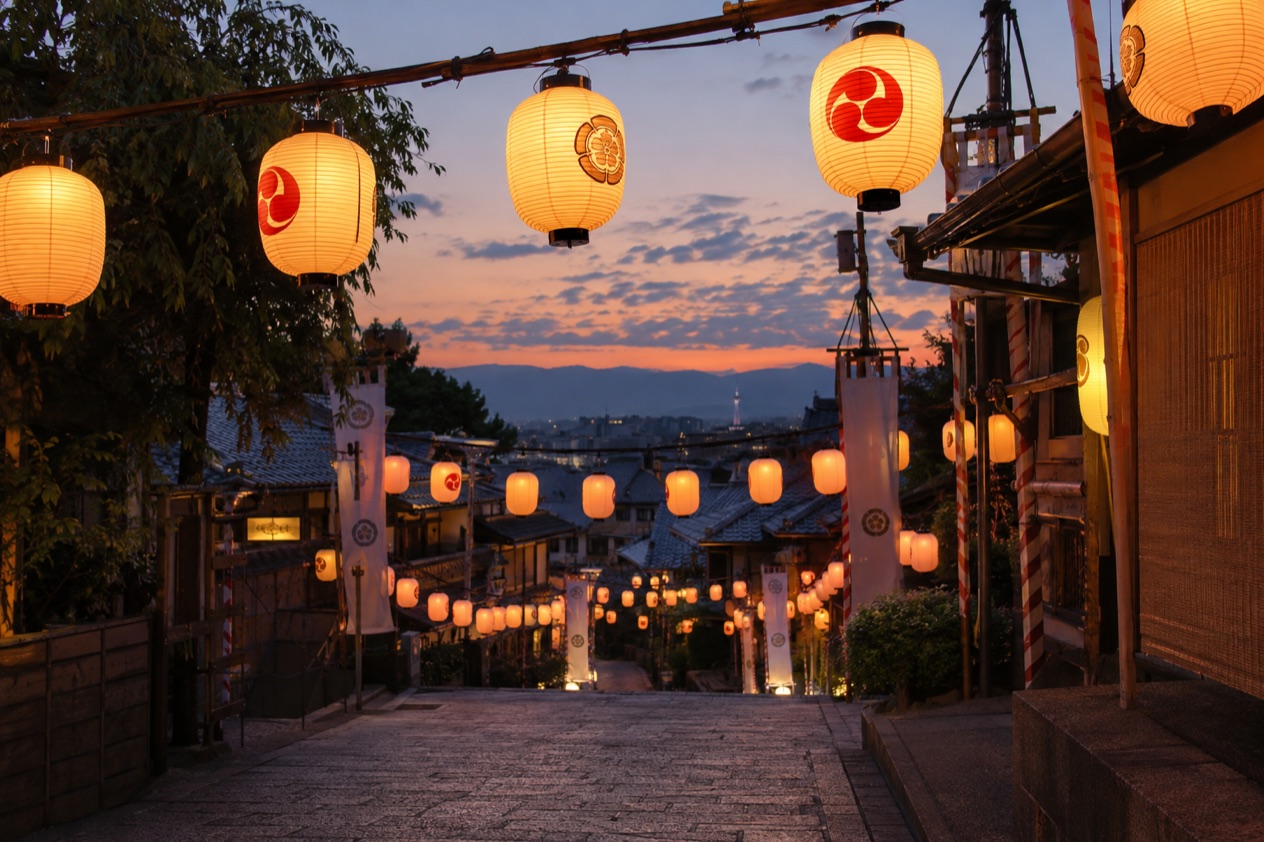
In Kyoto, a Shinto shrine glows after dark and the vermilion gates of Fushimi Inari climb the slope of Mount Inari, while the city around it keeps the rhythm of its machiya townhouses and tea shops. In Kanazawa, the paths of Kenrokuen Garden wind past ponds and pines, and the lanterns and castle walls next door are lit at night.
Both cities hold centuries of craft, ritual and cooking. One is a sprawling former capital with five districts to choose from, the other a smaller city on the Sea of Japan with its attractions gathered around a famous garden.
Which is better, Kyoto or Kanazawa?
Kyoto suits travelers who want the widest range of temples, shrines, palaces and day trips, while Kanazawa suits those who prefer one garden, one castle park, a craft tradition and a coastal table, all concentrated in a single city. First-timers building a long Japan itinerary will usually find more to fill their days in Kyoto. Travelers who have already seen the big sights, or who are heading to the Hokuriku side of Honshu, will find Kanazawa a rewarding change of scene.
The two cities also differ in feel. Kyoto reads as a grid of districts with different personalities, from the geisha quarters to the sake brewing area of Fushimi. Kanazawa feels like a place built around its Edo-period past as a cultural and artistic center, and it shows in its gardens, its crafts and its tea-house streets.
| Category | Kyoto | Kanazawa |
|---|---|---|
| Sights | Fushimi Inari Taisha, Kiyomizu-dera, Kinkaku-ji (Rokuon-ji), Nijo Castle, Kyoto Gosho | Kenrokuen Garden, Kanazawa Castle Park, historic districts |
| Vibe | Former imperial capital with machiya townhouses and hanamachi geisha districts | Edo-period cultural and artistic center on the Sea of Japan |
| Things to do | Samurai sword experience, kimono rental, rickshaw tour, kanji stamp carving, sake and tea outings | Garden and castle walks, craft traditions, itineraries toward Shirakawa-go, Gokayama and Takayama |
| Food | Ramen floor at Kyoto Station, sake in Fushimi, tea in Uji | Sea of Japan coastal cooking and craft-town sweets |
| Weather | Humid summers, cold winters with snow or sleet | Sea of Japan side of Honshu |
| Getting there | Tokaido Shinkansen to Kyoto Station | Hokuriku Shinkansen, or Komatsu Airport |
| Best for | First visits, temples, day trips, a long stay | Garden and craft lovers, a focused stay, a side trip toward the mountains |
Sights and food
Kyoto served as Japan’s capital and the emperor’s residence for over a thousand years, and it still carries that history in its streets. The city center follows a grid modeled on Chang’an, the capital of China’s Tang dynasty, so the old layout is something you can feel as you move between neighborhoods. Fushimi Inari Taisha sits at the base of Mount Inari, Kiyomizu-dera and Kinkaku-ji are both part of the Historic Monuments of Ancient Kyoto, and Nijo Castle shows off its nightingale floors, which chirp underfoot as an old alarm against intruders.
Kyoto’s food follows its traditions. Kyoto Station has an entire floor of ramen restaurants, a handy first meal on arrival. Beyond the station, the cooking of the old capital leans on tofu, seasonal vegetables, pickles, matcha sweets and the multi-course kaiseki meal. In southern Kyoto, Fushimi is one of Japan’s three main sake brewing areas, and Uji is the place for Japanese tea.
Kanazawa answers with Kenrokuen, one of Japan’s most iconic landscape gardens and one of the three great gardens of Japan. Known as the Garden of Six Attributes, it is a strolling garden, built to be walked slowly rather than glimpsed from a single spot.
Kanazawa Castle sits right beside it, and the castle park and garden are illuminated at night. The city is also part of the UNESCO Creative Cities Network as a City of Crafts and Folk Art, which gives its museums and workshops a different flavor from Kyoto’s temples.
At the table, Kanazawa’s position on the Sea of Japan points the menu toward fresh seafood, which you can find in sushi counters and market stalls. Its craft heritage also shows up in sweets and tea-house snacks, often decorated with gold leaf, a local specialty.
As for who wins, Kyoto takes it on sheer variety, with palaces, shrines, temples and sake all within one region. Kanazawa wins for a garden-centered visit, where one great garden, one castle park and one craft story fit into a couple of unhurried days.
Things to do
Kyoto’s list of experiences is long and hands-on. At Myokakuji Temple, a samurai experience includes a sword fighting lesson taught by a professional actor. In Central Kyoto you can turn your name into kanji and carve it into a Japanese stamp.
In Eastern Kyoto, a kimono rental lets you walk the old lanes dressed for the setting, and a rickshaw tour runs through Arashiyama in the western part of the city. Fushimi Inari Taisha also has a guided tour among its featured activities.
Temple and shrine visits in Kyoto reward a bit of timing. Visitors are recommended to go to shrines at less crowded times, such as early morning, or late evening when they are illuminated. That plan fits Fushimi Inari well, with its long lines of gates, and it gives you a good reason to spend an evening on a lit shrine path rather than only a daytime one.
Outside the center, Kyoto stretches in every direction. Ohara has ancient temples, famous gardens and spacious hot springs in a relaxing rural setting. The Takao area has three mountains, collectively called the Sanbi, known for their temples and lush greenery. In the Keihoku area, farm stays put visitors in touch with nature and agriculture. Farther north, near the Sea of Japan, are the sandbar of Amanohashidate and the boat houses of the Ine fishing village.
In Kanazawa, the day tends to revolve around Kenrokuen and the castle beside it. You can wander the garden paths, cross to the castle grounds, and return after dark when the lighting changes the mood.
Kanazawa also works as a base for day trips. The Kanazawa Tourist Information Guide offers sample itineraries for Gokayama, Shirakawa-go and Takayama, three places that take you into the mountain country on the way to or from the city. Nightlife in both cities leans toward evening walks, lit gardens and shrines, and small izakaya (Japanese pubs) rather than big clubs.
Weather and the best time to go
Kyoto’s seasons swing between a cold, damp winter and a hot, humid summer. In January the air is crisp enough for a coat and the city sees snow or sleet on many days, though it is often a light dusting rather than a deep cover. July is the opposite, with warm nights, high humidity and more days with rain than any other month in the table, so temple courtyards are best taken with an umbrella and a water bottle.
| Kyoto | Average high (°F) | Average low (°F) | Precipitation (inches) | Days with rain, snow or sleet (1 mm or more) | Sunshine (hours) |
|---|---|---|---|---|---|
| January | 48.4 | 34.7 | 2.10 | 6.4 | 124 |
| July | 89.6 | 74.5 | 8.80 | 11.6 | 143 |
Between those two extremes, Kyoto’s spring and autumn are the seasons its gardens are known for. Nijo Castle’s orchard of ornamental plum trees brings color early in the year, and its many maples take on exceptional colors in autumn. Kyoto’s calendar also includes the Gion Matsuri festival, one of the traditions the city is best known for.
Kanazawa lies on a narrow strip of land along the Sea of Japan on Honshu, and its seasons follow the coast, with winter weather coming in off the sea. Kenrokuen’s opening hours change with the season, with a shorter day from mid-October to the end of February, so a winter visit means planning around earlier closing.
| Site | Open |
|---|---|
| Kenrokuen Garden (summer) | 07:00 to 18:00 |
| Kenrokuen Garden (mid-October to end of February) | 08:00 to 17:00 |
Autumn is a natural time to see either city, since Kyoto’s maples and Kanazawa’s garden and castle park lights both belong to the cooler months. Visiting in January or July means either cold and damp or hot and humid in Kyoto, which suits travelers who do not mind the weather for the sake of fewer plans to rearrange.
Getting there and getting around
Kyoto Station is served by the Tokaido Shinkansen, which makes it the starting point for the city’s attractions and a connection to major cities across Japan. The station building is a destination in its own right, with a ramen floor, an Isetan department store, a theater and a Granvia hotel. Kyoto Tower stands a few steps from the main entrance and is visible across the whole city, so it is easy to orient yourself on arrival.
Kanazawa is reached by the Hokuriku Shinkansen, which has served the city since 2015. From Tokyo Station the line stops at Nagano and Toyama on the way. The nearest airport is Komatsu Airport (KMQ), in the city of Komatsu, for travelers who arrive by air rather than by rail.
| Route | Time |
|---|---|
| Tokyo Station to Kyoto by the most direct shinkansen | About 2 hours 20 minutes |
| Tokyo Station to Kanazawa by Hokuriku Shinkansen | About 2 hours 30 minutes |
| Kyoto or Osaka to Kanazawa by Limited Express Thunderbird to Tsuruga, then Hokuriku Shinkansen | About 2 hours |
Between the two cities, the route runs by Limited Express Thunderbird from Kyoto to Tsuruga, then by the Hokuriku Shinkansen on to Kanazawa. The JR Hokuriku Arch Pass covers travel between Tokyo, Kyoto and Osaka via Toyama and Kanazawa for seven consecutive days, which fits a loop that includes both cities.
Once in Kyoto, the city is split into five main areas: Central, Eastern, Northern, Southern and Western Kyoto. Grouping sights by area keeps a day coherent, for example Fushimi in the south for the shrine and sake, or Arashiyama in the west for the rickshaw tour. Kanazawa is a single city with a total area of just under 181 square miles, and its main draws, Kenrokuen Garden and Kanazawa Castle, sit side by side.
Who should choose which
Pick Kyoto if this is a first trip to Japan, if you want the temples, shrines, a palace and a castle in one stay, or if you like variety, from a samurai lesson to kimono dressing to a sake tasting in Fushimi. It also suits travelers who want hot springs and mountain temples in Ohara and Takao, or a rural farm stay in Keihoku, without leaving the city’s orbit. Its station makes it a place to arrive and branch out from.
Pick Kanazawa if a garden is what you came for, if you care about crafts and folk art, or if you want a Sea of Japan city where seafood and gold leaf share the menu. It also fits travelers who plan to continue on toward Shirakawa-go, Gokayama or Takayama, since the city’s own itineraries are built around those trips.
Combining the two is a natural fit. The Thunderbird and Hokuriku Shinkansen connection links Kyoto with Kanazawa in about two hours, and the Hokuriku Arch Pass is built for a loop between Tokyo, Kyoto, Osaka, Toyama and Kanazawa.
Good to know before you go
Plan for a mix of weather in Kyoto, since July brings humid heat and wet days while January brings cold air and sleet, and pack for the season you choose. Shoes come off at the entrance of a ryokan (a traditional inn) and in many temple halls, so slip-on shoes are handy. Kenrokuen’s hours shorten from mid-October, so the lit evenings of Kanazawa Castle Park and the garden are the part to plan around if you arrive in the cooler months.
Sources
- Japan National Tourism Organization, Kyoto (https://www.japan.travel/en/destinations/kansai/kyoto/), checked October 11, 2026
- Kyoto City Official Travel Guide, activities (https://kyoto.travel/en/activities), checked October 11, 2026
- Kyoto City Official Travel Guide, areas (https://kyoto.travel/en/areas), checked October 11, 2026
- Japan Meteorological Agency (JMA), Normal values 1991-2020, monthly (https://www.data.jma.go.jp/stats/etrn/view/nml_sfc_ym.php?prec_no=61&block_no=47759), station Kyoto, elevation 41 m, checked October 11, 2026
- Fushimi Inari Taisha, official site (https://inari.jp/en/), checked October 11, 2026
- Wikipedia, Fushimi Inari-taisha (https://en.wikipedia.org/wiki/Fushimi_Inari-taisha), checked October 11, 2026
- Wikipedia, Kinkaku-ji (https://en.wikipedia.org/wiki/Kinkaku-ji), checked October 11, 2026
- Kiyomizu-dera Temple, official site (https://www.kiyomizudera.or.jp/en/), checked October 11, 2026
- Wikipedia, Kiyomizu-dera (https://en.wikipedia.org/wiki/Kiyomizu-dera), checked October 11, 2026
- Japan National Tourism Organization, Kanazawa (https://www.japan.travel/en/destinations/hokuriku-shinetsu/ishikawa/kanazawa-and-around/), checked October 11, 2026
- Kanazawa Tourist Information Guide (https://www.kanazawa-tourism.com/), checked October 11, 2026
- Wikipedia, Kanazawa, Ishikawa (https://en.wikipedia.org/wiki/Kanazawa,_Ishikawa), checked October 11, 2026
- Wikivoyage, Kanazawa (https://en.wikivoyage.org/wiki/Kanazawa), checked October 11, 2026
- Japan National Tourism Organization, Japanese gardens (https://www.japan.travel/en/see-and-do/japanese-garden/), checked October 11, 2026
- Wikipedia, Kenroku-en (https://en.wikipedia.org/wiki/Kenroku-en), checked October 11, 2026
- Wikipedia, Kanazawa Castle (https://en.wikipedia.org/wiki/Kanazawa_Castle), checked October 11, 2026
To plan your stay
- Best Time to Visit Kyoto: Cherry Blossoms, Autumn Leaves, Weather by Month and Festivals
- Things to Do in Kyoto: Temples, Gardens, Food and Day Trips
- Where to Stay in Kyoto: Kyoto Station, Central and Eastern Districts, and Ryokan Stays
- Kyoto from Tokyo: Shinkansen Trains, Nozomi vs. Hikari and Kodama, and a First Day in Kyoto