
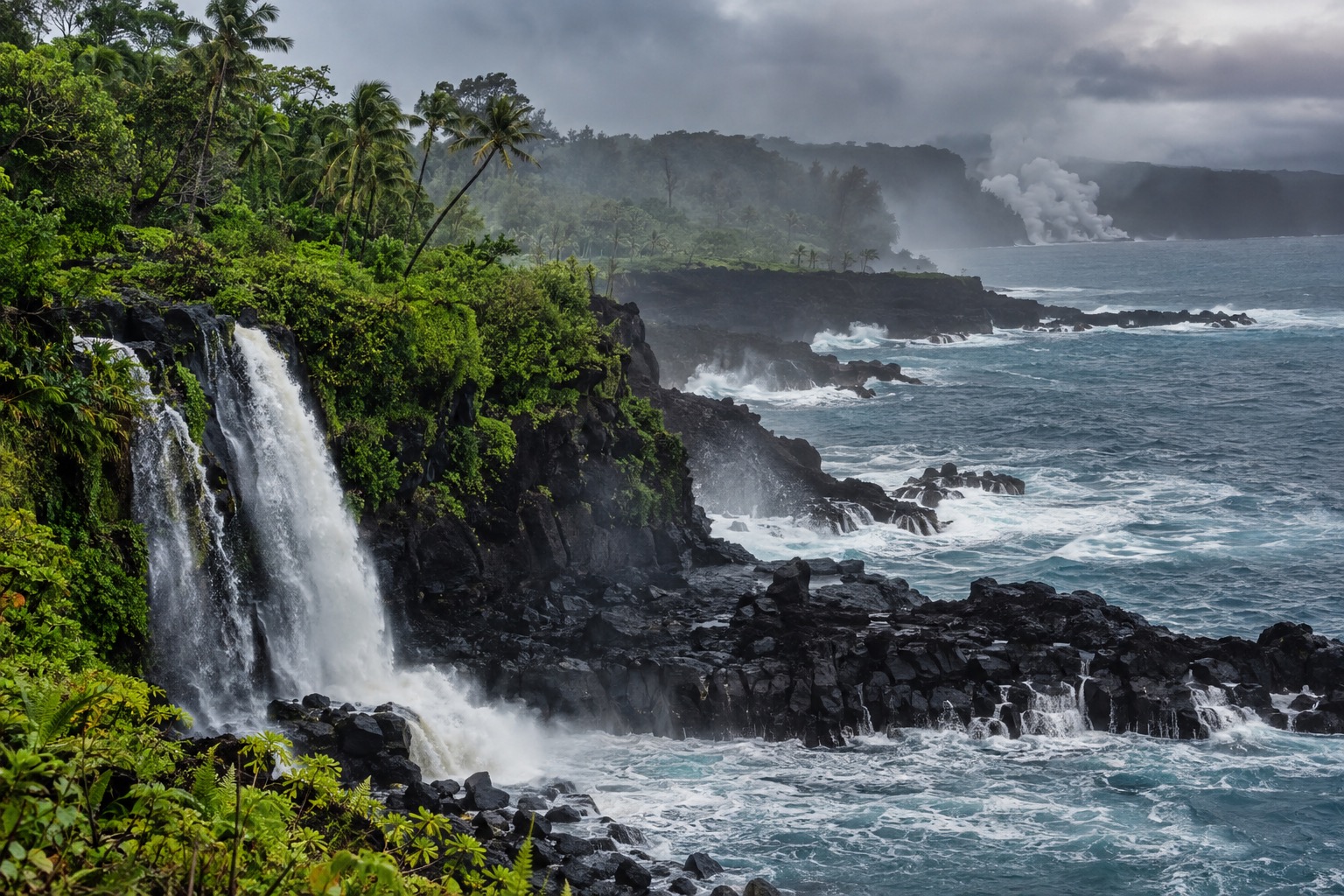
Early on a July morning in Hilo, the fish auction has long been over and the farmers market is setting up under tarps, with orchids, apple bananas and bags of warm malasadas passing hand to hand. Clouds sit on the slopes of Mauna Kea, the bay is a sheet of pale light, and the air smells of wet earth and plumeria. This is Hilo in its green, easygoing summer form, a month for waterfalls, gardens and slow days on the Big Island’s rainy side.
What is the weather like in Hilo in July?
Warm, humid and often wet: July in Hilo means comfortable temperatures all day and a good chance of rain on most days, usually in passing showers rather than all-day downpours.
| Month | Average high (°F) | Average low (°F) | Rain days | Sea (°F) |
|---|---|---|---|---|
| June | 81.8 | 68.7 | 16.7 | 78.5 |
| July | 82.8 | 69.9 | 18.8 | 79.3 |
| August | 82.9 | 70.4 | 18.2 | 80.2 |
Mornings are often the brightest stretch, with soft sun and clouds building by midday. Showers tend to arrive in the afternoon and again overnight, then clear out as quickly as they came.
Heat here is gentle compared with the dry Kona coast across the island. Afternoons feel warm and sticky rather than scorching, and evenings are mild enough for dinner outdoors in a T-shirt. A light rain jacket or a small umbrella earns its place in the day bag, along with sandals that dry fast.
The days are long, with about thirteen hours of daylight in mid-July, so there is time for a waterfall in the morning, a garden after lunch and a slow walk along the bay at golden hour. When the sun does break through the clouds, the light on the green hills and the black lava shore is worth stopping for.
Can you swim in Hilo in July?
Sure, you can take a long, comfortable swim in that warm ocean, but Hilo’s own coast is rocky, so it works better for wading, tide pools and watching the water than for lying around on sand.
The bay is sheltered by a long breakwater, which softens the swell, but the coast around it is mostly black lava rock with few sandy beaches. Locals head to the pocket beaches and ponds along the coast just outside town, where kids paddle in shallow lava-rimmed pools and snorkelers drift over small fish. Water clarity can drop after heavy rain, when streams carry runoff into the bay.
Summer is the season when east-facing shores are usually less rough than in winter, but conditions change from day to day and from beach to beach. Check the posted signs and flags, ask the lifeguard where there is one, and stay out when the water looks churned or brown. Bring water shoes for the rocks, a mask and snorkel if you have them, and a mineral sunscreen.
What to do in Hilo in July
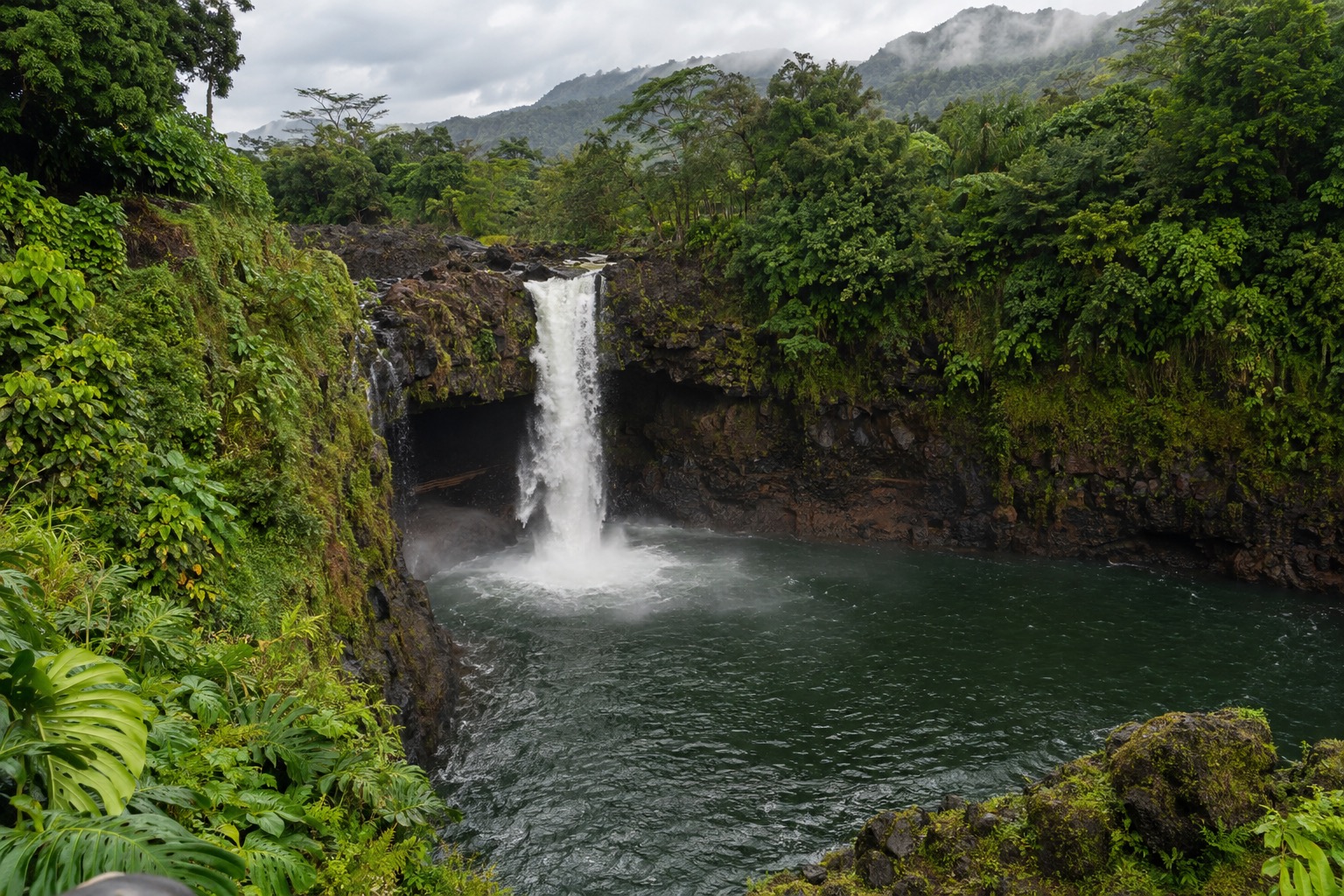
In July, Hilo shines at what it does best, with waterfalls that steady rain keeps flowing, lush tropical gardens, a farmers market that is up and running, and simple access to the volcano. Showers do not cancel much here, because the best sights are meant to be seen wet and green.
The calendar has a local flavor too. Summer weekends bring outdoor events, hula and canoe paddling on the bay, and small-town festivals where plate lunches and shave ice are the main food groups. If you are not sure what is on, ask at your lodging or look at the notices around town, because dates shift year to year.
Waterfalls and the Hilo coast
Rainbow Falls, just above town, and Akaka Falls, a short drive north along the Hamakua coast, are the classics. With July’s steady rain they run full, and the mist and tropical vegetation around them feel at their lushest. Rainbow Falls is a quick stop that often shows a rainbow in the morning light, while Akaka Falls is a short paved loop through ferns, bamboo and wild ginger.
Go early, before clouds thicken and tour groups arrive. Wear shoes with grip, because the paths stay slick, and keep to the marked viewpoints. The Hamakua coast drive is scenic enough on its own, with gulches, small bridges and sugar-town stops for coffee or a baked treat.
Gardens, farmers market and downtown
Hilo’s old downtown is a walkable mix of wooden storefronts, galleries, bookstores and cafés, and its Saturday and Wednesday farmers market is a highlight. Look for orchids, tropical flowers, local honey, apple bananas, lilikoi and fresh-cut pineapple, plus stalls selling laulau and fried treats. Eat as you go and bring a bag for flowers.
Rain suits the botanical gardens along the coast, where the leaves are glossy and the paths smell of earth. Lili’uokalani Gardens, on the bay, is a Japanese-style park with bridges, stone lanterns and views across the water to the mountain, and it is a pleasant place to end the day when the clouds lift.
A day at the volcano
Hawaii Volcanoes National Park is the usual day trip from Hilo, and it is cooler and often rainy at the crater rim, so bring a layer. You can walk through fern forest, look into the crater, follow steam vents and see lava tubes, then drive down Chain of Craters Road toward the coast if it is open.
Allow most of a day. Start in the morning when visibility is better, and save the viewpoints for late afternoon if skies are clearing. Check the park’s official notices for current trail and road conditions before you go, since they change.
On the rainiest days, the Pacific Tsunami Museum, the Lyman Museum and the bookstores and cafés downtown make easy indoor stops. Evenings are for plate lunches, poke, fresh fish and shave ice, with a stop for local coffee beans to take home.
A two-day itinerary for Hilo in July
Day 1 is for the town and the coast. Begin with Rainbow Falls in the morning, while the light stays gentle and few people are around, and afterward head north along the Hamakua coast to Akaka Falls to walk the loop trail. Stop in one of the old plantation towns for coffee and a pastry on the way back.
Grab a midday meal in the downtown area at a café or a plate-lunch counter, then pass the afternoon exploring the shops and galleries. If showers roll in, duck into a museum or bookstore. Toward the end of the day, walk Lili’uokalani Gardens along the bay and watch the light change on the water, then eat dinner at a local restaurant near the bay.
Day 2 is for the volcano. Set out early for Hawaii Volcanoes National Park, and take along a rain jacket plus something warm. Walk the crater rim and a fern-forest trail, look at the steam vents, and picnic or eat at a lodge café. Check park notices first for open trails and roads.
Come back to Hilo before dark, since the sun sets in the evening and the road is easier in daylight. If the weather turns on the mountain, trade the outdoor walks for the park’s visitor center and a slow drive, then finish with dinner and shave ice in town.
Is Hilo busy in July?
Moderately, because July is summer vacation season across the islands, but Hilo stays calmer than the resort coasts of Kona, Maui and Oahu.
Families on school break fill the island’s rentals and the national park, and the weeks around the Fourth of July are among the busiest. Hilo’s waterfalls and farmers market can feel crowded in the middle of the day, while the downtown streets and gardens stay relaxed. Evenings are quiet, with locals filling the casual restaurants.
Book rooms and rental cars early if your dates include the holiday week, and a little later for quieter stretches. Restaurant tables are rarely a problem, though popular places fill on weekends. Before you head out, look at the park’s official website for any rules about entry or reservations, as these can shift.
What to pack for Hilo in July
Pack for warm, humid days with frequent showers, plus a cooler day at the volcano.
- Bring a thin rain shell, since brief rain tends to move in on most days
- Quick-dry clothes and sandals that handle wet pavement
- A fleece or sweater for the cool crater rim
- Shoes with grip for slick waterfall paths and lava trails
- Water shoes, mask and snorkel for rocky pools
- A hat and mineral sunscreen for when the clouds open up
Good to know before you go
The Central Pacific hurricane season runs through the summer, so July falls inside it, and it is worth keeping an eye on forecasts before and during the trip. A rental car makes the waterfalls, the coast and the volcano far easier, and lodging taxes are added to the bill.
| Fee | Amount | Who pays |
|---|---|---|
| State Transient Accommodations Tax | 11.00% | Guests staying in lodging |
| County of Hawaii Transient Accommodations Tax | 3 percent | Guests staying in lodging |
Hilo in July vs June and August
Moving the trip to June gives you slightly drier days and a touch less humidity, with the sea a bit cooler. The summer school break is just starting, so crowds build more slowly and rooms are easier to find early in the month.
August is the wettest of the three, with the warmest sea and the heat at its peak. School starts again in many places during the month, so the later weeks tend to be quieter, though the early part of August still feels like peak summer.
Choose June if you want the least rain and a calmer start to summer, and July if you want the full summer atmosphere with warm water. August suits swimmers and travelers who do not mind a wetter, stickier town, and who want quieter late-month days.
Is July a good time to visit Hilo?
Sure, if you enjoy lush scenery, cascading falls and a laid-back town vibe, and you don’t mind bringing a raincoat and working around the rain.
Beach-lovers who want guaranteed sun and long stretches of sand should look to the dry Kona side instead, because Hilo’s coast is rocky and its skies are often cloudy. Anyone who dislikes humidity or rain will be happier elsewhere on the island.
On arrival, head first to the farmers market or a downtown café, then plan the volcano day around the weather. What makes July in Hilo special is the long, warm light on a wet green coast, with a waterfall mist, a bag of fresh lychee-colored sweets from a market stall and a rainbow over the bay.
Sources
- NOAA NCEI, monthly normals 1991-2020, station USW00021504, checked September 8, 2026
- Open-Meteo Marine API, average 2015-2024, checked September 8, 2026
- sunrise-sunset.org, sunrise and sunset calculated for the 15th of the month, checked September 8, 2026
- Hawaii Department of Taxation, Tax Announcement No. 2025-03 (Transient Accommodations Tax Law Changes from 2025 Legislative Session), files.hawaii.gov/tax/news/announce/ann25-03.pdf, checked September 24, 2026
- County of Hawaii, Department of Finance, Transient Accommodations Tax (TAT) page, hawaiicounty.gov/departments/finance/transient-accommodations-tax-tat (live returned HTTP 403 on request, read via Internet Archive Wayback Machine snapshot dated August 14, 2026, same official content), checked September 25, 2026
- Hawaii Department of Taxation, County Surcharge on General Excise and Use Tax page, tax.hawaii.gov/geninfo/countysurcharge/, checked September 25, 2026
- NOAA NCEI, monthly normals 1991-2020, station USW00021510
- NOAA NCEI, monthly normals 1991-2020, station USC00511303
- NWS Honolulu / Central Pacific Hurricane Center, « 2026 Central Pacific Hurricane Season Outlook », weather.gov/hfo/hurricaneOutlook2026, checked September 24, 2026
To plan your stay
- Things to Do in Hilo: Waterfalls, Farmers Market, Volcano Day Trips and Local Food
- Best Time to Visit Hilo: Weather by Month, Crowds, Swimming and Festivals
- Hilo in June: Rainy-Side Weather, Waterfalls, Farmers Markets and Two Days of Plans
- Hilo in August: Weather, Swimming, Things to Do and a Two-Day Plan