
By June morning in Hilo, vendors at the Mamo Street farmers market are already raising a racket as they pile up apple bananas, papayas and anthuriums, and for an hour or two Mauna Kea stands blue and clear over the bay before clouds roll in. The air is soft and warm, the rain comes and goes, and the town keeps its unhurried, slightly worn charm. It is the wet side of the Big Island at the start of summer, a good month for waterfalls, gardens, markets and a slow pace.
What is the weather like in Hilo in June?
Warm, green and showery: June in Hilo is comfortable all day in a T-shirt, with rain passing through on most days rather than settling in for long.
| Month | Average high (°F) | Average low (°F) | Rain days | Sea (°F) |
|---|---|---|---|---|
| May | 80.7 | 67.3 | 14.2 | 77.1 |
| June | 81.8 | 68.7 | 16.7 | 78.5 |
| July | 82.8 | 69.9 | 18.8 | 79.3 |
Hilo sits on the windward, east side of the island, where trade winds push moisture up against Mauna Kea and Mauna Loa. The result is a town that remains remarkably green, and rain can never be ruled out on any given day.
Showers tend to come in short bursts, often overnight and in the early morning, with a good share of the day still bright. Kona, on the leeward coast, is far drier, which is worth remembering if you are chasing a rain-free beach afternoon.
Mornings are usually the best time for views, when the summit of Mauna Kea may show and the light on Hilo Bay is soft. Afternoons are warm and often humid, and a passing downpour is a good excuse to duck into a café or a museum. Evenings stay mild enough to eat outside without a jacket, though a thin layer feels good if you head up toward the volcano, where it is much cooler and wetter.
Dress in quick-drying clothes, sandals that can get wet and a light rain shell. Daylight is long this time of year, which gives you generous hours for outings even when a shower interrupts. The sea is warm, and the Central Pacific hurricane season begins this month, running from June 1 to November 30.
Can you swim in Hilo in June?
Yes, you can swim long and comfortably in that warm water, though your choice of spot counts for more than how warm it is.
Hilo’s coast is lava rock and open ocean, so it has few classic sandy beaches. In sheltered places like Richardson Ocean Park, which has black sand and rocky pools, and Carlsmith Beach Park, where lava created calmer, shallower pockets, locals like to gather.
Snorkelers often find turtles and reef fish in these protected-feeling corners, though conditions change with the swell and with how much rain has run off the land. The wider bay and the open shoreline can have waves and currents, so beginners and children do better in the shallow pools.
Heavy rain upslope sends runoff to the coast and can leave the water murky for a day or so. Look at the beach signs and flags, talk to the lifeguards where they are posted, and let them decide. Pack water shoes for the rocky entrances, plus a mask and a rash guard. If you want a broad white-sand beach day, the dry Kona and Kohala coasts are the better bet.
What to do in Hilo in June
June in Hilo is less about a single festival and more about the daily rhythm of the town: market mornings, waterfall stops, garden walks and long lunches while the rain passes. The month also falls close to Kamehameha Day on June 11, a state holiday marked across the islands with parades, lei draping and hula, and the Big Island celebrates it with real pride. Dates and programs vary, so look for local announcements once you arrive.
Food is a big part of the pleasure. Look for poke counters, plate lunches, saimin, fresh local fruit at roadside stands and the famously good local shave ice. Downtown Hilo has old wooden storefronts, bakeries, bookshops, small galleries and cafés that make a good base for a rainy hour.
Waterfalls and gardens near town
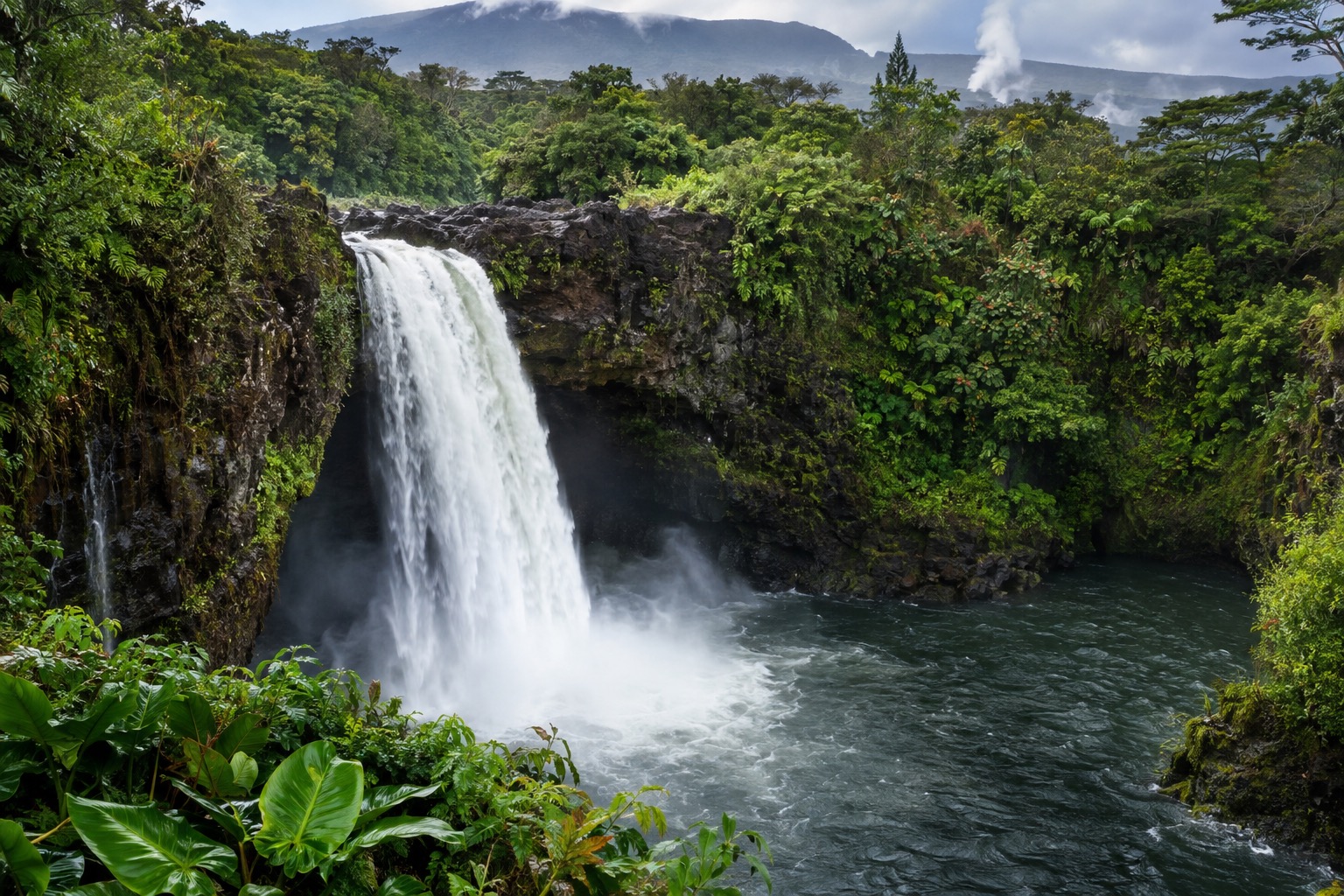
Rainbow Falls and Akaka Falls are the two stops almost everyone makes, and wet-side weather gives them plenty of water. A quick trip from downtown brings you to Rainbow Falls, which plunges into a pool under a lava cave.
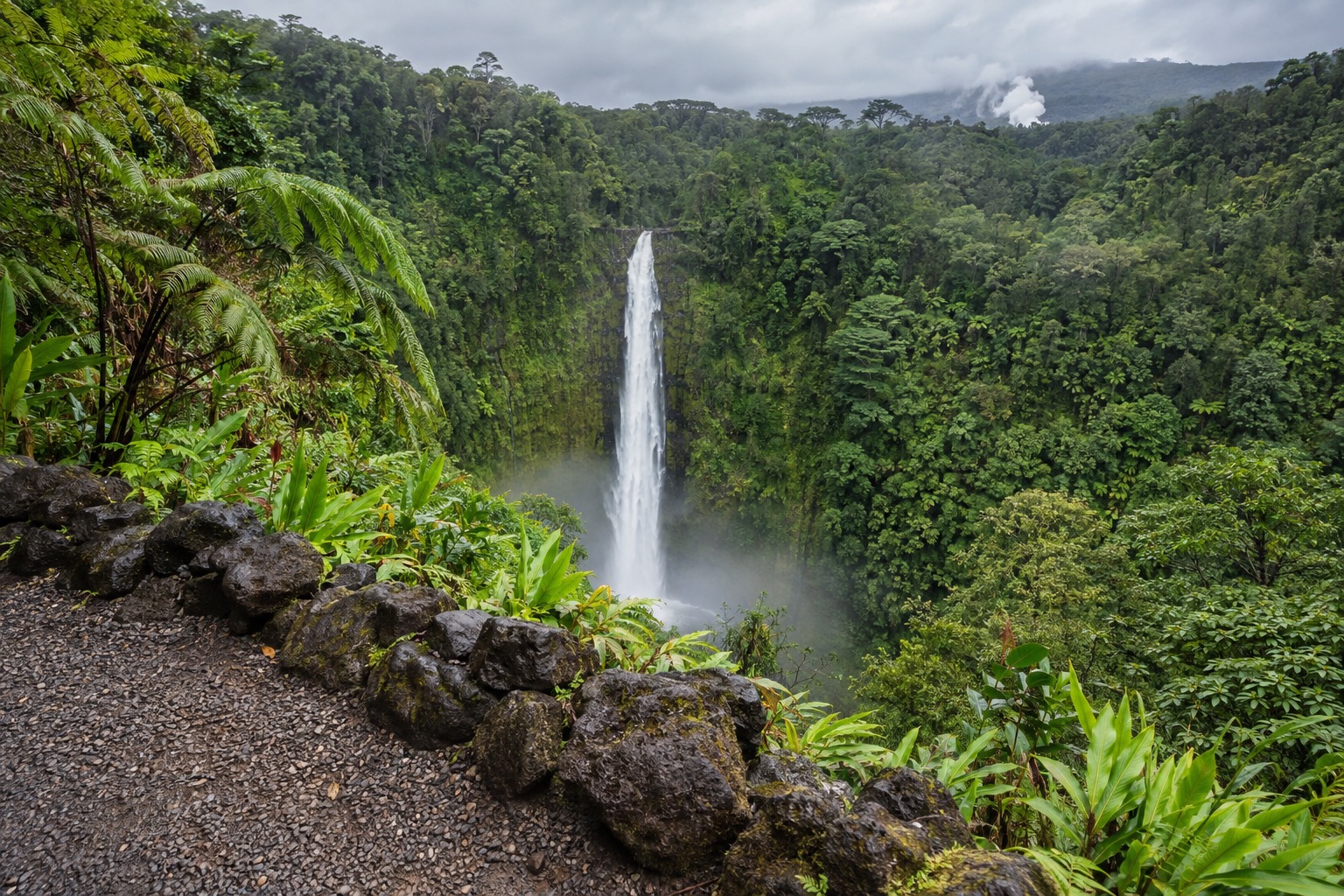
Late morning light can sometimes make a rainbow in the mist. Up along the Hamakua coast past town, Akaka Falls State Park offers a brief loop trail that passes ferns, bamboo and wild orchids on its way to a tall, thin plunge.
Both are viewpoint stops rather than swimming spots, so keep to the paths and rails. Wear shoes with grip, because paved trails get slick, and go earlier in the day when tour groups are fewer. Pair them with a garden visit, such as the Hawaii Tropical Botanical Garden on the coast, for a morning that suits the rain rather than fights it.
Farmers market and downtown Hilo
In Hilo, the farmers market serves as the town’s social hub, with Wednesday and Saturday mornings drawing the biggest crowds. Stalls sell tropical fruit, flowers, baked goods, honey, coffee and prepared food. It is good for breakfast, for gifts and for watching how locals shop. Go early, bring a bag, and plan to wander slowly.
Afterward, walk the nearby streets with their older storefronts, the Pacific Tsunami Museum and the bay-front views. When a shower arrives, bookstores, craft shops and cafés absorb you easily. This part of Hilo is flat and easy on foot, which makes it a good choice for a gray morning.
Volcano country
For most visitors, the day trip they plan their stay around is Hawaii Volcanoes National Park. It is cooler and often rainier at the summit area, so bring a jacket even in June.
The crater rim, steam vents and lava tube make good rainy-weather viewing, and the Kilauea area may offer a glow after dark when conditions allow, though nature gives no guarantees. Check the park’s official notices before you go for what is open.
Allow a full day with a picnic or lunch in Volcano Village, and leave a margin for fog and drizzle, which can hide views for a stretch and then lift suddenly. The visit suits families, hikers and anyone who likes landscapes that feel young and unfinished.
A two-day itinerary for Hilo in June
Day 1 belongs to town and the coast. Start at the farmers market with fruit and coffee while the morning is still clear, then drive to Rainbow Falls for the best of the light. Late morning, walk downtown and have a plate lunch or poke bowl at a casual counter. Daylight lasts past dinner, so there is no rush.
In the afternoon, head to Richardson Ocean Park or Carlsmith for a swim and some snorkeling, following the flags. Showers are common later in the day, so keep a dry towel in the car. Finish with dinner at a local restaurant and a stroll along the bay as the light fades. Rain card: the Pacific Tsunami Museum, a bookstore crawl and a long café stop.
Day 2 is for the north and the volcano. Set out early along the Hamakua coast to see Akaka Falls and pause in a garden before the clouds drop. Eat a simple lunch in a small town along the way, then continue to Hawaii Volcanoes National Park in the afternoon, when you can walk the rim and see steam vents without rushing.
Stay for dusk if the weather is clear, as the crater can glow after dark. Have dinner in Volcano Village before the drive back down to Hilo. If heavy rain rolls in, lean on the visitor center exhibits and the lava tube, which stay dramatic in any weather.
Is Hilo busy in June?
Moderately: Hilo is never as crowded as Kona or the resort coasts, and June brings summer family travel without overwhelming the town.
School is out on the mainland, so families fill rental cars and the more popular volcano and waterfall stops. Kamehameha Day weekend can make local roads and events livelier. Still, Hilo stays a working town where visitors share space with residents, and restaurant tables are usually easy outside the lunch and dinner peaks.
Book rooms and rental cars earlier for holiday weeks and late June, and a little later for early-month trips. Rental cars matter here, since sights are spread out and public transport is limited. Many visitors base themselves in Hilo for the volcano and then move to the dry coast for beach time, so sort out lodging at both ends before you fly.
Reservations matter at some parks and special sites around the islands. Check the official notices for any that apply to your plans before you travel, rather than counting on walk-up access.
What to pack for Hilo in June
Pack for warm, damp days that sometimes turn cool at elevation.
- Pack a light rain jacket since brief showers roll through on most days.
- Quick-drying clothes, since humidity keeps things damp
- Water shoes, for rocky tide-pool entries
- A warm layer for Volcanoes National Park, which is much cooler
- Mineral sunscreen and a hat, as the sun is strong between showers
- Grippy walking shoes for wet waterfall paths
Good to know before you go
The Central Pacific hurricane season opens on June 1 and runs to November 30, so keep an eye on forecasts. With a rental car, reaching the waterfalls, gardens and volcano becomes far simpler. Lodging in Hawaii County carries state and county taxes on top of the room rate.
| Fee | Amount | Who pays |
|---|---|---|
| State Transient Accommodations Tax | 11.00% | Guests of lodging |
| County of Hawaii Transient Accommodations Tax | 3% | Guests of lodging |
Hilo in June vs May and July
Going in May means slightly fewer rainy days and a slightly cooler sea, with less of the summer family rush. The town is quieter, rooms are generally easier to find, and the waterfalls are still full. You give up a little of the long summer evening and the warmest swimming.
July is warmer and wetter by the numbers, with more showers and the busiest family weeks. The sea is at its warmest of the three, which suits swimmers, and summer events are in full swing. Expect to book rental cars and rooms earlier.
Choose May if you want calm streets and a bit less rain, and July if warm water and a full summer feel matter most. June sits in the middle, with the Kamehameha Day celebrations and a good balance of both.
Is June a good time to visit Hilo?
Sure thing, for visitors drawn to lush scenery, cascades, bazaars, and an easygoing town rhythm, and who are fine with rain being part of the experience.
It suits families, gardeners, hikers and anyone building a trip around Volcanoes National Park. Beach-first travelers who want constant sun should look to the dry Kona and Kohala coasts instead, or split the stay between the two sides of the island.
On arrival, pick up a rental car, visit the farmers market and use the first clear morning for the falls or the volcano. What makes June special here is the combination of warm sea, long light and a wet side of the island at its greenest, with Kamehameha Day adding a touch of local celebration.
Sources
- NOAA NCEI, monthly normals 1991-2020, station USW00021504, checked September 8, 2026
- Open-Meteo Marine API, average 2015-2024, checked September 8, 2026
- sunrise-sunset.org, sunrise and sunset calculated for the 15th of the month, checked September 8, 2026
- Hawaii Department of Taxation, Tax Announcement No. 2025-03 (Transient Accommodations Tax Law Changes from 2025 Legislative Session), files.hawaii.gov/tax/news/announce/ann25-03.pdf, checked September 24, 2026
- County of Hawaii, Department of Finance, Transient Accommodations Tax (TAT) page, hawaiicounty.gov/departments/finance/transient-accommodations-tax-tat (live returned HTTP 403 on request, read via Internet Archive Wayback Machine snapshot dated August 14, 2026, same official content), checked September 25, 2026
- Hawaii Department of Taxation, County Surcharge on General Excise and Use Tax page, tax.hawaii.gov/geninfo/countysurcharge/, checked September 25, 2026
- NOAA NCEI, monthly normals 1991-2020, station USW00021510
- NOAA NCEI, monthly normals 1991-2020, station USC00511303
- NWS Honolulu / Central Pacific Hurricane Center, « 2026 Central Pacific Hurricane Season Outlook », weather.gov/hfo/hurricaneOutlook2026, checked September 24, 2026