
Come August, Hilo stirs awake breathing in the scent of damp soil and ginger blooms, while along Mamo Street the farmers market has already grown noisy, its vendors piling papayas, apple bananas and orchids beneath the tarps. Rain taps the awnings, then slips away, and Mauna Kea shows itself above the bay. August is a lush, easygoing stretch along the Big Island’s windward shore, perfect for gardens, waterfalls and leisurely meals.
What is the weather like in Hilo in August?
Warm and damp: Hilo in August is a place of mild days, soft nights and rain on most days, usually in short showers rather than all-day washouts. Compare it with its neighbors on the calendar.
| Month | Average high (°F) | Average low (°F) | Rain (in) | Rain days | Sea (°F) | Daylight on the 15th |
|---|---|---|---|---|---|---|
| July | 82.8 | 69.9 | 9.24 | 18.8 | 79.3 | 13 hours 14 minutes |
| August | 82.9 | 70.4 | 11.30 | 18.2 | 80.2 | 12 hours 50 minutes |
| September | 83.3 | 69.8 | 8.70 | 15.3 | 80.5 | 12 hours 17 minutes |
On the windward side, Hilo receives moisture that trade winds drive into the mountains. Mornings are often the brightest part of the day, with clear views of the bay and the summit of Mauna Kea. Clouds build by afternoon, and showers tend to come in passing waves, sometimes heavy for twenty minutes and then gone.
Evenings are mild enough for a T-shirt or a light layer, and the air stays soft after dark. Plan outdoor stops for the morning, keep a light rain jacket in the bag, and wear shoes that can get wet. Waterfall trails and gardens are lush and muddy at this time of year, which is part of their charm.
Daylight lasts nearly thirteen hours in mid-August, so there is room for a long day. The sun feels strong when it breaks through, so sunscreen belongs in the bag even on cloudy mornings. Inland and uphill is another story: the volcano area is cooler and wetter at the crater rim, and Kona on the dry west side is hotter and sunnier.
Can you swim in Hilo in August?
You can count on water that stays warm for a long, easy dip, and on the Hilo side, August makes a fine time to get in.
Hilo is a bay town, and its shoreline is mostly black lava rock rather than big sandy beaches. The breakwater shelters parts of Hilo Bay, but conditions change with swell and tide, so look at the beach signs and ask the lifeguard before getting in. Fresh water from rain and streams can cloud the sea after heavy showers.
Families often head to the protected lava-rimmed pools and small beach parks along Kalanianaole Avenue east of town, where Richardson Ocean Park has a black sand edge and good snorkeling when the water is clear. Keep off the reef, watch for sea turtles that rest near shore and give them space.
Bring reef-friendly sunscreen, water shoes for the rocks and a mask. Surfers read the swell on the open coast instead, and nervous swimmers do best with a lifeguard in sight.
What to do in Hilo in August
August in Hilo is about green places and local life: waterfalls running full, gardens at their lushest and a downtown that moves at its own pace. There is no giant festival to plan around here, which suits a trip built around food, rain forest and the volcano.
Start with the Hilo Farmers Market on Mamo Street, which is biggest on Wednesdays and Saturdays. Stalls pile up with tropical fruit, flowers, baked goods, laulau and plate lunches. Eat a few small things as you walk, then carry flowers back to your room.
Waterfalls and rain forest near town
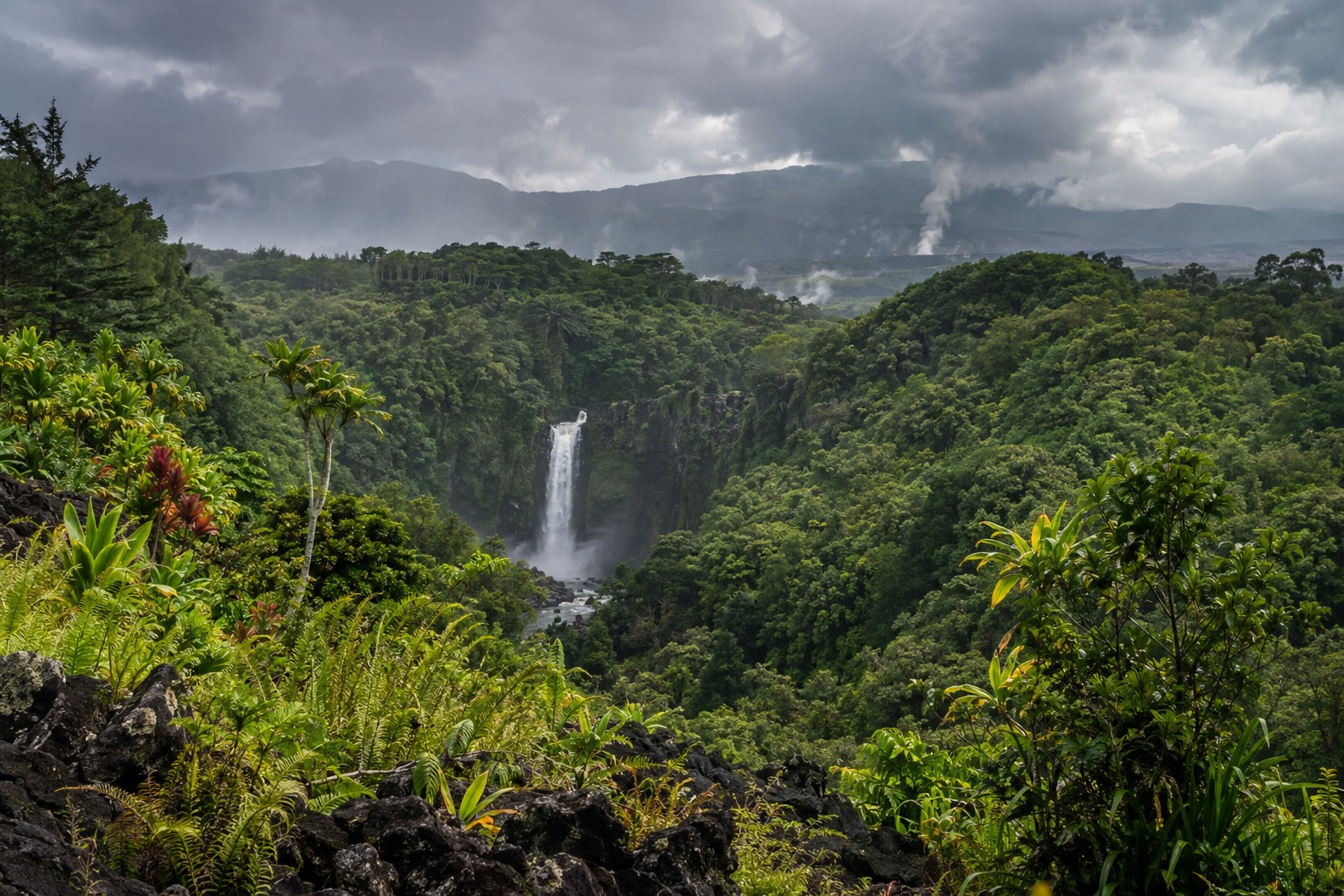
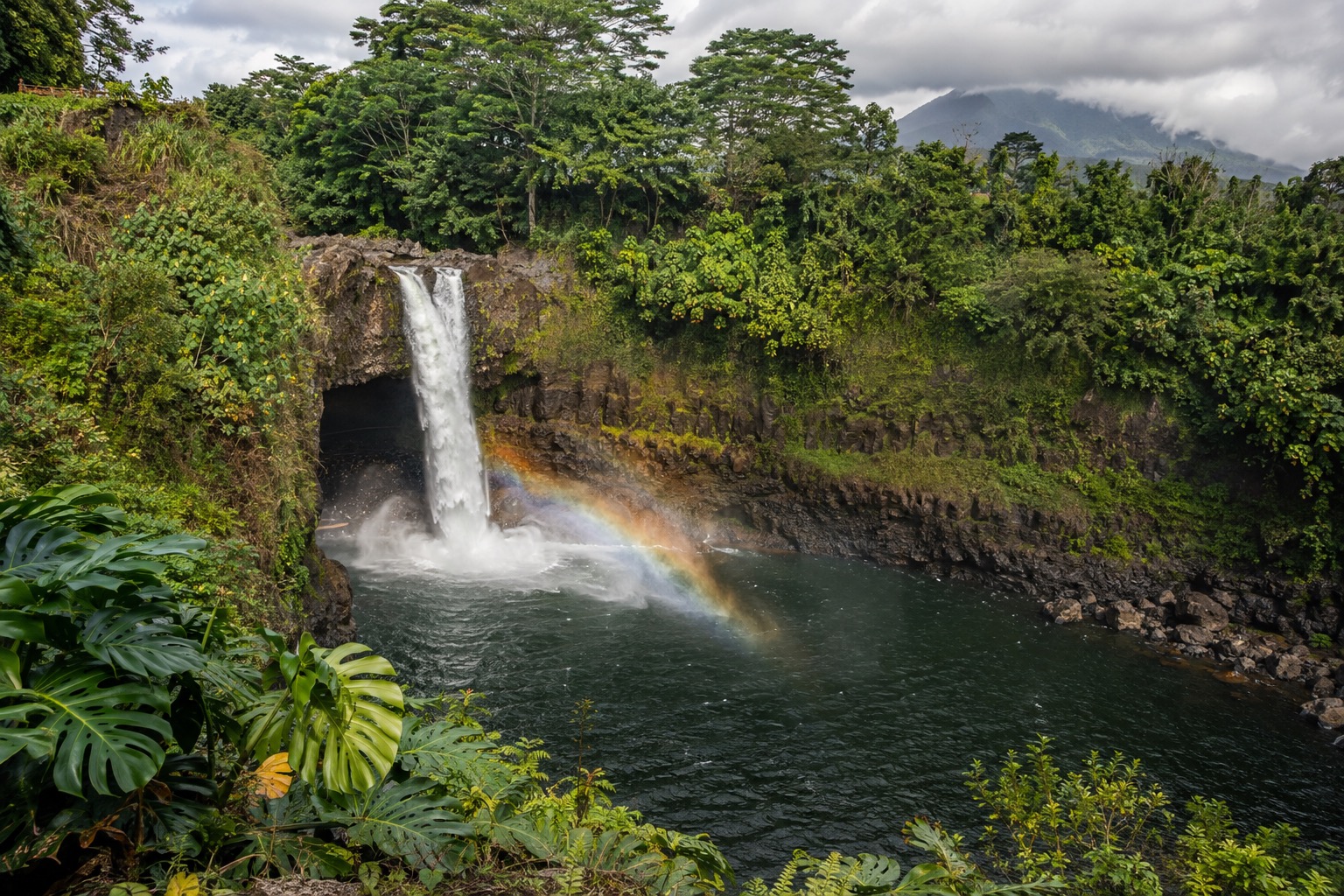
The two must-sees are Rainbow Falls and Akaka Falls, and the same rain that leaves Hilo soggy is what sends both of them roaring. Rainbow Falls sits just above town in a Wailuku River gorge, and in the morning light a rainbow often hangs in the mist. Akaka Falls lies north of town along the Hamakua coast and has a short loop path through bamboo, ferns and orchids.
Go early, before clouds thicken and the tour buses arrive. Wear shoes with grip, because stone paths stay slick. Both stops take a short visit, so pair them with the Hamakua coast drive or a lunch in a small town along the road.
Gardens, parks and the bay
Lili’uokalani Gardens, on the bay, is a calm Japanese-style park with lawns, stone lanterns and arched bridges. It suits a picnic or a short walk between showers, and the view across the water to Mauna Kea is the reward when the clouds lift. Coconut Island, linked by a footbridge, is a good place to watch the swimmers and outrigger paddlers.
Orchid and tropical gardens along the coast are most lush in this rain, with ginger, heliconia and bromeliads in bloom. Wet leaves are the point of a garden visit here, so go with a light jacket and be ready to duck under a canopy.
Hawaii Volcanoes National Park
Almost everyone who visits Hilo makes the park their day trip. Kilauea’s crater rim is cooler and wetter than the coast, so bring a layer. A stroll takes you among fern forest, then to the crater’s edge, with stops at steam vents and lava tubes. Evenings often bring the best view, when the glow of the crater shows against the dark.
Leave Hilo in the morning, give the park most of the day and plan dinner on the way back. It suits hikers, families with older children and anyone who wants a very different landscape from the green coast. Check the park’s current notices for trails and road status before you go.
Back in town, downtown Hilo has old storefronts, bookshops, small galleries and cafés for gray hours. The Pacific Tsunami Museum and the Lyman Museum are good rainy-day stops. Try shave ice, mochi and fresh local fish plates, and look for local-grown coffee and macadamia nuts to take home.
A two-day itinerary for Hilo in August
Day 1 belongs to town and waterfalls. Start at the farmers market for breakfast fruit and coffee, then drive to Rainbow Falls while the morning light is bright. Walk the bayfront at Lili’uokalani Gardens before clouds build.
Have lunch at a local plate-lunch spot or a downtown café, then spend the afternoon in the museums and shops, which are the rain card if showers set in. Late in the day, head to the shore for a swim at a lifeguarded beach if the water looks friendly.
Dinner is a casual place for local fish or noodles. Sunset comes after the light fades behind the clouds, so the evening is for a stroll downtown.
Day 2 goes up the mountain. Set out at dawn for Hawaii Volcanoes National Park, bring layers and a rain jacket, and stroll the fern forest trail and crater rim in the crisp morning air. Picnic lunch or a stop at the village near the park fits the middle of the day.
Spend the afternoon at steam vents and a lava tube, then stay for dusk, when the crater glow is strongest. If fog closes in, drive the coast road to a viewpoint or a small museum instead. Return to Hilo for a late dinner and an easy night.
Is Hilo busy in August?
Moderately: August brings summer family travel to the Big Island, but Hilo stays calmer than the resort coast on the dry side.
Most visitors base themselves in Kona or Waikoloa and come over for a day, so Hilo’s downtown and market feel local rather than packed. Families fill the weeks before school starts, and rooms and rental cars tighten for those weeks, so book early if your dates match the summer break. Later in the month it eases, and last-minute plans are easier.
Restaurant tables in town are rarely a problem, though popular dinner spots fill on weekends. Rental cars matter most, since the volcano, the waterfalls and the coast are all driving trips. Reserve the car with the room. Check the park and state parks pages for any reservation or entry rule before you go to a specific trail or site.
What to pack for Hilo in August
Pack light, quick-drying clothes and one warm layer for the volcano.
- Since rain tends to move through on most days, pack a light jacket.
- Grippy footwear, for lava rock and damp trails by waterfalls
- For the chilly crater rim, bring a sweater or fleece
- Reef-friendly sunscreen and a hat for bright breaks in the clouds
- Swimsuit, mask and water shoes for rocky shores
- A small dry bag to protect a phone and camera
Good to know before you go
August falls inside the Central Pacific hurricane season, which runs from June 1 to November 30, so watch forecasts as the trip nears. For getting to the waterfalls and the volcano, nothing beats a rental car. Lodging costs include the taxes below.
| Fee | Amount | Who pays |
|---|---|---|
| State Transient Accommodations Tax | 11.00% | Guests, on lodging |
| County of Hawaii Transient Accommodations Tax | 3% | Guests, on lodging |
Hilo in August vs July and September
Moving a month earlier to July changes little in the weather. The days are just as damp, with a few more rainy ones, and the sea is a touch cooler. Summer crowds are at a similar level, so July suits anyone locked into school-break dates.
September is a little drier, with fewer rain days and a slightly warmer sea. Families have gone back to school, so rooms and rental cars are easier to find and the farmers market feels quieter. It also falls deeper into hurricane season, so keep an eye on forecasts.
Choose July if your dates are fixed by school. Choose August for warm water and a green, lively town. Choose September if you want a calmer trip with a bit less rain.
Is August a good time to visit Hilo?
Sure, if you are a traveler drawn to lush scenery, cascades and a more relaxed rhythm, and a brief rain or two does not bother you.
It suits families, gardeners, food lovers and anyone building a volcano trip. Those who want guaranteed beach sun all day should look to the dry west coast instead. On arrival, rent the car, visit the farmers market and plan your volcano day around the clearest morning forecast. What makes August in Hilo special is its green: rain-fed falls, wet gardens and a bay town where the clouds lift just long enough to show Mauna Kea.
Sources
- NOAA NCEI, monthly normals 1991-2020, station USW00021504, checked September 8, 2026
- Open-Meteo Marine API, average 2015-2024, checked September 8, 2026
- sunrise-sunset.org, sunrise and sunset calculated for the 15th of the month, checked September 8, 2026
- Hawaii Department of Taxation, Tax Announcement No. 2025-03 (Transient Accommodations Tax Law Changes from 2025 Legislative Session), files.hawaii.gov/tax/news/announce/ann25-03.pdf, checked September 24, 2026
- County of Hawaii, Department of Finance, Transient Accommodations Tax (TAT) page, hawaiicounty.gov/departments/finance/transient-accommodations-tax-tat (live returned HTTP 403 on request, read via Internet Archive Wayback Machine snapshot dated August 14, 2026, same official content), checked September 25, 2026
- Hawaii Department of Taxation, County Surcharge on General Excise and Use Tax page, tax.hawaii.gov/geninfo/countysurcharge/, checked September 25, 2026
- NOAA NCEI, monthly normals 1991-2020, station USW00021510
- NOAA NCEI, monthly normals 1991-2020, station USC00511303
- NWS Honolulu / Central Pacific Hurricane Center, « 2026 Central Pacific Hurricane Season Outlook », weather.gov/hfo/hurricaneOutlook2026, checked September 24, 2026