
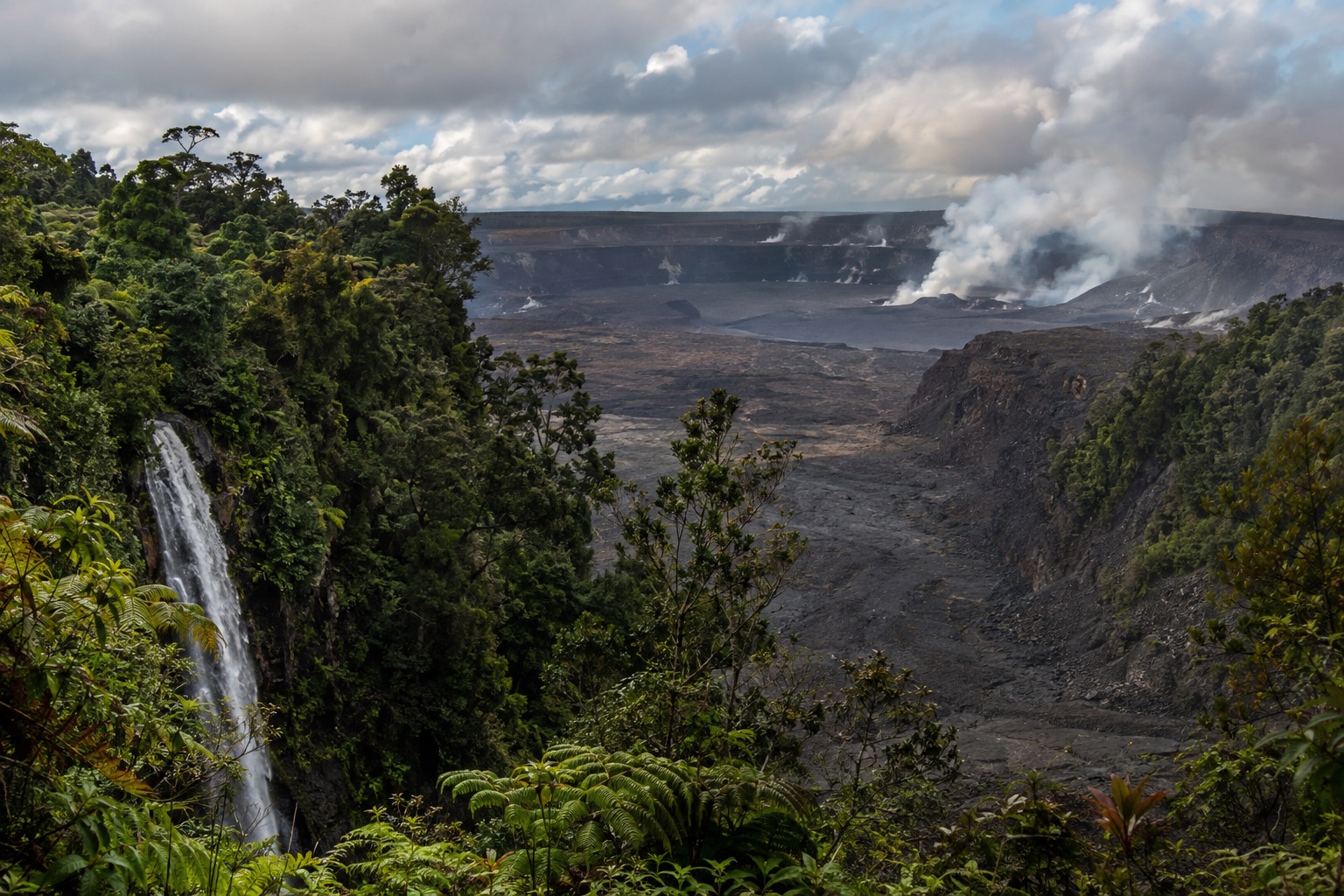
At the edge of Kilauea on a morning in September, vapor rises from fissures in the earth and floats over the ohia forest as dawn’s early glow paints the crater floor a gentle pewter. Nene geese wander the roadside, the air smells of wet earth and ferns, and the visitor center parking lot is calmer than it was in July. Late summer is a quiet, atmospheric time to walk the park’s craters, lava tubes and coastal cliffs.
What is the weather like in Hawaii Volcanoes National Park in September?
Up at the summit in September, expect cool, damp, shifting conditions: mild daytime hours, cold nights, and rain showers that drift in and out all afternoon.
| Month | Average high (°F) | Average low (°F) | Rain days |
|---|---|---|---|
| August | 73.7 | 56.0 | 12.2 |
| September | 73.2 | 55.4 | 12.2 |
| October | 72.4 | 55.1 | 13.2 |
The park headquarters sit near Kilauea at about 3,970 feet, so this is not the beach weather of the coast. During the day you can stroll comfortably in something light, while at night you will want a sweater or jacket, particularly before sunrise and after dark, when wind rises along the crater rim. The start of the day usually brings the best visibility, along with gentle light and vistas that reach over the caldera.
Rain here is a feature of the landscape. It usually arrives as passing showers or a gray, drizzly spell that drifts over the rim, then lifts again, and a downpour can sit over the rainforest while the lower coast stays bright. Several inches fall over the month, so a rain shell matters more than an umbrella, and trails through the ferns can be slick and muddy.
Down on the Chain of Craters Road, toward the sea, it is warmer, drier and more exposed, with little shade on the old lava flows. That contrast is the best way to plan a day: start high where the air is cool, then drop to the coast when the sun is out. The Central Pacific hurricane season runs from June 1 to November 30, so September falls inside it.
What to do in Hawaii Volcanoes National Park in September
September has no big festival inside the park, which is part of its appeal. What the month offers is room to walk, long stretches of quiet on the trails and the steady drama of an active volcanic landscape. The park rewards slow travel, and the cool, misty weather suits its forests and craters well.
Many visitors come hoping for glowing lava, but eruptions start and stop and the view changes from one visit to the next. Think of any glow as a lucky break rather than a guarantee, and check with the visitor center about what can be seen and from which spots. Whatever the volcano is doing, the landscape itself is the show.
The Kilauea rim and Crater Rim Drive
The rim of Kilauea is the natural starting point, and the walk along the caldera edge gives you the scale of the place: a vast, sunken floor of cooled lava, steam vents breathing along the cliff and the pale smoke of the summit. Overlooks near the visitor center and the Volcano House area let you take it in with little effort. The drive around the rim connects several viewpoints, so you can stop, look and move on as clouds open and close.
Early morning and the hour after sunset are the most atmospheric times, when the light is low and the steam stands out. In a showery month, keep the plan flexible, since a view that is hidden at nine can be wide open by eleven. A warm layer and a rain shell are the only gear you really need here.
Thurston Lava Tube and the rainforest
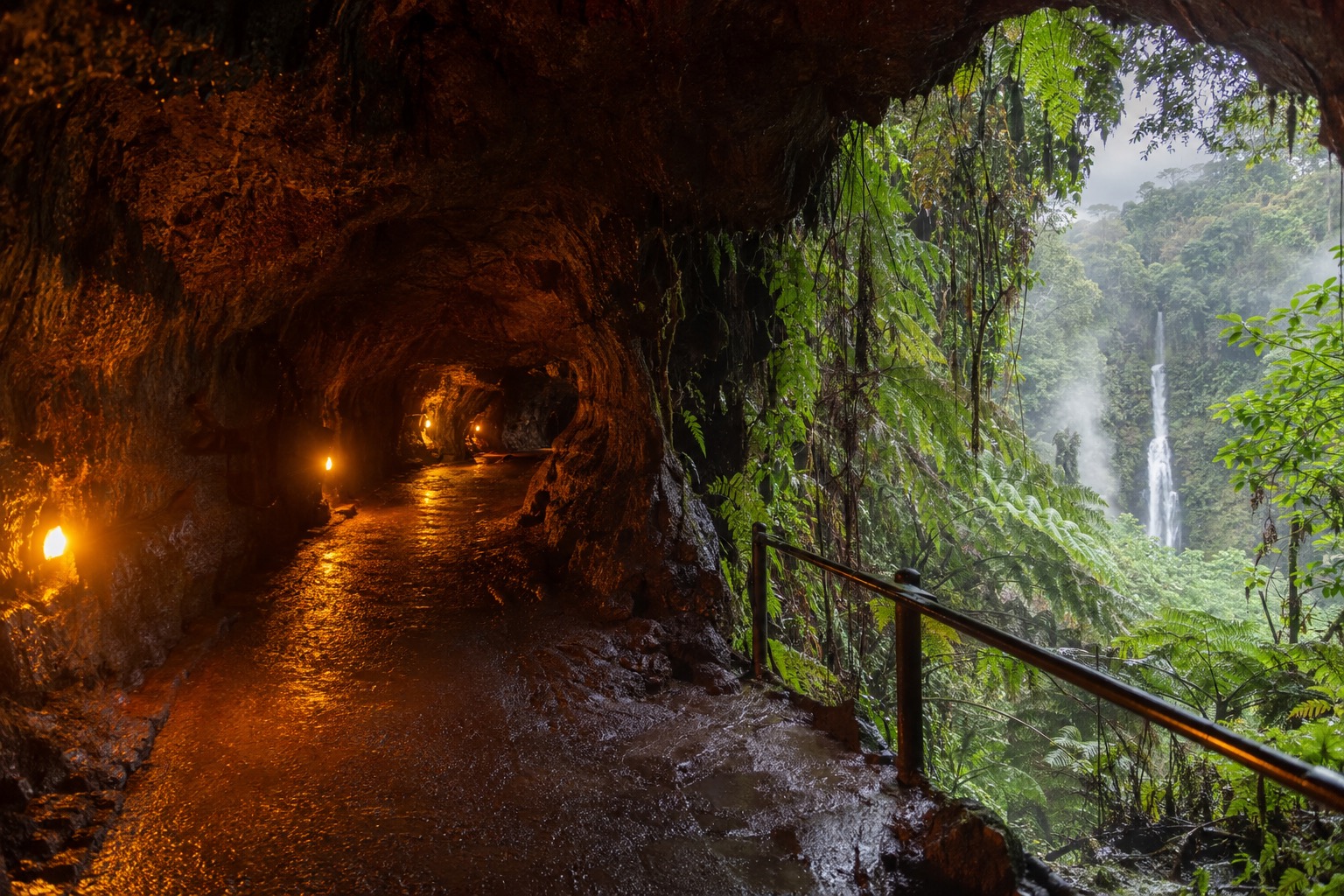
A brief stroll past dripping tree ferns leads into the Thurston Lava Tube, a cavern carved by flowing lava. The approach feels like stepping into a green, damp, prehistoric world, with birdsong in the canopy and moss on every trunk. It is an easy outing that suits families and anyone who wants a gentler stop between longer walks.
Since the woods remain damp, it works well when rain showers arrive, as the treetops soften the downpour and the tunnel is covered too. Choose footwear that can grab the ground, since the trail may be slick, and pack a little lamp for the shadowy part past the main illuminated area if exploring appeals to you.
Chain of Craters Road and the coast
The road that descends from the summit toward the sea passes old craters, lava fields and long views over the black cliffs. It ends where lava once crossed the pavement, at a rugged coastline with sea arches and a wide, open horizon. The drop in elevation brings warmer air and fewer trees, so sun protection and water matter more than at the rim.
Along the way you may spot petroglyph fields, short trails and pullouts where the ocean pounds the rocks below. Treat the sea as rough and the cliffs as unstable, and follow the signs and rangers on the coast. The lower road is a good late-day outing, with the low sun lighting up the dark lava.
Beyond the park’s main roads, the nearby village of Volcano has small cafés, art galleries and farm stands, and it is a pleasant place for a warm drink on a cool, damp afternoon. Food here is simple and hearty, from plate lunches to coffee grown on the slopes of the Big Island. A bowl of hot soup suits the weather well.
Birdwatchers will enjoy the forest in the morning, when native honeycreepers sometimes flit through the ohia blossoms and the nene, Hawaii’s state bird, grazes near the road. Keep your distance from wildlife and stay on the marked path, because the plants and the ground are fragile. The place carries cultural importance too, so treat it with care: Kilauea is holy to Native Hawaiians, and Pele is linked to the summit area.
A two-day itinerary for Hawaii Volcanoes National Park in September
Day 1 begins at the Kilauea rim early, when the light is soft and the steam shows clearly against the cool air. Walk the overlooks near the visitor center, then continue around Crater Rim Drive as the morning clouds shift. By late morning, step into the Thurston Lava Tube and the surrounding rainforest, which is a sheltered choice if the showers arrive.
Have lunch in the village of Volcano at a café or a plate-lunch counter, then spend the afternoon in the visitor center and museum exhibits to understand what you have seen. With around twelve hours of daylight, there is time for a gentle walk before dinner. After dark, return to the rim if the sky is clear, since the glow and the stars can both be striking at that altitude.
Day 2 heads downhill. Start the day by driving Chain of Craters Road, stopping where craters and lava fields appear along the way, and reach the shore before the midday sun gets fierce. Walk the cliffs, look for the sea arches and take in the long view over the open water, keeping well back from the edges.
Return uphill for a late lunch near the summit or in the village, then use the afternoon for a short forest trail or a quiet stop at a gallery. If rain settles in, shift to the museum, a café and the sheltered lava tube instead. Finish with a warm meal and an early night, since the cool air makes bed feel good.
Is Hawaii Volcanoes National Park busy in September?
No, September is one of the calmer months here, with fewer visitors on the trails and more room at the overlooks. Summer family travel has wound down as schools return, and the winter holiday rush has yet to begin. That shows in the parking lots, the lava tube path and the small restaurants in Volcano village.
Even in a quiet month, the most popular viewpoints fill up around midday and at sunset, especially if the weather is clear and word of a good glow spreads. Early morning remains the most peaceful time. Weekdays tend to be easier than weekends, and the village’s few lodgings are small, so they can still sell out on a good weekend.
Rooms and rental cars are usually easier to find than in the summer or winter holiday weeks, but it is still wise to book lodging near the park early, since there are few beds close by. Restaurant tables in the village are rarely hard to get, though kitchens can close early. A rental car is the practical way to move between the rim, the coast and your lodging.
What to pack for Hawaii Volcanoes National Park in September
Pack for cool, damp days at altitude and warmer, sunnier stretches near the coast.
- Pack a light rain jacket, since rain showers move through frequently.
- Warm layers such as a fleece, since mornings and nights are chilly.
- Sturdy shoes with grip for wet, uneven lava and muddy trails.
- Sun protection and a hat for the open coastal road.
- A refillable water bottle for longer walks.
- Bring a compact flashlight for the lava tube and for nights along the rim.
Good to know before you go
September falls inside the Central Pacific hurricane season, which runs from June 1 to November 30, so keep an eye on the forecast. Distances are long between the park and the rest of the Big Island, and a car is the simplest way to get around. Lodging near the park is limited, so choose where you will sleep before anything else.
| Fee | Amount | Who pays |
|---|---|---|
| State Transient Accommodations Tax | 11.00% | Guests on lodging |
| County of Hawaii Transient Accommodations Tax | 3% | Guests on lodging |
Hawaii Volcanoes National Park in September vs August and October
Moving the trip earlier, to August, brings nearly the same weather but busier trails and fuller lodging, as summer family travel is still going. The days feel much the same at the rim, with similar rain, though the crowds are heavier. Choose August only if school dates leave you no other option.
A trip four weeks later, in October, tends to be a touch cooler and wetter, with more days of rain and the long gray spells that suit moody photographs of the rainforest. It is still a quiet month on the trails, although the hurricane season continues until the end of November. Showers are more likely to interrupt a plan.
If you want the driest and calmest balance, September sits comfortably between the two. Travelers who value solitude and steady, mild weather should stay put, while those chasing summer crowds and long school-break trips will land in August. Anyone who enjoys mist and moody light can lean toward October.
Is September a good time to visit Hawaii Volcanoes National Park?
Yes, September suits walkers, photographers and anyone who prefers quiet trails and cool air to crowded overlooks. It is a good fit for couples, hikers and families with older children who like a bit of adventure. Travelers who want hot, sunny beach days should look to the coast and the leeward resorts instead of the summit.
On arrival, go first to the visitor center to ask what the volcano is doing and which roads and viewpoints are open, then take a short walk on the rim to get your bearings. Keep a rain layer with you and plan outdoor time for the morning, saving the museum and cafés for the wetter afternoon hours.
What sets September apart here is the stillness. Steam drifts over the caldera, the ferns drip in the forest, and you can stand at the rim for a long time with few people around, listening to the wind move across one of the most active volcanic landscapes on earth.
Sources
- NOAA NCEI, monthly normals 1991-2020, station USC00511303, checked September 8, 2026
- sunrise-sunset.org, sunrise and sunset calculated for the 15th of the month, checked September 8, 2026
- Hawaii Department of Taxation, Tax Announcement No. 2025-03 (Transient Accommodations Tax Law Changes from 2025 Legislative Session), files.hawaii.gov/tax/news/announce/ann25-03.pdf, checked September 24, 2026
- County of Hawaii, Department of Finance, Transient Accommodations Tax (TAT) page, hawaiicounty.gov/departments/finance/transient-accommodations-tax-tat (live returned HTTP 403 on request, read via Internet Archive Wayback Machine snapshot dated August 14, 2026, same official content), checked September 25, 2026
- Hawaii Department of Taxation, County Surcharge on General Excise and Use Tax page, tax.hawaii.gov/geninfo/countysurcharge/, checked September 25, 2026
- NWS Honolulu / Central Pacific Hurricane Center, « 2026 Central Pacific Hurricane Season Outlook », weather.gov/hfo/hurricaneOutlook2026, checked September 24, 2026
To plan your stay
- Things to Do in Hawaii Volcanoes National Park: Kilauea Iki, Lava Tube, Petroglyphs and Day Trips
- Best Time to Visit Hawaii Volcanoes National Park: Weather, Crowds, Rain and Seasonal Events
- Hawaii Volcanoes National Park in August: Weather at the Crater Rim, Things to Do and a Two-Day Plan
- Hawaii Volcanoes National Park in October: Weather, Kilauea Crater Walks and a Two-Day Plan