
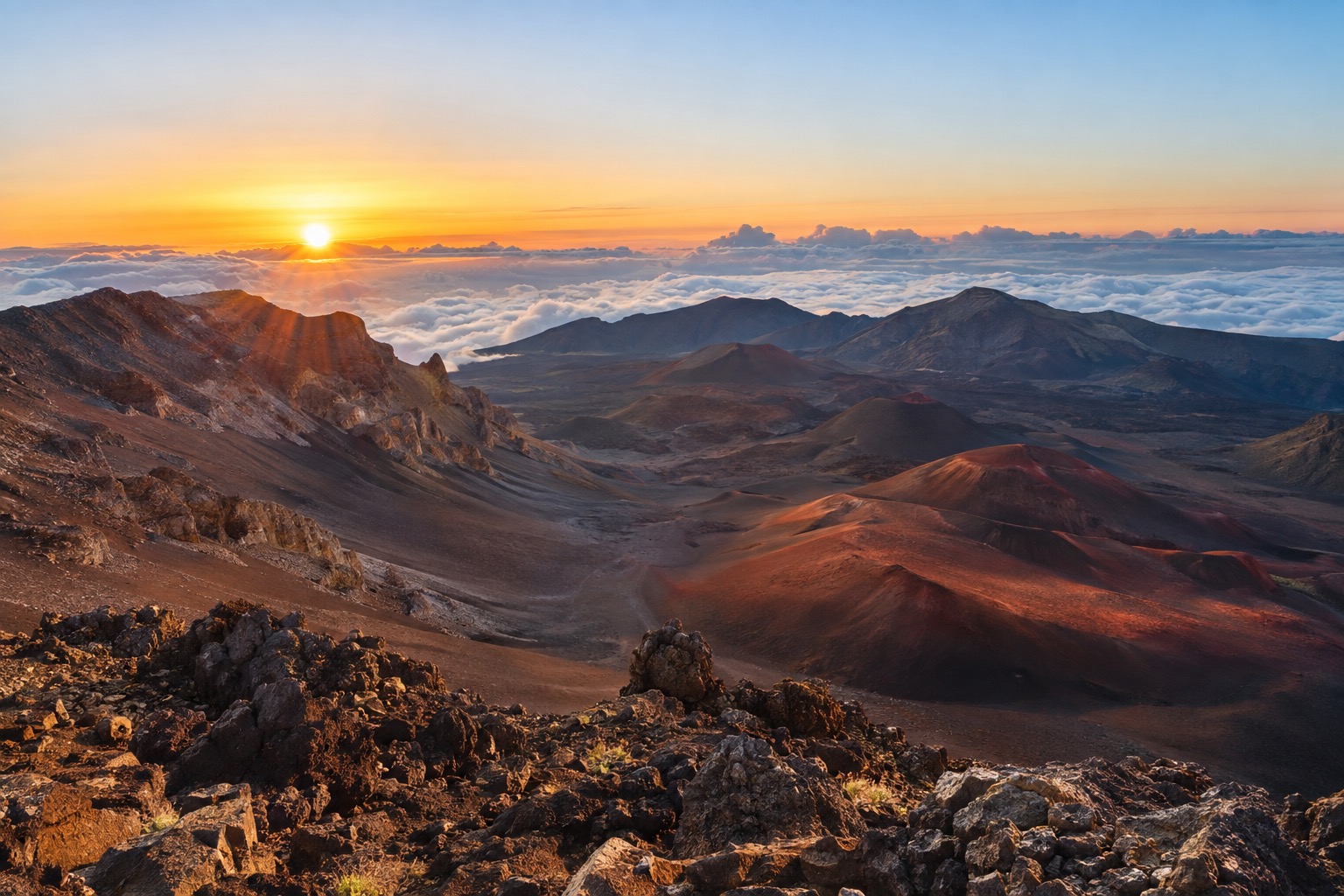
Before dawn in September, the parking lot at the summit of Haleakala fills with people in borrowed blankets, breath showing, waiting for the sky to turn from black to indigo to orange above a floor of clouds. Later in the day the crater turns rust, ochre and gray under a bright sun, and the silence between the cinder cones feels enormous. September gives the mountain a settled, unhurried mood, good for sunrise, hiking and long nights of stargazing.
What is the weather like in Haleakala in September?
On the mountain, September brings cool, largely dry, bright weather, plus chilly nights and brisk mornings that demand genuine layers, even if the beaches down below feel like summer. The table puts the month next to its neighbors.
| Month | Average high (°F) | Average low (°F) | Rain days |
|---|---|---|---|
| August | 66.1 | 49.4 | 4.4 |
| September | 64.7 | 47.9 | 5.2 |
| October | 64.0 | 47.8 | 5.5 |
Those figures belong to the high country, and they mean a day that feels like a fall afternoon in the mountains, not like Maui’s coast. Mornings at the rim are cold enough for a hat and gloves, especially while you wait for the sun, and the wind can make it feel colder. At this height, the midday sun beats down and the air holds little moisture, so you still need sunscreen, jacket or not.
Short-lived showers drift through, most often as clouds rise up the slopes later in the day, yet many days remain dry. Clouds often fill the crater or sit just below the rim, which can hide a view for an hour and then open it again. Daylight lasts a little over twelve hours in mid-September, so evenings arrive early and the temperature drops fast after sunset.
The summit sits roughly three thousand feet above the ranger station area, so it is colder again up there. Down at the beaches of Wailea and Kihei, a short drive away, it is warm and sunny, which makes the contrast part of the fun: you can wear a fleece at dawn and swim by lunchtime.
What to do in Haleakala in September
September has no big festival on the mountain itself. What it offers is the landscape: clear mornings are common, the summer crowds thin a little, and the crater is quiet enough that you can hear the wind move through the silversword plants. Plan around the light, because the volcano is best at the start and the end of the day.
Sunrise at the summit
Watching the sun rise above the clouds is the famous Haleakala experience, and for good reason. You stand at the edge of a vast crater as the sky lightens in bands of pink and gold, and the clouds below look like a sea. The drive up is long and dark, so most people leave their hotels in the middle of the night, bringing every warm layer they own.
Sunrise at the summit requires a reservation, so book it ahead of the trip. The weather is a gamble in any month: clouds may cover the view, or the sky may open to a clear horizon, so treat the show as a chance, not a promise. After the sun clears the horizon the crowd drains quickly, and the quiet walk along the rim afterward is often better than the sunrise itself.
Hiking into the crater
Trails drop from the visitor center into the crater floor, where the ground turns red, black and silver and the cinder cones rise like a lunar landscape. Even a short descent on the Sliding Sands trail feels otherworldly, with views opening at each bend. The hardest part is the climb back, because the air is thin and the trail rises steadily.
Go in the morning, when the sky is usually clearer and the afternoon clouds have not yet gathered. Carry water, sun protection and a layer for the wind, and turn around earlier than you think you need to. This suits fit walkers who are comfortable at altitude, while others will be happy with the short overlooks near the road.
Stargazing after dark
The summit is far from city lights and above much of the atmosphere, which makes it one of the great places for stars. September evenings often bring clear spells, and the Milky Way can stretch from edge to edge when the moon is small. It is cold after dark, so dress as you would for winter in the mountains.
A night visit pairs well with an early dinner in Kula or Makawao, where small restaurants and farm stands sit on the slope. The drive down in the dark is slow, with sharp curves, so keep your speed gentle and watch for cattle and other cars.
Upcountry and the slopes
On the way up or down, the upcountry towns make a pleasant stop. Kula has flower farms and gardens with big views over the isthmus, and Makawao keeps its paniolo (cowboy) character, with galleries, bakeries and old wooden storefronts. Lavender and protea fields spread across the cooler slopes, and a slow wander here balances the intensity of the summit.
Lunch is simple and local: plate lunches, sandwiches from a bakery, or fresh fruit from a roadside stand. This stretch is also lovely in the afternoon when the high country light turns soft, and it is a good rainy-day plan because many stops are indoors.
A two-day itinerary for Haleakala in September
Come down toward Kula by late morning for a bakery breakfast or an early lunch, then wander the flower farms and gardens as the clouds begin to build.
In the afternoon, rest. After a 3 a.m. start, a nap or a quiet hour at a beach in Wailea or Kihei is the right call, since the coast is warm and dry while the mountain clouds over. Dinner can be a casual plate lunch place or a seafood spot near the water, with an early night to follow.
Day 2 is for the other side of the park and the night sky. Spend the morning in Makawao, with coffee, galleries and a slow walk along the main street, then head up toward the crater for a longer hike into the cinder cones while the day is still bright. If rain turns up, switch to galleries, bakeries and a long lunch in the upcountry towns.
Return to the summit area near sunset, when the light slants across the crater and the temperature falls fast. Stay for stars if the sky is clear, with a jacket, hat and gloves, and leave in time for a slow drive down. Sunset comes early in September, so the dark drive begins sooner than in summer.
Is Haleakala busy in September?
September is generally quieter than the peak summer weeks and the winter holidays, though sunrise stays a draw all year. School is back in session for most families, so the long lines of summer have eased and the lodging market feels calmer. Rooms and rental cars are usually easier to find than in July or December, though the island never empties.
The one thing that still fills up is the sunrise slot, which needs a reservation. Reserve it the moment your plans are set, and make a habit of booking the rental car and rooms a few weeks in advance, sooner if a particular beachfront stay is what you’re after. Restaurants in Kihei, Wailea and Paia can be busy at dinner on weekends, so a reservation helps for popular spots.
The summit is busiest at dawn and almost empty by mid-morning. Afternoons and evenings offer a quieter mountain, which is the best moment for a stroll along the rim or a longer hike. Upcountry towns stay relaxed through the week.
What to pack for Haleakala in September
The mountain asks for cold-weather clothing while the island below asks for swimsuits, so pack for both and keep the warm layers within reach in the car.
- Pack a warm jacket along with a hat and gloves, since the wind blows hard and the summit stays cold before daybreak.
- For chilly dawns and paths of cinder, bring long pants plus closed shoes that grip.
- A blanket or extra fleece for sunrise, since you may wait outside in the dark.
- Also pack sunscreen and sunglasses, since the sun is intense at high elevation even when the air feels cool.
- A refillable water bottle, because the air is dry and thin on the trails.
- A small rain shell for passing upcountry showers.
Good to know before you go
September falls inside the Central Pacific hurricane season, which runs from June 1 to November 30, so keep an eye on forecasts as the trip approaches. The climb to the top takes a long, twisting route, and at dawn those turns are chilly and unlit, so start out early and take it slow. Reserve your sunrise spot before anything else, then plan the rest of your trip around that time, and fill your gas tank before you head up because the mountain has no fuel.
Haleakala in September vs August and October
Moving a month earlier, to August, brings slightly warmer mountain air and a bit less rain, but also the last of the summer family crowds and fuller beaches. Sunrise reservations are harder to get, and rooms book up sooner. The sea on the south and west coasts tends to be at its summer best.
Moving to October gives a little more rain, with showers passing through more often on the slopes, and slightly cooler air. Visitor numbers keep easing, and the autumn mood in the upcountry is quiet. Hurricane season remains open through November, so the forecast still matters.
Choose August if you want the warmest beach days alongside the mountain, and October if you want fewer people and can live with a few more showers. September sits between the two, with calmer crowds than summer and mostly dry mornings for the summit.
Is September a good time to visit Haleakala?
Yes, September suits travelers who want crisp mornings, a quieter summit and clear nights for stars, and who do not mind layering up before dawn. Hikers, photographers and anyone who loves open landscapes will find the mountain at ease. Those who want guaranteed sunshine and warm air at the rim should look to the coast instead, since the summit is always cold.
On arrival, confirm your sunrise reservation and choose a clear-weather morning for the early start, keeping the second day flexible in case clouds roll in. Then spend the afternoons at the beach and the evenings upcountry. September’s particular charm here is the pace: the crater feels spacious, the nights are dark, and you can stand at the rim in the quiet after the sun clears the clouds.
Sources
- NOAA NCEI, monthly normals 1991-2020, station USC00511004, checked September 8, 2026
- sunrise-sunset.org, sunrise and sunset calculated for the 15th of the month, checked September 8, 2026
- NOAA NCEI, normals 1991-2020, station USC00511004, via PLAN-HAWAII.md §1
- NWS Honolulu / Central Pacific Hurricane Center, « 2026 Central Pacific Hurricane Season Outlook », weather.gov/hfo/hurricaneOutlook2026, checked September 24, 2026
To plan your stay
- Haleakala Sunrise: Summit Reservations, Cold Dawn Conditions and the Drive Up
- Best Time to Visit Haleakala: Weather by Month, Sunrise Seasons, Crowds and Events
- Haleakala in August: Summit Sunrise, Cool Weather and Starry Nights
- Haleakala in October: Summit Sunrise, Cool Weather and Two Days on the Mountain