
In October, long before the sun comes up, people gather in the summit parking lot on Haleakala, wrapped in blankets they borrowed, their breath misting, waiting as the black sky turns deep orange above a sea of clouds. Later the mountain softens into the pastures and eucalyptus of Kula and the quiet trails of the crater. In the fall, Haleakala offers cool air, long views and room to breathe for travelers who come to the volcano.
What is the weather like in Haleakala in October?
Come October, the mountain turns cool and largely dry, yet shifts often, bringing brisk mornings plus showers that ride in along with the clouds. Values are for the Ranger Station level, well above the beaches.
| Month | Average high (°F) | Average low (°F) | Rain days |
|---|---|---|---|
| September | 64.7 | 47.9 | 5.2 |
| October | 64.0 | 47.8 | 5.5 |
| November | 63.1 | 47.0 | 6.9 |
Afternoons feel like a crisp spring day, pleasant for walking in a fleece, while mornings and nights are properly cold. At sunrise, the summit sits about 3,000 feet above the Ranger Station and feels even colder, with wind making the chill sharper. Plan on dressing in layers you can add and remove through the day.
Rain is usually a passing thing. Clouds build on the slopes by midday and can bring a short shower or a cold mist, and most days still offer long dry stretches. Rain on the mountain says little about the coast, where the leeward beaches of Wailea and Kihei sit in sun while the upper slopes are in cloud.
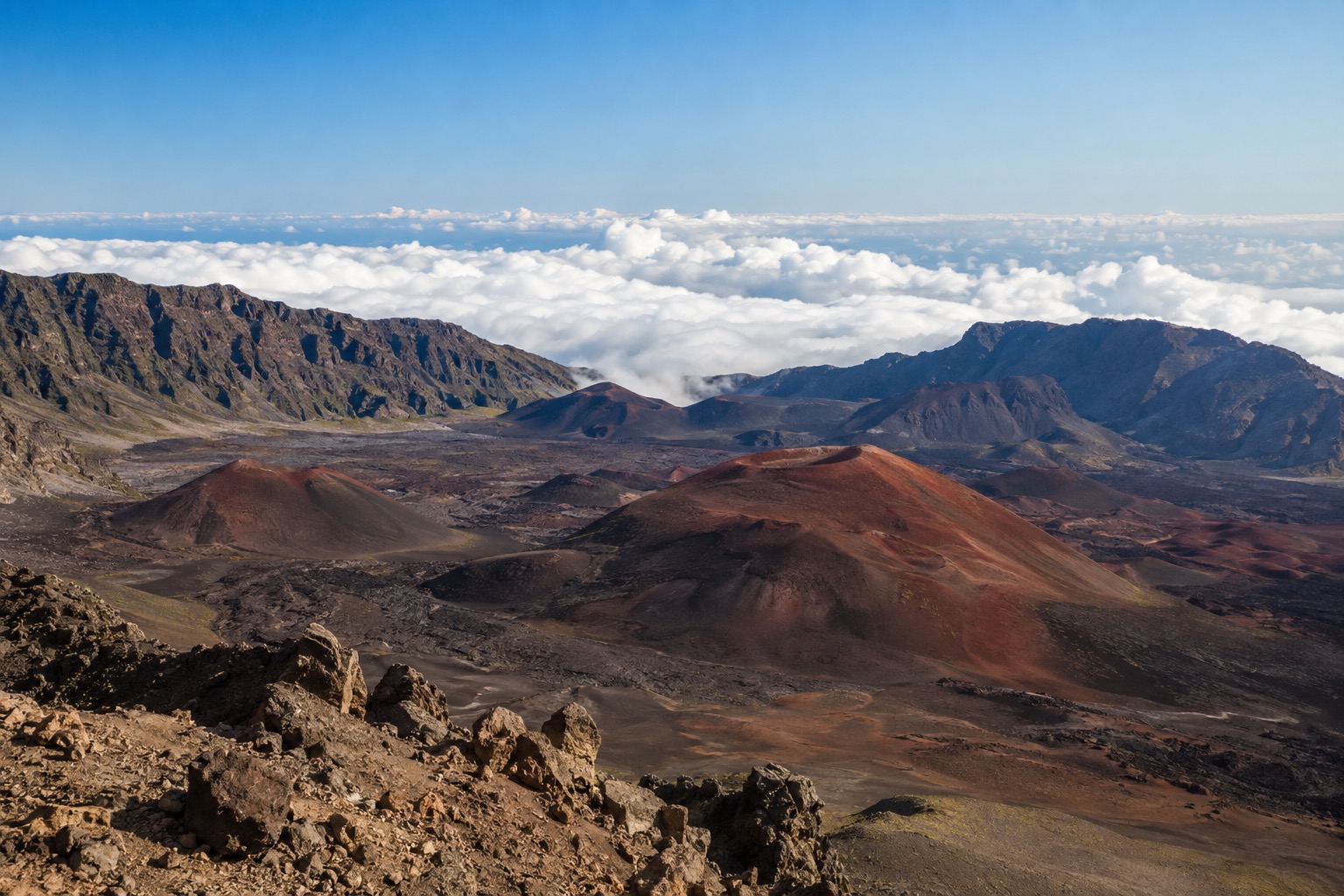
The light is a pleasure in October. Days last a bit under twelve hours, the sun sits lower and the colors at both ends of the day are rich. Cloud can fill the crater or sit below the rim, and the difference is a roll of the dice you cannot predict from the hotel.
What to do in Haleakala in October
October is a quiet, hiking-and-views month on the volcano. The summer school crowds are gone, the air is cool for walking, and the pastures of Upcountry are green and calm. There is no single festival to plan around, so the mountain itself is the event.
Seasonal markets and farm stands around Kula and Makawao sell vegetables, flowers and baked goods, and the paniolo (Hawaiian cowboy) town of Makawao has a slow, small-town rhythm of galleries, bakeries and feed stores. Cool evenings suit a bowl of hot soup or plate lunch after a day outdoors.
Sunrise and the summit
The sunrise is the classic reason to come. You drive up a switchbacking road in the dark and stand at the rim as the sun lights the crater floor, with cinder cones in rust, gray and red. Sunrise requires a reservation, and the park sets the rules, so book before you fly. Dress for real cold and expect wind.
A summit sunset or late afternoon visit is a gentler option. The crowds are smaller, the light turns gold, and stars come out sharply after dark. The sky at that altitude is dark and clear when the clouds stay below, and stargazing is a quiet reward for those willing to stay up.
Walking in the crater
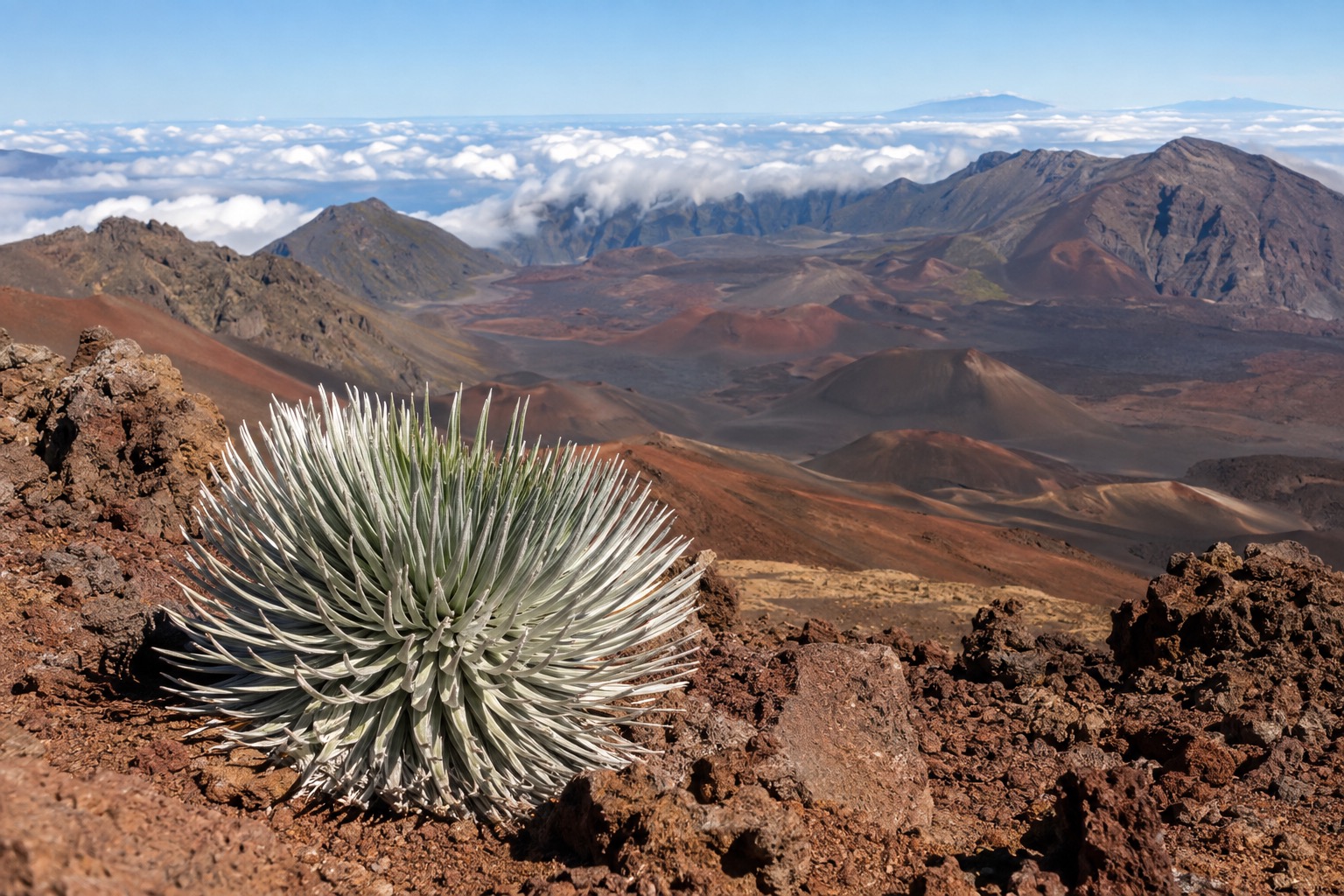
Short walks start near the visitor center and the summit, among silverswords, the silvery plants that grow only in this kind of high volcanic landscape. Longer trails drop into the crater and feel like walking on another planet. The climb back out is slow at altitude, so go at an easy pace and bring water.
Cloud and mist can roll over the trail within minutes, which gives the crater an eerie look but also hides the views. Cool, overcast days suit hiking well, as there is no heat to fight, and you can often walk with fewer people around.
Upcountry: Kula and Makawao
Lower on the slopes, Kula is lavender farms, protea fields and rolling ranchland with views down to the ocean. Makawao has bakeries, shops and a western feel. These stops suit a cloudy day or the afternoon after a summit morning, and they pair easily with a lunch of local produce.
Winding country roads reward slow driving. Fog can come in quickly, so keep the headlights on and take your time between stops.
A two-day itinerary for Haleakala in October
Day 1. Once your reservation is set and all your warm layers are on, head up in the darkness to see the sunrise from the summit. Sunrise falls a little after six in the morning in mid-October, so you leave your lodging well before. After the light show, take a short walk near the visitor center among the silverswords, then descend for breakfast in Kula or Makawao, at a bakery or café with hot coffee.
Midday is for a nap or a slow drive through Upcountry farm country, with a stop at a roadside stand. In the afternoon wander the galleries of Makawao. Dinner can be a plate lunch or a warm bowl of noodles, as the evening turns cool.
Day 2. Sleep in, then head for a longer crater hike once the morning chill eases, going early enough to beat afternoon cloud. If rain moves in, swap to a farm visit, a lavender garden or a museum or café stop in town. Finish on the leeward coast near Wailea for sunset on the beach, where the weather is warmer and drier, and dine on fresh fish at a seaside spot. If the whole slope is socked in, spend the day on the coast and keep the summit for a clearer window.
Is Haleakala busy in October?
No, October is one of the calmer months on the mountain, though the sunrise still draws a steady crowd. Now that summer families have cleared out and the winter holiday rush has yet to arrive, booking rooms and rental cars is easier, and getting a table at a restaurant is rarely an issue.
What fills up first is the sunrise slot, because it needs a reservation and the park limits entry. Reserve it the moment your dates are fixed, and keep the rest of your plans loose. Rooms and cars can be booked later than in holiday weeks, though a habit of booking early still pays off on a small island.
At the summit, sunrise is the busiest hour and the afternoon is the quietest. Trails in the crater are peaceful most of the day, and Upcountry towns stay laid-back. If you want solitude, plan your hiking for mid-morning or later.
What to pack for Haleakala in October
The mountain is a different climate from the beach, so pack for both cold summit mornings and warm coastal afternoons.
- A warm jacket, hat and gloves for the summit before dawn, when it is cold and windy.
- Layers such as a fleece and long pants for crater walks and cool evenings.
- Sturdy closed shoes for cinder trails and uneven ground.
- A light rain shell for passing showers and mist on the upper slopes.
- Sunscreen, sunglasses and a water bottle, since the sun is strong at altitude.
- Swimsuit and sandals for the leeward beaches after the mountain.
Good to know before you go
The Central Pacific hurricane season runs from June 1 to November 30, so October falls inside it. Hawaii is rarely hit, but weather can change plans, and clouds or wind can affect summit visits. The drive up is long and winding, with little at the top, so fill the gas tank and bring snacks and water. Reserve the sunrise before you travel and keep other days open for the weather.
Haleakala in October vs September and November
Moving a month earlier gives a very similar mountain, with slightly drier days and a touch more warmth. The beaches below are in their summer pattern, and Upcountry is still calm. September suits travelers who want the driest feel on the slopes.
A month later, rain becomes more frequent and the upper slopes see more cloud and mist. The winter surf season starts to build on north shores, and the holiday rush begins to approach later in the season. November still works for hikers, but the clear summit windows get a little rarer.
Choose October if you want the middle ground, with steady cool weather and quiet trails. Pick September for the best odds of clear skies and November if you are combining the trip with a longer winter stay.
Is October a good time to visit Haleakala?
Yes, especially for hikers, photographers and anyone who prefers cool air and quiet trails to crowds. October gives a calm, dry-leaning mountain with long views and gentle light.
It suits less well anyone who wants warm weather all day or guaranteed clear skies at the summit, since clouds can still close the view. Beach lovers can pair the mountain with the dry leeward coast and get the best of both. On arrival, secure your sunrise reservation first and plan the rest around it. What stays with you from October is the contrast, a cold, silent dawn above the clouds and a warm, relaxed afternoon on a sunny shore the same day.
Sources
- NOAA NCEI, monthly normals 1991-2020, station USC00511004, checked September 8, 2026
- sunrise-sunset.org, sunrise and sunset calculated for the 15th of the month, checked September 8, 2026
- NOAA NCEI, normals 1991-2020, station USC00511004, via PLAN-HAWAII.md §1
- NWS Honolulu / Central Pacific Hurricane Center, « 2026 Central Pacific Hurricane Season Outlook », weather.gov/hfo/hurricaneOutlook2026, checked September 24, 2026