
Before dawn on the crater rim, a line of headlamps drifts across the parking lot and everyone falls quiet as the sky turns from black to deep orange above the clouds. In March the winter whales are still offshore far below, the upcountry hillsides are green from the rainy months, and the mountain is cold enough to make a hot drink at the lodge feel like a reward. Haleakala is a summit for early risers, hikers and sky-watchers, and March suits all three.
What is the weather like in Haleakala in March?
Cool and changeable: March on the mountain feels like a crisp autumn day, with cold nights, mild afternoons in the sun and a fair chance of clouds and showers rolling through.
| Month | Average high (°F) | Average low (°F) | Rain days |
|---|---|---|---|
| February | 59.7 | 42.7 | 5.4 |
| March | 59.7 | 43.1 | 7.6 |
| April | 60.7 | 43.8 | 6.0 |
Up around 7,000 feet, the air feels thin and nippy. The summit sits about 3,000 feet higher and is colder still, so the sunrise crowd should expect near-freezing air and a wind that cuts through thin layers. Down at the beach resorts on the leeward coast the day is far warmer, which is why people often shiver in the dark at the rim and are in swimsuits by lunch.
Rain comes mostly as passing showers and low cloud, and March is one of the wetter months on the slopes. Windward and upper slopes catch the most, while mornings tend to be clearer than afternoons, when clouds build and can fill the crater. A good share of the days stay dry, and a rare day brings a heavy soaking.
Days are close to equal in length, with about twelve hours of daylight, so sunrise comes at a reasonable hour rather than the very early start of summer. Dress in layers, bring a rain shell and expect the light to change fast as clouds move through the crater.
What to do in Haleakala in March
March is the tail end of the Hawaii winter, and that shapes the month. Humpback whales are often still visible from the coast below, the rains have left the upcountry pastures and eucalyptus groves vivid, and the summit is quieter than in the busiest holiday weeks. Spring break brings families from the mainland, so the mood in the small upcountry towns is relaxed but lively, with bakeries and farm stands busy at midday.
Sunrise and sunset at the summit
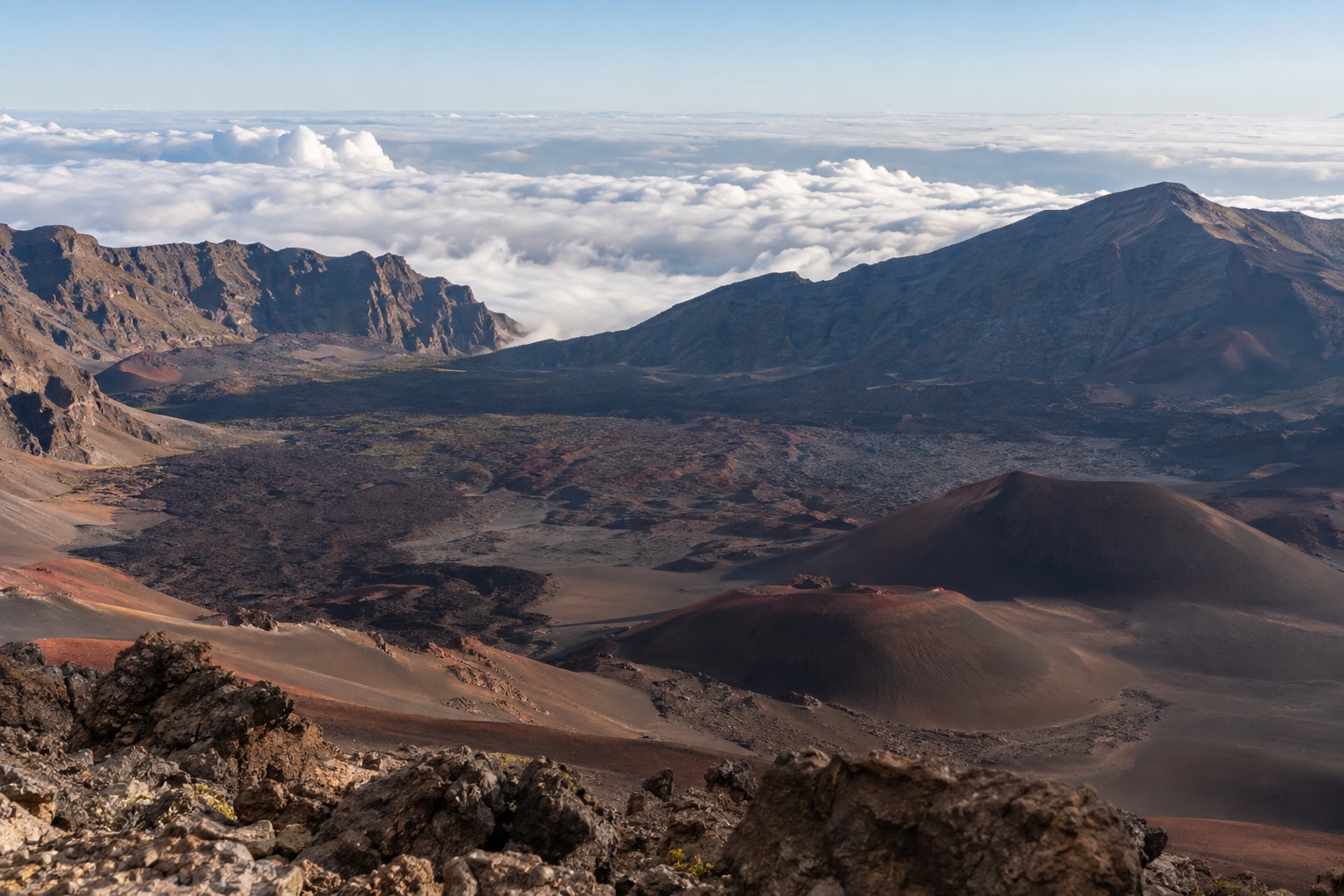
The sunrise from the rim is the famous outing, and the sunset is a calmer alternative that many visitors prefer. You stand above the clouds, with the crater spread out in rust, red and gray cinder, and the sky changes color in slow stages. The sunrise requires a reservation for the park’s summit viewing, so plan that before anything else, and be ready for a long wait in the cold.
Sunset suits people who do not want a pre-dawn alarm, and the stars that follow can be striking when the sky is clear. Bring warm clothes either way, since waiting in the wind is colder than the thermometer suggests. Clouds sometimes cover the view, so treat any sky show as a chance rather than a promise.
Hiking into the crater
From the rim, the trails descend into terrain resembling Mars more than Hawaii, featuring cinder cones, silversword plants and sweeping vistas across lava fields. A short walk on the Sliding Sands trail is enough to feel the scale, and you climb back out slowly because of the altitude. Start in the morning, carry water and watch the clouds, since weather shifts quickly.
Stay on the marked paths, because the silversword and the fragile cinder surface are easily damaged. The nene, Hawaii’s native goose, sometimes wanders near the trails, and keeping your distance is the right habit. This is a good outing for fit walkers and a lot to ask of anyone sensitive to thin air.
Upcountry and the coast below
Heading down the mountain, the road passes ranchland, lavender and flower farms, and small towns such as Makawao and Kula. Look for bakeries, fruit stands and cafés where you can warm up after the cold summit. Many travelers pair the mountain with a beach afternoon on the dry leeward side.
From the shore you may spot humpback whales in March, their spouts and tail slaps visible from the beach or a boat. Surf on north-facing shores can still be high in this part of winter, so check the beach flags and listen to the lifeguard before swimming anywhere.
A two-day itinerary for Haleakala in March
Day 1 starts in the dark with the summit. Reach the rim with your reservation in hand before sunrise, bundled up, and stay until the light fills the crater. Afterward walk a short stretch of the Sliding Sands trail while your energy is high, then head down for a late breakfast at an upcountry bakery.
In the afternoon, rest. Wander Makawao’s shops or the farm stands around Kula, and return to the coast by late afternoon for a beach walk and dinner. If clouds close in, spend the afternoon in a café or a gallery and keep the evening free.
Day 2 is for the slower side of the mountain. Spend the morning on a flower farm or a garden walk upcountry, when the air is clear, and have lunch at a casual spot in town. In the afternoon go to the shore for whale watching from a beach or a boat, where you may see humpbacks.
Finish with a sunset on the coast, then dinner at a restaurant serving local fish. If rain sets in, switch to indoor stops such as a gallery, a market hall or a long lunch.
Is Haleakala busy in March?
Moderately: March brings spring-break families, but it is not the crush of the winter holidays or midsummer.
The summit is the pressure point, since everyone wants the same sunrise slot. The park’s reservation rule decides who gets in, so the first thing to book is the sunrise itself, ahead of rooms and cars. Sunset visits are generally easier and the afternoon crowds on the rim thin out.
Rooms near the beaches fill most during school break weeks, so book early if your dates match the holiday calendars of the mainland. Later in the month, and outside those weeks, rooms and rental cars are easier to find and restaurant tables open up. Upcountry towns stay quiet and unhurried, with the busiest hour at lunch.
Whale-watching boats can fill on sunny weekends, so a booking a few days ahead is a sensible habit. A weekday outing is often calmer.
What to pack for Haleakala in March
The mountain asks for cold-weather clothes while the coast calls for beachwear, so pack for both.
- A warm jacket and a hat for the summit, where wind and cold bite before sunrise.
- A light rain shell, since showers pass through the slopes.
- Sturdy closed shoes for cinder trails.
- Gloves and a layer under the jacket, for the long wait at the rim.
- Swimsuit and mineral sunscreen for the beach afternoon.
- A refillable water bottle for hikes at altitude.
Good to know before you go
March falls outside the official hurricane season, which runs from June 1 to November 30. The road up the mountain is long and winding, so allow time and a full tank, and plan the sunrise reservation before anything else. A rental car is the usual way to reach the summit.
Haleakala in March vs February and April
Going a month earlier, in February, brings a bit less rain on the slopes and whales at their busiest offshore, with more big surf on the north shores. It is also a month of winter holiday crowds winding down, so rooms can be a little easier to find than in the peak weeks.
A month later, April is slightly warmer and drier at altitude, the whales begin to leave, and the hillsides stay green. Crowds thin once spring break ends, so the summit and the beaches feel more relaxed.
Whale enthusiasts should lean toward February or March, while hikers who want clearer skies may prefer April. March sits in the middle, with a bit of everything.
Is March a good time to visit Haleakala?
Yes, especially for hikers, sky-watchers and anyone who wants the mountain with winter’s green still on it and whales still off the coast.
It suits people who do not mind cold mornings and a chance of cloud. Travelers who want guaranteed sun on the summit or warm weather everywhere should look at the drier months of summer instead.
On arrival, secure the sunrise reservation first, then build the rest of the days around it. March gives you the crater at dawn, the green slopes and the last of the whale season in one trip.
Sources
- NOAA NCEI, monthly normals 1991-2020, station USC00511004, checked September 8, 2026
- sunrise-sunset.org, sunrise and sunset calculated for the 15th of the month, checked September 8, 2026
- NOAA NCEI, normals 1991-2020, station USC00511004, via PLAN-HAWAII.md §1
- NWS Honolulu / Central Pacific Hurricane Center, « 2026 Central Pacific Hurricane Season Outlook », weather.gov/hfo/hurricaneOutlook2026, checked September 24, 2026