
August is hot, bright and almost completely dry, with the warmest sea of the year. It's a superb month for beach days, swimming, nightlife and family trips, and a harder one for quiet sightseeing, long hikes or a tight budget. July is nearly identical in heat, and September keeps the warm water while the crowds thin out.
What is the weather like in Crete in August?
| Month | Average high | Average low | Sea | Rainfall | Sunshine per day |
|---|---|---|---|---|---|
| July | 85°F (29°C) | 73°F (23°C) | 76°F (25°C) | 0.0 in (0 mm) | 12.2 h |
| August | 85°F (29°C) | 73°F (23°C) | 78°F (25°C) | 0.1 in (1 mm) | 11.5 h |
| September | 81°F (27°C) | 69°F (20°C) | 76°F (25°C) | 0.4 in (11 mm) | 9.3 h |
Expect long, cloudless days with a high UV index. Heatwaves can push temperatures well above the usual highs, and inland areas run hotter than the coast. Plan Knossos, old-town walks and exposed hikes for early morning or late afternoon. Save the hours between noon and 4 p.m. for the beach, a shaded lunch, a museum or the hotel pool.
Coastal evenings stay warm in August, so air conditioning is a real comfort, particularly for families with small children and older travelers. Confirm your room has it when you book.
The sea is at its warmest and feels almost bath-like, comfortable even for people who usually feel the cold. The hot air keeps you warm when you step out.
Rain is very unlikely, so wind is the thing to watch. Northerly summer winds can whip up big waves on exposed north and west coast beaches such as Platanias, Agia Marina and Falasarna, even under a clear sky. Strong winds become more of a concern toward the end of the month. Beaches on the south coast can be breezy too, so look at the local forecast before you drive across the island.
How does August compare with July and September?
July matches August on air temperature. Its sea is slightly cooler, and its crowds are lighter than in mid-August, when Greek holidaymakers arrive in force. In September the sea is still warm, and the heat, the crowds, the traffic and hotel rates all ease up little by little. It's the better pick if you want the water without the crush.
The last week of August tends to feel a bit calmer than the middle of the month. If your dates are flexible, late August beats the stretch around the 15th, as long as you leave some slack in any ferry plans.
Is August a good time to visit Crete?
For beaches, swimming, nightlife and family resorts, August is excellent. It's also the island's peak.
Chania and Rethymno's old towns, Knossos, Elafonisi, Balos and the big resorts all draw large crowds. Expect traffic on roads to popular beaches, parking lots that fill early, and old-town restaurants where a table takes more effort to find. Arrive early everywhere, and early means close to opening time, not mid-morning. To find more space, try eastern Crete, a small mountain village or a beach away from the big resorts. Greece is generally safe, though petty crime such as pickpocketing is common at busy tourist spots.
On August 15 itself, banks, government offices and many shops that don't serve visitors close. Restaurants, beach clubs and many businesses that serve visitors usually stay open. Allow extra time for driving and parking that day.
Prices follow the crowds, and hotels, flights and rental cars tend to cost more in August than in much of the year. Book rooms several months ahead for Chania Old Town, the Elounda resorts, family hotels or any stay around the 15th. Reserve a rental car as soon as your dates are fixed, especially an automatic or a larger family car.
Where should you stay in Crete in August?
Your base shapes the whole trip:
- Chania: restaurants, history and easy access to the west. The Old Town gets crowded and parking is tricky, so think about that when picking a place if you're renting a car.
- Agia Marina and Platanias: lively beach resorts with restaurants and beach facilities within walking distance, plus crowds, traffic and busy evenings.
- Rethymno: old-town charm, a sandy beach and a central position for day trips to western and central Crete.
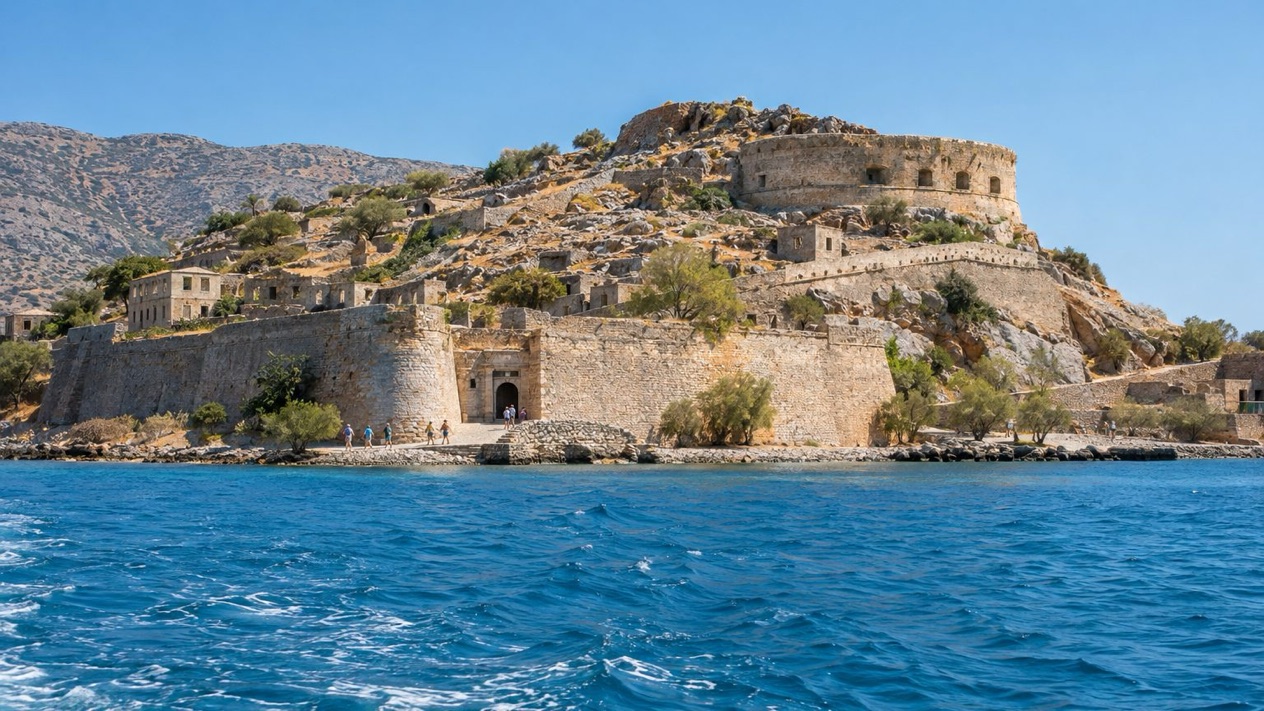
- Elounda: luxury resorts with views of the lagoon and the island-fortress of Spinalonga, and sheltered swimming. Its location makes day trips to western Crete less convenient.
- Plakias or Paleochora: a slower south coast pace with beaches and tavernas, reached on winding mountain roads and still busy in August.
- Hersonissos or Malia: big resorts and package-holiday nightlife, best skipped if you want village character or quiet evenings.
- Heraklion: handy for Knossos, the Archaeological Museum and airport or ferry logistics, less so for a beach stay.
What is there to do in Crete in August?
Beaches come first. On windy days, head for the sheltered coves near Chania. Agioi Apostoloi has shallow swimming areas and organized facilities that suit families. Marathi and Loutraki, east of Chania, usually have calm water and tavernas. Local families pack them in August, so arrive early.
Falasarna is big enough to feel roomy even now, and glorious for a late-afternoon swim and sunset, though its waves can run strong. Elafonisi is beautiful and exceptionally crowded. Leave Chania around 7 a.m. to get ahead of the tour buses and the parking crush at Elafonisi. Please stay on the marked paths and leave the sand, shells and plants in this protected area as you found them. On the south coast, Plakias and Damnoni are good alternatives to the busy Chania beaches, though Plakias can be very windy.
Boat excursions are available to Balos, Gramvousa, Spinalonga, Dia and beaches along the south coast. Wind can reshuffle schedules, so book ahead and stay flexible.
Get to Knossos at opening, ahead of the tour groups and the worst heat, then spend the afternoon in the air-conditioned Heraklion Archaeological Museum. After sunset, wander the harbors of Chania and Rethymno, at their liveliest on August evenings, and book dinner a few streets back from the busiest waterfront restaurants.
August is a poor month for a hiking-focused trip. The Samaria Gorge offers about 10 miles (16 km) of hiking through a unique biosphere reserve, and its narrow passages rise to almost 1,640 feet (500 meters). It's usually open in August, though extreme heat, strong winds or fire risk can lead to temporary closures. The full walk to Agia Roumeli takes five to eight hours and ends with a ferry from the village. Start as early as permitted, check the official gorge status and the ferry times before you set out, and bring proper footwear, plenty of water and sun protection. Imbros Gorge is shorter but still needs an early start. Forest fires are common in the dry summer and occasionally close roads, so follow local warnings and skip hikes in extreme heat. If walking is the point of your trip, May, early June or September are kinder.
Around August 15, many villages celebrate with panigiria, local festivals featuring live music, traditional dancing, food and wine. Ask locally which ones are on. Some are superb, though parking in small villages can be a headache.
What should you pack for Crete in August?
Pack light, breathable clothes, a hat and UV-blocking sunglasses. Bring broad-spectrum SPF 30+ sunscreen and reapply it every few hours and after swimming, since sand and water bounce the glare back at you. Add sturdy shoes for rough ground and ruins, and a reusable water bottle.
How do you get to and around Crete in August?
Flights are plentiful, with direct international service to both Chania and Heraklion and domestic links to Athens and Thessaloniki. Overnight ferries run to Piraeus, and seasonal high-speed boats run from Heraklion to Santorini, some continuing to other Cycladic islands. It's wise to reserve early for overnight cabins, space for your vehicle and Santorini crossings. If you're flying home from Athens, get there the day before.
A rental car is a great way to reach remote beaches, villages and the south coast, though August traffic and parking can make driving feel less relaxed than the map suggests. Greek law requires a valid U.S. driver's license, and insurance companies may require an international driver’s permit. Thieves in Greece break into rental cars to steal passports, valuables and luggage, so avoid leaving valuables inside. Look for a hotel with a clear, realistic parking arrangement.
Many trips don't require a car.
What do Americans need to enter Greece?
The U.S. State Department says U.S. citizens can enter Greece without a visa for stays of up to 90 days for tourism or business. Your passport should have at least three months of validity beyond your planned departure date, and a passport previously reported lost or stolen won't get you in. Be ready to show proof of sufficient funds and a return ticket or other evidence of departure if asked. Once you're on the island, carry your passport or another photo ID at all times.
Sources
- travelscoop.co.uk (https://travelscoop.co.uk/weather-august/greece/greek-islands/crete), checked October 18, 2026
- tripcrafters.com (https://www.tripcrafters.com/travel/crete-weather-and-best-time-to-visit-crete), checked October 18, 2026
- sovereign.com (https://www.sovereign.com/holidays/greece/crete/weather-in-crete/), checked October 18, 2026
- tui.co.uk (https://www.tui.co.uk/holidays/weather/europe/greece/crete/august.html), checked October 18, 2026
- santorinidave.com (https://santorinidave.com/crete-in-august), checked October 18, 2026
- U.S. Department of State (https://travel.state.gov/content/travel/en/international-travel/International-Travel-Country-Information-Pages/Greece.html), checked October 15, 2026
- U.S. Department of State (https://travel.state.gov/content/tsg_aem/us/en/home/international-travel/travel-advisories/destination.grc.html), checked October 15, 2026
- anek.gr (https://www.anek.gr/en-gb), checked October 15, 2026
- anek.gr (https://www.anek.gr/en-gb/destinations/chania), checked October 15, 2026
- Visit Greece (GNTO) (https://www.visitgreece.gr/en/islands/crete), checked October 15, 2026