
Cruise ships slide up to the downtown docks, the tram cars start their climb into the low cloud on Mount Roberts, and the whole waterfront smells of rain, coffee and wet spruce. Juneau is the capital of Alaska, a town pressed between a channel and steep, forested mountains, with no road leading out of it. It suits travelers who want glaciers, rainforest trails, Native culture and a bit of gold rush and statehouse history in the same day.
Where is Juneau and what is it like?
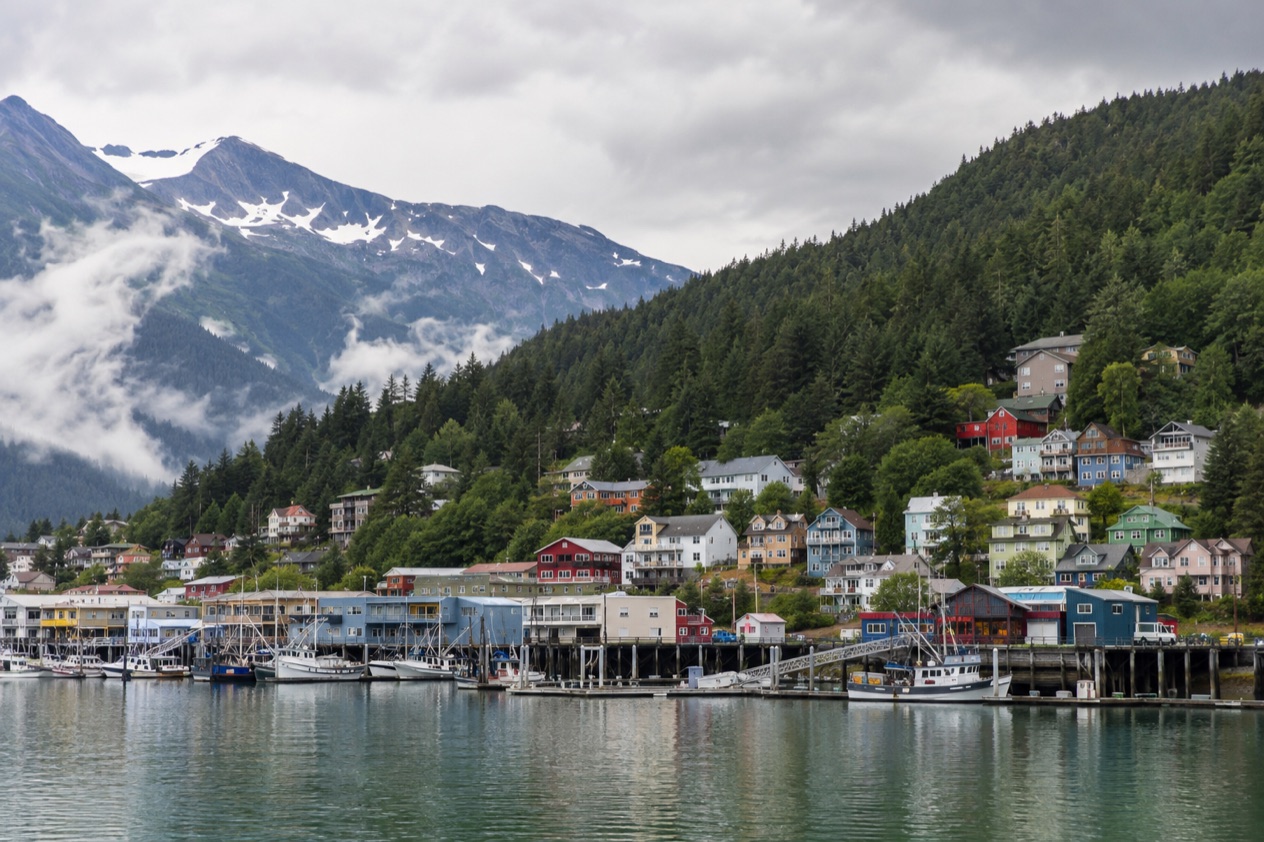
Juneau sits on Gastineau Channel in Southeast Alaska, along the Inside Passage, inside the Tongass National Forest, the largest temperate rainforest in the world. It is the capital of the state, yet it cannot be reached by land, only by air or sea. Across the channel lies Douglas, joined to downtown by the Juneau-Douglas Bridge, and Auke Bay, the harbor district, lies north of Mendenhall Valley.
The city is huge on the map and tiny on the ground. It is the largest capital in the country by land area, but only a sliver of that is urban, and much of the rest is ice cap, water and forest. About thirty-two thousand people live here, so downtown has the feel of a working small town where state employees, fishermen and tour guides share the same coffee counters.
The pace depends on the calendar. When the legislature meets from January into spring, lawmakers and lobbyists fill the sidewalks around the Capitol. From May to September, cruise ships bring a daily wave of visitors, sixteen thousand or more on busy days, and the waterfront shops and the tram line fill with them. Between those tides the town is quiet, rainy and a little introverted.
Juneau is for people who like their scenery wet and green and who are happy with a gray day, because the climate is Pacific temperate rainforest and rain is part of the deal. Hikers, wildlife watchers, history lovers and anyone curious about Tlingit culture will find plenty here. If you want a beach, hot sun or a nightlife scene, this is the wrong place, and the water is for looking at, not for swimming.
The name tells part of the story. Long before prospectors arrived, the Tlingit knew the area as Dzantik’i Héeni, the Base of the Flounder’s River, and fished it for thousands of years.
Gold found at the mouth of Gold Creek, with the help of Tlingit Chief Kowee, started the rush that built the town. Government later replaced mining as the main employer, followed by tourism, and the old mining past is still easy to read in the streets.
What is there to do in Juneau?
Juneau offers a glacier you can drive to, a tram that lifts you out of town into alpine country, wildlife outings on the water and a deep Native cultural scene. What sets it apart from other Southeast towns is how much of this sits within a few minutes of a real downtown, and how much of the surrounding country you can reach by trail, boat or floatplane.
Mendenhall Glacier
The glacier is 13 miles from downtown and close to the airport, and visitors can drive directly to it. It is a lake-terminating, calving glacier, and the visitor center and the surrounding area look out over the ice and the lake in front of it. The Forest Service runs the center as part of the Tongass National Forest and offers interpretive programs through the year for children and adults.
The center was built in 1962 and was the first Forest Service visitor center in the nation. The glacier itself is a long river of ice, and its face has been retreating, losing width and height, which gives the exhibits a note of urgency. The setting is a protected recreation area within the national forest, so alongside the ice you find forest and lakeshore paths.
Go for the quiet rather than for a checklist. Standing in front of the ice you may hear it crack, and you may see chunks fall, though calving is a chance rather than a show on schedule. It suits almost everyone, from families to photographers, and the airport’s closeness means it can fit between a flight and a hotel check-in.
The Goldbelt Tram up Mount Roberts
The tram starts on the downtown cruise ship docks and climbs through the rainforest in a six-minute ride to the Mountain House, about 1,800 feet up on a mountain that rises well beyond it. From the top you look over Juneau, Gastineau Channel, Douglas Island to the west, the Chilkat Mountains to the north and Kupreanof Island to the south.
At the top you find a theater, a nature center, a shop and Timberline Bar & Grill, a full-service restaurant and bar overlooking the town and the Inside Passage. The Skybridge links the terminal platform to the ridge and the summit facilities. Trails lead both up and down Mount Roberts, including one to a sub-alpine meadow with a 360-degree view.
In cloud the view closes in, but the forest on the way up stays atmospheric, and a walk down the mountain trails back to the waterfront is an option for those who like to finish on foot.
Wildlife outings
Wildlife tours are one of Juneau’s big draws, and visitors are likely to see bears, bald eagles or humpback whales, especially from April through November. The tours can also bring you close to black bears, Dall’s porpoises, sea lions, harbor seals, sea otters, mountain goats and Sitka blacktail deer. As always, the animals decide, so think of each sighting as a bonus.
The tours run through a landscape of channels and forested shore, so the trip is worth taking even on a quiet day. On the water, eagles perched on snags and seals hauled out on rocks are often the first reward, and a whale spout on the horizon can turn the whole boat’s attention at once.
Gardens, culture and the Capitol
Glacier Gardens in Mendenhall Valley is a rainforest garden known for its Flower Towers, upside-down trees turned into living sculptures with cascading blooms. Rainforest Adventure Tours use 18-passenger golf carts along a two-mile path through the Tongass, climbing to a panoramic view of the valley and the Chilkat Mountains. Afterward you can wander the lower botanical garden on foot.
For Native culture, Sealaska Heritage Institute has its headquarters in the Walter Soboleff Building downtown, with an ongoing exhibit on the first floor and a store selling art by Southeast Alaska Native artists. The Alaska State Capitol, completed in 1931 as a federal and territorial building, is open for self-guided tours Monday through Friday. The small, walkable historic district holds several more sights between them.
How many days do you need in Juneau?
A long weekend covers the essentials, and a week lets you reach the wild country around the town. With two or three days you can see the glacier, ride the tram, walk the historic district, tour the Capitol and take one wildlife outing, with a rainy spell absorbed by the visitor center, the museum-style exhibits and a long lunch.
A good short stay starts downtown on foot, because the historic district is small. Add the Capitol and the Sealaska exhibit, which are both indoors and useful when the sky opens. Give the tram a clear window if you can, since the view is the point, and save the glacier for a time when you want a slower, open-air hour or two.
With four or five days you can add the Mendenhall Valley gardens, one of the forest trails and a boat or floatplane excursion. The trail network is more than 250 miles, so there is room to hike for as long as you like, from forest walks near town to climbs above the tree line from the top of the tram.
A full week opens the larger trips. Tracy Arm, a fjord south of Juneau within the Tracy Arm-Fords Terror Wilderness, is usually reached by boat or floatplane and is known for its narrow walls and ice.
Admiralty Island, with its brown bear population and the Pack Creek viewing area, needs a Forest Service permit in summer, so plan that early. A ferry to Haines, about five hours on a regular boat, adds a different town and a road connection beyond.
Allow slack for the weather. Flights and float trips depend on cloud and wind, and a wet day is likelier than a dry one, so a day or two of margin keeps the trip from turning into a scramble.
Where to stay in Juneau
Visitors choose between downtown, the Mendenhall Valley and the Auke Bay area, and each suits a different kind of trip. Downtown puts you in the historic district, close to the waterfront, the tram base and the Capitol, and the compact layout means you can do a lot on foot. It also holds the oldest operating hotel in the state, a hotel and bar more than a century old, which gives a sense of the town’s mining days.
Downtown is also where the cruise crowds land between May and September, so the waterfront gets busy in those months, and the evenings after the ships leave feel noticeably calmer. Across Gastineau Channel, Douglas is reached by the bridge and gives a more residential angle on the town for those who want a bit of distance from the docks.
The Mendenhall Valley is the broad residential part of Juneau, near the airport and the glacier, with Glacier Gardens along its edge. It suits travelers who plan to head out to the ice and the trails and want to be near the road to them. Reaching downtown from here is a drive, so think of the valley as a base for the outdoors rather than for strolling.
Auke Bay is the harbor area north of the valley and the home of the ferry terminal, so it makes sense for those arriving or leaving on the Alaska Marine Highway or heading out on boats. It is quieter again, with a working-harbor feel, and it appeals to travelers who like to be near the water and the departure point rather than in the center of town.
There is no single wrong answer. Pick downtown for walking and sights, the valley for the glacier and gardens, and Auke Bay for boats and ferries, and remember that the main sights are spread across a few miles of one road system rather than gathered in one spot.
How do you get to Juneau and get around?
You reach Juneau by air or by sea, because no road connects it to the rest of Alaska or to the Lower 48. Juneau International Airport is just 10 minutes from downtown, and Alaska Airlines flies there daily all year from Seattle and Anchorage. Delta provides seasonal service as well. Since the town is remote, it pays to plan transportation early.
From Seattle, the only direct departure city in the Lower 48, the flight takes about two to two and a half hours nonstop. From Anchorage it is roughly an hour and a half in the air. Alaska Airlines also links Juneau to Ketchikan, Petersburg, Sitka and Yakutat, with seasonal service to Gustavus, which makes hopping around Southeast Alaska possible without leaving the air network.
The airport has a single runway and a separate seaplane landing area, a reminder that small planes are a normal way to get around here. Floatplanes from Juneau are one of the ways to reach Tracy Arm, and boats are the other, using Stephens Passage and Holkham Bay.
By sea, the Alaska Marine Highway System ferry terminal is in Auke Bay, 13.8 miles from downtown on Glacier Highway. Ferries run regularly throughout Southeast Alaska. The closest port with a road connection is Haines, and a catamaran ferry is the quicker way across than the regular boat.
Once you are in town, downtown is walkable, and the historic district is small enough to cover on foot. The tram base sits on the cruise docks, so it starts from the same walk. Mendenhall Glacier can be reached directly by road, and the airport is close to it. Beyond the road system, boats and floatplanes take over.
When is the best time to visit Juneau?
Summer, from May through September, is the main season, with the longest days and the full run of cruise ships. In July the afternoons reach the low-to-mid-60s on average and nights stay cool, and a stretch of warm weather can push highs well above that. Rain still turns up on roughly one day in three, in showers that come and go, so a jacket is part of the summer outfit.
The light is a big part of the draw. The longest day, June 21, brings 18 hours and 18 minutes of daylight, which leaves long evenings for walks and late boat trips. Wildlife viewing runs especially from April through November, which stretches the good window on both sides of the busy summer. Those shoulder months can mean fewer crowds on the waterfront while whales, bears and eagles are still around.
Winter is a different Juneau. January days are cold, with highs hovering near freezing and nights well below, and snow falls heavily at the airport. Winter temperatures average 29 degrees, and the days are short. It is the season of the legislature, when the town is busy with government business from January to April or May, and the Capitol is at its liveliest.
Culture sets some dates. Celebration, the gathering of Tlingit, Haida and Tsimshian peoples, welcomes thousands of Native people in June of even-numbered years, with dancing, regalia carrying years of clan history and canoes arriving to songs and drumming. Check the city’s events calendar to line up your visit with something happening, as the town hosts many annual events.
Rain is the constant. Juneau sees precipitation on about 230 days a year, so no month is dependable for dry weather, and a good trip plans for it rather than against it. The best months for travelers are the early summer ones, for the long light and open services, with late spring and early fall as the quieter option.
Good to know before you go
Juneau is in the Alaska Time Zone, one hour earlier than Pacific Time, and it observes Daylight Saving Time, which matters if you are lining up flights from Seattle. The town is a regular U.S. destination with no formalities for American travelers, so your planning goes into the weather, the transportation and the season. Pack for rain and layers in any month, and if you are heading to the wild country around town, remember that plans there can change with cloud and wind.
Wildlife is wild. Bears, whales and eagles are chances rather than promises, and rules for viewing areas such as Pack Creek on Admiralty Island come from the Forest Service. Follow what the agency and your tour operator tell you, and give the animals room.
Sources
- Travel Juneau (https://www.traveljuneau.com/), checked October 11, 2026
- Wikivoyage, Juneau (https://en.wikivoyage.org/wiki/Juneau), checked October 11, 2026
- Wikipedia, Juneau, Alaska (https://en.wikipedia.org/wiki/Juneau,_Alaska), checked October 11, 2026
- Wikipedia, Juneau International Airport (https://en.wikipedia.org/wiki/Juneau_International_Airport), checked October 11, 2026
- Goldbelt Tram, Juneau (https://mountrobertstramway.com/), checked October 11, 2026
- Glacier Gardens Rainforest Adventure, Juneau (https://www.glaciergardens.com/), checked October 11, 2026
- Wikipedia, Mendenhall Glacier (https://en.wikipedia.org/wiki/Mendenhall_Glacier), checked October 11, 2026
- Wikipedia, Mount Roberts Tramway (https://en.wikipedia.org/wiki/Mount_Roberts_Tramway), checked October 11, 2026
- Wikipedia, Tracy Arm (https://en.wikipedia.org/wiki/Tracy_Arm), checked October 11, 2026
- Wikipedia, Endicott Arm (https://en.wikipedia.org/wiki/Endicott_Arm), checked October 11, 2026
- Wikipedia, Admiralty Island (https://en.wikipedia.org/wiki/Admiralty_Island), checked October 11, 2026
- Wikipedia, Tlingit (https://en.wikipedia.org/wiki/Tlingit), checked October 11, 2026
- Sealaska Heritage Institute (https://www.sealaskaheritage.org/), checked October 11, 2026
- Wikipedia, Tongass National Forest (https://en.wikipedia.org/wiki/Tongass_National_Forest), checked October 11, 2026
- Wikipedia, Southeast Alaska (https://en.wikipedia.org/wiki/Southeast_Alaska), checked October 11, 2026
- Wikipedia, Climate of Alaska (https://en.wikipedia.org/wiki/Climate_of_Alaska), checked October 11, 2026
- NOAA NCEI, U.S. Climate Normals 1991-2020, monthly (https://www.ncei.noaa.gov/access/services/data/v1?dataset=normals-monthly-1991-2020&stations=USW00025309), station Juneau Intl Ap, elevation 16 feet, checked October 11, 2026
All our pages
When to go
- Best Time to Visit Juneau: Weather by Month, Wildlife Season and Cruise Crowds
- Juneau in January: Weather, Short Days, the Legislature and What to Do
- Juneau in February: Weather, Winter Days and What to Do
- Juneau in March: Weather, Snowy Mountain Views and Things to Do
- Juneau in April: Weather, the Alaska Folk Festival and What to Do
- Juneau in May: Weather, Long Days, Tlingit Culture and What to Do
- Juneau in June: Long Daylight, Mendenhall Glacier, Wildlife and Weather
- Juneau in July: Weather, Glaciers, Whales and a Two-Day Plan
- Juneau in August: Rainy Days, Mendenhall Glacier, Mount Roberts and Tracy Arm
- Juneau in September: Rain, Fall Light, Tlingit Culture and Things to Do
- Juneau in October: Rain, Short Days and a Quiet Capital
- Juneau in November: Weather, Wildlife and What to Do in Alaska's Capital
- Juneau in December: Weather, Short Days, Mendenhall Glacier and What to Do
Things to do
- Things to Do in Juneau: Mendenhall Glacier, Mount Roberts Tram, Whale Watching and Day Trips
- Day Trips from Juneau: Mendenhall Glacier, Tracy Arm, Haines and Glacier Bay
- 3 Days in Juneau: Downtown History, the Mount Roberts Tram and Mendenhall Glacier
- Juneau Airport to Downtown: Arriving by Air, the Glacier Next Door and Getting Oriented
Where to stay
Getting there
- Juneau from Seattle: Nonstop Flight, Ferry from Bellingham and What to Do on Arrival
- Juneau International Airport (JNU): Airlines, Seaplane Flights and Getting to Downtown
- Juneau to Glacier Bay: Flights, the Ferry to Gustavus and Bartlett Cove
- Juneau to Sitka: Ferry, Flights and What to Know Before You Go
- Juneau to Skagway: Ferry Routes, Flights and What to Know Before You Go