
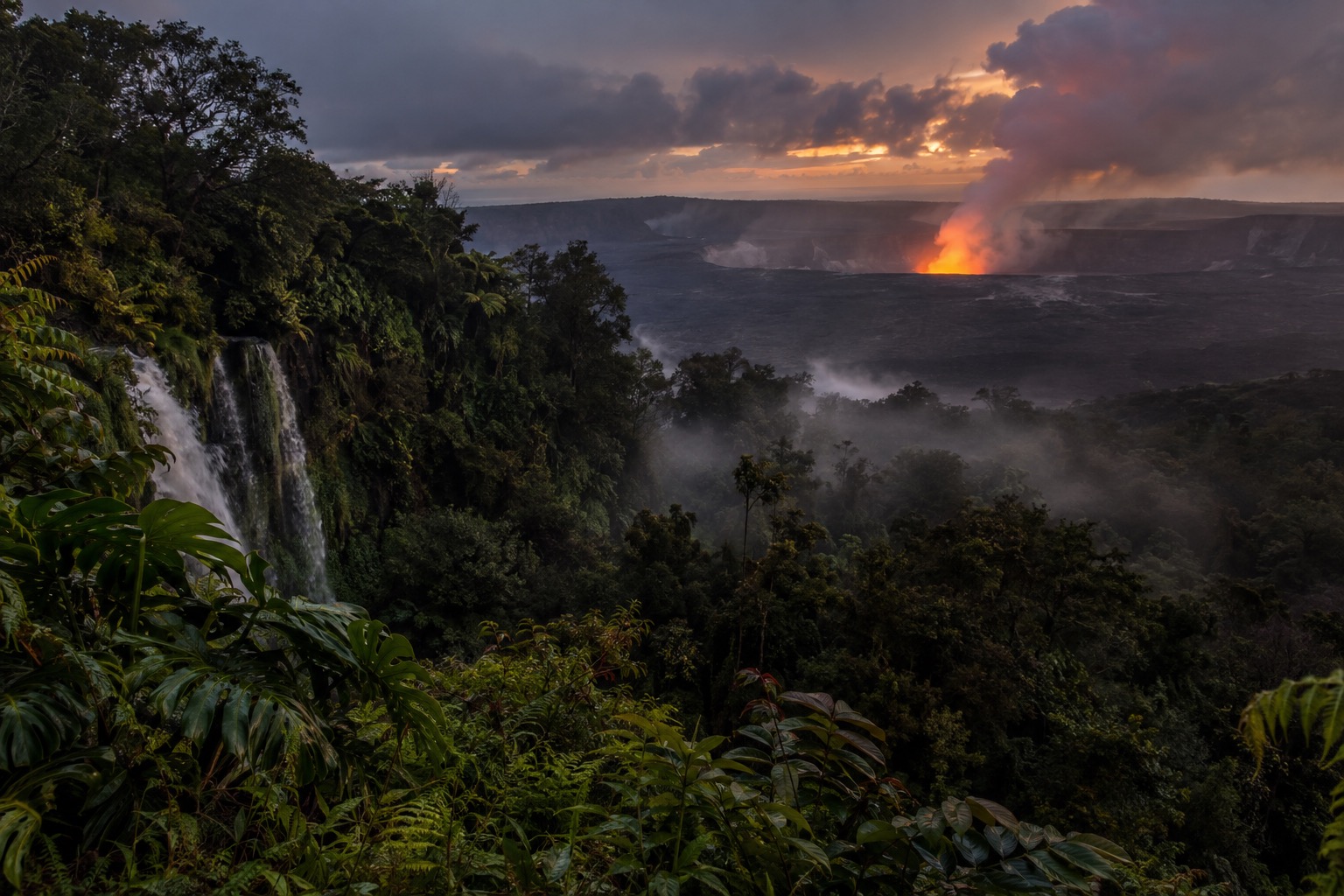
In October, the steam vents along Crater Rim Drive curl into cool morning air, and the ohia trees at the edge of the rainforest are bright with red lehua blossoms. Kilauea’s caldera sits wide and quiet under shifting cloud, and the park has a hush that the busy summer weeks do not. This is a month for walking through fern forest and across old lava, then watching the crater glow fade into a very dark night sky.
What is the weather like in Hawaii Volcanoes National Park in October?
At the crater rim in October, expect mild, cool conditions and regular rain showers that pass through quickly instead of lingering for days. Perched at a high elevation on the slopes of Kilauea, the park headquarters has weather that bears no resemblance to what you find at the coast’s beaches.
| Month | Average high (°F) | Average low (°F) | Rain days |
|---|---|---|---|
| September | 73.2 | 55.4 | 12.2 |
| October | 72.4 | 55.1 | 13.2 |
| November | 70.3 | 54.0 | 15.1 |
The day usually starts with the best visibility, when gentle light falls across the caldera and the air is cool enough that you will want a fleece. Clouds tend to build by afternoon and bring passing showers, sometimes heavy for a short spell, followed by patches of sun. Rain is a regular companion here, since this is a wet, windward-influenced upland, so plan every walk with a jacket in the daypack.
Evenings turn properly cool, and after dark the summit area feels like a mountain, not a tropical beach. Days are a little under twelve hours long, so daylight is enough for a full outing, but you will want to be on the trail early. Lowland stretches toward the coast are warmer and drier, so a drive down Chain of Craters Road feels like stepping into a different climate.
What to do in Hawaii Volcanoes National Park in October
October has no big festival inside the park, and that is part of its charm. The season is quieter, the forest is lush after the rains, and the lehua blossoms on the ohia trees give the rainforest trails touches of red.
This is a good month for long walks and slow stops at the overlooks. Hawaiian tradition holds that the volcano is the home of Pele, so visitors treat the land with respect, stay on marked paths and leave lava rock where it lies.
Kilauea Caldera and Crater Rim Drive
The loop along Crater Rim Drive is the classic introduction, with overlooks onto the vast caldera, steam vents and sulfur banks. You can stop at the Steam Vents and the Sulphur Banks, and walk short paths that are easy for most travelers. Whether you can see any glow or active lava depends entirely on what the volcano is doing, so check the park’s current notices and the ranger updates at the visitor center before you count on it.
The best moments are early morning, when the air is still and the light is soft, and after dark, when the sky can be very clear above the crater. Expect clouds to roll in over the rim in the afternoon. Even if you’re only stopping briefly, pack an extra layer, since a T-shirt won’t stand up to the wind at the overlooks.
Thurston Lava Tube and the rainforest
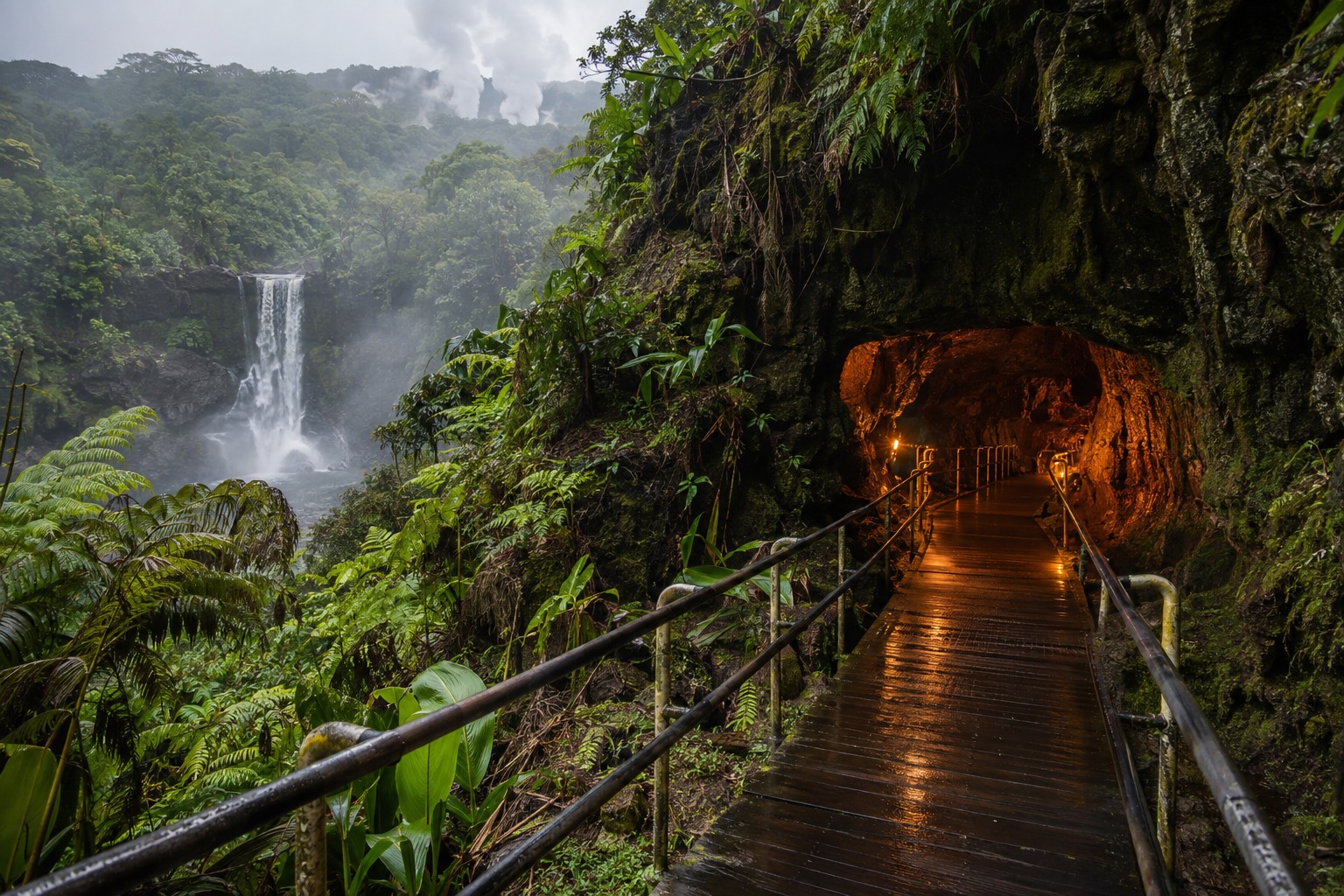
A short walk by tree ferns covered in drips brings you into the Thurston Lava Tube, then on through a corridor under the forest floor that lava once occupied. The surrounding rainforest is loud with birdsong in the morning, and October’s moisture keeps everything green and glistening. It suits families and anyone who wants a gentle walk without much climbing.
Go early, before tour groups arrive, and keep your voice low to hear the birds. The path can be slick after rain, so shoes with grip help. If a shower catches you, the forest canopy gives some shelter, and the drizzle adds to the atmosphere.
Chain of Craters Road and the coast
The road descends from the cool summit toward the sea, crossing old lava flows that look like black, frozen rivers. Along the way you pass craters, lookouts and, at the bottom, dramatic sea cliffs where the waves pound the rock. The change in temperature as you drop is striking, so you can peel off the fleece by the coast.
The sea here is rugged and not a swimming beach. Treat the cliffs with care and stay on marked paths, since the edges can be unstable and the surf is powerful. The coast is best with a clear morning, and there is little shade on the lava, so a hat and water matter.
For food, the park has little beyond a lodge restaurant, and most travelers eat in nearby Volcano Village, where small cafes, bakeries and a few restaurants serve plates of local fare, soups and baked goods that suit a cool day. After a damp hike, a hot bowl of something or a cup of local coffee tastes better than it has any right to. If rain settles in, the visitor center, the Volcano Art Center gallery and the village cafes make good indoor stops, and the mist often lifts for the evening.
A two-day itinerary for Hawaii Volcanoes National Park in October
By midday the clouds usually build, so a lunch at a cafe in Volcano Village fits well.
In the afternoon, drive the rest of Crater Rim Drive at an easy pace, stopping where the view opens. Stay for the evening, when the sky darkens and the crater can glow or the stars can come out, depending on conditions. Dinner in the village is warm and unhurried.
Day 2 heads downhill. Leave at dawn for Chain of Craters Road, stopping at the craters and old lava flows on the way and reaching the shore before the heat builds. Walk out toward the sea cliffs and arches, with a hat and plenty of water.
Climb back up for a late lunch, then spend the afternoon on a rainforest trail or in the Volcano Art Center gallery. If rain closes in, make it an indoor afternoon with the visitor center exhibits and a long coffee in the village. Sunset comes in the early evening, so be on your way before dark.
Is Hawaii Volcanoes National Park busy in October?
October is one of the quieter months here, with fewer crowds than summer or the winter holidays. The park feels roomier, parking at the popular overlooks is easier, and the trails have more space.
Visitors are a mix of independent travelers, couples and some families, since school is in session on the mainland. In Volcano Village and the surrounding towns, lodging is usually simpler to come by, but the supply of small inns and cabins is limited and those still book up on weekends. Rental cars are needed here, because the park is spread out and there is no easy way around without one.
Book small lodgings a little ahead as a habit, and earlier if you want a specific cabin or view. Because village eateries are tiny, you will have better luck getting a dinner table Monday through Friday. The holiday weeks come later in the year, and those are the ones to reserve early.
What to pack for Hawaii Volcanoes National Park in October
Pack for a cool, damp mountain and a warm coast in the same day.
- A light rain jacket, since showers come and go through the afternoon.
- A fleece or warm layer for the cool mornings and evenings at the rim.
- Sturdy shoes with grip for wet trails and rough lava.
- A hat and water for the sunny, shadeless coastal stretch.
Good to know before you go
The Central Pacific hurricane season runs from June 1 to November 30, so October is still inside it, and a storm can bring heavy rain to the island. A car is the way to get around, and the lodging you book in Volcano Village keeps you close to the park. Lodging is subject to the state and county accommodation taxes below.
| Tax | Rate | Who pays |
|---|---|---|
| State Transient Accommodations Tax | 11.00% | Guests on lodging |
| County of Hawaii Transient Accommodations Tax | 3% | Guests on lodging |
Hawaii Volcanoes National Park in October vs September and November
Moving the trip to September brings slightly warmer days and a little less rain, with a similar quiet feel. The forest is a touch drier and the clouds lift more often, which helps for views at the caldera.
November is cooler and wetter, with more rainy days, and it edges toward the winter holidays and busier weeks later on. The hurricane season ends at the end of that month, and the evenings get chillier at the rim.
If you want the driest views and warmest layers, lean toward September. If you do not mind rain and want quiet trails, October suits well, and November is for those who like moody, misty days.
Is October a good time to visit Hawaii Volcanoes National Park?
Yes, October is a good time for walkers, photographers and anyone who likes quiet trails and a cool, misty mountain. It suits travelers who accept some rain and dress in layers.
It is less ideal for those who want warm beach days or guaranteed clear skies at every overlook, since showers are frequent. If rain is a dealbreaker, a drier side of the island is a better base for sunbathing.
Once you arrive, stop at the visitor center first to check what’s open and how conditions look, then take the rim drive before the morning haze lifts. What makes October special here is the quiet: red lehua in the forest, steam in the cool air and a crater that feels entirely your own.
Sources
- NOAA NCEI, monthly normals 1991-2020, station USC00511303, checked September 8, 2026
- sunrise-sunset.org, sunrise and sunset calculated for the 15th of the month, checked September 8, 2026
- Hawaii Department of Taxation, Tax Announcement No. 2025-03 (Transient Accommodations Tax Law Changes from 2025 Legislative Session), files.hawaii.gov/tax/news/announce/ann25-03.pdf, checked September 24, 2026
- County of Hawaii, Department of Finance, Transient Accommodations Tax (TAT) page, hawaiicounty.gov/departments/finance/transient-accommodations-tax-tat (live returned HTTP 403 on request, read via Internet Archive Wayback Machine snapshot dated August 14, 2026, same official content), checked September 25, 2026
- Hawaii Department of Taxation, County Surcharge on General Excise and Use Tax page, tax.hawaii.gov/geninfo/countysurcharge/, checked September 25, 2026
- NWS Honolulu / Central Pacific Hurricane Center, « 2026 Central Pacific Hurricane Season Outlook », weather.gov/hfo/hurricaneOutlook2026, checked September 24, 2026
To plan your stay
- Things to Do in Hawaii Volcanoes National Park: Kilauea Iki, Lava Tube, Petroglyphs and Day Trips
- Best Time to Visit Hawaii Volcanoes National Park: Weather, Crowds, Rain and Seasonal Events
- Hawaii Volcanoes National Park in September: Weather, Crater Walks and Two Days Around Kilauea
- Hawaii Volcanoes National Park in November: Weather, Kilauea Crater Walks and a Two-Day Plan