
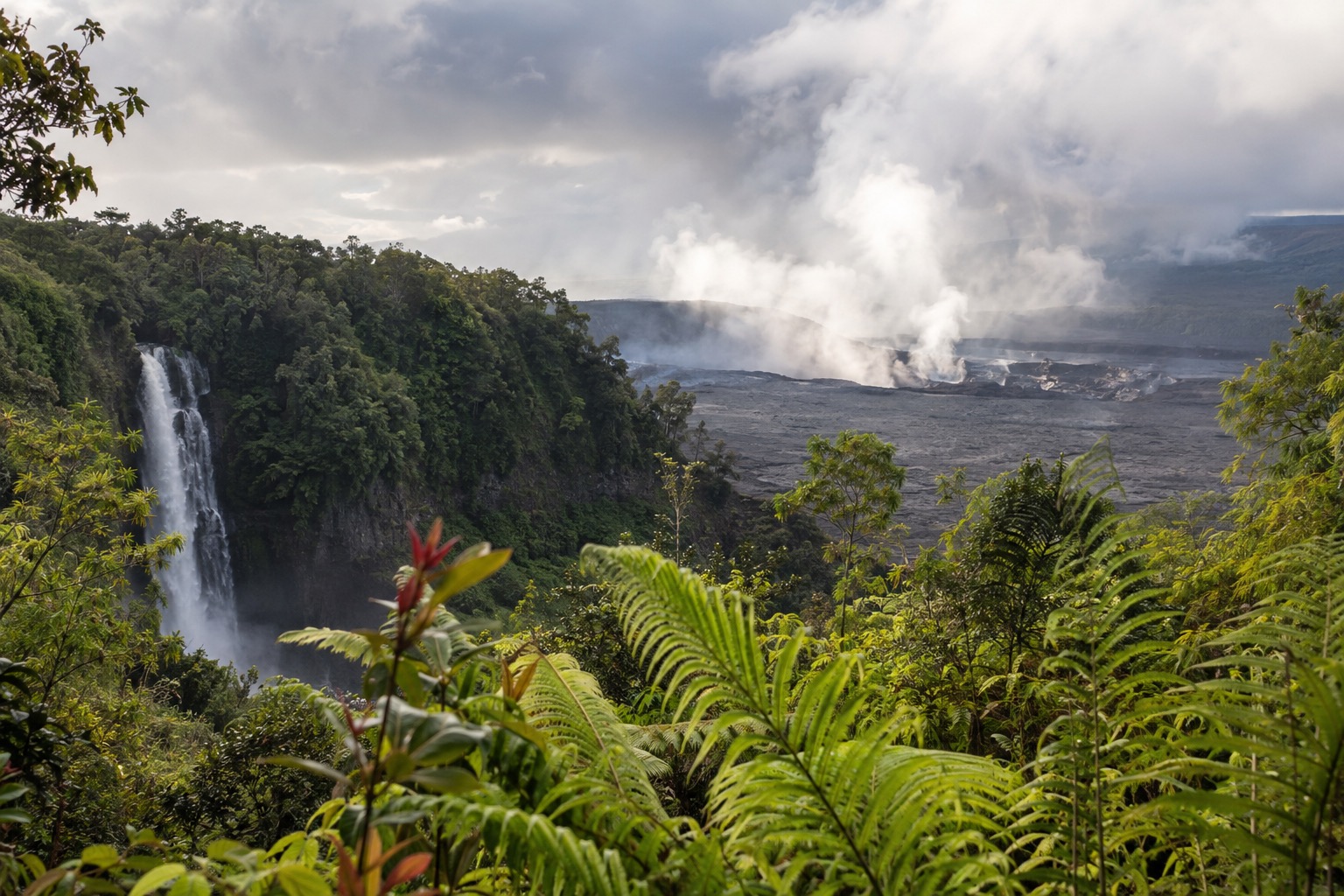
In May, the morning mist lifts off the rim of Kilauea and the smell of wet ohia and fern drifts across the Crater Rim Drive. Steam rises from vents along the road while red-and-yellow ohia blossoms and the calls of native honeycreepers fill the forest.
The park sits cool and green above the island’s heat, and May gives it a calmer pace than the winter holidays. It suits hikers, photographers and anyone who wants to stand at the edge of a living volcano.
What is the weather like in Hawaii Volcanoes National Park in May?
May is cool, green and changeable at the park’s high elevation, with mild days, chilly nights and rain that comes and goes through the day. Conditions tilt a little drier than the spring months before it.
| Month | Average high (°F) | Average low (°F) | Rain days |
|---|---|---|---|
| April | 68.3 | 51.9 | 17.1 |
| May | 70.5 | 53.0 | 13.3 |
| June | 71.3 | 54.3 | 14.2 |
Mornings are often the clearest hours, with soft light over the crater and a good chance of open views across the caldera. By noon the clouds usually gather, and the rain that comes next seldom lasts long, yet it can arrive with force and cross the rim in just minutes. A day with a downpour that lasts from breakfast to dinner is not common, but a gray, misty stretch is part of the park’s character.
The park sits on the windward, wetter slopes of the mountain, so the rain falls mostly on the upland rim and the rainforest. The coast down the Chain of Craters Road is lower, warmer and often drier, and it can feel like a different climate within the same day. Evenings cool down quickly once the sun drops, and nights call for a real jacket.
Dress in layers: a rain shell, a warm fleece and sturdy shoes for wet lava rock. Daylight lasts a little over thirteen hours, which leaves room for a long morning on the trails and an evening watching the sky darken over the crater.
What to do in Hawaii Volcanoes National Park in May
May is a good month for walking. The air is cool enough for long hikes, and the forest is lush after the wetter months.
Lei Day on May 1 brings flower garlands and hula performances across the islands, and the Big Island’s communities often celebrate with music, crafts and school programs. In the park, the local hula tradition is deeply tied to the crater, which is sacred to Native Hawaiians as the home of Pele, so the best way to take part is to listen and observe with respect.
The park rarely feels crowded in May, which makes the main viewpoints more pleasant. Whether lava is visible in the crater changes from week to week, so treat a glow at night as a chance, not a promise. The park’s visitor center and rangers are the place to ask what is open and what is visible that day.
Kilauea caldera and Crater Rim Drive
The loop of Crater Rim Drive is the park’s backbone, with pullouts at steam vents, overlooks and the edge of the great caldera. Start at the visitor center and the nearby museum, then follow the road past the Steam Vents and the Sulphur Banks, where the air smells of rotten eggs and yellow crystals stain the rock. The scenery shifts from green fern forest to bare black lava within a few minutes.
Go early, while the clouds are high and the light is soft. The viewpoints facing the caldera are best before midday haze or rain arrives. Bring layers, since wind on the rim makes it feel colder than the thermometer says, and a rain jacket stays useful even on a sunny start.
Thurston Lava Tube and the rainforest
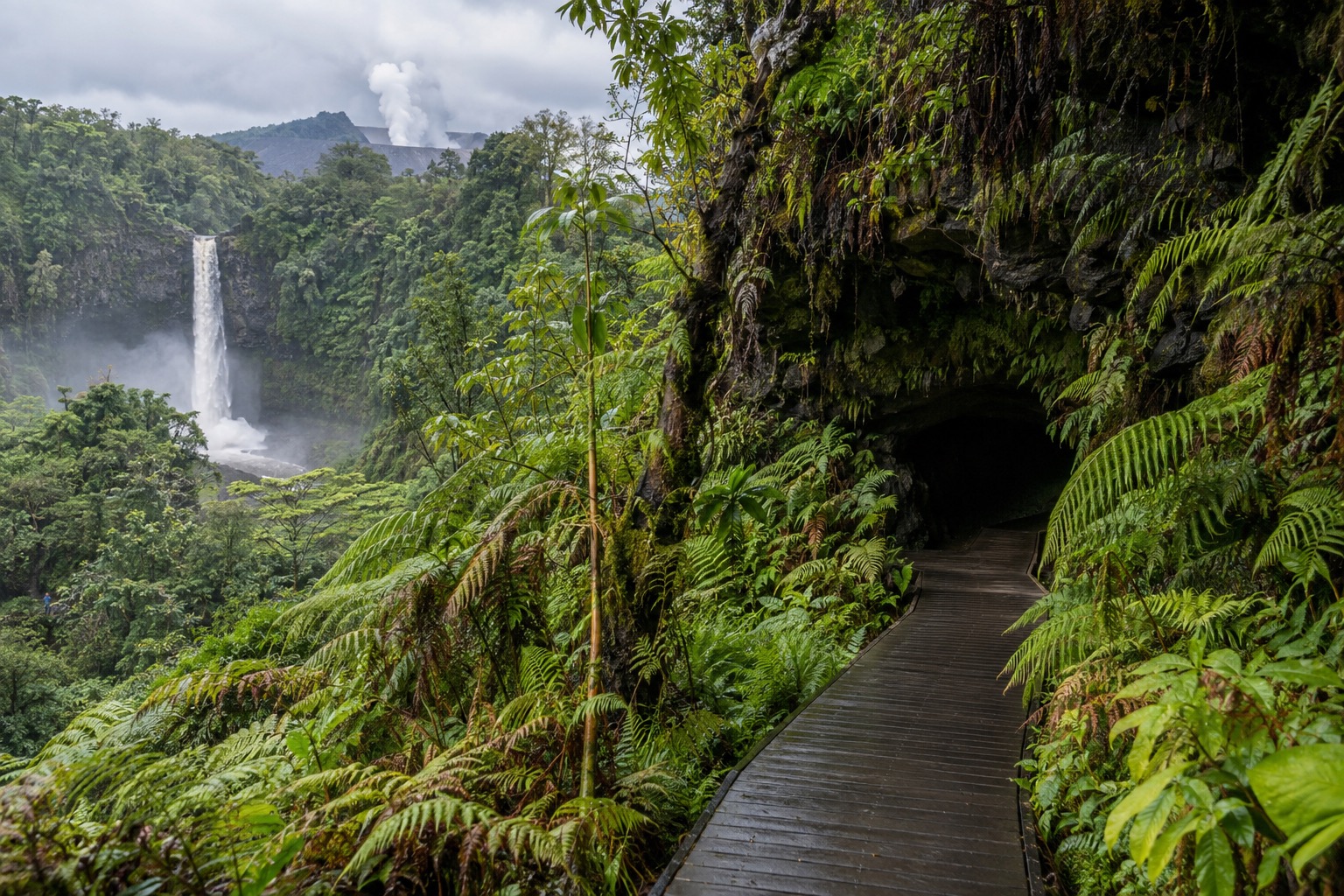
A brief stroll through a fern forest slick with moisture leads to Nahuku, or the Thurston Lava Tube, a cavern created by molten rock. Inside, the tunnel is dim and damp, with a ceiling of dark rock and a floor that can be wet. Birdsong in the forest outside is one of the park’s quiet pleasures, especially in the early morning.
Families will find it a good fit, along with anybody after a simple excursion in between longer treks. Go when a tour bus has not just arrived, and wear shoes with grip. A flashlight or phone light helps in the darker stretches.
Chain of Craters Road and the coast
This road descends from the cool rim toward the sea over old lava flows, with pullouts that show craters, black fields and then a dramatic drop at the coast. It is a change in climate as well as scenery, since the lower stretch is warmer and more exposed. At the end, the sea arches and cliffs show how the waves carve the young lava shore.
Plan a half day for the drive and stops, with water and sun protection for the lower part. Ocean swells here can be heavy, so keep well back from the cliff edges and watch the surf from above. The Pu’u Loa trail’s petroglyphs share a much earlier tale of those who once called this place home.
Take the evening to watch the crater’s glow from the Kilauea overlooks if the activity allows, and linger after dark when the stars come out over the rim. Fruit stands and bakeries in Volcano Village, just outside the park gate, are the place for a warm drink and a slice of local pie after a cool day. Plates of loco moco, Portuguese sweet bread and fresh Big Island coffee are the usual comforts.
A two-day itinerary for Hawaii Volcanoes National Park in May
Around midday, stop for lunch in Volcano Village, where small cafés and bakeries serve sandwiches, plate lunches and hot coffee.
In the afternoon, when showers are most likely, walk through Thurston Lava Tube and the surrounding fern forest, which looks lovely under a gray sky. Return to the rim in the evening for the dusk light and, if activity allows, the glow after dark. The temperature drops fast, so bring your jacket.
Day 2 is for the coast. Start out early on Chain of Craters Road, pausing at the craters and lava fields along the route, and get to the sea arch and cliffs before the air warms up. Walk the petroglyph trail in the morning, then eat a picnic lunch near the coast.
If the weather turns, spend the afternoon indoors at the visitor center exhibits and the nearby museum, or browse the galleries and craft shops in Volcano Village. Finish with dinner in the village and an early night, since the cool upland air makes for good sleeping.
Is Hawaii Volcanoes National Park busy in May?
May is moderately busy, calmer than the winter holidays and summer family weeks, with the park’s main viewpoints often easy to enjoy. Mainland spring breaks have mostly ended, and school summer vacations have not yet begun, so the crowds stay manageable.
The busiest hours are late morning and midday, when tour groups arrive at the visitor center, the Thurston Lava Tube and the main overlooks. Early mornings and late afternoons feel quieter, and the trails away from the main road are often nearly empty. Evenings at the crater overlooks draw visitors when there is a glow, so expect more people after sunset on a clear night.
Rooms in Volcano Village and the nearby towns are limited, with many small inns and vacation rentals, so it is wise to book early for the Memorial Day weekend and any holiday week. In quieter weeks, a booking a bit closer to the trip is usually fine. Rental cars are a must for this park, and reserving one ahead is a good habit, particularly if you are flying into Hilo or Kona.
What to pack for Hawaii Volcanoes National Park in May
The park is high, cool and damp, so pack for changing conditions rather than for a beach vacation.
- Pack a light rain jacket since afternoon showers are common.
- A warm fleece or sweater for cool evenings on the rim
- Sturdy closed shoes with grip for wet, sharp lava rock
- A refillable water bottle for long walks
- For exploring the lava tube and watching at night, bring a flashlight or headlamp.
- Mineral sunscreen and a hat for the lower coast
Good to know before you go
May falls before the Central Pacific hurricane season, which runs from June 1 to November 30. A car is the practical way to move around the park and its roads. Staying in the area means paying state and county accommodation taxes in addition to the room rate.
| Fee | Amount | Who pays |
|---|---|---|
| State Transient Accommodations Tax | 11.00% | Guests staying in paid lodging |
| County of Hawaii accommodations tax | 3% | Guests staying in paid lodging |
Hawaii Volcanoes National Park in May vs April and June
Moving the trip to April means more rain, with the wetter days leaving the rim in cloud more often and the evenings a touch cooler. The park can feel greener and quieter, and mainland spring breaks may still fill some rooms early in the month. Travelers who love moody, misty forest walks will not mind.
June is a little warmer and a bit drier, and it brings the start of summer family travel and the opening of the Central Pacific hurricane season. Rooms near the park tend to fill sooner as school lets out, so booking ahead matters more.
Choose May if you want the balance: fewer showers than April, fewer crowds than June and long daylight for the trails. Shift earlier for the lushest forest and quiet trails, or later if you want slightly warmer days and do not mind more company.
Is May a good time to visit Hawaii Volcanoes National Park?
Yes, May is a very good time for hikers, photographers and families who like cool air and green scenery over beach weather. The days are long enough for a full circuit of the rim and a drive to the coast, and the park is far from its busiest.
Those who want hot, dry sunshine should choose a beach resort on the leeward coast instead, since the upland park stays cool and often cloudy. Visitors who dislike layers and wet shoes will be happier elsewhere.
When you get there, make the visitor center your first stop so you can check with rangers about what is open and how the crater is behaving that day, then build your walks around that. What makes May special here is the soft green of the forest, the cool air on the rim and the chance of a red glow in the crater as the evening light fades.
Sources
- NOAA NCEI, monthly normals 1991-2020, station USC00511303, checked September 8, 2026
- sunrise-sunset.org, sunrise and sunset calculated for the 15th of the month, checked September 8, 2026
- Hawaii Department of Taxation, Tax Announcement No. 2025-03 (Transient Accommodations Tax Law Changes from 2025 Legislative Session), files.hawaii.gov/tax/news/announce/ann25-03.pdf, checked September 24, 2026
- County of Hawaii, Department of Finance, Transient Accommodations Tax (TAT) page, hawaiicounty.gov/departments/finance/transient-accommodations-tax-tat (live returned HTTP 403 on request, read via Internet Archive Wayback Machine snapshot dated August 14, 2026, same official content), checked September 25, 2026
- Hawaii Department of Taxation, County Surcharge on General Excise and Use Tax page, tax.hawaii.gov/geninfo/countysurcharge/, checked September 25, 2026
- NWS Honolulu / Central Pacific Hurricane Center, « 2026 Central Pacific Hurricane Season Outlook », weather.gov/hfo/hurricaneOutlook2026, checked September 24, 2026
To plan your stay
- Things to Do in Hawaii Volcanoes National Park: Kilauea Iki, Lava Tube, Petroglyphs and Day Trips
- Best Time to Visit Hawaii Volcanoes National Park: Weather, Crowds, Rain and Seasonal Events
- Hawaii Volcanoes National Park in April: Cool Crater Rims, Showers and Steam Vents
- Hawaii Volcanoes National Park in June: Weather, Crater Walks and a Two-Day Plan