
In August, the road into Hana is lined with fruit stands, dripping ferns and bends where the sound of a waterfall reaches you before you see it. The town itself stays small and unhurried, with a single main road, a ballpark and a scatter of lunch spots, and the Pacific is right there beyond the pastures. August offers long light, a warm sea and the green of East Maui at full volume, for travelers who come for the journey as much as the destination.
What is the weather like in Hana in August?
Warm, humid and green: August in Hana feels like a mild summer day that never gets oppressive, with showers drifting in off the ocean and sunshine in between. The table puts it next to its neighbors.
| Month | Average high (°F) | Average low (°F) | Rain (inches) | Sea (°F) |
|---|---|---|---|---|
| July | 81.7 | 71.2 | 5.49 | 79.2 |
| August | 82.9 | 71.7 | 5.99 | 79.5 |
| September | 82.5 | 70.3 | 6.12 | 80.2 |
On Maui’s windward side, Hana lies where moisture is driven by the trade winds up against Haleakala’s slopes. That is why the landscape is so lush, and why rain here is a matter of timing rather than a question of whether. Showers tend to be brief and often come in the night or early morning, then give way to bright, breezy stretches. The dry, sunny coast of Wailea is a different world from here.
Mornings are soft and fresh, a good time for a waterfall or a coastal walk. By afternoon, it is warm enough to wear shorts and take a dip, while the trade winds stop the warmth from turning oppressive. Evenings stay mild, so a light layer is plenty, though a thin rain jacket earns its place in the bag.
The light is generous this month, with about thirteen hours of daylight, so there is time for the slow drive, a long lunch and still a beach stop before dusk. Outside the official hurricane season, which runs from June 1 to November 30, nothing applies, but August falls inside it, so keep an eye on forecasts when you plan.
Can you swim in Hana in August?
You can count on a long, comfortable swim, because marine data show the water off Hana at about 80°F, just a touch above the average for the whole day.
Summer is the gentler season for most of Maui’s north and east shores, as the big winter swells stay away. Still, the shoreline at Hana faces the open sea, and the surf and breeze shape how things shift.
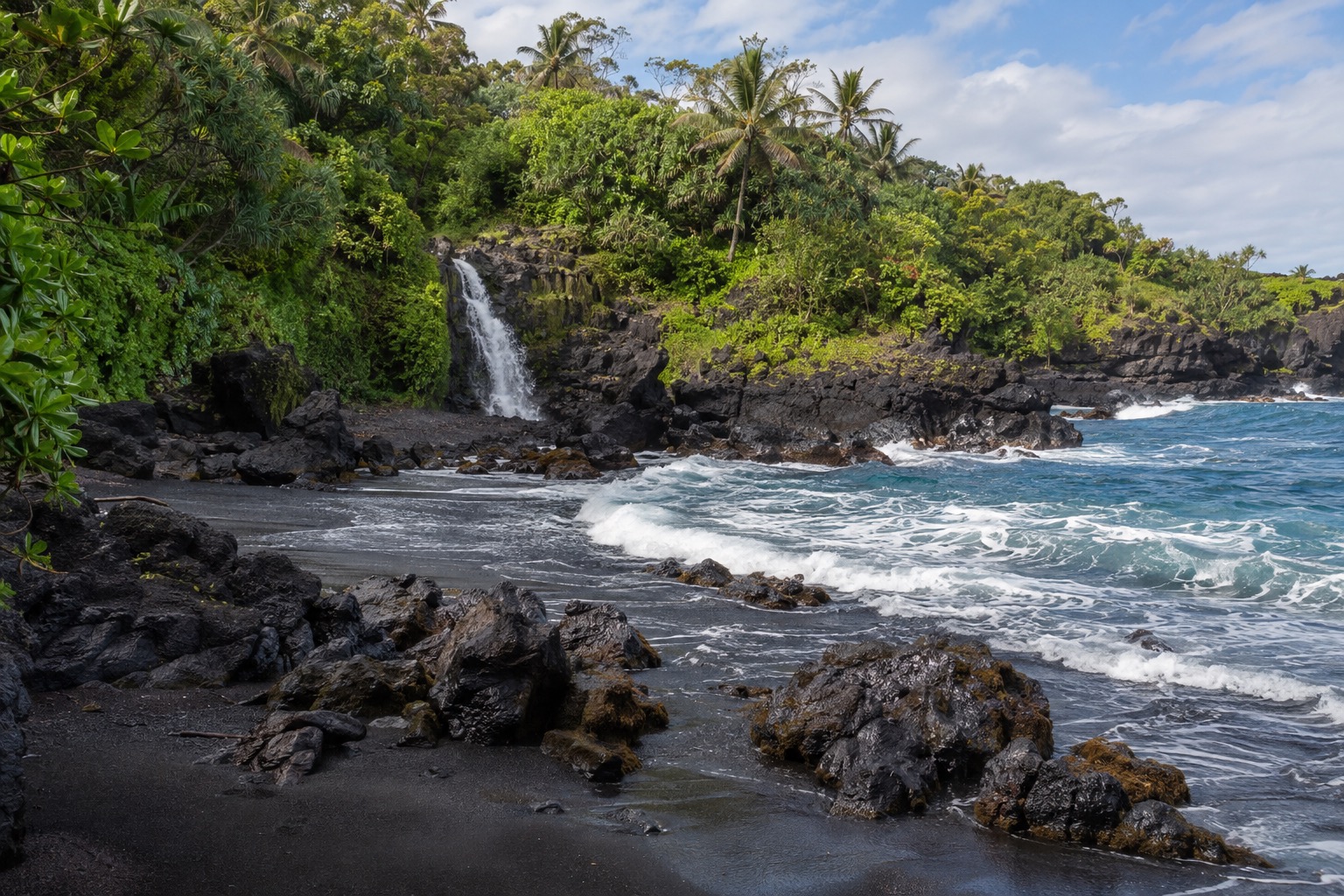
Hana Bay, with its small beach beside the pier, is the usual place for families and for a quiet morning dip. Red Sand Beach (Kaihalulu) and the black sand of Waianapanapa are dramatic to look at, but waves and currents can be strong on this coast, so watch the sea for a while before getting in.
Snorkelers do best on mornings when the water is clear and the surf is low. Follow the beach signs and any lifeguard on duty, because they decide what is safe that day. Bring a rash guard, a mask and a towel, and use only mineral sunscreen, the only kind Maui County allows to be sold or distributed without a prescription.
What to do in Hana in August
August is a month for slow days. There is no single festival to plan around, so the pleasures are the ones Hana offers all year, made easier by long daylight and warm water: waterfalls, black sand, fruit stands, and plenty of time on the road. Locals fish, gather at the ballpark and keep a Sunday rhythm that visitors are welcome to share quietly.
The Road to Hana itself
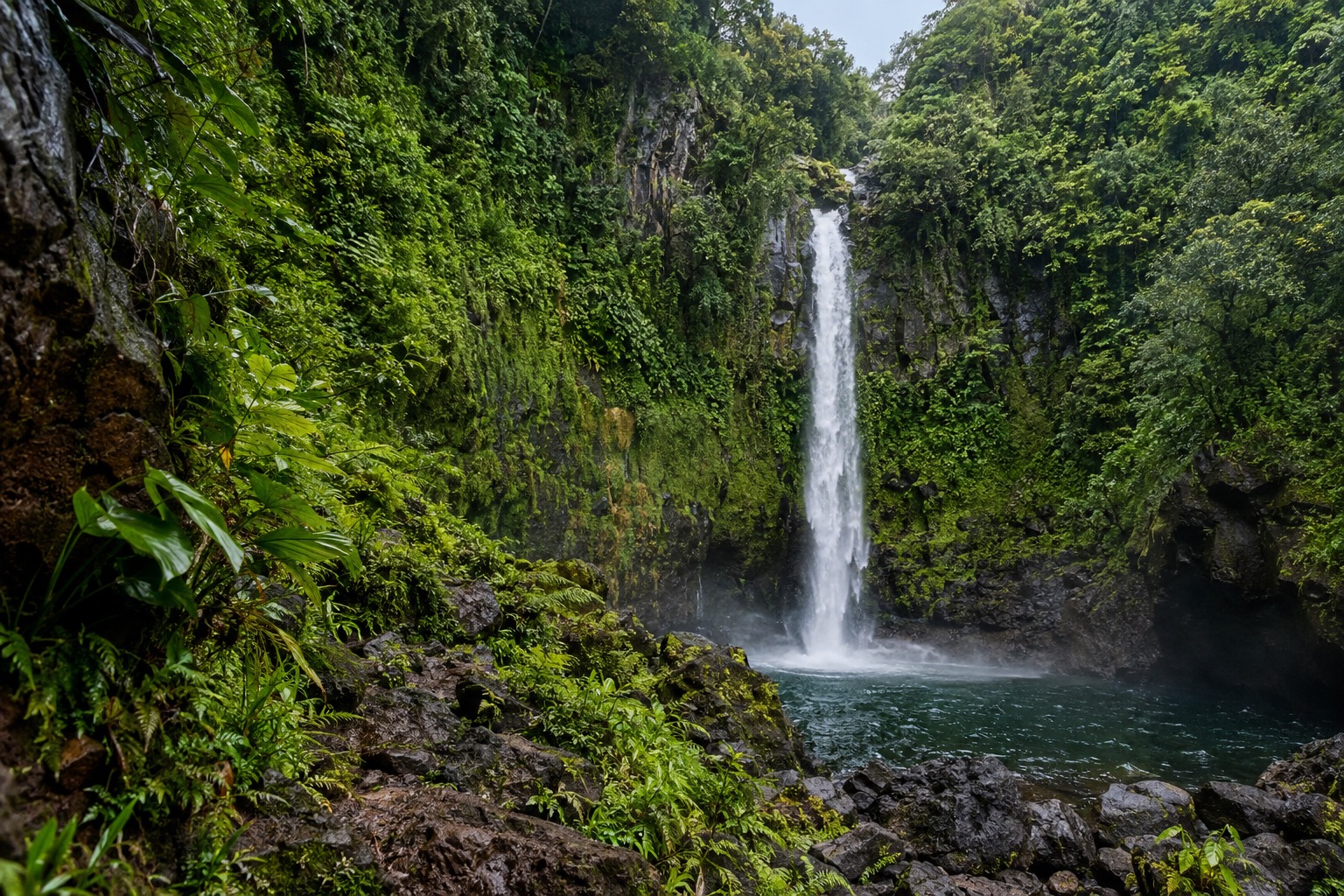
The drive is the main event, a winding road with one-lane bridges, rainforest tunnels and pullouts over blue water. Leave early from the Paia side, take it slowly and treat every stop as optional. Banana bread stands, roadside coconut, and little waterfall pools break up the hours.
August light is bright and long, so the late afternoon return is not rushed by darkness. Rain can make the road slick and swell the streams, so stay out of rushing water and keep to marked paths. This drive works well for unhurried motorists and those who enjoy pausing to take in the view, but it is a poor fit for anyone who gets carsick.
Waianapanapa and the black sand coast
Waianapanapa State Park is a short run from town, with a black pebble beach, sea caves, lava cliffs and a coastal trail through hala trees. It is a place to look and walk, with the surf often dramatic against the dark rock. Waianapanapa is one of the parks where reservations matter, so plan ahead rather than counting on a walk-up visit.
Head out early, as the sand glows in gentle light and sunlight sparkles on the sea spray. The park suits photographers, families who like a short walk and anyone who wants a different kind of beach. Treat the sacred sites and ancient stones with respect, and keep off the cliffs near the edge.
Hana town, Hana Bay and the farm stands
Hana itself is quiet: a bay with a pier, a small beach, a general store and a handful of places for plate lunches, grilled fish and fresh fruit. In August, stalls along the road sell tropical fruit and baked goods, and the pace of the town is its charm. Stop for a bowl of shave ice or a banana bread slice and watch the fishing boats.
Beyond town, the road continues toward Kipahulu and the pools of Oheo, where the landscape becomes even greener. The coast out here is wild, and a day devoted to just the town and bay is a perfectly good way to spend it, especially if rain turns the trails muddy.
A two-day itinerary for Hana in August
Day 1 starts early on the Road to Hana, with the first pullouts before the tour vans arrive. Take the waterfalls and the roadside stands in order, stopping when something looks good, and reach Hana by lunchtime for a plate lunch near the bay. In the afternoon, settle at Hana Bay for a swim if the water looks calm, then walk the pier and the small beach.
As the light softens, wander the town and pick up fruit for the evening. Dinner is simple and local, and the night is quiet enough for stargazing if the clouds break. With sunrise and sunset about thirteen hours apart, there is no need to hurry anywhere.
Day 2 begins at Waianapanapa while the morning is cool, walking the black sand and the coastal trail before the crowds. Back in town by late morning, take a slow lunch, then spend the afternoon on the coast road toward Kipahulu for the greenery and the pools, going only as far as the day allows.
If rain settles in, shift to the indoor stops: a long lunch at a local café, a browse through the shops and galleries, and a coffee while the shower passes. Showers usually move on within a short time, so the afternoon often clears for a last walk by the water.
Is Hana busy in August?
Moderately: August brings summer visitors and family vacations, but Hana stays small, so the pressure falls on rooms and parking rather than on crowds in the streets.
Lodging in Hana is limited, and the best rooms and rentals go early, so book well ahead for summer weeks. Rental cars on Maui are also in demand, and the more flexible you are on dates the easier it is to find one. Restaurants are few and small, so a plan for lunch and dinner helps, particularly on the busiest days.
The one reservation that matters is for Waianapanapa State Park, which requires advance booking, so make it as soon as your dates are set. The Road to Hana is busiest in the middle of the day, so early starts mean quieter pullouts and easier parking. Later in the week, the pace often eases.
What to pack for Hana in August
Pack clothing for warm, damp conditions that alternate between sun and showers and then come back around, along with a sea you will be itching to plunge into.
- For the rain showers that move in off the ocean, bring a lightweight jacket.
- Quick-dry clothes, because humidity keeps things damp.
- Footwear that can hold the trail, made for slick stone and paths turned to mud.
- Mineral sunscreen, the kind Maui County allows.
- A swimsuit and rash guard for the bay and the beaches.
- Insect repellent for the rainforest stops.
Good to know before you go
August falls inside the Central Pacific hurricane season, which runs from June 1 to November 30, so check the forecast before the drive and again each morning. Services in Hana are limited, so fill the gas tank and carry water and snacks before heading out. Book the park reservation and your lodging first, then build the days around them.
Hana in August vs July and September
July is very close to August: a touch cooler and slightly drier, with the same long days and a sea a shade cooler. Travelers who prefer a bit less rain and are happy with similar crowds can shift earlier without losing anything. The summer family rush is in full swing, so rooms are tight either way.
September is a little wetter and the sea is at its warmest, which suits swimmers. The summer school break winds down, so the roads and the town often feel calmer and rooms are easier to find. It is also deeper into hurricane season, so keep an eye on forecasts.
Families tied to school calendars will stay with August. Those with flexible dates who want a quieter town and warm water may prefer the start of September, while travelers who want the driest of the three should lean toward July.
Is August a good time to visit Hana?
Yes, for travelers who like warmth, greenery and a slow pace, and who do not mind a passing shower. It suits families on school break, swimmers and drivers who enjoy a long, scenic road.
It is less suited to anyone hoping for a dry, sun-baked beach vacation, since that belongs to the leeward coasts of Maui. Visitors who dislike winding roads or limited dining options may be happier elsewhere on the island.
On arrival, secure the park reservation and a lunch plan, then head out early on the first day while the road is quiet. The best of August in Hana is the quiet green hours: warm water at the bay, black sand in the morning light and a plate lunch eaten with the trade winds on your face.
Sources
- NOAA NCEI, monthly normals 1991-2020, station USC00511125, checked September 8, 2026
- Open-Meteo Marine API, average 2015-2024, checked September 8, 2026
- sunrise-sunset.org, sunrise and sunset calculated for the 15th of the month, checked September 8, 2026
- NOAA NCEI, normals 1991-2020, stations USC00511125 (Hana AP) and USC00515842 (Makena), via PLAN-HAWAII.md §1
- County of Maui, Mineral Only Sunscreen, relayed by Maui Now, checked September 25, 2026
- NWS Honolulu / Central Pacific Hurricane Center, « 2026 Central Pacific Hurricane Season Outlook », weather.gov/hfo/hurricaneOutlook2026, checked September 24, 2026