
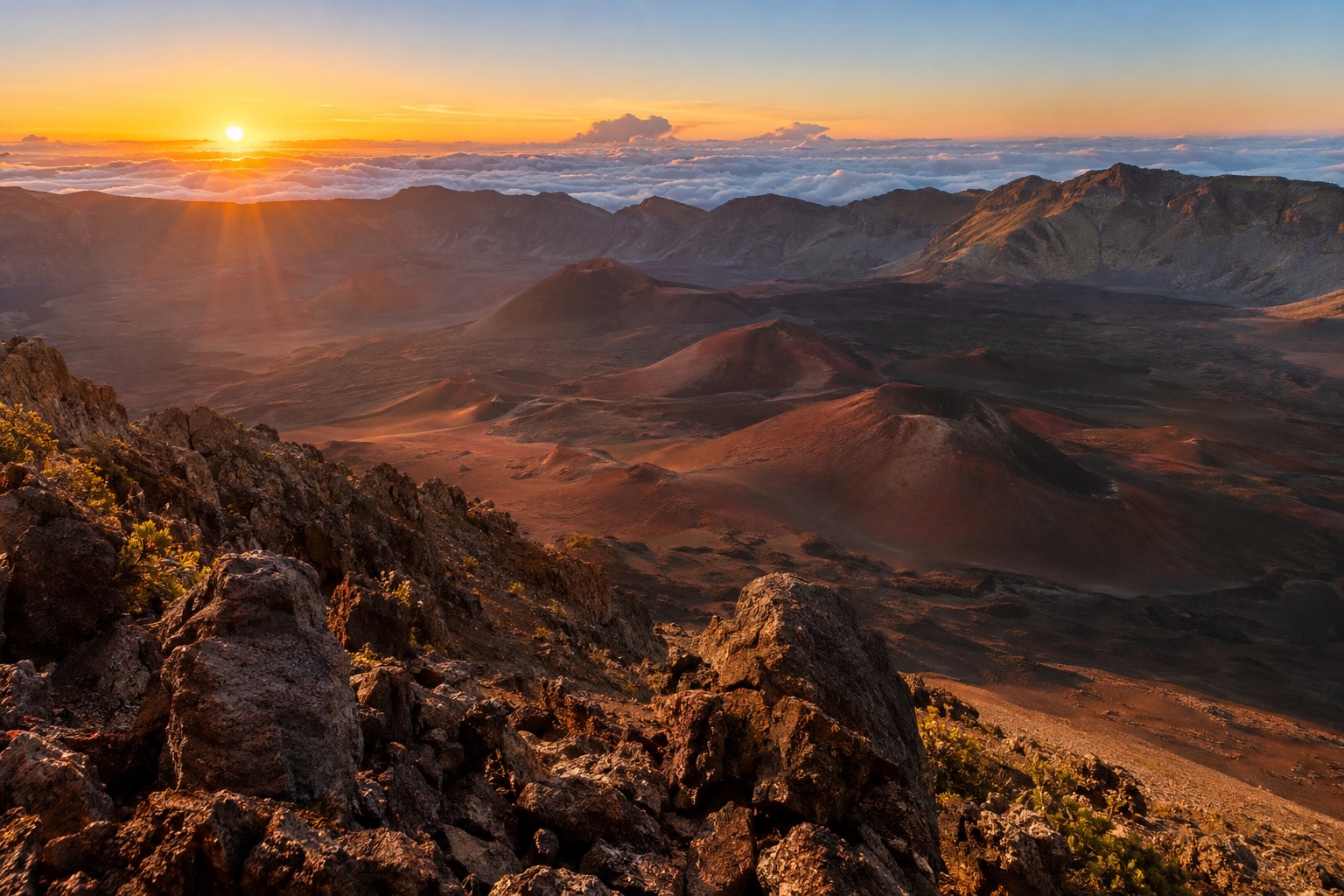
At the rim of the crater in July, the first light turns the clouds below you into a pink and gold sea, and the cold bites through your jacket while you wait for it. Later the cinder slopes warm up, silversword plants stand in silver rosettes among the red rock, and nene geese pick across the trails. This is the Haleakala of high summer on Maui: dry, bright and a world apart from the beaches far below. July is one of the easier months to see the volcano, with long days, mostly clear skies and a crater that rewards slow walking as much as early rising.
What is the weather like in Haleakala in July?
July on the mountain is cool, bright and mostly dry, with a chill in the morning that surprises people who just left a warm beach.
| Month | Average high (°F) | Average low (°F) | Rain days |
|---|---|---|---|
| June | 65.6 | 47.7 | 3.3 |
| July | 65.5 | 48.9 | 5.0 |
| August | 66.1 | 49.4 | 4.4 |
Even in midsummer the air at the rim stays far from beach weather. Afternoons are pleasant in the sun, comfortable for a walk in a light layer, but the wind and the altitude make it feel cooler than the thermometer suggests. Before dawn, the summit is roughly 3,000 feet above the ranger station, so it gets even colder, and you will want a hat, gloves and a proper jacket.
Rain comes as brief showers or drifting cloud rather than a long gray spell, and most days stay dry. The clouds often gather in the afternoon and settle around the crater walls, sometimes closing the view for an hour or two. That is why the early hours are the clearest, with the sky often open above a cloud deck that sits below the rim.
Days are long, with daylight lasting a little over thirteen hours in mid-July, so there is time to combine a sunrise with a hike and still be down the mountain by afternoon. Sunburn is a real risk at this height, since the sun is strong and the air thin. After dark the sky is often superb for stars, and the evening chill returns quickly once the sun drops.
What to do in Haleakala in July
July is a month for the mountain itself: sunrise above the clouds, walks across the crater floor, and a night sky that is often full of stars. There is no summer festival on the volcano, so the pleasures are natural ones. The thin air, the silence and the strange colors of the cinder are the main attraction, and the dry season makes the trails easier than in winter.
The park sits on the slopes of a huge dormant volcano, and the landscape changes every few hundred feet. Near the summit it looks like another planet, with red, orange and gray cinder cones. Lower down you pass shrubland and then rain-fed forest, where birds sing in the early morning.
Sunrise at the summit
Watching the sun rise over the crater is the signature experience, and in July it often goes well, with clear air above the cloud deck. You stand on the rim in the dark with a crowd of other people, wrapped in everything you brought, and wait as the horizon turns from black to deep blue to orange. The light then slides down the crater walls and picks out each cinder cone in turn.
Sunrise visits require a reservation, so book ahead rather than hoping to turn up. Come dressed far warmer than you think you need, bring a blanket if you have one, and stay after the sun is up, because the colors keep changing for a while. It suits anyone who can face an very early start, though children may find the cold and the wait hard.
Hiking into the crater
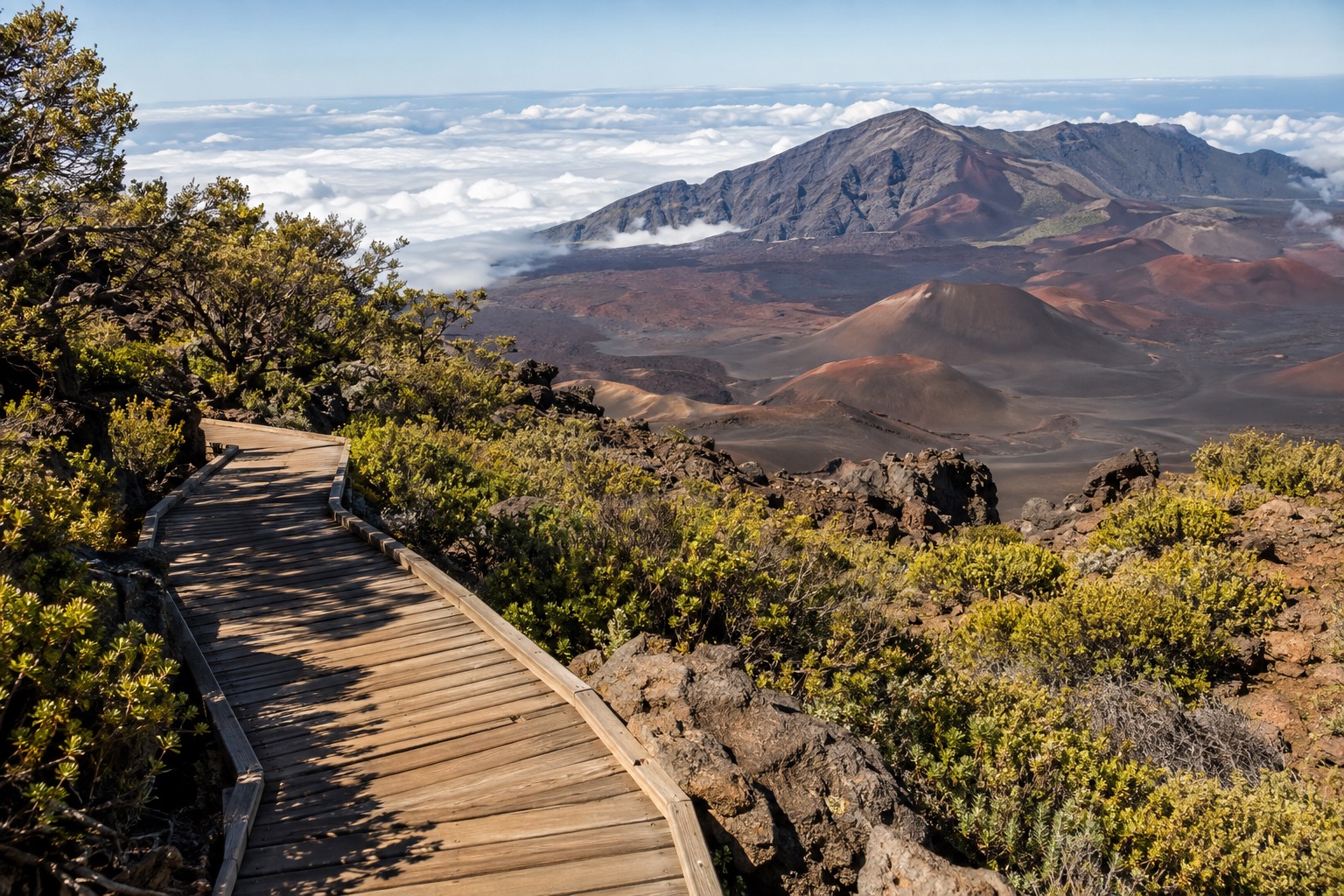
To grasp how vast this place is, nothing beats the trails that descend from the rim to the crater floor. The cinder crunches underfoot, and the colors shift from rust to purple to gray as you go down. Silversword plants, which grow only in a few high places like this one, often stand along the path, and nene geese are sometimes seen near the trails.
A short walk near the visitor center gives a taste of it, while a longer descent takes much of the day and has to be climbed back out, which is tiring at this altitude. July’s drier weather makes the path firmer, but the sun is strong, so carry water and sun protection. Stay on the marked trail and leave the plants and stones as you find them.
Stargazing after dark
Haleakala is high, dry and far from city lights, and on a clear July night the Milky Way can be strikingly bright. People come up after sunset with warm clothes and a thermos, and the cold is real, so dress as for winter. Clouds can drift in, which makes this a chance rather than a promise.
Pair a late afternoon walk with a sunset and a stay into the evening, which avoids the very early drive of the sunrise plan. The summit is quiet and the stars come out in sequence as the sky darkens. Bring a flashlight with a red light if you have one, and let your eyes adjust slowly.
Along the lower slopes, the Kipahulu side of the park offers a different mood, with pools and waterfalls in lush green, far from the cold summit. Many visitors also stop at roadside stands and in upcountry towns for coffee, baked goods and fresh fruit on the way up or down.
A two-day itinerary for Haleakala in July
Before the sun is anywhere close to rising, Day 1 begins with the trip up to the summit to catch sunrise, reservation in hand and all the layers you have. Remain at the rim while the light shifts, then take a brief path beside the visitor center before the air loses its clarity. By late morning the clouds begin to build, so head down for a long breakfast or brunch in an upcountry town, where bakeries and small cafés serve the early risers.
The afternoon suits a rest, since an early start leaves most people tired. A swim or a slow beach hour on the coast makes a pleasant contrast with the cold morning. Dinner can be a casual plate lunch spot or a restaurant near your hotel, and an early night is wise. If rain or heavy cloud closes the view, a visit to a gallery, a farm stand or a coffee tasting upcountry fills the time.
Day 2 is for the crater itself, starting mid-morning with a hike down from the rim while the light is bright and the cinder colors are strongest. Carry water, a hat and sunscreen, and turn back with energy left for the climb out. Eat a picnic lunch at a viewpoint, or stop at a market on the way up.
In the late afternoon, return toward the summit for sunset and then the stars, with warm clothes and a flask of something hot. The sun sets well after the heat of the day has gone, and the sky afterward can be brilliant. If clouds cover the summit, a drive on the lower slopes or a visit to the Kipahulu side offers waterfalls and green forest as a wet-weather card.
Is Haleakala busy in July?
Yes, July is a busy month, because summer vacations bring families from the mainland and the park is one of the main draws on Maui.
The sunrise is the busiest moment, with cars lining up in the dark and people crowded along the rim. The rest of the day is calmer, especially on the crater trails, where the crowd thins out a few minutes from the parking lot. Late afternoon and evening, with sunset and stars, tend to be quieter than the dawn rush.
Summer demand also shows in rooms and rental cars on Maui, which fill up early around the holiday weeks and school breaks, so book those well ahead. Restaurant tables at popular spots are easier with a reservation, while weekdays are looser than weekends. A reservation is needed for the sunrise, so lock it in right after you settle on your dates, because the most popular mornings disappear first.
If you like fewer people, choose a midweek visit, an afternoon or evening slot, or a longer trail that takes you away from the rim. Early July around the Fourth tends to be the most crowded stretch, and later weeks are a little easier.
What to pack for Haleakala in July
The mountain is cold and sunny at the same time, so pack for both ends of the weather rather than for a beach day.
- A warm jacket, hat and gloves, because the pre-dawn rim is cold even in summer.
- Layers you can peel off, since the sun warms the cinder quickly once it is up.
- Sturdy closed shoes for the loose cinder on the crater trails.
- Sunscreen and sunglasses, as the sun at this height is strong.
- A refillable water bottle for the hike, since there is little shade.
- A light rain shell for the passing afternoon showers and cloud.
Good to know before you go
The Central Pacific hurricane season runs from June 1 to November 30, so July falls inside it, though the summit is far above the coast and the weather there is mostly shaped by altitude. The first thing to arrange is the sunrise reservation, then the rental car and a room on Maui. Since you will drive to the top, pack gas, food and warm layers before departing the coast, and allow extra time for the dark, curving road.
Haleakala in July vs June and August
Moving earlier to June gives you a drier crater, since the rain days are fewer, and the early part of summer is a little less crowded before the family weeks peak. The nights are slightly colder, which suits stargazing but asks more of a sunrise visit.
Moving later to August keeps the same clear, cool character with slightly warmer nights and a bit less rain than July. Crowds remain steady into the month, easing as schools return on the mainland, so the second half can feel calmer at the rim and in the rooms below.
Choose July if the dates are fixed by school and you want the long days. Shift to June if you prefer fewer showers and a quieter start to the season, and to late August if you want the same mountain with a lighter crowd.
Is July a good time to visit Haleakala?
Yes, July is a good time for travelers who want clear mornings, long days and a night sky that can be spectacular, and who do not mind the crowds at sunrise.
It suits hikers, photographers, families with older children and anyone who likes to be outdoors from dawn to dusk. It is less ideal for people who dislike cold, early alarms or busy viewpoints, or who want a quiet, empty summit. For those travelers a later afternoon visit is a gentler way to see the crater.
Once you get there, lock in your sunrise booking right away, then build everything else around that, putting the hike and the stargazing on different days so altitude does not leave you worn out. What makes July special is the combination of warm days on the coast and a cold, star-filled mountain above, with the crater floor dry underfoot and the cloud sea glowing below the rim at first light.
Sources
- NOAA NCEI, monthly normals 1991-2020, station USC00511004, checked September 8, 2026
- sunrise-sunset.org, sunrise and sunset calculated for the 15th of the month, checked September 8, 2026
- NOAA NCEI, normals 1991-2020, station USC00511004, via PLAN-HAWAII.md §1
- NWS Honolulu / Central Pacific Hurricane Center, « 2026 Central Pacific Hurricane Season Outlook », weather.gov/hfo/hurricaneOutlook2026, checked September 24, 2026