
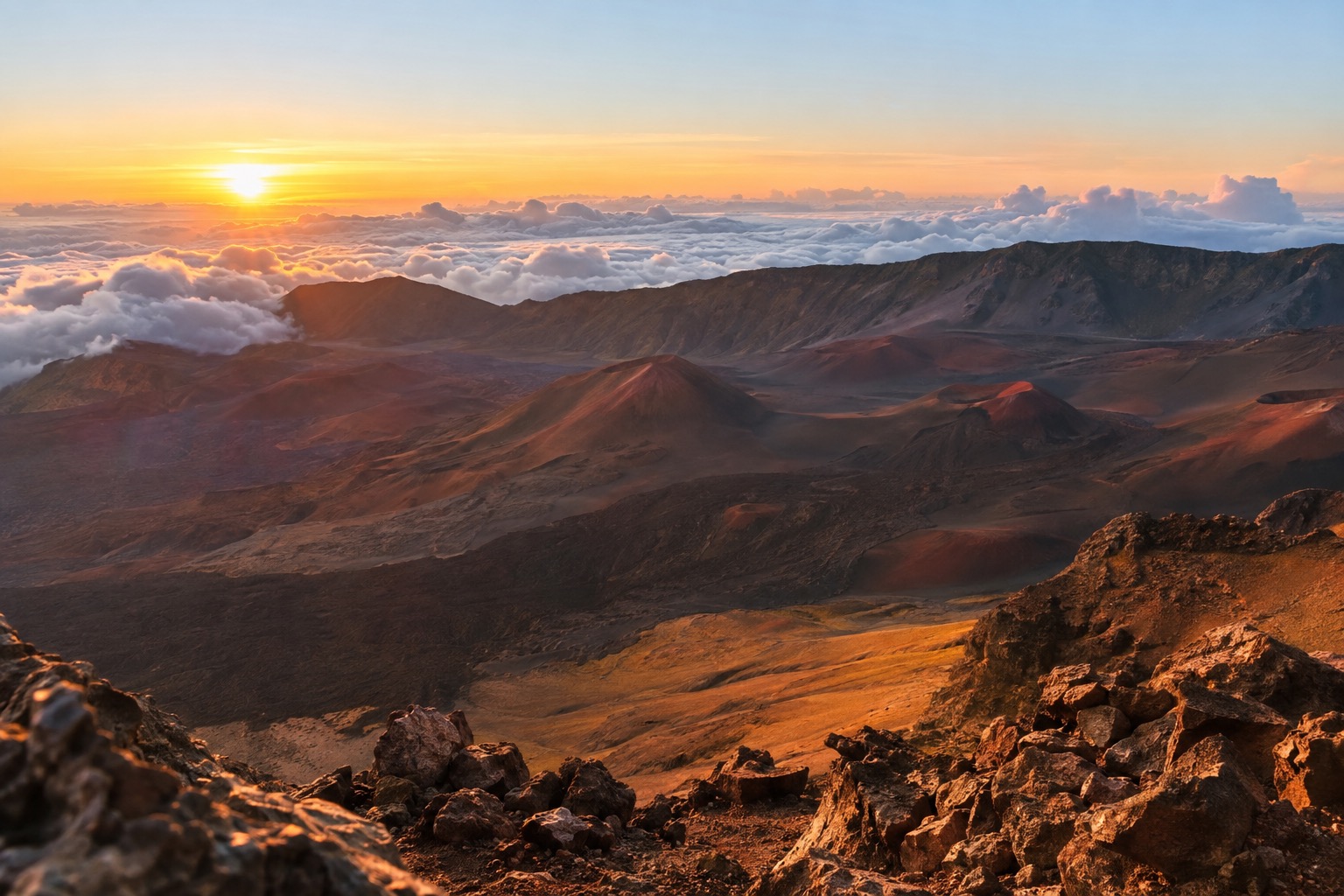
In June, well before sunrise, the summit parking lot on Haleakala fills with crowds wrapped in blankets they did not bring, beating their feet against the cold and gazing as a slim orange line splits the clouds below. Then the light spills into the crater and the cinder cones turn rust, pink and violet. June is a dry, clear stretch on the mountain, a good month for the sunrise, for walking the crater floor and for stargazing once the sky goes dark.
What is the weather like in Haleakala in June?
June on Haleakala is cool, fairly dry and bright, with cold mornings that surprise people who started the day on a Maui beach in shorts. June on Haleakala feels like a cool, bright middle ground between the wetter months and the drier ones.
| Month | Average high (°F) | Average low (°F) | Rain days |
|---|---|---|---|
| May | 63.2 | 45.9 | 4.4 |
| June | 65.6 | 47.7 | 3.3 |
| July | 65.5 | 48.9 | 5.0 |
Up top it feels much colder than you would expect, and that changes how you plan your day. Before sunrise the air at the summit is far colder than the lows suggest, because the summit sits well above the ranger station and the wind adds bite.
By midday the sun is strong at this altitude, the sky is often clear and the crater walls glow. Clouds tend to roll up from the coast in the afternoon and can fill the crater, so mornings are usually the best time for views.
Rain is infrequent in June and comes as brief showers or drizzle when the clouds climb the slope. The wetter weather on this island belongs to the windward side, toward Hana, while the leeward coast below stays sunny. Days are long, with the sun up for well over thirteen hours in mid-June, so there is time for a hike after a dawn start.
Dress in layers: a warm jacket, a hat and gloves for the sunrise, then a light shirt and sunscreen by late morning. The evenings are chilly again, and after dark the sky can be spectacular when the clouds stay below you.
What to do in Haleakala in June
June is the start of the long, easy season on Maui, and the mountain shows it. The summit road is busiest at dawn, and the rest of the day belongs to quiet trails, wide views and the strange landscape of a volcanic crater that looks more like Mars than the tropics. Kamehameha Day on June 11 is a state holiday, and across the islands it brings parades, flower leis draped on statues and family picnics, so expect a festive mood in the towns at the foot of the mountain.
The summit sunrise
Watching the sun rise from the rim is the classic Haleakala experience. Sunrise visits need a reservation, so secure one ahead of time rather than count on turning up. You drive up in the dark from the Maui lowlands, so allow for a long, winding climb and an early alarm.
The show begins well before the sun appears, with a slow brightening of the clouds below you. In June the sky is often clear above the cloud layer, though nobody can promise it. Pack all your warmest clothing, since the chill bites harder when you stand motionless in the wind. After the sun is up, the crowd thins and the crater is yours to look at in stronger light.
Walking into the crater
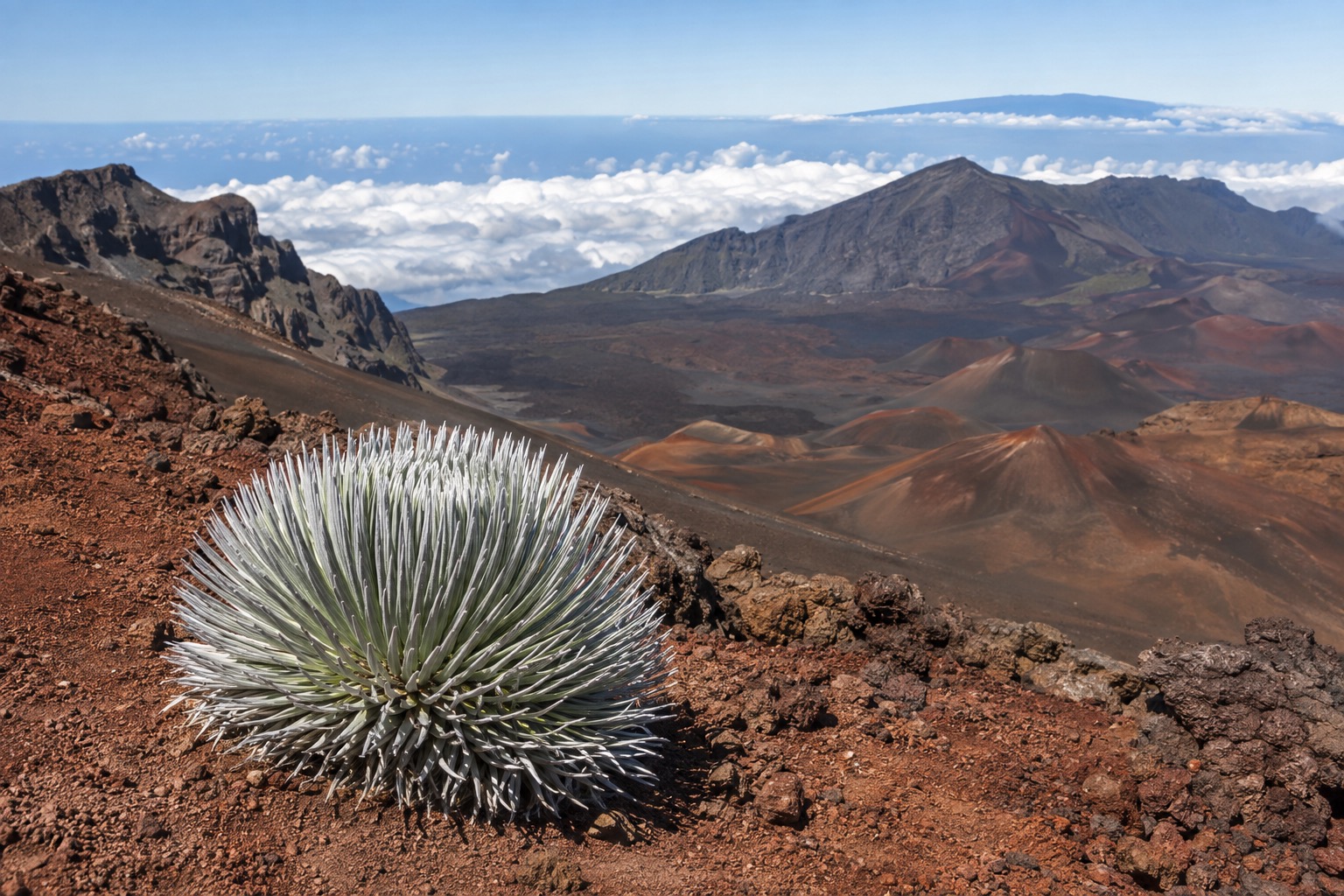
The trails drop from the rim onto the crater floor, past cinder cones, lava flows and silversword plants, spiky silver rosettes that grow almost nowhere else. A short walk from the visitor area gives you the scale of the place, while longer hikes descend into a silent, otherworldly basin. Remember that every step down is a step you must climb back at high altitude, where breathing is harder than at the beach.
Morning is the best time to walk, before afternoon clouds drift in. Keep to the marked paths, because the silverswords and the nesting birds are fragile, and take water and a windbreaker even on a sunny day. Sunscreen matters at this height, where the sun burns quickly.
Stargazing and the afternoon visitor centers
After dark the summit is one of the best places on the islands to look at stars, far from city lights. Dress as if for winter and expect the air to be thin and cold. If the clouds close in, the visitor centers and the upcountry towns on the way down offer warm drinks and a gentler end to the day.
Lower on the mountain, the upcountry area has lavender and flower farms, small cafés and ranch land, a pleasant stop for lunch on the way back toward the coast. Fruit stands and bakeries along the roadside are good for picking up a snack for the drive.
If you want a break from the cold, spend the afternoon on the dry coast below, where the beaches of the south and west are sunny. In June the water there is usually inviting, though the beach flags and lifeguards decide where to swim.
A two-day itinerary for Haleakala in June
Day 1 begins before daylight, driving up to catch the sunrise, and you need to book that in advance. Wear every layer you packed, watch the light fill the crater, then linger while the crowds go back down. By mid-morning the sun is warm enough for a short walk along the rim or a first stretch of trail on the crater floor.
Come down toward lunchtime and eat at one of the cafés or bakeries in the upcountry towns. Spend the afternoon at a flower farm or a ranch-country viewpoint, then take a long nap or an early dinner. If rain or low clouds spoil the afternoon, switch to a museum, a coffee stop or a slow stroll through a small town.
Day 2 is for the crater itself. Start after a slower breakfast and head up in the morning, when the sky is clearest and the air is crisp. Choose a longer hike into the crater, with plenty of water and a pause for photographs of the cinder cones.
Spend the afternoon on the warm coast, with a beach swim or a shaded lunch by the water, and come back up at dusk if you want to see the stars. With the long June days, there is time to do both. If the weather closes in, a local market or a leisurely dinner in town fills the evening just as well.
Is Haleakala busy in June?
Moderately to very, since the mountain draws steady crowds at dawn and school vacation begins to fill Maui with families. The sunrise is the pinch point, and reservations for it go quickly, so plan ahead rather than hope for a spot.
Outside the sunrise hours the park feels calmer, and the trails and the crater floor have plenty of room. Mid-morning and afternoon are the easy times to visit if you do not need the dawn show. Stargazing is quieter again, with a small crowd of patient visitors.
Hotels and rental cars on Maui tend to get tighter as summer vacations start, so book rooms and a car early, especially if your dates fall around Kamehameha Day on June 11 or near a long weekend. Restaurant tables in the popular upcountry and coastal towns also fill at dinner, so a reservation helps on weekends. Weekdays are quieter and easier.
What to pack for Haleakala in June
Packing for Haleakala means packing for two climates, a cold summit and a warm coast.
- A warm jacket and gloves, for the freezing wind before sunrise
- A hat and sunscreen, because the sun is strong at high altitude
- Sturdy closed shoes for the cinder trails
- A refillable water bottle for hikes in thin, dry air
- Swimwear and a light layer for the beaches below
- A flashlight or headlamp for the dark drive and the stars
Good to know before you go
The Central Pacific hurricane season runs from June 1 to November 30, so June is its first month, though the mountain is usually clear and dry in this early stretch. Lock in the sunrise before anything else, then plan the remainder of your trip around that. Allow time for the winding road, which is slow in the dark, and fill the gas tank before you start up.
Haleakala in June vs May and July
May is a little cooler and wetter on the mountain, with a few more showery days, and it comes before the summer vacation rush. Crowds are lighter, and rooms and cars are easier to find. If you want a quieter dawn and do not mind a bit more chill, May suits you well.
July is just as mild but brings more rain days and more families, since school is out for most of the country. Rooms and cars are in higher demand, and the sunrise is busier. The coast stays sunny and the sea is usually pleasant, so it works for beach-focused trips.
Choose June if you want clear, long days and the start of summer without the full peak. Choose May if you prefer calm and flexibility, and July if your schedule is tied to school vacations.
Is June a good time to visit Haleakala?
Yes, especially for hikers, early risers and anyone who wants cool air and clear views after the warm beaches. June is dry on the mountain, the days are long, and the sunrise often delivers.
It suits less well anyone who dislikes cold mornings or early alarms, or who wants a lazy, beach-only trip. In that case, you can still see the crater on a later morning visit and spend the rest of your time on the coast.
On arrival, reserve the sunrise and pick your crater hike, then arrange everything else around them. What makes June special is the contrast, a freezing summit before dawn and a sunny beach by afternoon, with the long light of early summer connecting the two.
Sources
- NOAA NCEI, monthly normals 1991-2020, station USC00511004, checked September 8, 2026
- sunrise-sunset.org, sunrise and sunset calculated for the 15th of the month, checked September 8, 2026
- NOAA NCEI, normals 1991-2020, station USC00511004, via PLAN-HAWAII.md §1
- NWS Honolulu / Central Pacific Hurricane Center, « 2026 Central Pacific Hurricane Season Outlook », weather.gov/hfo/hurricaneOutlook2026, checked September 24, 2026
To plan your stay
- Haleakala Sunrise: Summit Reservations, Cold Dawn Conditions and the Drive Up
- Best Time to Visit Haleakala: Weather by Month, Sunrise Seasons, Crowds and Events
- Haleakala in May: Summit Sunrise, Mountain Weather and What to Do
- Haleakala in July: Weather, Sunrise and Stargazing, and Two Days on the Mountain