
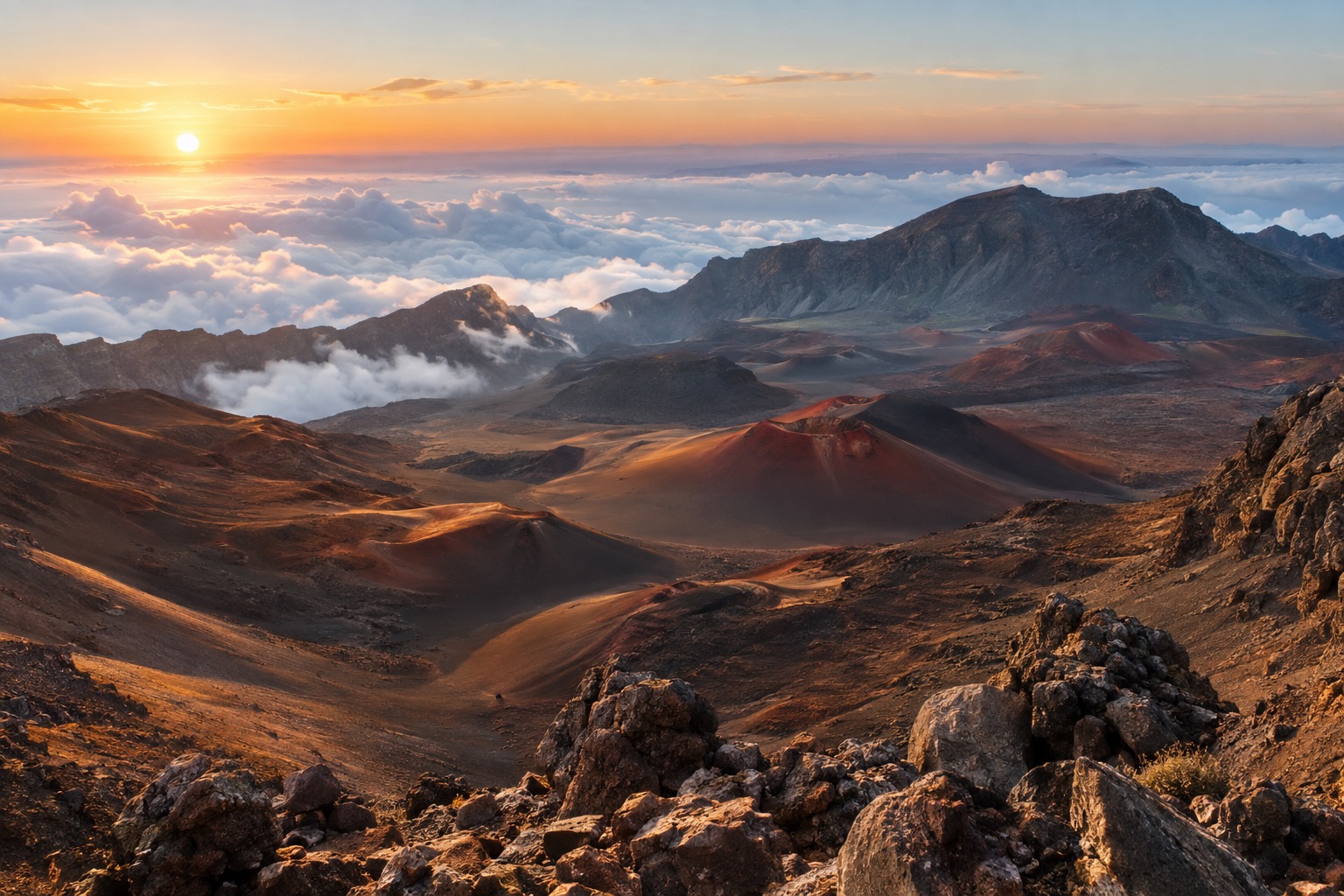
Before dawn in May, the line of headlights climbing the switchbacks to the summit of Haleakala thins out, and the cold air smells of volcanic dust and wet grass. Clouds pool below the rim like a white sea, and the first light turns the cinder cones red and orange inside the crater. May is a drier, calmer month on the mountain, good for sunrise, hiking and stargazing.
What is the weather like in Haleakala in May?
Haleakala in May brings cool, largely dry weather, with mornings that feel crisp, afternoons that turn mild at the park’s lower elevations, and a summit cold in every season. The mountain is drying out as the islands move into their warmer half of the year.
| Month | Average high (°F) | Average low (°F) | Rain days |
|---|---|---|---|
| April | 60.7 | 43.8 | 6.0 |
| May | 63.2 | 45.9 | 4.4 |
| June | 65.6 | 47.7 | 3.3 |
Up around the upper slopes, the summit feels about 3,000 feet higher and colder still. Sunrise is a coat-and-gloves affair. After sunrise the temperature climbs fast, so by midmorning you can walk in just a light layer, but that crater rim wind can still sting.
Rain falls in short showers rather than all-day gray, and a few days in the month bring a real soaking. Clouds often build around the slopes by midday and slide up into the crater, so the clearest views usually come early. The light is long and clean, with daylight stretching past thirteen hours in mid-May, which leaves room for a late hike or a sunset.
Evenings turn cold fast at this altitude. If you are staying at the beach resorts on the dry leeward side, the weather down there is a different world, warm and sunny, and the drive up is a climb through several climates in one afternoon.
What to do in Haleakala in May
May is one of the pleasant months to be on the mountain. Lei Day on May 1 is the month’s tradition, and across Maui schools, towns and hotels celebrate with flower leis, hula and music. Humpback whale season is over by now, so the attention turns to the land: the crater, the cloud forest and the stars.
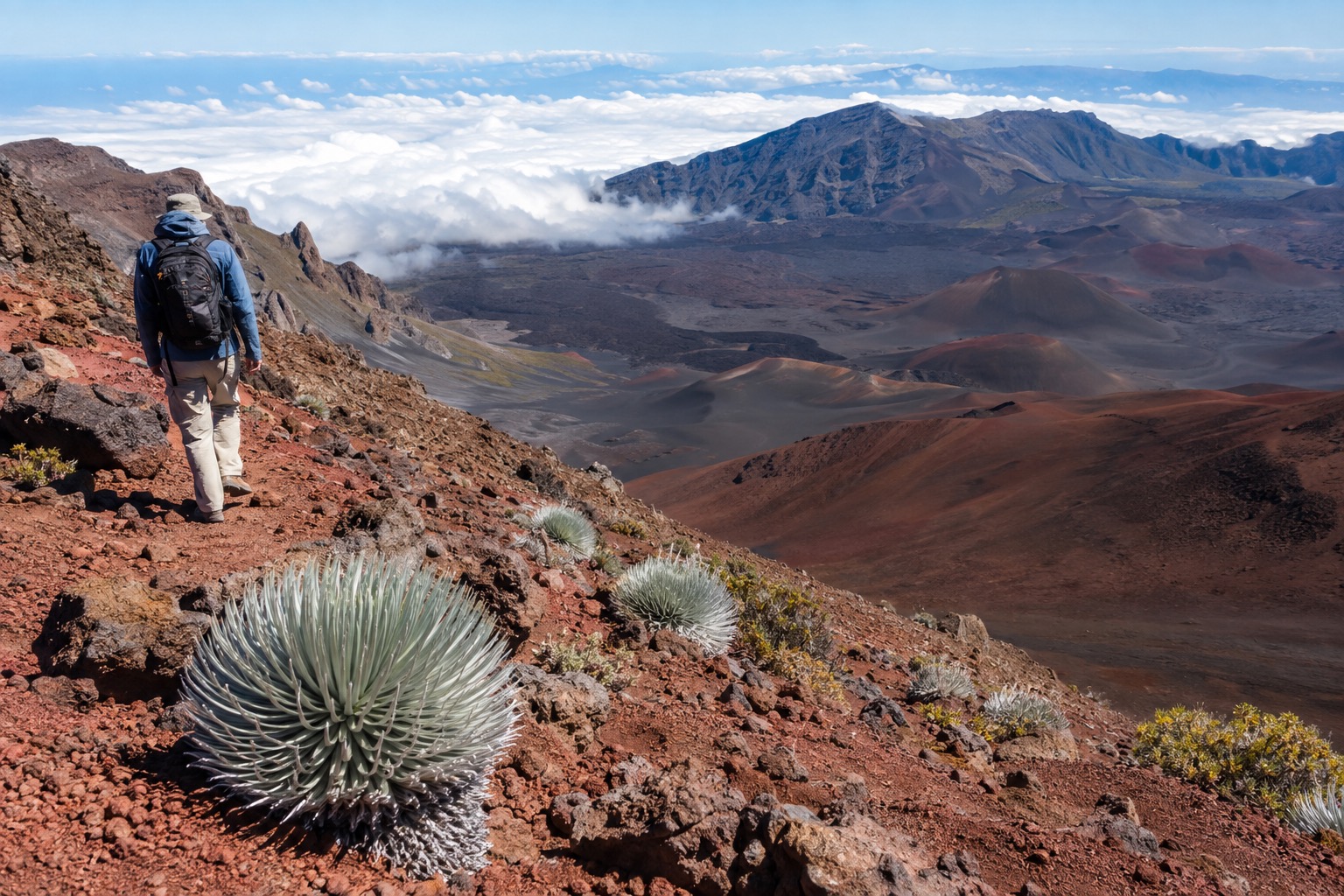
The nene, Hawaii’s state bird, is often seen near the summit road and the visitor center, and silversword plants, which grow only in this kind of volcanic landscape, may be putting up their stalks in the cinder. Keep off the plants and the bird’s nesting ground, and give the nene space.
Sunrise at the summit
The sunrise is the reason most people come, and it needs a reservation. Plan to leave your hotel in the dark, dress in every layer you own and bring a thermos. The light begins as a thin glow on the horizon, then spills across the crater floor and lights up the cloud deck below you.
Clouds sometimes cover the summit, and the sunrise can be a gray bank of mist. May’s lower rain count improves the odds, though no month promises a clear sky. A lot of visitors linger past sunrise to see the crater walls shift in color, then stroll the short trails close to the summit.
Hiking inside the crater
The trails descending into the crater, such as the Sliding Sands path, take you across a landscape of cinder cones in rust, ochre and gray. It feels like another planet. In May the cool air and lower rain make walking comfortable, but remember that the climb back out is the hard part at this altitude, so turn around earlier than your legs want to.
Bring more water than you think you need and a windbreaker, since the weather can shift within an hour. Early morning is the best time to start, before clouds drift in and while the light is clearest. This suits hikers with some fitness, and a short stroll along the rim is a fine alternative for everyone else.
Stargazing and the upper slopes
After dark the summit sky is one of the clearest you will find, with the Milky Way arching over the rim on a good night. The nights are long and cold, so pack like it is winter. Lower down, the Ranger Station area and the roadside pullouts give wide views over the clouds and are quieter than the summit.
If you prefer daylight, the drive itself is part of the pleasure, with ranch land, eucalyptus groves and rolling pasture giving way to bare lava. Stop where the road allows, and take your time on the curves.
Back at sea level, May afternoons suit a beach stop on the dry coast or a lunch in a paniolo (cowboy) town on the slopes, with plate lunches, fresh fruit stands and local coffee. Pair the cold of the summit with a warm bowl of saimin or a shave ice on the way down.
A two-day itinerary for Haleakala in May
Day 1. Leave in the dark for the summit sunrise, with a reservation in hand, and stay for the colors to move across the crater. Walk a short rim path while the air is clear, then drive down slowly, stopping at the Ranger Station area and the pullouts for views above the clouds. Breakfast in a slope town, where bakeries and cafés open early, is a good reward.
By midday, head to the dry coast for a long lunch and a beach afternoon, since the summit clouds tend to build then. Take a nap if you were up at 3 a.m. Come back up in the evening only if the sky is clear, because the stars are worth the cold drive for those with energy left.
Day 2. Start later and take a crater hike on the Sliding Sands side, setting out in the cool morning and turning back with plenty of energy to climb out. Bring water, a windbreaker and a snack, and keep to the trail.
In the afternoon, drive through upcountry ranch land and farm stands, with a stop for coffee or a plate lunch. If a shower rolls in, shift indoors to a gallery, a bakery or a small museum in town, and save the sunset for a leeward beach, where May evenings are usually clear.
Is Haleakala busy in May?
May is moderately busy, a shoulder month between the spring break rush and the summer family weeks. The summit sunrise remains the most crowded moment of any day, and the parking lot fills early on clear mornings.
You can book rooms and rental cars with less trouble than during the winter holiday season, but Memorial Day weekend and the days surrounding it bring bigger crowds, so reserve those early. Early May and the weeks after the holiday are quieter, and you can often arrange a trip with a few weeks of notice.
Restaurant tables on the busy coast are easiest to find at lunch or on weeknights, while upcountry cafés keep a slower rhythm. The sunrise reservation is the first thing to secure, since it is the part of the trip you cannot improvise. Once your dates are locked in, reserve it right away, then arrange the car and lodging to fit around that.
What to pack for Haleakala in May
Pack for two climates: warm beaches below and a cold, windy crater above.
- A warm jacket and a hat, because the summit before dawn is cold.
- Gloves and long pants for the sunrise wait.
- Sturdy hiking shoes for loose cinder on the crater trails.
- Pack a rain shell, as the slopes see passing showers.
- Sunscreen and sunglasses, as the sun is strong at altitude.
- A refillable water bottle for hikes where there is little to buy.
Good to know before you go
May falls before the Central Pacific hurricane season, which runs from June 1 to November 30. Book your sunrise spot first, then plan for the drive, a long and winding route, so leave yourself plenty of time in the dark. Fuel up before climbing, as there are no services on the mountain, and the altitude can leave some people tired or light-headed.
Haleakala in May vs April and June
Moving earlier to April brings a bit more rain and cooler air, plus the tail end of the spring break crowds. The humpback whale season is still winding down off the coast, which adds a reason to pair the mountain with a boat trip. Mornings on the crater feel colder, and clouds are slightly more frequent.
June is warmer and drier, with fewer showers and longer days. It also starts the family summer vacation weeks, so rooms and cars tighten, and the hurricane season opens on June 1. The sunrise crowds can build with the school break.
Choose May for a balance of clear mornings and a calmer feel. Pick June if you want the driest weather and do not mind more families, and April if the whales matter more than the view.
Is May a good time to visit Haleakala?
Yes, May is a good time to visit for hikers, stargazers and anyone who wants the summit with a decent chance of clear skies and room to breathe. The weather is cool and dry enough to enjoy the crater, and the crowds are lighter than in winter.
Travelers who want a warm beach vacation with whale watching may prefer a winter month, and anyone who dislikes cold, early starts will find the sunrise a stretch. Once you land, book the sunrise before anything else, then build the rest of your trip around that. What stays with you from May is the stillness at the crater rim, the nene crossing the road and the lei-draped celebrations of May Day below, all under long, clean light.
Sources
- NOAA NCEI, monthly normals 1991-2020, station USC00511004, checked September 8, 2026
- sunrise-sunset.org, sunrise and sunset calculated for the 15th of the month, checked September 8, 2026
- NOAA NCEI, normals 1991-2020, station USC00511004, via PLAN-HAWAII.md §1
- NWS Honolulu / Central Pacific Hurricane Center, « 2026 Central Pacific Hurricane Season Outlook », weather.gov/hfo/hurricaneOutlook2026, checked September 24, 2026