
In January, the rain in Hana arrives as a passing curtain, then the sun comes back and every leaf along the road steams and shines. Waterfalls run full, the air smells of wet earth and ginger, and the small town sits quiet at the far end of a winding coast. The month suits travelers who like green, slow days, and who accept that this side of Maui is wet by nature.
What is the weather like in Hana in January?
January in Hana is warm, green and showery, with mild days and cool-feeling evenings, and rain that can fall at any hour on this windward coast.
| Month | Average high (°F) | Average low (°F) | Rain days | Sea (°F) |
|---|---|---|---|---|
| December | 78.8 | 68.0 | 6.59 in. of rain | 78.4 |
| January | 77.8 | 64.8 | 5.64 in. of rain | 77.5 |
| February | 77.3 | 65.0 | 5.45 in. of rain | 76.4 |
Mornings are often the best window, soft and bright, with clouds banking against the mountain behind town. Afternoons bring more of the showers, usually short and heavy, followed by a quick clearing. Hana sits on the windward side, so the trade winds push moisture against the slopes of Haleakala and the rain keeps the rainforest, the pools and the waterfalls in full voice.
This is far wetter than the dry resort coast of South Maui. Hana Airport collects more than twice the rain of the Makena golf course in a typical January, so a day in Wailea can be sunny while Hana is under cloud. Plan on both, and treat the sun as a bonus.
Days are warm enough for a T-shirt, but evenings feel cool and damp once the sun drops, and a light layer helps. Daylight lasts a little over eleven hours, so the road home is best driven while it is still light. Quick-drying clothes and a rain shell serve you better than an umbrella in the wind.
Can you swim in Hana in January?
Yes, the sea is warm enough for a comfortable swim, though winter swells and the rain often decide whether you actually get in.
The water sits near the high 70s, about the same as the air, so there is no shock when you wade in. January is the season of bigger surf on north-facing shores, and Hana’s open coast can feel it, with waves that run larger and a stronger pull at the shoreline on some days. Other days the bay beaches are gentler, but never count on it.
Hamoa Beach and Hana Bay are the places most visitors head for. Hamoa is a crescent of golden-gray sand with a lively break that attracts bodyboarders and surfers.
Heavy rain can cloud the water near stream mouths, so snorkeling is a hit-or-miss plan this month. Check the posted signs and flags, ask a lifeguard if one is on duty, and stay out when the waves look rough. Bring a rash guard, a towel and a dry bag for the car.
What to do in Hana in January
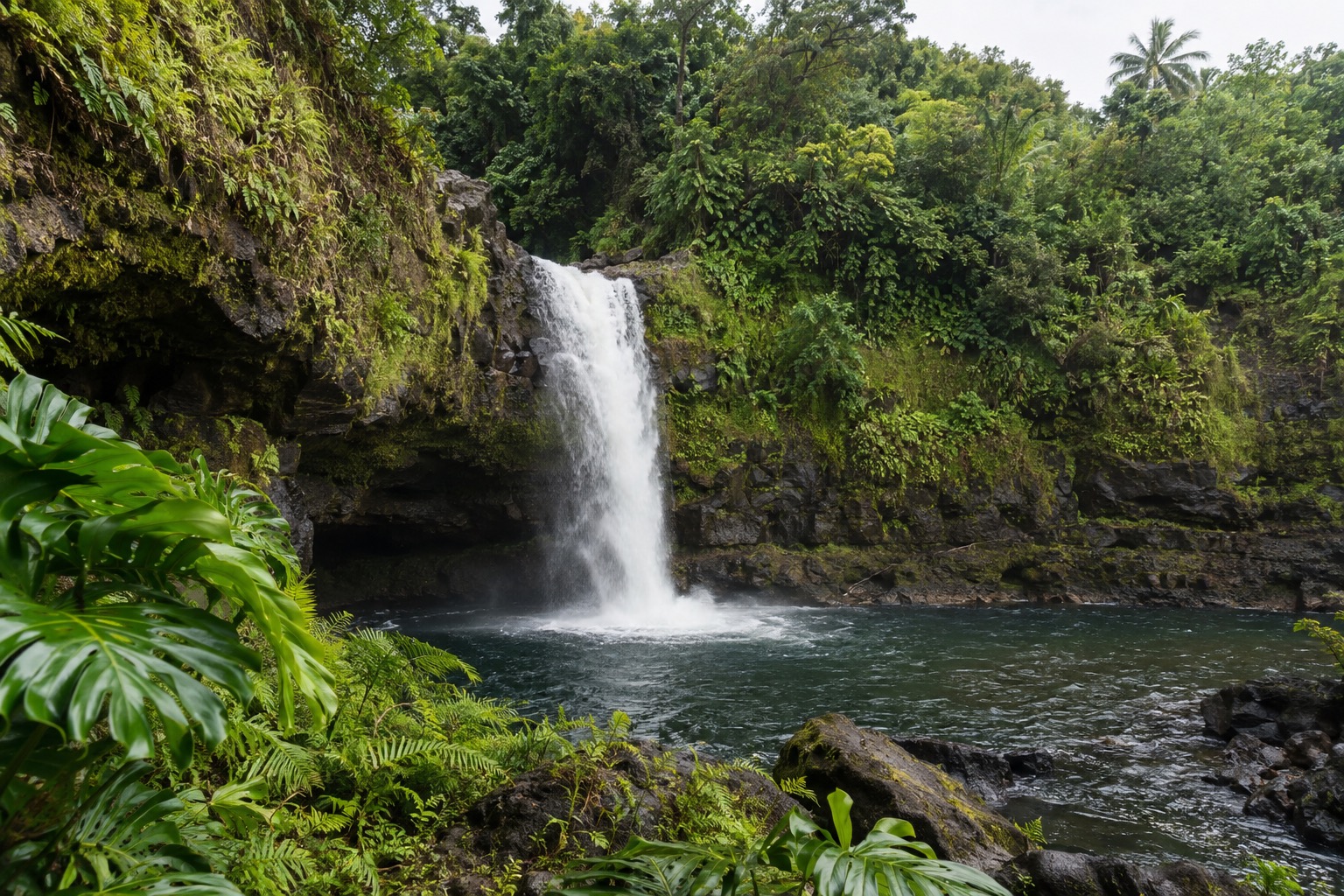
January in Hana is about waterfalls, rainforest walks, black-sand coves and a long, unhurried drive. Humpback whales spend the winter in Hawaiian waters, and from a headland on a clear morning you may spot spouts or a breaching whale offshore. The town itself is small, a handful of shops, fruit stands and a country store, and the mood is quiet, with locals who have little patience for rushing.
Food leans on what the roadside offers: banana bread warm from a stand, fresh coconut, tropical fruit, plate lunches, grilled fish and shave ice for the sunny breaks. Many stands run on their own schedule, so treat them as pleasant surprises rather than fixed stops.
The Road to Hana drive
The drive from the Kahului and Paia side is the classic outing, a narrow road of hairpin turns and one-lane bridges through rainforest, with waterfalls beside the pavement after heavy rain. It is slow, and in January wet surfaces make it slower, so start early and plan on a full day with many stops.
Look for bamboo groves, roadside waterfalls, lookouts over the coast and small stands selling fruit and baked goods. Passengers enjoy it more than drivers, so share the wheel if you can. Pull off only in marked places, and leave the stream pools alone when the water is running high and brown.
Waianapanapa and the black-sand coast
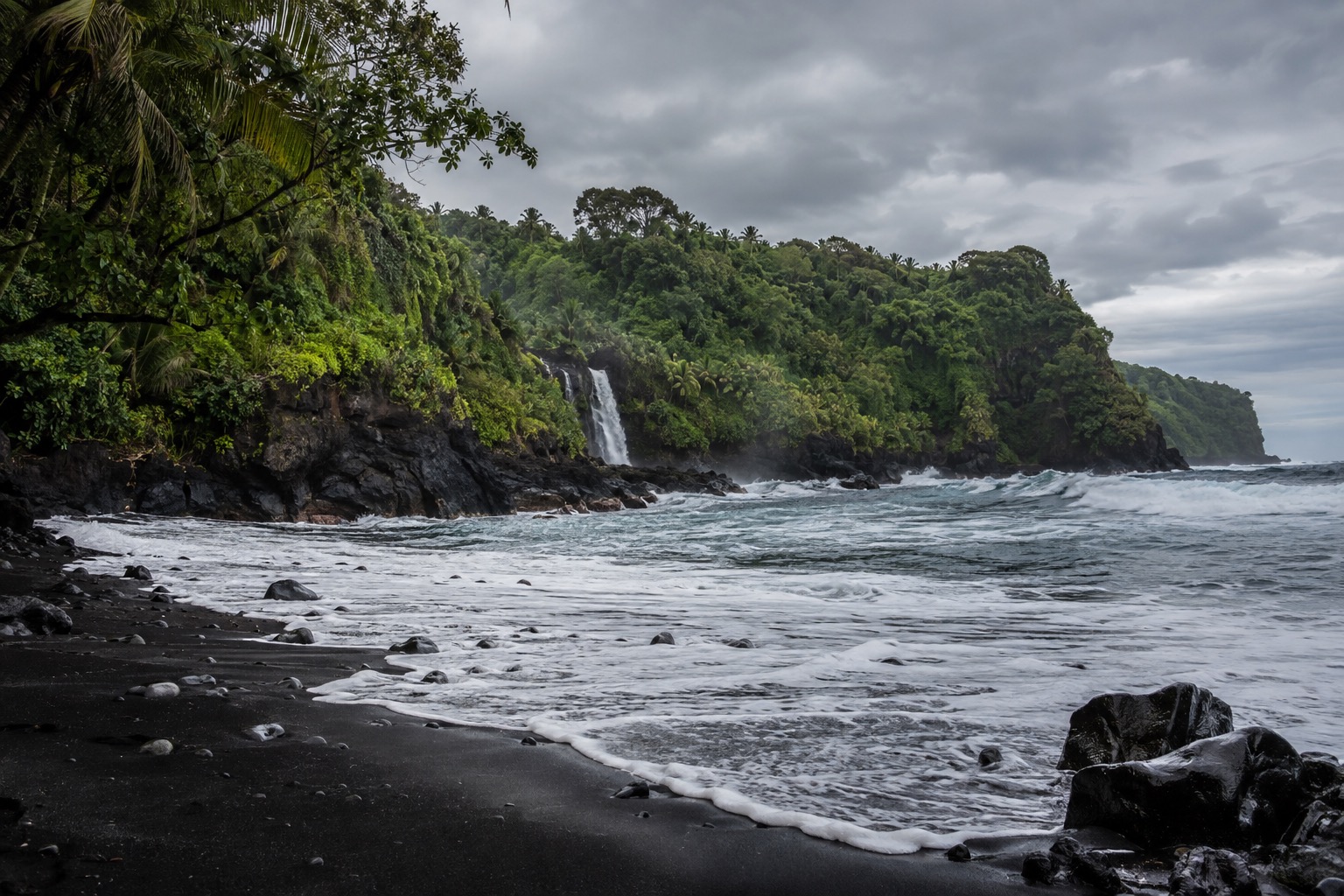
Waianapanapa State Park, just outside town, has a black-sand beach, sea caves and a coastal trail with sea arches and lava rock. Winter surf crashes hard against the cliffs, which makes the views dramatic even in gray weather. The park requires a reservation, so settle that before you go.
Walk the coastal path in the morning when the light is clearer and the black sand glistens. Keep well back from the edge where waves hit the rocks, and do not climb on lava formations or stones with cultural meaning. Rain makes the path slippery, so wear shoes with grip.
Hamoa, Hana Bay and the quiet town
Hamoa Beach is a picture-book cove framed by cliffs and palms, good for watching surfers and bodyboarders even when you stay dry. Hana Bay, near the town center, has a small pier, a park and a calm corner that suits a picnic, with locals fishing and paddling in the early hours.
Spend a slow hour in town browsing the cultural center, the shops and the fruit stands. When rain sets in, a covered porch and a plate lunch is a fine plan. The place rewards patience more than a checklist.
A two-day itinerary for Hana in January
Day 1. Leave early so you drive the winding road in good light, with the first stops at the waterfalls and bamboo groves before the traffic builds. Reach town by late morning, and take lunch at a food truck or a plate lunch counter.
In the afternoon, visit Hana Bay and walk the quiet streets while any showers pass. Watch the sky for the clearing, then settle in for an early supper, since the town winds down after dark.
If the rain sets in, the cultural center and the shops give you an indoor hour. Sunsets come early in January, so keep the evening easy and stay near your lodging, with the dark roads left for the morning.
Day 2. Start at Waianapanapa State Park with your reservation, walking the black-sand beach and the coastal trail in the clearer morning light. Move on to Hamoa Beach by midday for a swim if the waves allow, or just a picnic and a long look at the surf.
Spend the afternoon on a slow drive back toward Paia, stopping at fruit stands and lookouts you passed the day before in a hurry. Keep an eye on the ocean for whale spouts. Eat late at a casual spot in Paia on the way home, and plan to reach the main highway before full dark.
Is Hana busy in January?
Hana is moderately busy in January, with the first week carrying holiday visitors and the rest of the month quieter.
The town is tiny, so even a modest crowd is felt at the lodgings, the food trucks and the parking at the popular stops. The early weeks bring families and travelers finishing their winter break, and then things settle. Day-trippers from the resort areas arrive mid-morning, which is why an early start gives you the waterfalls and pull-offs with more room.
Rooms in Hana are limited, so book early for the holiday weeks and a little later for the quieter stretch. Rental cars across Maui tighten up over the busy weeks, so reserve those with your flights. Restaurants are few and often close early, so plan dinner rather than hoping for a table.
Waianapanapa State Park is the reservation that matters most this month, and it is worth securing before anything else is fixed. Other stops along the road need nothing but patience and a bit of luck with parking.
What to pack for Hana in January
Think wet and warm, with layers you can dry quickly and shoes that hold on mud and lava rock.
- A light rain jacket, because showers come fast on the windward side.
- Shoes with grip, for slick trails and black-sand paths.
- A swimsuit and rash guard, for Hamoa and Hana Bay when the surf allows.
- A light sweater, since evenings feel cool and damp.
- A dry bag, to keep phones and papers safe in sudden rain.
- Motion-sickness remedies, for those who get queasy on the winding road.
Good to know before you go
January falls outside the official hurricane season, which runs from June 1 to November 30, but winter brings its own rain and surf. The road is narrow, cell service can drop out, and gas stations are scarce, so start with a full tank and a plan for daylight. Services in town are limited, so bring snacks and water for the longer stretches.
Hana in January vs December and February
December is a touch warmer and wetter, with a sea that feels slightly warmer and the holiday crowds at their heaviest. Moving earlier gives you the festive feel but tighter rooms and fuller roads. Travelers who want warmth above all may enjoy it, though they should book early.
February is a little cooler in the water and a hair drier, and the humpback whales are still around for much of it. The crowds ease for much of the month, so rooms are easier to find, and the road feels calmer. Surf can remain lively on exposed shores.
Families bound by school breaks may prefer December or the start of January, while flexible travelers who like quiet mornings and a chance at whales will be happy in February. January sits in the middle, with the green at full strength and the crowds thinning after the first week.
Is January a good time to visit Hana?
Yes, for travelers who love lush scenery and slow days and are happy to treat rain as part of the scenery.
Hikers, photographers, waterfall chasers and anyone who wants a quiet corner of Maui will find a lot to like. Those who dream of a dry beach day, steady snorkeling or long open sunsets may be happier on the leeward coast around Wailea or Kaanapali, where the weather is drier and the water more predictable.
On arrival, confirm your Waianapanapa reservation, fill the tank and shop for water and snacks before the town closes up for the evening. Then take the first clear morning for the coast. What January gives Hana is its fullest green, waterfalls spilling beside the road, surf crashing on black lava and, from a headland, the chance of a whale spout out at sea.
Sources
- NOAA NCEI, monthly normals 1991-2020, station USC00511125, checked September 8, 2026
- Open-Meteo Marine API, average 2015-2024, checked September 8, 2026
- sunrise-sunset.org, sunrise and sunset calculated for the 15th of the month, checked September 8, 2026
- NOAA NCEI, normals 1991-2020, stations USC00511125 (Hana AP) and USC00515842 (Makena), via PLAN-HAWAII.md §1
- NWS Honolulu / Central Pacific Hurricane Center, « 2026 Central Pacific Hurricane Season Outlook », weather.gov/hfo/hurricaneOutlook2026, checked September 24, 2026