
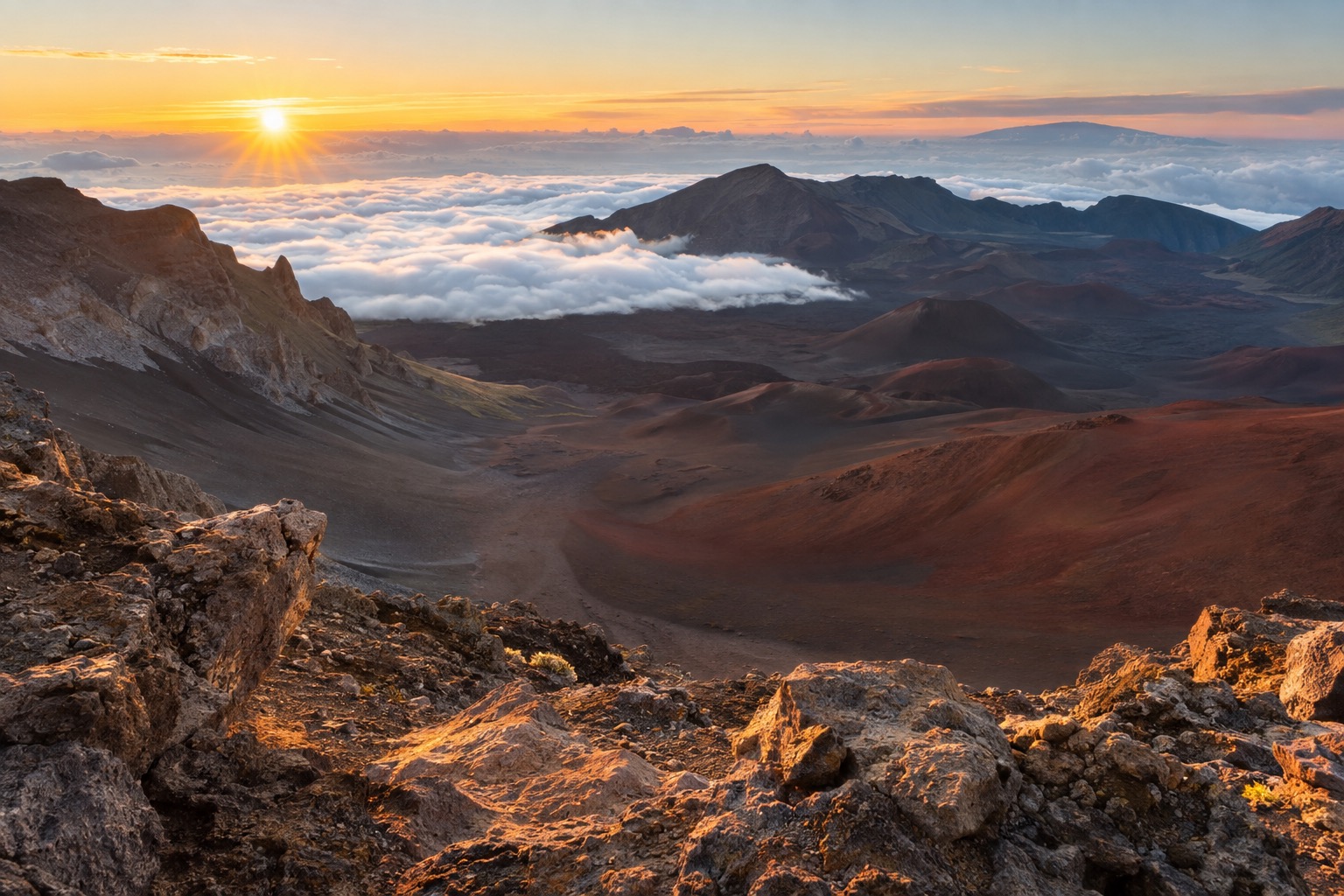
In August, before the sun comes up, headlights trace a winding climb up Haleakala’s switchbacks as the lowlands rest beneath a gentle quilt of cloud. At the crater rim, people in borrowed blankets stand shoulder to shoulder, waiting for the sky to turn from indigo to orange over a landscape of red cinder cones. August is a dry, clear stretch of the Maui year, and the volcano rewards that weather from the summit to the upcountry slopes.
What is the weather like in Haleakala in August?
August on the mountain is cool, mostly dry and often bright, though you are at altitude, so it never feels like the beach weather waiting at the bottom of the road.
| Month | Average high (°F) | Average low (°F) | Rain days |
|---|---|---|---|
| July | 65.5 | 48.9 | 5.0 |
| August | 66.1 | 49.4 | 4.4 |
| September | 64.7 | 47.9 | 5.2 |
Those numbers are recorded at the mountain’s ranger station level, and the summit, roughly 3,000 feet above it, stays colder yet. Mornings before sunrise feel properly chilly, with wind that cuts through a light sweatshirt. By midday the sun is strong, the air is thin and dry, and you can walk the rim in a fleece or even shirtsleeves, though UV exposure is higher than it feels.
Rain falls on only a handful of days this month, usually as short showers that drift in with the clouds in the afternoon. Toward Hana, the windward side has the wetter slopes, but the summit and the leeward flanks remain drier. In the afternoon the crater frequently clouds over, which means your best views usually arrive earlier in the day.
Evenings are cold enough for a jacket and a hat, and after dark the sky can be extraordinary. Daylight lasts nearly thirteen hours in mid-August, which gives you a comfortable window for a full day outside. The hurricane season runs from June 1 to November 30, so August sits inside it, and a distant system can occasionally change flights and plans.
What to do in Haleakala in August
August has no single festival that defines the mountain. What defines it is the weather: a stable, clearer season that suits long hikes, early starts and a night under the stars. Summer family weeks bring lots of visitors, so the experiences here reward an early alarm clock.
Sunrise at the summit
The sunrise is the signature experience of Haleakala, and in August the odds of a clear horizon are decent, although clouds can still roll over the rim and swallow the view. You drive up in the dark from the upcountry towns, park at the summit area and wait in the cold as the first light touches the crater floor. Sunrise visits require a reservation, so secure it before you plan anything else.
The show lasts well beyond the first sliver of sun. Colors move across the cinder cones, shadows shrink, and the silversword plants, found nowhere else, glint on the slopes. Bring every warm layer you own. Many visitors stay for the rangers’ talks and then head down, leaving the crater quiet for those who linger.
Hiking into the crater
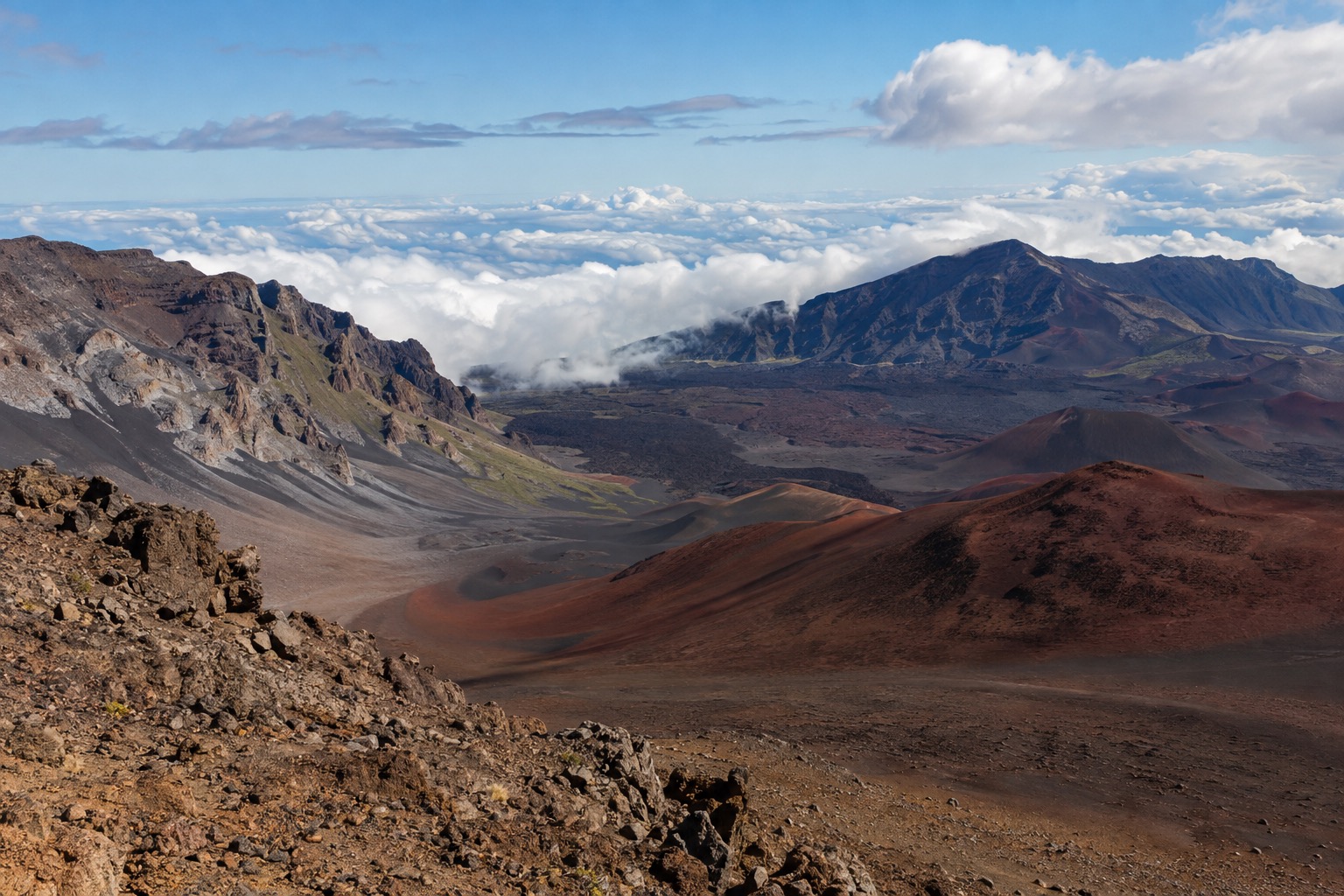
Once the sun is up, the trails into the crater are most inviting. The Sliding Sands trail descends through a lunar landscape of red, orange and gray cinder, with views that change at every bend. The air is thin, so the walk back up is much harder than the walk down, and many hikers turn around well before they planned to.
Shorter walks near the visitor center give a taste of the terrain without the climb. Go in the morning, carry plenty of water and watch for afternoon clouds that can reduce visibility. Nene, the Hawaiian goose, sometimes wander near the trailheads, and they should be left alone.
Stargazing after dark
With little light pollution and thin, dry air, the summit area is a favorite for stargazing. In August the Milky Way arches overhead on clear nights, and shooting stars from the Perseids often streak across the sky in the middle of the month. It is bitterly cold after sunset, so dress as if for winter.
Many visitors combine sunset on the rim with the first stars, then drive carefully down the winding road. The slower, quieter descent is part of the experience, with the lights of Maui spread out far below.
Upcountry stops on the way down
The slopes below the park are Maui’s upcountry, a cooler country of pastures, eucalyptus and flower farms. Kula and Makawao are the usual stops, with small cafés, bakeries and shops selling local crafts. After a cold dawn, a hot coffee and a pastry in Makawao feel like a reward.
Lavender and protea farms in the area open their gardens to visitors, and farm stands sell seasonal fruit and vegetables grown in the volcanic soil. It is a gentle way to spend the middle of the day while the summit clouds build.
A two-day itinerary for Haleakala in August
By mid-morning, head down to Kula for a long breakfast at a café, since you will be hungry after the cold.
Spend the afternoon in the upcountry, browsing a flower farm and the shops of Makawao. Eat early in a casual local spot, then rest. If rain or low clouds move in, the galleries and bakeries of Makawao make an easy indoor plan.
Day 2 is for the crater floor. Drive up after breakfast, when the light is bright and the clouds have not yet gathered, and hike into the cinder landscape on the Sliding Sands trail, turning around before you are tired. Pack lunch and eat on the rim with the view stretching to the sea.
If the sky is clear, remain on the mountain through sunset, then as the temperature falls, watch the first stars come out. Descend slowly and have a late dinner in a town below. On a gray day, shift your plan toward the park’s visitor center exhibits and a drive on the Hana side’s greener slopes.
Is Haleakala busy in August?
Yes, August is a busy month on Maui, with families filling the island before school starts, and that busyness shows up on the summit road before dawn.
The sunrise is the pressure point. Sunrise visits require a reservation, and slots tend to disappear quickly in school-vacation weeks, so book as soon as your dates are set. Parking at the summit fills up before dawn, and the rim is crowded at first light. Later in the morning and in the afternoon the park is noticeably calmer.
Rooms and rental cars on Maui are in demand in summer, so book them early, especially for the weeks right before schools reopen. Restaurant tables in the upcountry towns are easier to find than on the beaches, though the popular spots in Makawao and Kula can fill at lunch. Late August is generally a little calmer than the first weeks of the month.
If crowds bother you, trade the sunrise for sunset or a midday hike. The stars come out just as beautifully without the line of cars, and the trails in the crater are quiet for much of the day.
What to pack for Haleakala in August
Pack for two climates, the warm lowlands and the cold summit, and layers will do most of the work.
- Because the summit turns cold after dark and before sunrise, pack gloves, a hat and a warm jacket.
- Sturdy closed shoes for the cinder trails, which are loose and uneven.
- Bring sunscreen and sunglasses too, because at high elevation the sun beats down hard even if the air feels chilly.
- A refillable water bottle, as the dry, thin air dehydrates you quickly.
- A light rain shell for passing upcountry showers.
- A small flashlight or headlamp for the dark walk to the rim.
Good to know before you go
August falls inside the Central Pacific hurricane season, which runs from June 1 to November 30, so keep an eye on forecasts as your trip approaches. The road to the summit is long, steep and winding, and driving it in the dark takes patience, so leave early and allow time. Fuel up and bring snacks, since services on the mountain are limited. Sunrise reservations come first, before hotels and flights if you can manage it.
Haleakala in August vs July and September
Moving the trip to July brings a similar mountain, a touch cooler in the mornings and just as busy, with summer family travel at its peak. The weather is nearly identical, with slightly more rain days, so there is little to gain in clearer skies. Expect the same early-morning lines for sunrise.
September is a little cooler and a bit wetter on the mountain, with crowds easing as schools reopen on the mainland. Rooms and rental cars become easier to find, and the sunrise lines shorten. The tradeoff is slightly more cloud in the afternoons and a closer position to the heart of the hurricane season.
Families tied to summer vacation should stay with August or July. Travelers with flexible schedules who prefer quieter viewpoints may like early September better, while those chasing the clearest, warmest days will find August a very good choice.
Is August a good time to visit Haleakala?
Yes, August is a good time for hikers, stargazers and early risers who want a mostly dry, clear mountain and can handle some company at sunrise.
It suits photographers, families on summer break and anyone who wants a day that starts in the cold and ends in the warm lowlands. It is a weaker fit for travelers who dislike early alarms, crowds or cold air, and those who want a purely beach vacation may prefer to stay on the coast and visit the summit only once.
Once you land, lock in that sunrise reservation before anything else, then plan the other days around it. Keep the afternoons light, since the altitude and the early starts add up. Then the Milky Way over the crater, on a clear August night, is the moment that tends to stay with people long after the trip.
Sources
- NOAA NCEI, monthly normals 1991-2020, station USC00511004, checked September 8, 2026
- sunrise-sunset.org, sunrise and sunset calculated for the 15th of the month, checked September 8, 2026
- NOAA NCEI, normals 1991-2020, station USC00511004, via PLAN-HAWAII.md §1
- NWS Honolulu / Central Pacific Hurricane Center, « 2026 Central Pacific Hurricane Season Outlook », weather.gov/hfo/hurricaneOutlook2026, checked September 24, 2026
To plan your stay
- Haleakala Sunrise: Summit Reservations, Cold Dawn Conditions and the Drive Up
- Best Time to Visit Haleakala: Weather by Month, Sunrise Seasons, Crowds and Events
- Haleakala in July: Weather, Sunrise and Stargazing, and Two Days on the Mountain
- Haleakala in September: Weather, Sunrise and Stargazing, and What to Do