
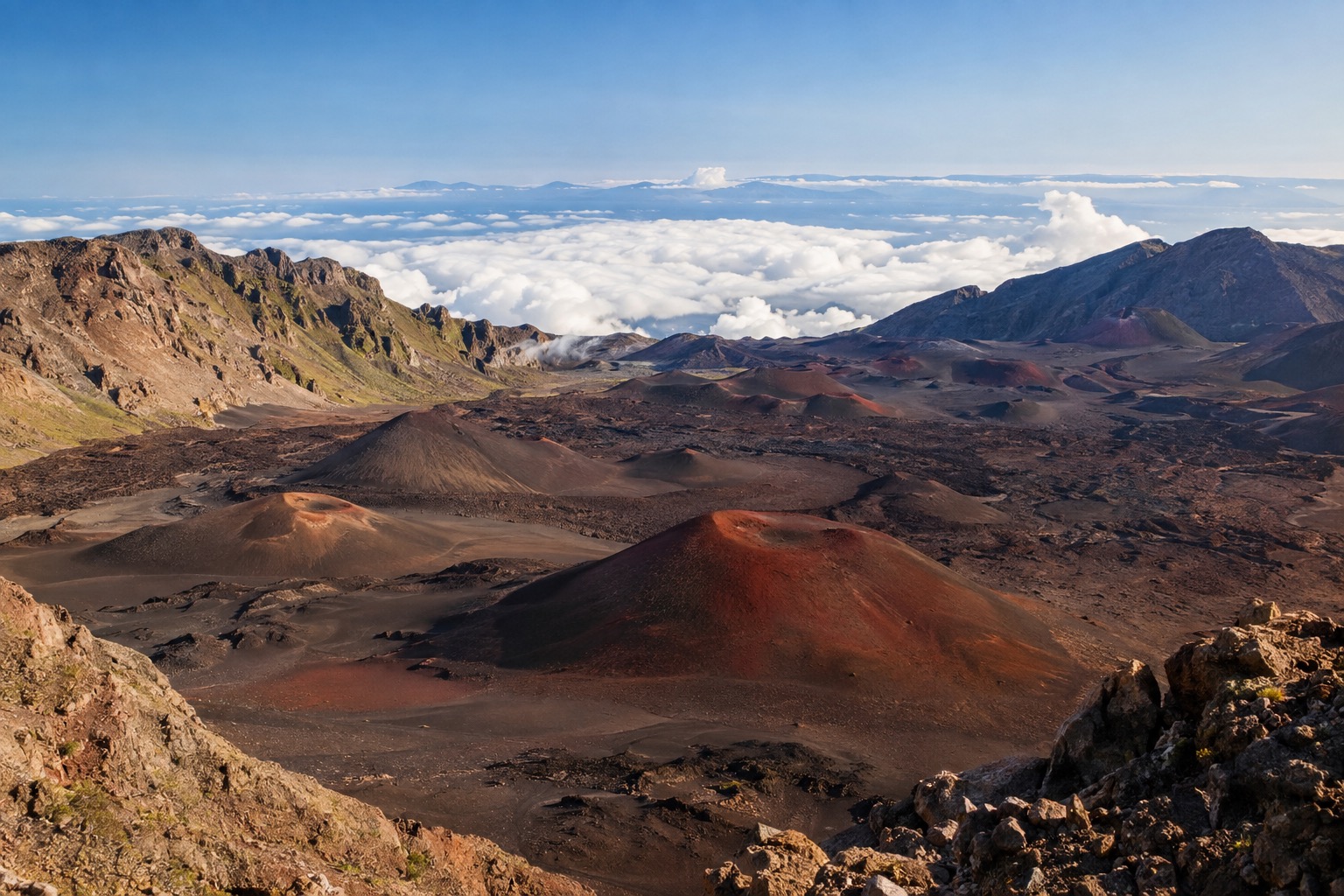
Before dawn in April, a line of headlights climbs the switchbacks above the clouds, and the people who step out at the top pull their jackets tight as the sky turns from black to plum to orange. Below, the cloud deck glows like a second sea, and the crater floor slowly comes into view in rust and gray. April on Haleakala is a drier, clearer month than the winter that just ended, a good time for sunrise, crater hikes and long looks across the clouds.
What is the weather like in Haleakala in April?
April on the mountain is cool and mostly clear, with brisk mornings, mild afternoons and only a few days of rain. The table compares it with the months on either side.
| Month | Average high (°F) | Average low (°F) | Rain days |
|---|---|---|---|
| March | 59.7 | 43.1 | 7.6 |
| April | 60.7 | 43.8 | 6.0 |
| May | 63.2 | 45.9 | 4.4 |
Up around 7,000 feet, the air already has a bite, and by the time you climb another 3,000 feet to the summit, it feels even colder on your skin. Expect the kind of chill that calls for a winter coat, a hat and gloves at sunrise, especially with the wind that sweeps the crater rim. By midday the sun feels strong at this altitude, and a layer comes off quickly on a trail.
Rain here arrives as passing showers, usually when clouds climb the slopes in the afternoon, and many days stay dry. The wettest weather falls on the windward side of the mountain, toward Hana, while the summit often sits above the cloud deck in clear air. Fog can still roll over the crater and hide the view for an hour or a whole morning, so a flexible plan helps.
Days are long enough for a full outing, with about twelve and a half hours of daylight in mid-April. Evenings turn cold fast once the sun drops, and the stars at night are spectacular when the sky is clear. The sea is far below and not part of the summit day, but the coast at the foot of the mountain stays warm.
What to do in Haleakala in April
April has no single big festival on the mountain itself, and that suits it. April is given over to the scenery: daybreak over the cloud tops, treks over a crater resembling some other world, and still nights beneath an enormous sky. Spring on the slopes also means fewer showers than winter, so the views open more often.
Humpback whale season is winding down along the coast below, and you may still spot a few from the shore toward the early part of the month. Lower on the mountain, the upcountry farms and ranch land are green from the winter rains, and the roadside stands sell fruit, flowers and local snacks.
Sunrise at the summit
The sunrise is the signature outing, and in April it is one of the great pleasures of a Maui trip. You drive up in the dark, park near the summit area and wait on the rim as the light spreads across the clouds. The sun often rises through a sea of cloud, and the colors shift for a long while after it clears the horizon.
Dress for real cold, bring a blanket or a thermos of something hot, and expect crowds along the railings. To catch the sunrise in the park, you need a reservation, so secure it before you map out the rest of your day. Clouds can hide the show, but they sometimes part at the last minute, so stay until the light is full.
Hiking into the crater
The trails drop from the rim onto cinder and lava fields in shades of red, orange and gray, with silversword plants dotting the slopes. Even a short walk down feels like leaving the Earth behind, and the silence is part of the draw. April weather tends to be friendlier than winter, with fewer rainy days and good visibility on many mornings.
Up here the air is thin, so take your time, bring water, and keep in mind that the return climb is what makes this tough. Go early, before afternoon cloud rolls in, and keep to the marked trails so the fragile plants survive. Do not touch or pick the silverswords, which grow nowhere else.
Stargazing after dark
With little light pollution and thin air, the night sky here is among the finest in the islands. In clear April evenings the Milky Way can stretch across the dark, and the planets glow steadily. It is bitterly cold after sunset, so bring heavy layers and a warm drink.
A short stop at a visitor center in the late afternoon helps you learn how the volcano formed and why the plants and birds here are rare. Rangers and exhibits explain the Hawaiian meaning of the mountain, which is sacred ground. Visit with respect, stay on paths and leave the stones where they lie.
A two-day itinerary for Haleakala in April
Day 1 starts in the dark. Set out from where you are staying with time to spare so you reach the summit long before dawn, your reservation ready and all your warm layers on. Watch the sunrise, then linger as the crater lights up, and walk a short stretch of trail near the rim while the air is still crisp and the cloud is below you.
After a late breakfast at a café or bakery upcountry, head down and pass the middle of the day on the slower slopes, amid farms, flower stands and eucalyptus groves. An afternoon nap is not a bad idea after a pre-dawn start. If clouds or rain close in, a visit to a cultural center or a museum fills the hours indoors.
Day 2 is for the crater floor. Start a bit later, around the time the morning light turns warm, and take a longer hike down into the cinder landscape, turning back before your legs tire. Eat a picnic lunch at the rim or at a viewpoint, then spend the afternoon at the visitor center or on a slow drive with stops at overlooks.
As evening falls, return up the road for sunset or for the first stars, with a jacket in the car. Dinner afterward can be a casual spot in an upcountry town, where plates of local fish, grilled meats and warm bread feel right after a cold, bright day. If fog hides the summit, trade it for a coastal evening at lower elevation.
Is Haleakala busy in April?
April is moderately busy, with a steady flow of visitors rather than a rush, and the sunrise is the one moment that fills up. Spring break travelers and families on Easter week bring more cars to the summit road, while the rest of the month feels calmer. Weekdays after the holiday weeks are the quietest.
Rooms and rental cars on Maui tighten around the holiday weeks, so book early if your dates touch Easter, and a bit later if you travel at the end of the month. Restaurant tables in the upcountry towns and the coastal resorts fill on weekends, so a reservation for dinner helps on those nights. Mornings at the summit are best planned first, since the rest of the trip can bend around it.
The one reservation that matters most is the sunrise entry to the park, which is required for viewing at that hour. Come with your confirmation in hand and your gas tank filled, because the mountain has no fuel. Daytime visits are easier, and afternoons are the calmest time to see the crater.
What to pack for Haleakala in April
Think in layers, because the mountain swings from freezing pre-dawn to warm sun within a few hours.
- For the wind at the summit before sunrise, bring a warm coat, hat and gloves.
- Sturdy closed shoes, for cinder and lava trails
- A light rain jacket, since showers pass through in the afternoon
- Pack sunscreen and sunglasses, since the sun beats down hard up high
- A refillable water bottle and snacks, for hikes with no services
- A blanket or thermos, to stay warm while waiting for the sun
Good to know before you go
April falls outside the Central Pacific hurricane season, which runs from June 1 to November 30. The road to the summit is long and winding, so allow plenty of time and keep your fuel topped up before you leave the lowlands. Cell service can be patchy, so save directions before you go and plan the sunrise reservation first.
Haleakala in April vs March and May
March is wetter on the mountain, with more cloudy mornings and the last of the whale season along the coast below. If you want the whales, an earlier trip makes sense, though you accept more rain and more fog at the summit.
May is warmer and drier, with clearer mornings and the start of the long summer stretch, and the crowds begin to build toward the summer family weeks. Hikes are easier, and the sunrise is a little less bitter, though the whales have mostly gone.
April sits comfortably between the two. Choose it if you want a balance of fewer showers, a calmer trail and a final chance at whales. Shift to May if warmth matters most, or to March if whales are the priority.
Is April a good time to visit Haleakala?
Yes, April is a good time for hikers, photographers and anyone who wants a clear sunrise without the deepest winter chill. For travelers drawn to dawn outings and wide-open views, this is a great match, while anyone hoping for warm beach weather from morning to night may find it lacking, because the summit remains cold.
On arrival, book the sunrise entry first, then build the rest of the trip around it, leaving the coast and the upcountry for the hours after. Keep one flexible morning in case fog hides the view, and spend the first afternoon letting your body adjust to the altitude. What stays with you from April is the moment the clouds fall away below the rim and the crater fills with light, red cinder glowing under a pale spring sky.
Sources
- NOAA NCEI, monthly normals 1991-2020, station USC00511004, checked September 8, 2026
- sunrise-sunset.org, sunrise and sunset calculated for the 15th of the month, checked September 8, 2026
- NOAA NCEI, normals 1991-2020, station USC00511004, via PLAN-HAWAII.md §1
- NWS Honolulu / Central Pacific Hurricane Center, « 2026 Central Pacific Hurricane Season Outlook », weather.gov/hfo/hurricaneOutlook2026, checked September 24, 2026