
GULF ISLANDS NATIONAL SEASHORE · FEBRUARY · FLORIDA TO MISSISSIPPI
February afternoons at Gulf Islands National Seashore average 65.8°F at the NOAA station on its eastern end, and the Gulf alongside runs about 62°F. Pack for long barrier-island walks and fort afternoons, and treat a swim as a dare for the hardy.
Evenings set the packing list. Nights average 47.9°F, one night in an average February drops to freezing, and sunset on the 15th comes at 5:33 p.m. Central time. Bring a real jacket, plan the outdoor day around the light, and the month gives you cool, bright days on the sand with few beach crowds around you.
FEBRUARY AT A GLANCE · GULF ISLANDS NATIONAL SEASHORE
Go in February for forts, trails and beach walks in 65.8°F afternoons, and bring a jacket for the 47.9°F nights, because the 62.1°F Gulf is for wading, not lounging.
WINTER OFF-SEASON · SEA 62.1°F · LAYERS REQUIRED
Go for: walking the forts and live-oak trails in mild afternoons, empty-feeling beaches and an easy weekend escape from a northern winter.
Think twice before: planning a swimming trip, since the Gulf averages 62.1°F even at its warmest hour of the day.
Air: NOAA NCEI station USW00053853 · Sea: Open-Meteo Marine API · Light: sunrise-sunset.org · full sources below
On this page
- Gulf Islands weather in FebruaryHighs of 65.8°F, lows of 47.9°F, 5.3 rain days
- Can you swim in February?Sea at 62.1°F, measured as daily maxima
- Crowds and room prices in FebruaryOff-season booking, lodging tax and where to spend more
- Things to do in FebruaryFort Pickens, Naval Live Oaks, Opal Beach and Davis Bayou
- A two-day February itineraryTwo days built around a 5:33 p.m. sunset
- February vs January and MarchHow the three months compare on air, rain and sea
- Is February a good time to visit?Who should go now, and who should wait
Most February trips to the Florida side start at Pensacola International Airport (PNS), while the Mississippi district sits closer to Gulfport-Biloxi. Two or three nights (est.) cover one district well. Routes and fares are in our Florida flights guide, and everything that does not change with the calendar, from the districts to the campgrounds, is in our Gulf Islands National Seashore guide.
Gulf Islands National Seashore weather in February: average highs, lows and rain days
| February normal (1991-2020) | Value |
|---|---|
| Average high | 65.8°F |
| Average low | 47.9°F |
| Precipitation | 4.96 in |
| Days with 0.10 in or more | 5.3 |
| Days with 1 in or more | 1.7 |
| Nights at 32°F or below | 1.0 |
| Daylight on February 15 | 11 h 10 min |
NOAA NCEI’s official 1991-2020 normals for station USW00053853 at South Walton supply every figure here: a physical thermometer, not a reanalysis grid cell. February there averages a high of 65.8°F, a low of 47.9°F and 4.96 inches of precipitation. That station stands at the seashore’s eastern end, and the park stretches west from there into Mississippi, so read these numbers as the eastern end’s weather. Fort Pickens and Davis Bayou can run a little different on any given day.
Measurable rain, 0.10 inch or more, falls on 5.3 days of an average February, roughly one day in five. On 1.7 of those days the total passes an inch, enough to cancel a beach afternoon outright. A three-day trip has close to even odds of meeting at least one wet day (est.), so keep one indoor or driving plan in reserve.
Dawn and afternoon sit 17.9°F apart on average, and a single February day can ask for a fleece at breakfast and short sleeves by two. Pack long pants, a warm midlayer and a windproof shell for the open beaches. Campers need more: one night in an average February falls to 32°F or below, so bring a sleeping bag rated for frost.
On February 15 the sun rises at 6:23 a.m. and sets at 5:33 p.m. Central Standard Time, for 11 hours 10 minutes of daylight, according to sunrise-sunset.org. Aim to finish the last beach walk by about 5:30 p.m. and expect the drive back to your room in darkness.
Swimming at Gulf Islands National Seashore in February: sea temperature
Open-Meteo’s Marine API, a modeled series averaged over 2015-2024, puts the Gulf off the seashore at 62.1°F in February. That figure is the mean of each day’s warmest reading, a shade warmer than a 24-hour average, so the water at dawn runs a little cooler still. It also comes from a different source and period than the NOAA air normals.
For most swimmers, 62°F water means a quick in-and-out: cold enough to take your breath on entry, and cold enough that a full wetsuit decides whether you get a dip or a proper swim. Afternoon air at 65.8°F barely beats the water, so bring a towel and a dry layer to the sand. Assume there is no lifeguard coverage in February and swim close to shore with company.
We could not read a wind or wave series for February, so we give no figure for chop or surf. Winter cold fronts do cross the northern Gulf, and conditions can turn within a day. Check the posted beach flags before you wade in, and our Florida safety guide explains what each color means.
How busy is Gulf Islands National Seashore in February? Crowds and prices
February falls in the winter off-season on this stretch of coast, after the holiday weeks and before March brings spring break to Florida’s beach towns. We found no occupancy series and no monthly room rates, so we rank no month cheapest.
A February weekend in Pensacola Beach, Gulf Breeze or Navarre can usually be booked two to three weeks out (est.). Leave more lead time if your dates run into early March. Campers eyeing Fort Pickens or Davis Bayou should check the NPS reservation system directly, because we could not verify February campsite availability.
We could not verify the lodging-tax rates for Escambia, Santa Rosa or Okaloosa County, or for Jackson County in Mississippi, so we give no percentage. Ask for the total with tax and fees before you book, and our Florida trip-cost guide covers the resort-fee layer that often sits on top.
Spend the extra on heat. With lows averaging 47.9°F and one freezing night in an average February, a heated room or cabin changes the trip for anyone without cold-weather camping gear, far more than a better view does. Our Florida where-to-stay guide sorts the bases by region.
Things to do in Gulf Islands National Seashore in February
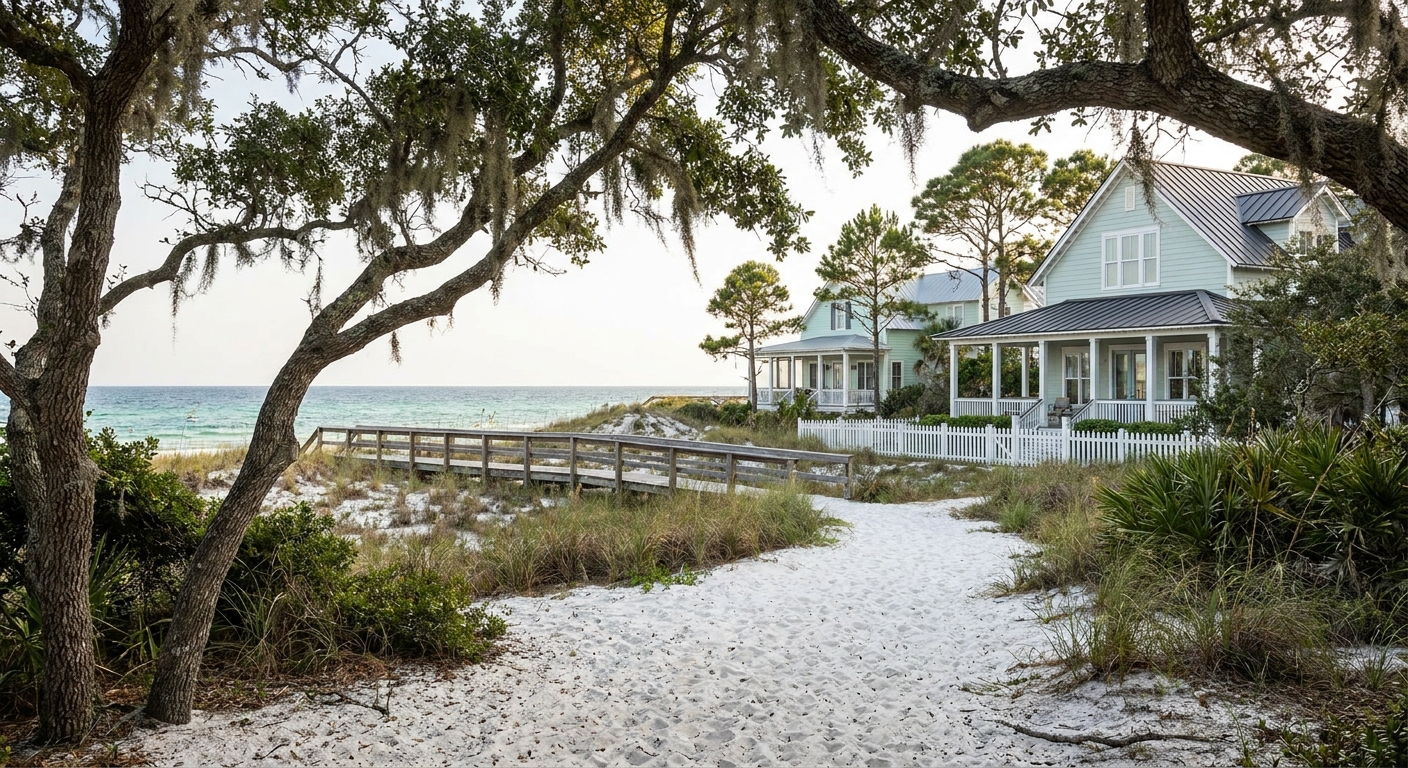
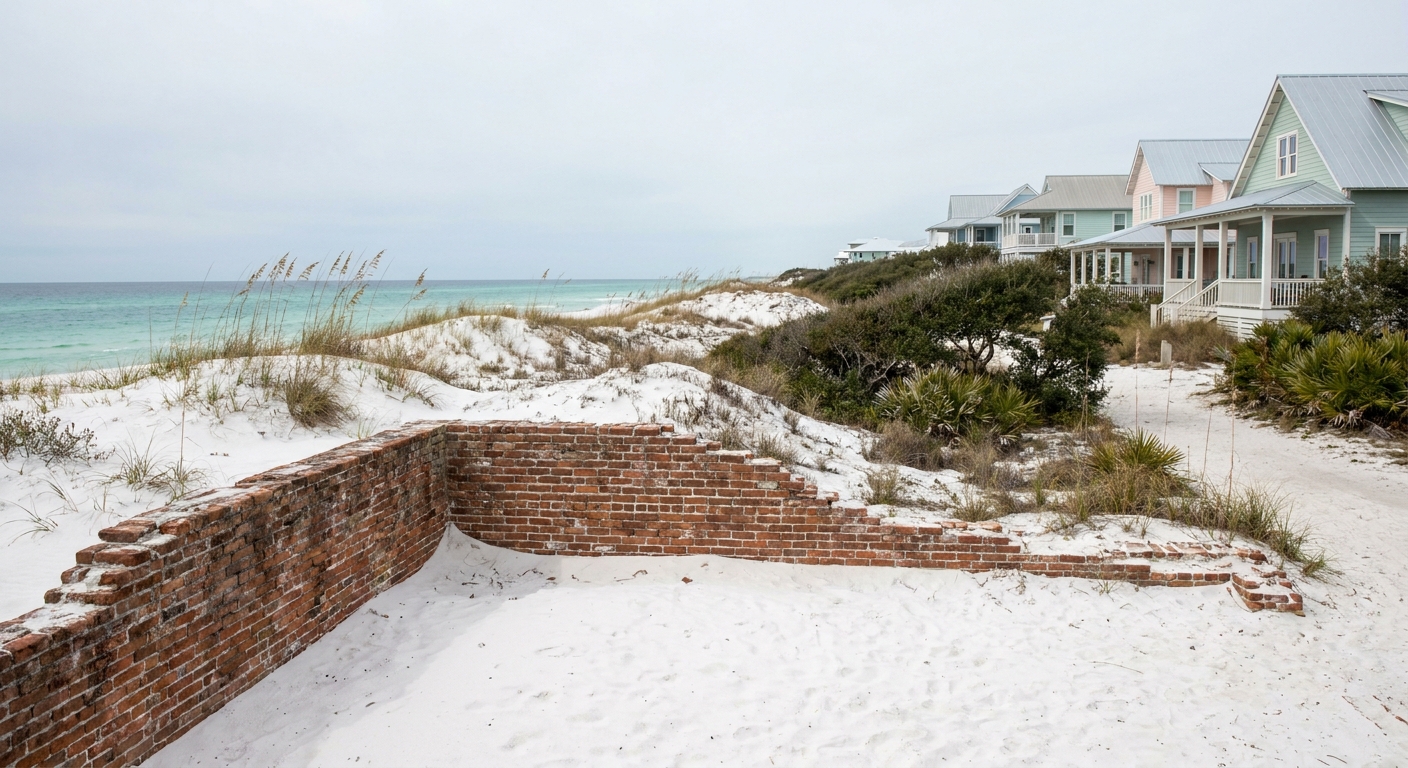
February’s 65.8°F afternoons suit the seashore’s walking side. The brick forts, the shaded trails and the long barrier-island beaches all make full-day outings without midday heat to dodge, and winter shorebirds work the flats at the water’s edge.
On Santa Rosa Island, Fort Pickens guards the western tip past Pensacola Beach, and Opal Beach sits on the undeveloped stretch toward Navarre. Across Santa Rosa Sound in Gulf Breeze, Naval Live Oaks keeps its trails under old live oaks. In Mississippi, Davis Bayou at Ocean Springs holds the district’s visitor center and campground. Check the NPS site before you drive for 2026 fees, hours and trail lengths.
What shifts this month is the air around these places. The Gulf peaks near 62.1°F each day, while the air swings from 47.9°F at dawn to 65.8°F in the afternoon. An 8 a.m. beach walk is colder on land than in the water, and the same walk at 2 p.m. sits on the warm side of that swing.
We could not verify whether an entrance fee applies at each area in February 2026, or whether any fee-free day falls this month, so we call nothing free. Annual and interagency passes, and how they work across the state, are covered in our Florida national parks guide.
Gulf Islands National Seashore in February: a two-day itinerary
Day one, the Florida district. Start at Naval Live Oaks around 7 a.m., soon after the 6:23 a.m. sunrise, for the stillest hour on the trails. Cross to Santa Rosa Island by mid-morning and give the late morning to Opal Beach while the air warms. Reach Fort Pickens in early afternoon, when February highs usually arrive, and spend two or three hours on the walls and the beach below. Head off the sand by 5 p.m., since sunset lands at 5:33 p.m. and the air slides toward 47.9°F after dark.
Day two, the Mississippi district. Davis Bayou at Ocean Springs sits about two hours west of Pensacola by car (est.), a comfortable day trip with an early start, and our getting-around guide covers rentals. If the forecast shows one of February’s 1.7 inch-plus rain days, swap the order: give the wet day to the drive and the Davis Bayou visitor center, and move Opal Beach and Fort Pickens to the drier one.
Gulf Islands National Seashore in February vs January and March
| Normal | January | February | March |
|---|---|---|---|
| Average high | 63.1°F | 65.8°F | 70.7°F |
| Average low | 45.3°F | 47.9°F | 53.6°F |
| Precipitation | 4.52 in | 4.96 in | 4.70 in |
| Days with 0.10 in or more | 5.6 | 5.3 | 5.2 |
| Sea, daily maxima (Open-Meteo, 2015-2024) | 60.4°F | 62.1°F | 67.5°F |
February runs 2.7°F warmer than January on the average high (65.8°F against 63.1°F) and 4.9°F cooler than March at 70.7°F. Lows climb in step, from 45.3°F to 47.9°F to 53.6°F. Rain barely moves by count, with 5.6, 5.3 and 5.2 days at 0.10 inch or more, though February carries the most total rain of the three at 4.96 inches. In Open-Meteo’s marine series the Gulf rises from 60.4°F to 62.1°F, then jumps to 67.5°F in March.
Pushing the trip four weeks later buys 5.4°F of sea and 5.7°F on the nights, yet leaves the water under 68°F and lands you in spring break season. Moving it four weeks earlier costs 2.7°F on the afternoon and 1.7°F of sea in exchange for 0.44 inch less rain. Our Gulf Islands January page details the colder month.
Is February a good time to visit Gulf Islands National Seashore?
Yes, if the trip is about walking, forts and winter shorebirds, or about trading a northern February for 65.8°F afternoons. No, if the plan is a beach vacation spent in the water: at 62.1°F even at its daily peak, the Gulf here calls for a wetsuit.
Swimmers should look beyond March too, because its 67.5°F sea still reads cool to most people. We have no summer figures for this seashore in our sources, so turn to our Florida best-time guide for the warm-water months.
Among the three months compared, February pairs afternoons in the mid-60s with the calm stretch before spring break reaches Florida’s beach towns.
The last word
Pick the district before you pick the dates. The seashore runs 160 miles from its eastern end, where our NOAA thermometer stands, west into Mississippi, and a February weekend feels best from one base: Pensacola Beach for Fort Pickens and Opal Beach, Ocean Springs for Davis Bayou. Book the room nearer the district you want most, and pack the fleece for evenings in the 40s.
Sources & data for this guide
- February, January and March air normals, precipitation, rain days and freezing nights · NOAA NCEI monthly normals 1991-2020, station USW00053853 (South Walton, eastern end of the seashore) · checked Sep 24, 2026
- Sea surface temperature, February, January and March · Open-Meteo Marine API, mean of daily maxima 2015-2024 (modeled, a shade warmer than a 24-hour mean) · checked Sep 24, 2026
- Sunrise, sunset and daylight on February 15 · sunrise-sunset.org, converted from UTC to Central Standard Time · checked Sep 24, 2026
- We could not verify 2026 entrance fees, hours, lifeguard coverage, campsite availability, wind and wave data or lodging-tax rates, and we give no figure for any of them.
- Stay lengths, booking lead times, drive times and rain-day odds marked (est.) are editorial estimates · confirm with the NPS and your lodging when you book.
To plan your stay
- Best Time to Visit Gulf Islands National Seashore: Weather, Sea Temperature and the Quiet Months
- Gulf Islands National Seashore in January: Weather, Sea Temperature, Crowds and a Two-Day Plan
- Gulf Islands National Seashore in March: Weather, Sea Temperature, Crowds and a Two-Day Itinerary
- Gulf Islands National Seashore in April: Weather, Water Temperature and Crowds