
PORTUGAL · MARCH · THE MONTH, REGION BY REGION
The chairs come back out. Somewhere in the first two weeks of March the café terraces in Lisbon and Faro stop being a gamble and go back to being the default, and the whole country tilts outdoors: 62°F afternoons, 51°F nights, about eight days of rain in the national average, and a sunset that travels from 6:29pm to 7:59pm across four weeks once the clocks jump.
That shift lands unevenly, which is the point of this page. The Algarve gets walking weather at 63°F and seven rain days. Porto still collects 123 mm of rain. And the national crowd curve sits at 47 percent of the August peak, so the country is awake without being full.
THE MONTH AT A GLANCE · PORTUGAL IN MARCH
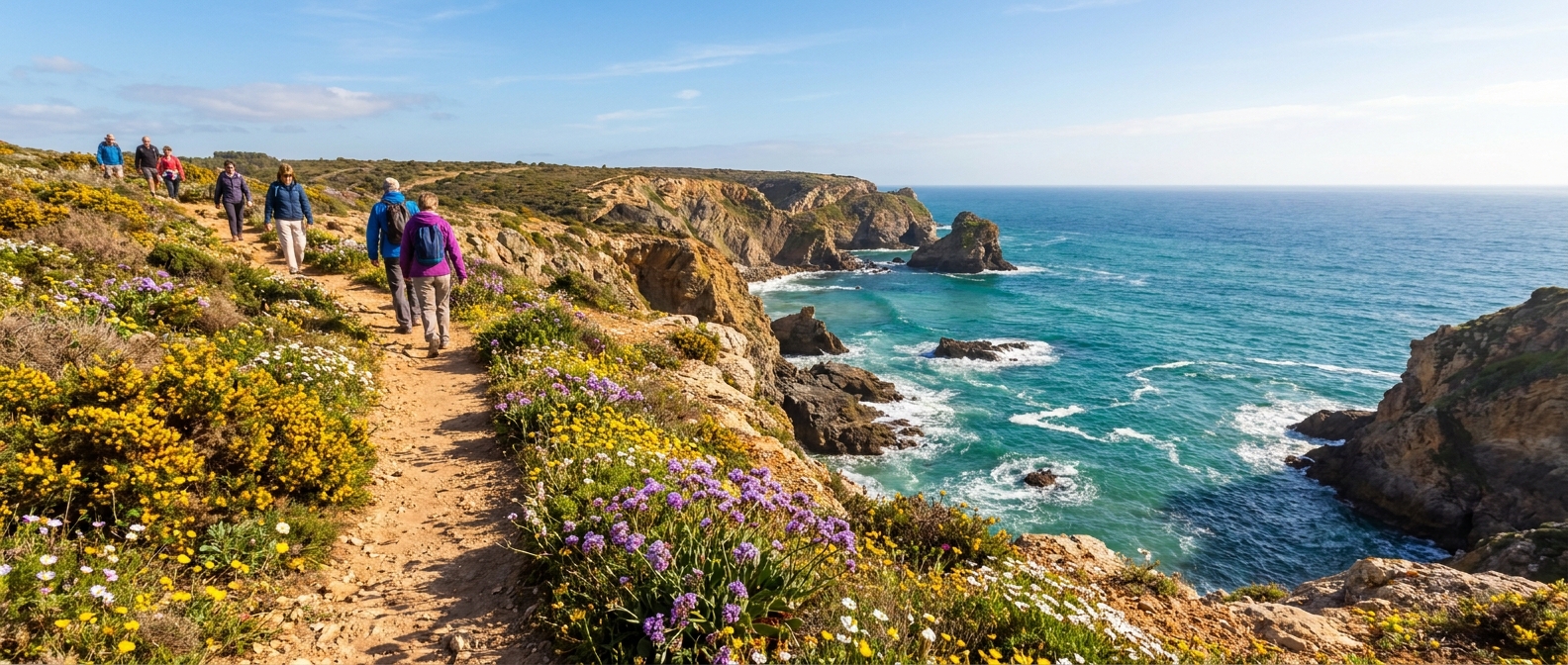
March is Portugal’s first outdoor month: 62°F afternoons, eight rain days nationally, terraces reopening in the south, and evening light stretching to nearly 8pm by the last week.
GOOD MONTH NATIONALLY · BEST IN: THE ALGARVE & ALENTEJO · WETTEST IN: THE NORTH
Go for: coastal hiking in the Algarve before the summer heat, city walking in a light jacket, green Alentejo back roads, and hotel rates well below the summer line.
Think twice if: the trip is built on swimming. The sea runs around 59°F, and the north pours 123 mm of rain over roughly ten days in Porto.
Easter is a moving feast and can land in the final days of March some years (est.). If it does, expect processions, domestic travel and firmer rates in that one week.
Climate: 1991–2020 normals per city (ERA5) · Crowds: Eurostat monthly data · full sources at the end
See the full 12-month verdict →
On this page
- Coastal hiking before the heatThe Algarve, 7 rain days
- City days in a light jacketLisbon & the center
- Green terraces, 123 mm of rainPorto & the Douro
- Wildflower plains and empty roadsThe Alentejo
Where to go in Portugal in March: coast, capital, north and plains
Lisbon & the center: 62°F days, 51°F nights, 8 rain days
The capital’s March runs at 62°F by day and 51°F after dark, with 53 mm of rain spread over about eight days. Those are lunch-outside numbers and jacket-after-seven numbers at the same time. Sintra’s hills sit several degrees cooler and mistier than the city (the palace day rewards an early train), while the miradouro sunset moves from half past six to almost eight over the course of the month.
Verdict: Good · the reliable base · Rain: 8 days · For: first-timers, walkers, food trips
The Algarve: 63°F, 7 rain days, the trail season
The south is the driest corner of the country this month: 63°F afternoons, 54°F nights, 54 mm across roughly seven days. That combination is what the cliff paths were built for. Walking the Seven Hanging Valleys route or a section of the Rota Vicentina in March means no shade problem and no August heat, and the beach towns are running at a fraction of their summer load. Swimming is another matter at 59°F. The Algarve’s two sides.
Verdict: Best · driest region · Sea: ~59°F, wetsuit only · For: hikers, cyclists, golfers
Porto, the Douro & the North: 123 mm of rain, green terraces
Porto gets 61°F days, 47°F nights and 123 mm of rain over about ten days, more than double Lisbon’s total. What that water buys is the greenest Douro of the year: the terraces are budding, the river runs high, and the valley looks nothing like its autumn self. Cellar visits and granite churches absorb the wet afternoons. The picking season and its logistics belong to a different half of the calendar, covered in our Douro harvest almanac.
Verdict: Mixed · green and wet · Rain: 10 days · 123 mm · For: wine people, city breakers with a raincoat
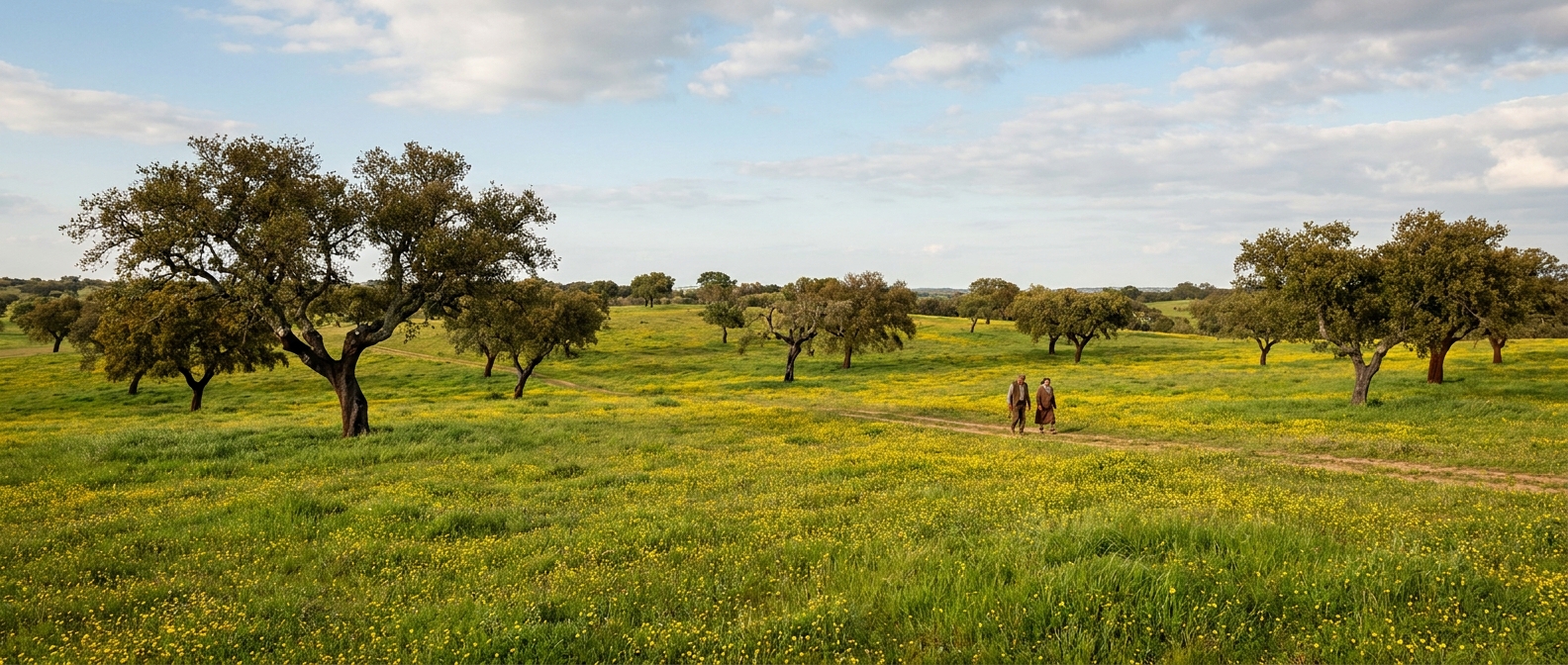
The Alentejo: wildflowers, cork oaks and empty back roads
Between the winter rain and the summer scorch, the plains turn briefly green, and March catches them mid-bloom: yellow fields under the cork oaks, storks on every chimney in Évora, and marble villages you can park in without circling. Interior temperatures track Lisbon’s, with cold mornings inland. A car is the only sensible way to string Évora, Monsaraz and the Alqueva starfield together, and the rental rules are worth reading before you book.
Verdict: Best · the green window · For: road-trippers, photographers, stargazers
March weather in Portugal: what the normals say for Lisbon, Porto and Faro
| Region (city) | Days | Nights | Rain | Sea | The trade |
|---|---|---|---|---|---|
| Lisbon | 62°F / 17°C | 51°F / 11°C | 8 days · 53 mm | ~59°F | Terraces back, jacket at night |
| Algarve (Faro) | 63°F / 17°C | 54°F / 12°C | 7 days · 54 mm | ~59°F | Driest region, trail weather |
| North (Porto) | 61°F / 16°C | 47°F / 8°C | 10 days · 123 mm | colder (est.) | Green valley, real rain |
30-year averages (1991–2020) per reference city; the Alentejo interior runs close to Lisbon’s daytime figures with colder dawns. National lodging data puts March at about 47 percent of the August peak.
March in Portugal: the clock change, the green countryside and Easter’s moving date
The evening jump. Portugal starts the month with sunset at 6:29pm in Lisbon and ends it at 7:59pm, most of that gain arriving in one go when the clocks move forward on the last weekend. Dinner outdoors becomes plausible again in the final week, and a day trip stops ending in the dark.
The green window. Winter rain does its work here: hillsides that will be straw-colored by June are lush now, and the Algarve’s almond blossom has mostly finished by the time March gets going (est.). Pack layers rather than a wardrobe, since a 63°F afternoon on the coast turns into a cool evening fast. Our packing list settles the shell-jacket question.
Easter moves. Some years the Holy Week processions of Braga and the Alentejo villages fall inside March, some years they wait for April (est.). Check the calendar for your travel year before locking rooms, because that week behaves like a small high season while the rest of the month keeps its 47 percent crowd figure and its off-peak rates. Our cost breakdown shows what the difference does to a week.
Portugal in February, April or May instead
Gain: the quietest cities and the softest rates of the winter, plus almond blossom in the south. February in Portugal.
Lose: an hour and a half of evening light, and any terrace certainty.
Gain: warmer afternoons, longer evenings, and the countryside still green. April in Portugal.
Lose: March’s near-empty trails, and the pre-Easter pricing (est.).
Gain: the driest spring month and a sea that has stopped being a shock. May in Portugal.
Lose: the crowd curve, which climbs steadily from here to August.
The last word
March asks you to aim south and walk. Give the Algarve the trail days it deserves at 63°F and seven rain days, keep Lisbon for the middle of the week, and treat the north as a bonus with a raincoat rather than the spine of the trip. Then wait for the last weekend, when the clocks move and dinner at 7:30pm suddenly happens in daylight.
Plan the shape of the week with the seven-day route, compare every month in the full-year verdict, or start from the whole Portugal playbook. American passport holders should also check what the entry rules ask for before booking.
Sources & data for this guide
- Climate: 1991–2020 normals computed from ERA5 daily data for the Lisbon, Faro and Porto grid cells · Open-Meteo (ECMWF ERA5) · checked Sep 3, 2026
- Crowds (~47% of the August peak) and the national March row · our full-year verdict page, built on Eurostat monthly nights, Portugal · checked Sep 3, 2026
- Sunset times for Lisbon, first and last day of March (local time, DST switch late in the month) · NOAA solar algorithm · checked Sep 3, 2026
- Sea temperature ~59°F: multi-year coastal average · Open-Meteo Marine · checked Sep 3, 2026. The Porto figure is left as an estimate: we did not have a verified March value for that stretch of coast.
- Editorial note: Easter moves every year, so this page gives no dates, no processions schedule and no event times for it. Check the calendar for your travel year.