
BLUE MOUNTAIN PEAK · JAMAICA · 7,402 FT
What there is to do here, activity by activity, is on things to do in the Blue Mountains.
An hour or two above the beach bars, the temperature drops, the roadside turns to tree fern and cloud, and Jamaica stops looking like its own postcard. The range runs the island’s spine to 7,402 feet (2,256 m), carries a UNESCO World Heritage listing since 2015 (the Blue and John Crow Mountains, the country’s first inscribed site), and grows the most fiercely protected coffee name on the planet. The classic visit starts at one in the morning, in the dark, on foot.
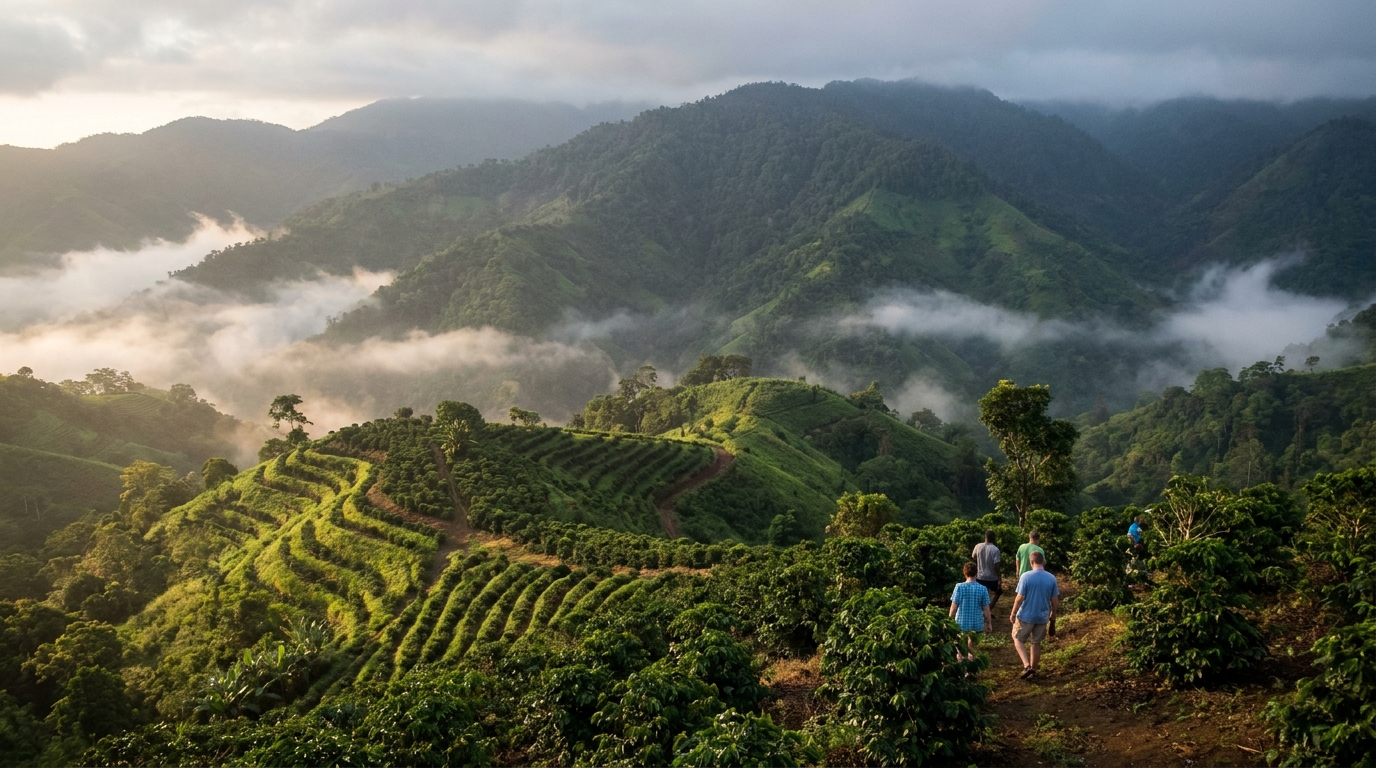
THE MOUNTAINS AT A GLANCE · JAMAICA
Sleep near the trailhead, start walking in the dark behind a guide, take the sunrise at 7,402 feet, and come back down through the coffee farms: this is a two-day plan, not an afternoon detour from the coast.
7,402 FT / 2,256 M · UNESCO SINCE 2015 · TWO GATEWAYS: KINGSTON AND PORT ANTONIO
Go for: cold air, cloud forest and coffee tasted fifty yards from the tree, in a country most visitors only meet at sea level.
Think twice before: driving the ridge roads yourself after dark, or squeezing the peak into a beach week with no spare day for weather. The seasonal picture sits in our 12-month verdict.
Facts: UNESCO World Heritage listing · full sources at the end of this guide
Two ways into the Blue Mountains: the Kingston side and the Port Antonio side
From Kingston. The city’s northern edge climbs straight into the range, and the road gains altitude fast: coffee estates, hillside guesthouses, cool evenings that feel like a different country from the harbor below. Most peak hikers come this way, because the trailhead hamlets on the eastern flank are reached from this side. Base yourself in Kingston for a night, then go up.
From Port Antonio. The wetter, greener approach, sharing a ridge system with the John Crow Mountains that make up the other half of the World Heritage site. Rivers, waterfalls and rainforest do the work here rather than summit ambition. It suits travelers already committed to the northeast coast, and the Port Antonio guide covers what the lowland base gives you.
Which door you pick decides the trip. Kingston side means summit, coffee and altitude. Port Antonio side means forest, water and a slower register. Very few visitors do both in one week, and the drive between them is not the shortcut a map suggests.
The night hike to Blue Mountain Peak, hour by hour
| Hour (est.) | Where | Why then |
|---|---|---|
| 19:00 | Dinner at the trailhead guesthouse | Sleep is the actual equipment |
| 01:00 | Headlamps on, first switchbacks | The dark start is what puts you up top at dawn |
| 03:30 | Halfway, layers going on | Air is thinning and the temperature is falling |
| 05:00 | Last ridge below the summit | Pre-dawn cold at 7,402 ft, gloves earn their place |
| 05:45 | The peak | Sunrise, with the island reading as a relief map on a clear morning |
| 09:30 | Back down at the guesthouse | Breakfast, and coffee grown on the slope you just walked |
| 12:00 | A farm visit on the way out | The descent’s best excuse to stop |
Times above are approximate and depend on your pace, your guide and the trail’s condition after rain. What isn’t negotiable: a headlamp with fresh batteries, a warm layer, and a guide who knows the route in the dark. The mountain does not have streetlights, and the descent in daylight is longer than the climb felt.
Blue Mountain coffee farms: the appellation, the tour, the cost
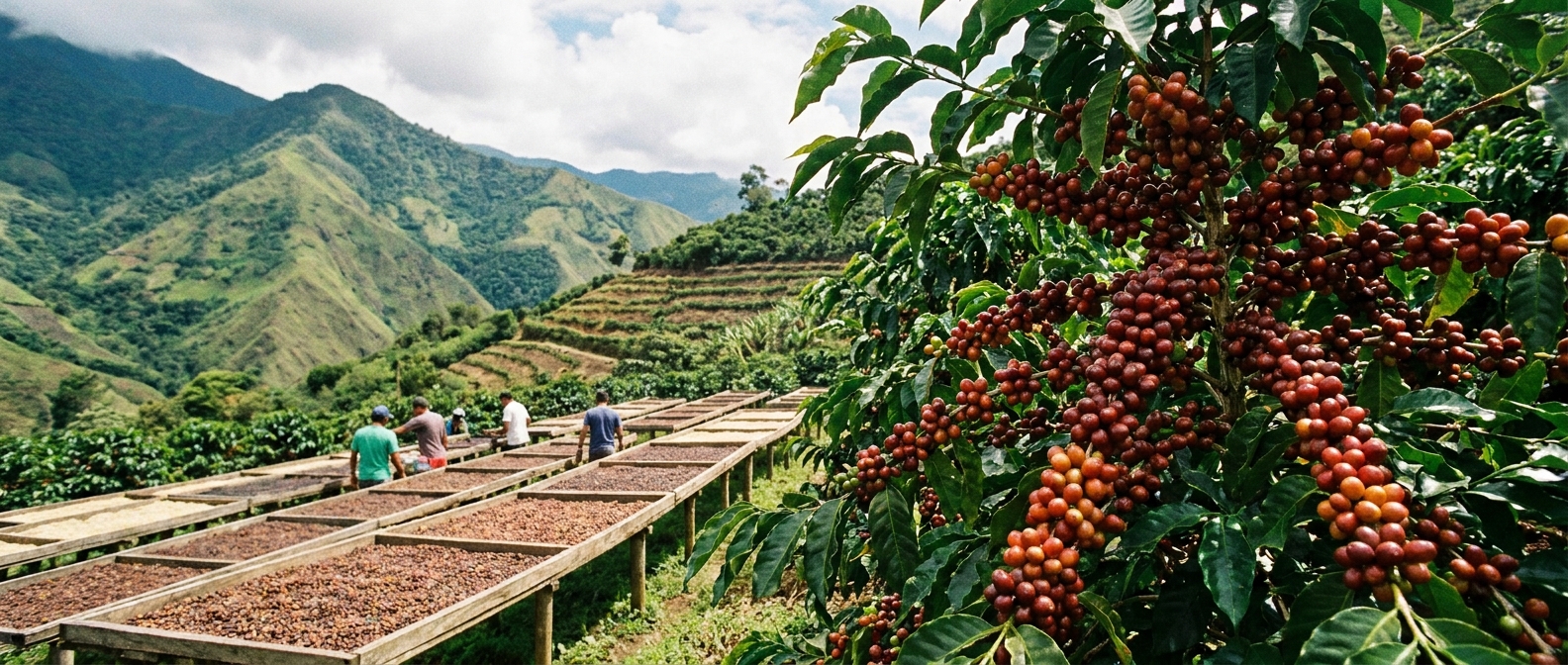
The name is legally protected. Only coffee grown inside the defined mountain zone can be sold as Blue Mountain, which is why a bag at the airport costs what it costs and why the imitations exist. Several working estates on the Kingston flank open to visitors, and the good ones walk you through the rows, the pulping shed and the drying beds before anyone pours a cup.
Expect roughly $25 to $40 per person for a guided farm visit with tasting (est.), booked ahead rather than dropped in on. Mornings are better: cloud usually builds over the ridges by early afternoon, and the estate roads are more pleasant to drive dry. Budget extra time for the road, every time (est.), and see what a Jamaica day costs if you’re pricing the whole trip.
Sleeping, eating and refueling in the Blue Mountains
Food: small and local. Guesthouse kitchens, roadside jerk pans and coffee-estate cafés cover it, and dinner is usually whatever the house is cooking, arranged when you book. There is no strip of restaurants up here, so declaring your meal plans in advance is the courteous move as well as the practical one.
Fuel and signal: fill the tank in the last town before you climb, and assume phone coverage will come and go along the ridges. Download your route rather than trusting live navigation on a road with hairpins every hundred yards.
Sleeping: rustic guesthouses and lodges near the trailhead for peak hikers, a handful of characterful hillside inns on the Kingston approach for everyone else. Nights are genuinely cool at altitude, blankets are provided, and hot water is not universal. Book direct and confirm your pickup, since many places arrange transport up the last rough stretch.
After the 2025 storm: the island’s recovery has run at different speeds by region, with the west and south taking the hardest hit rather than these mountain parishes. We keep the moving picture on the recovery page instead of freezing numbers here.
Best time to hike Blue Mountain Peak: sunrise odds, rain and cold
Altitude flips the coastal script. A beach afternoon in the eighties becomes a summit morning where breath shows, so the fleece and long pants that felt absurd at the airport are the two items every returning hiker mentions. Our packing guide has the mountain add-ons.
For the sunrise you want the driest, clearest stretch of the calendar, and for the trail you want the ground settled after heavy rain. Rather than reprint a table, the month pages carry the detail: start with the 12-month verdict, then read February or March if you’re aiming at the peak, and the storm-season page if your dates land later in the year.
Blue Mountain Peak guides, mountain road conditions and cash
We don’t publish gate hours for this range, because there is no single gate. Access runs through hamlets, estate roads and trailheads, and the practical clock is set by your guesthouse and your guide. Some access points collect a small conservation fee in cash (est.), so carry Jamaican notes rather than assuming a card reader at 5,000 feet.
The roads deserve respect before the trail does: narrow, steep, blind-cornered, driven on the left, and unforgiving of a rental car taken up at night. Our driving page makes the case for a driver here, and getting around covers the transfer options. The current US advisory sits at Level 2 with a few named inland zones, none of them on these slopes; the wording lives on the safety page.
On this page
- Which side to enter fromKingston side vs Port Antonio side
- The 1am start and the summit dawnPeak hike, hour by hour
- Farm visits and tasting pricesCoffee estates and the appellation
- Beds, meals, fuel and signalBasecamp logistics
- Guides, cash and the ridge roadsWhat to sort before you climb
When to go. The month-by-month case for the Blue Mountains — what the normals say, when the sea is warm enough to swim and which weeks fill up — sits on the best time to visit the Blue Mountains.
The last word
Most visitors leave Jamaica having met one country: warm water, warm sand, warm evenings. The Blue Mountains hand you the other one, and they charge for it in sleep rather than money. Stand at 7,402 feet at quarter to six with cold hands wrapped around a cup grown on the slope below you, and the beach week gets a second act it didn’t know it needed.
Fit it into the bigger route with the 7-day plan, weigh it against the coast’s other headline days in things to do, and get your bearings for the whole island in our Jamaica orientation.
Sources & data for this guide
- UNESCO · Blue and John Crow Mountains, inscribed 2015, Jamaica’s first World Heritage site · checked Sep 2, 2026
- Summit elevation 7,402 ft / 2,256 m · standard survey figures · checked Sep 2, 2026
- Blue Mountain coffee as a protected appellation tied to a defined growing zone · Jamaican industry regulation · checked Sep 2, 2026
- Farm-tour prices, hike splits and conservation fees vary by operator, guesthouse and season: anything we could not source is marked (est.) rather than dressed up as precision
- Advisory wording and storm-recovery figures are maintained on their own pages and deliberately not duplicated here