
JAMAICA · MAY · 18.05° N
At the top of the Blue Mountains, May looks nothing like the Jamaica on the postcards. Open-Meteo’s ERA5 model puts the average afternoon high at the summit near 60.6°F. At that temperature a fleece does more work than a swimsuit, and 5.73 inches of rain fall on the forest across the month. Up there the trees shrink into Elfin Forest, gnarled and hung with mosses, ferns and tiny orchids.
The reward for packing a sweater to the tropics is a UNESCO World Heritage site, inscribed in 2015 as Jamaica’s first, with days that run 13 hours 02 minutes by mid-month. Expect rain as well: in an average May, 13.0 days bring at least a tenth of an inch, against 7.7 in April.
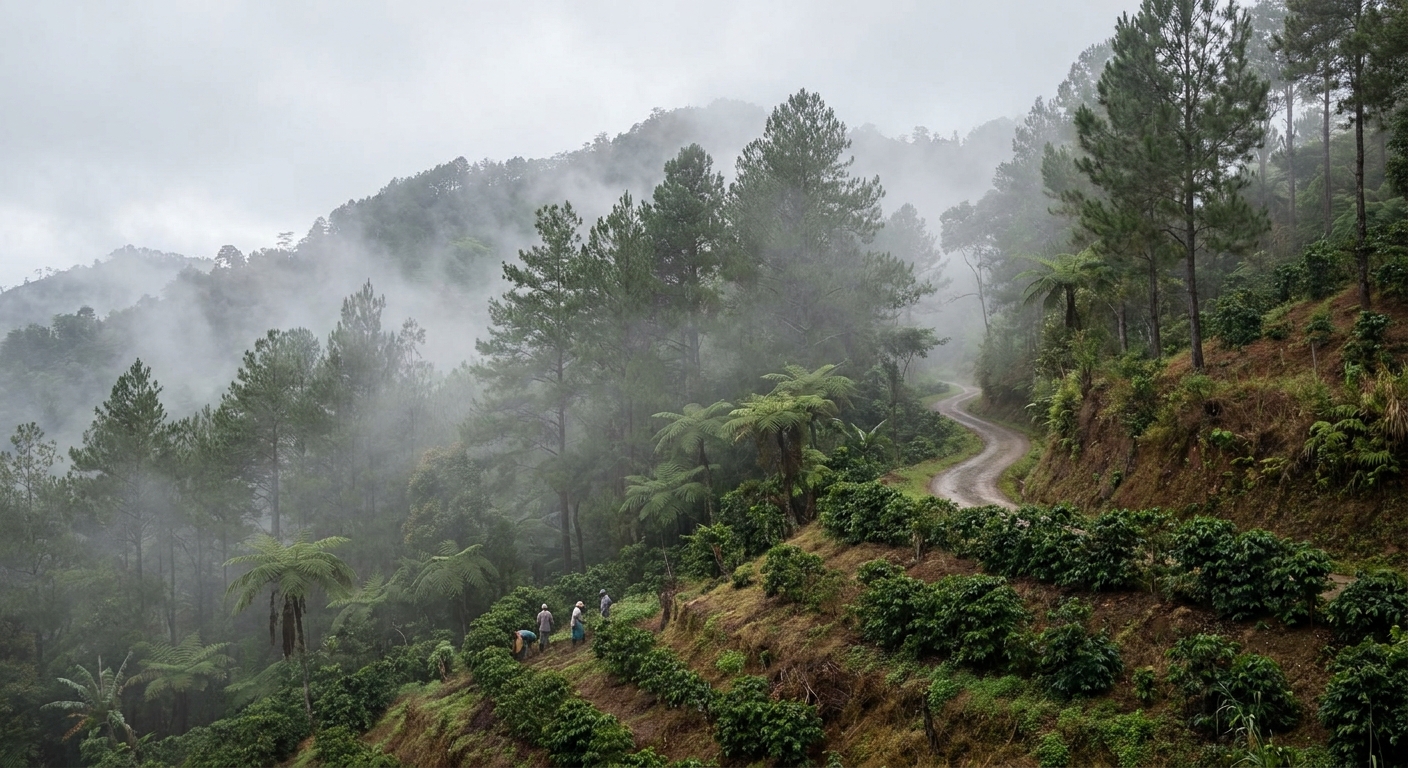
THE MONTH AT A GLANCE · BLUE MOUNTAINS · MAY
Come in May for cool 60.6°F summit afternoons and 13-hour days, but pack a fleece and a rain shell and keep a spare day for the 13.0 wet ones.
PEAK-CELL HIGHS 60.6°F · 13.0 WET DAYS · SUNSET 6:33 P.M.
Go for: cloud-forest hiking in cool air, the Elfin Forest above 2,000 meters, and the Maroon heritage of Moore Town.
Think twice before: staking a short trip on one dry summit morning. April logs 7.7 wet days to May’s 13.0.
Climate: Open-Meteo / ECMWF ERA5 reanalysis (model, not station) · Light: sunrise-sunset.org · Heritage: UNESCO · full sources at the end
On this page
- Blue Mountains weather in May60.6°F highs and 13 wet days
- How cold it gets at night up top52.3°F lows at the peak
- Crowds, hotel prices and booking in MayBooking, lodging tax and a third night
- Things to do in the Blue MountainsBlue Mountain Peak, the Elfin Forest and Moore Town
- A two-day Blue Mountains itineraryTwo days around a 5:31 a.m. sunrise
- May vs April or JuneRain more than doubles after April
- Is May a good time to go?Who should go in May and who should pick April
Jamaica’s highest range rises behind Kingston, so the usual trip flies into the capital and heads up for two or three nights (est.). US departures are in our flights guide, mountain roads in our driving guide, and the island’s full calendar in when to visit Jamaica.
The Blue Mountains weather in May: average highs, lows and rain days
| May normal | Value | In practice |
|---|---|---|
| Average high | 60.6°F | Fleece weather at midday |
| Average low | 52.3°F | Long sleeves after dark |
| Precipitation | 5.73 in | Rain gear on every walk |
| Days with 0.10 in or more | 13.0 | About four days in ten |
| Days with 1 in or more | 0.8 | Less than one a month |
| Daylight, May 15 | 13 h 02 min | Sunrise 5:31 a.m., sunset 6:33 p.m. |
None of these come from an airport thermometer. Open-Meteo computed the 1991-2020 normals from ECMWF’s ERA5 reanalysis for a single grid cell at 18.0465° N, 76.5788° W, the cell over Blue Mountain Peak at 2,256 meters (7,402 feet). That model gives May an average high of 60.6°F and a low of 52.3°F. Read every figure here as the summit end of the range. The UNESCO property starts as low as 850 meters (2,789 feet), and a Kingston forecast will leave you underdressed up top.
Rain comes often, mostly in modest doses. In an average May, 13.0 days log at least 0.10 inch, roughly four days in ten, while only 0.8 day reaches an inch or more. On a two-day stay you have good odds of meeting at least one shower, and a real soaking turns up less than once a month. Carry a rain shell on every outing and keep one flexible day in the plan.
Only 8.3°F separates the 60.6°F high from the 52.3°F low. The mountain stays cool around the clock, so the bag needs long pants, a warm midlayer and closed shoes with grip rather than a day-to-night wardrobe change. Our Jamaica packing list covers the beach half of the trip.
On May 15 the sun rises at 5:31 a.m. and sets at 6:33 p.m. Jamaica time (10:31 and 23:33 UTC, with the island on UTC-5 all year), for 13 hours 02 minutes of daylight. Aim to be off the high trails and back on a paved road well before 6:33 p.m., with the drive down counted in.
How warm is the Blue Mountains in May?
At 2,256 meters, warm is relative. The average May day peaks at 60.6°F in the summit cell and bottoms out at 52.3°F, under nine degrees apart. Across the whole spring the needle barely moves either: the April high sits at 59.8°F and the June high at 61.6°F.
At dawn, with the air near its 52°F floor, dress as for an early fall morning in New England: a fleece or light insulated jacket over long sleeves. By early afternoon, closer to 60°F, the jacket can ride in the pack, with the rain shell packed on top where you can reach it.
Our sources carry no count of frost nights for May. The average low of 52.3°F sits 20.3°F above freezing. We cannot tell you how far a single cold night has dropped, so pack for the low 50s with a layer to spare.
How busy is the Blue Mountains in May? Crowds and prices
We found no occupancy series and no monthly room rates for the Blue Mountains, so we crown no month cheap or expensive. On the calendar, May is the last month before the Atlantic hurricane season opens on June 1 (our hurricane-season guide has the details), and island-wide budgets are in what a Jamaica trip costs.
We have no lead-time data either, so we give no number of weeks. Two checks matter more than timing. Read our Hurricane Melissa update for the latest on roads and lodges before you commit, and choose a refundable rate, since a mountain room depends on a road you cannot inspect from home.
We could not verify a lodging tax for mountain guesthouses, so we give no percentage. The same gap runs through park access: our sources carry no trail times, no entrance fee and no guide rate, and we found no stable official page publishing them. Ask your lodge for current prices in writing before you arrive.
If one budget line deserves extra money in May, make it a third night up the mountain. With rain on about four days in ten, a spare morning gives the summit a second chance at clear weather, for the price of the room alone. Book it on the same refundable terms.
Things to do in the Blue Mountains in May
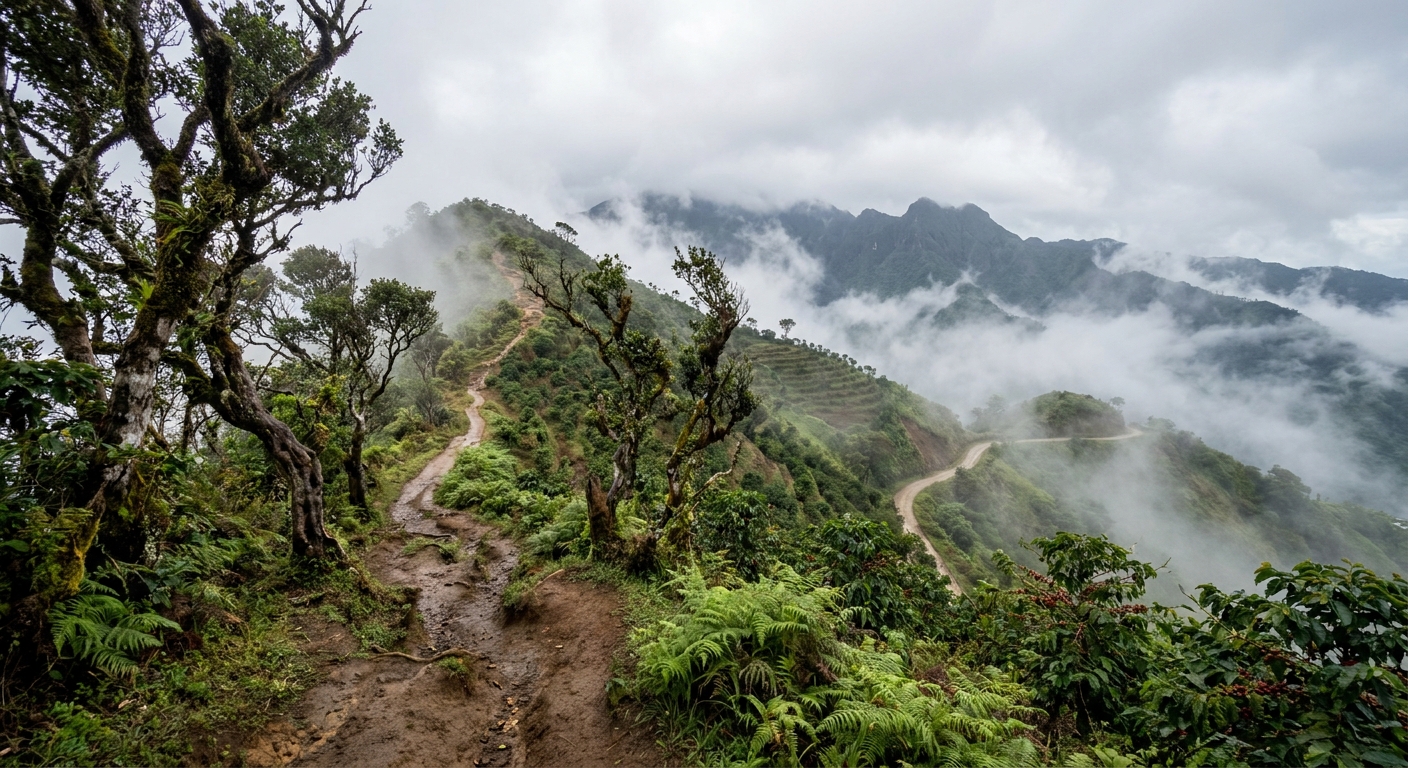
In May a hiker gets 13 hours 02 minutes of light on the 15th and a 60.6°F high at the peak cell, 0.8°F above April’s and 1.0°F under June’s. We found no evidence of any site opening or closing for the month, so the case for May comes down to long days in cool air.
Blue Mountain Peak, at 2,256 meters (7,402 feet), crowns a UNESCO property of 26,251.6 hectares. Above 1,800 meters (5,906 feet) the trees grow stunted, and past 2,000 meters (6,562 feet) the Elfin Forest begins, gnarled and coated in epiphytes, one of nine ecological communities in the upper montane forest. The John Crow Mountains hold the threatened hutia, whose population is restricted to that range. The Windward Maroons’ trails and look-outs survive as the Nanny Town Heritage Route, and Moore Town‘s Maroon heritage joined UNESCO’s intangible list in 2008.
The species list stays put all year: 1,357 flowering plants, 87 of them found nowhere else, and above 900 to 1,000 meters half of all flowering plants are endemic. The sky over them is what shifts. Rain climbs from 2.46 inches in April to 5.73 in May while the high rises just 0.8°F, so the same trail runs noticeably wetter underfoot and the upper forest spends more time in cloud (est.).
We could not verify whether any gate in the national park charges, or whether any day is free, so we list nothing as free. Pack binoculars regardless: the property is a key part of the Jamaican Endemic Bird Area, and its threatened species include the Jamaican Blackbird, the Yellow-billed Parrot, the Black-billed Parrot and Bicknell’s Thrush, a migrant.
The Blue Mountains in May: a two-day itinerary
Day one. Be moving by first light at 5:31 a.m. and give the morning to the high country around Blue Mountain Peak, where the Elfin Forest starts above 2,000 meters. Start in the fleece, since the early hours sit closest to the 52.3°F low, and shed it toward midday as the air nears 60.6°F. Take lunch and the afternoon lower down, and be settled at your lodge before the 6:33 p.m. sunset. Hire a local guide for the summit: we could not verify trail times, and a guide can set the pace to the day’s weather.
Day two. Give it to Moore Town and the Maroon story behind the Nanny Town Heritage Route. If the morning opens wet, as about four days in ten do, flip the order and hold the summit for the next clear dawn, using the third night suggested above. On an inch-plus day, 0.8 of them in an average May, skip the high trails and drop down to Kingston or Port Antonio.
The Blue Mountains in May vs April and June
| Normal (ERA5, 1991-2020) | April | May | June |
|---|---|---|---|
| Average high | 59.8°F | 60.6°F | 61.6°F |
| Average low | 50.6°F | 52.3°F | 53.8°F |
| Precipitation | 2.46 in | 5.73 in | 4.81 in |
| Days with 0.10 in or more | 7.7 | 13.0 | 12.2 |
May sits between a drier April and a slightly warmer June. Highs run 59.8°F in April, 60.6°F in May and 61.6°F in June, and lows 50.6°F, 52.3°F and 53.8°F. Rain jumps from 2.46 inches over 7.7 wet days in April to 5.73 inches over 13.0 in May, then eases to 4.81 inches over 12.2 days in June. The grid cell is a mountaintop, so we carry no sea temperature for any of the three months. For swims, head to the Port Antonio coast.
Moving four weeks earlier, to April, trims 3.27 inches of rain and 5.3 wet days, at a cost of 0.8°F on the afternoon high and 1.7°F on the night low. Moving four weeks later, to June, adds 1.0°F by day and 1.5°F by night and trims 0.92 inch of rain and 0.8 wet day, but it lands inside the hurricane season that opens June 1. See our April and June guides for each month in full.
Is May a good time to visit the Blue Mountains?
Yes, for walkers who like cool air and carry a rain shell without complaint: May pairs 60.6°F highs with 13-hour days and falls before the hurricane season. No, for anyone whose trip hinges on a single dry summit morning, because rain falls on about four days in ten.
Pick April if dry trails matter most. It brings 7.7 wet days and 2.46 inches of rain against May’s 13.0 and 5.73, for just 0.8°F off the high. June is no fix for the rain, at 12.2 wet days.
Of the three months, only May combines nights 1.7°F milder than April’s with the hurricane season still a month away.
The last word
Decide on dryness first. If one clear summit morning is the whole point, book April, and if cool air and long days win, bring the shell and come in May. You will be climbing into ranges that, with the John Crow Mountains, cover about 20% of Jamaica’s land, where UNESCO counts 61 species of liverwort and moss and 11 of lichen, all of them endemic. Leave room in the suitcase for a fleece beside the swimsuit.
Sources & data for this guide
- April, May and June normals (high, low, precipitation, wet days), 1991-2020 · Open-Meteo / ECMWF ERA5 reanalysis for grid cell 18.0465° N, 76.5788° W over Blue Mountain Peak · a model reanalysis, not a station reading · checked Sep 24, 2026
- Sunrise, sunset and daylight on May 15 · sunrise-sunset.org, converted from UTC to Jamaica time (UTC-5) · checked Sep 24, 2026
- Inscription, area, elevations, forest zones, flora, mosses, hutia, birds, Maroon heritage and protecting laws · UNESCO World Heritage Centre, property 1356 · checked Sep 24, 2026
- Hurricane season start, June 1 · see our Jamaica hurricane-season guide
- Trail times, entrance fees, guide rates, lodging tax, room prices and booking lead times · we found no stable official source and give no figures · checked Sep 24, 2026
- Meter-to-foot conversions and the (est.) marks are our own editorial calls; lodge rates and road conditions change, so confirm with your host when you book.
To plan your stay
- Things to Do in the Blue Mountains: Coffee Farms, the Peak Hike, Bike Descents and Short Trails
- Blue Mountains Wildlife: The Birds, the Hutia and What Lives Only Here
- Best Time to Visit the Blue Mountains: Rainfall, Cool Nights and the Quiet Months
- The Blue Mountains in April: Weather, Rain Days, Night Temperatures, Crowds and a Two-Day Plan