
JAMAICA · THE BLUE MOUNTAINS IN JULY · 18.05° N
The first thing to pack for the Blue Mountains in July is a fleece. Our climate figures come from the grid cell over Blue Mountain Peak, 2,256 m up. In an average July it tops out at 62.6°F and drops to 54.1°F at night. A bag packed from a Kingston forecast will leave you cold near the top.
Those summits anchor the Blue and John Crow Mountains, inscribed in 2015 as Jamaica’s first UNESCO World Heritage site. Up high, gnarled trees wear hanging mosses, ferns and tiny orchids. For a walking trip, July also sits kindly among the summer months: 3.77 inches of rain on the peak cell, against more than 4.7 inches in both June and August.
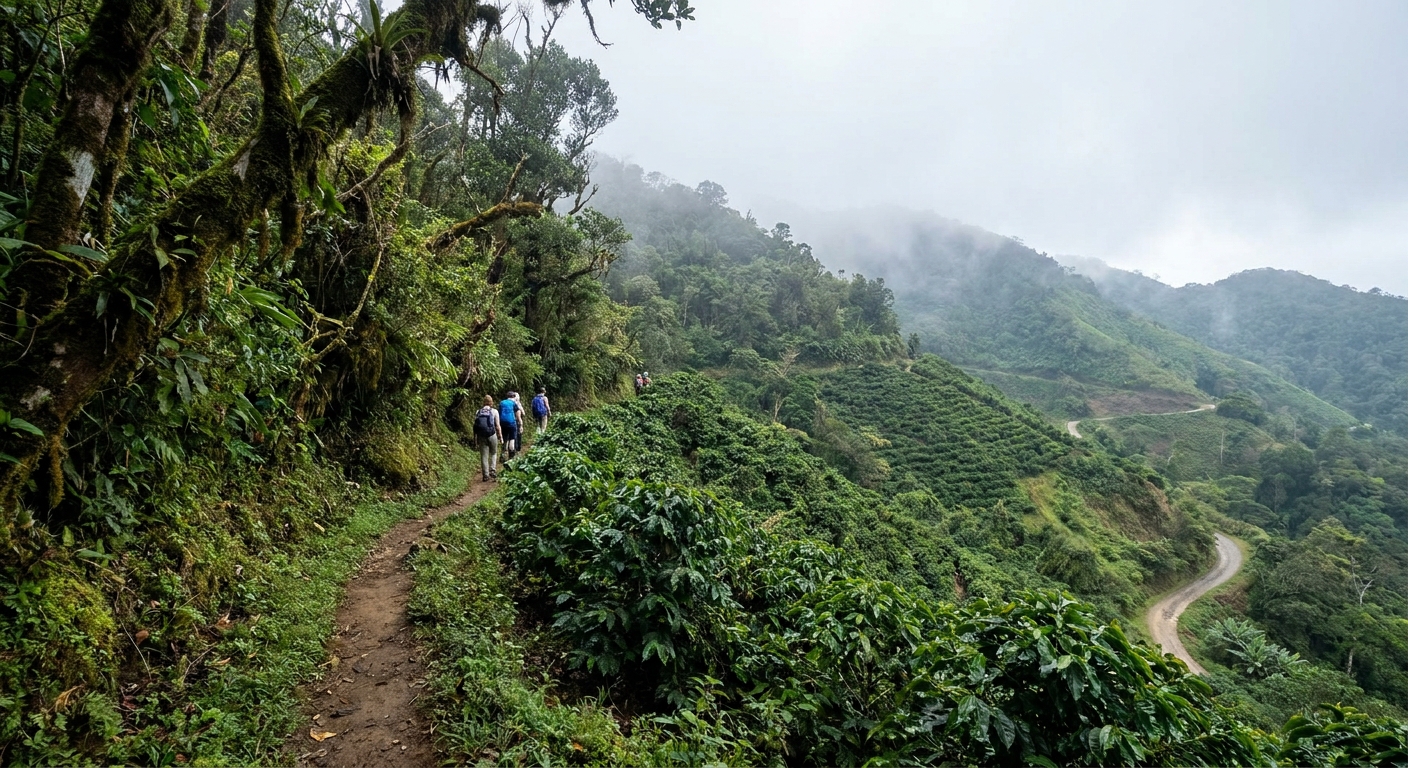
JULY AT A GLANCE · THE BLUE MOUNTAINS
Go in July for cool cloud-forest walking under 62.6°F afternoons, and pack for 54.1°F nights on the peak.
PEAK CELL · 2,256 M · ERA5 1991–2020 · 3.77 IN OF RAIN · FLEECE REQUIRED
Go for: the Elfin Forest above 2,000 m, endemic birds such as the Jamaican Blackbird, and the Windward Maroon trails of the Nanny Town Heritage Route.
Think twice before: packing from a Kingston forecast. Every figure here comes from a grid cell over Blue Mountain Peak, where July nights average 54.1°F.
Climate: Open-Meteo / ECMWF ERA5 reanalysis · Light: sunrise-sunset.org · Heritage: UNESCO · full list at the end
On this page
- Blue Mountains weather in July62.6°F highs, 54.1°F lows, 10.1 wet days
- How cold the peak gets at night54.1°F lows and what to wear for them
- Crowds, prices and guide costs in JulyHurricane season, booking and guide rates
- Things to do in the Blue Mountains in JulyElfin Forest, endemic birds, Nanny Town Heritage Route
- A two-day Blue Mountains itineraryTwo days built around a 5:38 a.m. sunrise
- June, July or August in the Blue Mountains?July has the least rain of the three: 3.77 in
- Is July a good time to go?Yes for hikers and birders, no for beach days
For the range beyond the calendar, start with our Blue Mountains guide. Driving the mountain roads yourself is covered in driving in Jamaica, and island-wide precautions in our Jamaica safety guide.
The Blue Mountains weather in July: average highs, lows and rain days
| July normal, peak cell (1991–2020) | Value |
|---|---|
| Average high | 62.6°F (17.0°C) |
| Average low | 54.1°F (12.3°C) |
| Precipitation | 3.77 in |
| Days with 0.10 in or more | 10.1 |
| Days with 1 in or more | 0.3 |
| Daylight on July 15 | 13 h 09 min |
| Sunrise / sunset, July 15 | 5:38 a.m. / 6:46 p.m. |
Every figure here is a model reanalysis: Open-Meteo’s reading of ECMWF ERA5 for 1991–2020, computed on the grid cell at 18.05°N, 76.58°W over Blue Mountain Peak, 2,256 m up. No airport thermometer stands behind these numbers. In an average July that cell runs a high of 62.6°F and a low of 54.1°F, with 3.77 inches of precipitation. The UNESCO property reaches down to 850 m, and lower slopes will run warmer than the peak (est.), so read these as the cold end of your trip.
On 10.1 days of an average July the cell records at least a tenth of an inch, so measurable rain lands on roughly one day in three. Heavy days are scarce: an inch or more falls on 0.3 day per July, about one such day every three years. Our sources give no hour for the rain, so we cannot promise dry mornings or dry afternoons. Build one spare day into the trip and carry a rain shell on every outing.
Only 8.5°F separates the average afternoon from the average night, but the whole scale sits low. Pack a fleece or light insulated jacket, long pants, a waterproof shell, a warm hat and socks that dry fast. Our Jamaica packing list covers the beach half of the bag.
On July 15 the sun rises at 5:38 a.m. and sets at 6:46 p.m. Jamaica time, for about 13 hours 09 minutes of daylight (sunrise-sunset.org, converted from UTC). A headlamp goes in the pack for any start before dawn. On the way down, plan to reach the road with daylight to spare before 6:46 p.m.
How warm is the Blue Mountains in July?
An average July on the peak cell runs from 54.1°F (12.3°C) at night to 62.6°F (17.0°C) by day. Both are 30-year means. We did not read record highs or lows for the month, so a given night can dip below 54.1°F by an amount we cannot state. We read no sea temperature either: the cell sits on a summit, and swimming belongs on a coast day in Port Antonio or along the south coast.
Dress for the low on any early start: a synthetic or wool base layer, the fleece over it, long pants and a hat. Once the air nears its 62.6°F average high and you are walking, a long-sleeve layer is usually enough, and the fleece goes back on at every stop. Keep the shell at the top of the pack. Skip cotton, which stays damp in 54°F air.
Our sources carry no count of freezing nights for July. The average low of 54.1°F sits 22.1°F above freezing, and we neither give a frost figure nor rule out an unusually cold night. Anyone sleeping high on the mountain should bring a bag rated well below a summer weight.
How busy is the Blue Mountains in July? Crowds and prices
We found no occupancy series and no monthly room-rate series for the mountains, so we crown no month cheap or expensive. The calendar does place July inside the Atlantic hurricane season, and our Jamaica hurricane-season guide gives the dates and what they mean for a booking. For how costs move across the island’s year, see the best time to visit Jamaica and Jamaica trip costs.
We have no lead-time data either, so we give no number of weeks. In hurricane season, book refundable rooms and transfers where you can, and read our post-Hurricane Melissa update for the island’s latest conditions before you fly. US departures are in flights to Jamaica from the US, and the leg from the airport in airport transfers.
We could not verify a lodging-tax rate for the Blue Mountains, so we give no percentage. Ask your host whether any tax sits on top of the quoted room price before you pay a deposit.
A licensed local guide is where extra spending changes a July visit. We could not find a published guide rate, entrance fee or trail time on any stable official page, so settle the price in writing before the day. With measurable rain on 10.1 days, someone who reads the morning sky and knows the paths above 1,800 m, where the forest turns stunted, can move your walk to the right day.
Things to do in the Blue Mountains in July
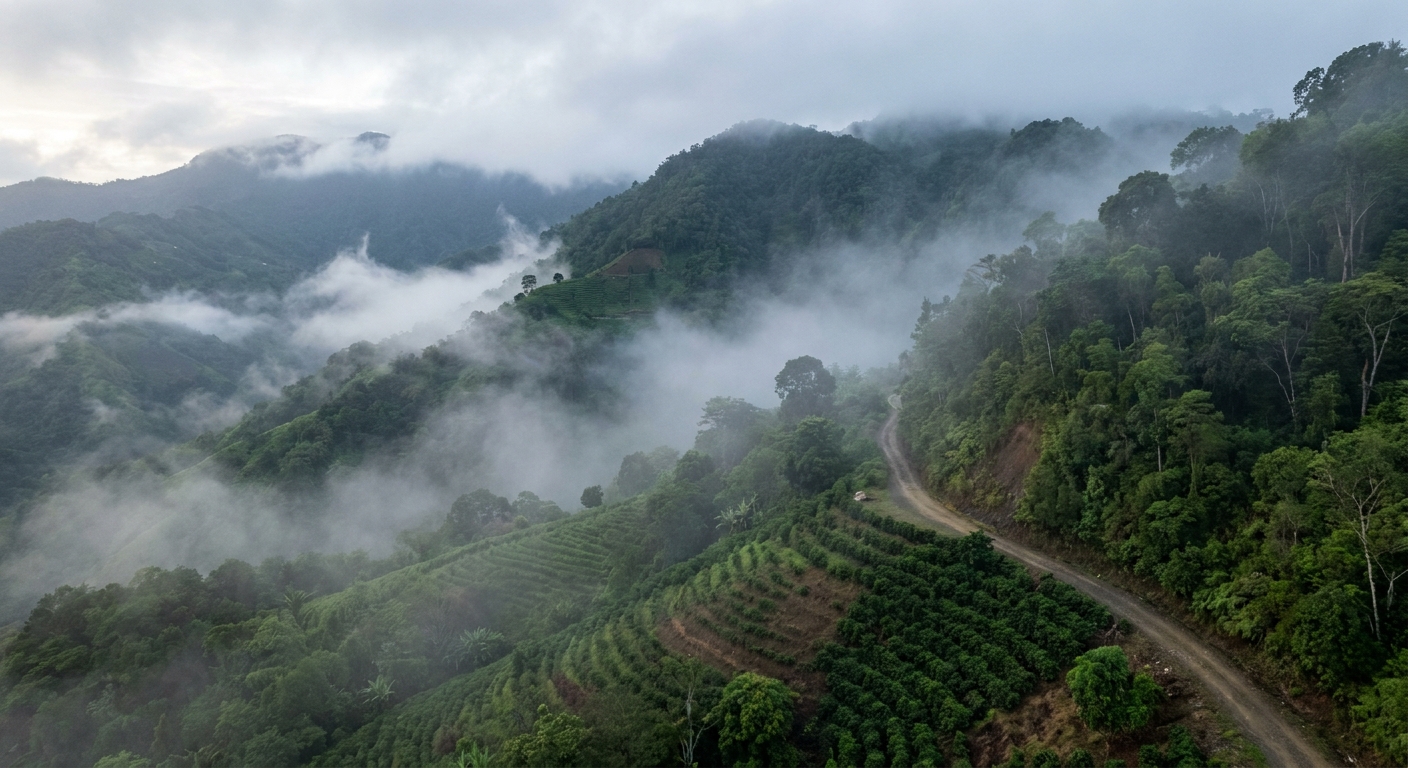
July leaves the most dry days of the three summer months for walking and birding. On the peak cell, an average July has 20.9 days without measurable rain, against 17.8 in June and 19.7 in August.
The World Heritage property covers 26,251.6 hectares of tropical montane rainforest, with a 28,494-hectare buffer, and spans 850 m to 2,256 m. Above 2,000 m grows the Elfin Forest, gnarled trees heavy with hanging mosses, ferns and tiny orchids. UNESCO reports 1,357 flowering plants, 87 of them found nowhere else, plus 61 liverworts and mosses and 11 lichens, all endemic. Birders look for the Jamaican Blackbird and the Yellow-billed and Black-billed parrots. The Nanny Town Heritage Route follows the trails, look-outs and hiding places of the Windward Maroons.
The forest keeps its shape all year. The air around it shifts: July’s afternoons average 1.0°F above June’s, and rain on about one day in three means wet roots and rock underfoot, so wear boots with real grip. The Hutia, the property’s only land mammal that does not fly, lives in the John Crow Mountains alone, so a walk on the Blue Mountain side stays outside its range.
We could not verify an entrance fee, so we cannot say which parts of the park cost nothing in July. The protection we could verify: the property lies inside the Blue and John Crow Mountains National Park, under the Natural Resources (National Park) Act of 1993 and the Forestry Act of 1996. Keep to marked paths and leave mosses and orchids where they grow.
The Blue Mountains in July: a two-day itinerary
Day one follows the light. Leave your base before the 5:38 a.m. sunrise with a headlamp and the fleece on, dressed for 54.1°F. Give the morning to the upper forest with your guide, from the stunted trees past 1,800 m into the Elfin Forest above 2,000 m, binoculars ready for the parrots. Start down as the air climbs toward its 62.6°F average, and be off the trail well before the 6:46 p.m. sunset. We cannot give trail times, so let your guide set the turnaround.
Day two turns to Maroon history. The Maroon heritage of Moore Town has been on UNESCO’s Intangible Heritage list since 2008, and the Nanny Town Heritage Route traces the Windward Maroons’ network of trails and settlements; ask your guide how to visit. If rain sets in, as it does on 10.1 days in an average July, shorten the walk and use your spare day. A day of an inch or more comes only 0.3 times per July. Bases on both sides of the range are in where to stay in Jamaica.
The Blue Mountains in July vs June and August
| Peak cell, 1991–2020 | June | July | August |
|---|---|---|---|
| Average high | 61.6°F | 62.6°F | 62.8°F |
| Average low | 53.8°F | 54.1°F | 54.3°F |
| Precipitation | 4.81 in | 3.77 in | 4.75 in |
| Days with 0.10 in or more | 12.2 | 10.1 | 11.3 |
Temperatures barely move across the three months: highs go from 61.6°F in June to 62.6°F in July and 62.8°F in August, lows from 53.8°F to 54.1°F to 54.3°F. The rain figures move more. July’s 3.77 inches sits about an inch under both neighbors, and its 10.1 wet days are 2.1 fewer than June’s and 1.2 fewer than August’s. We read no sea temperature for any of the three months.
Moving to June costs 1.0°F on the afternoon high, 1.04 inches of extra rain and 2.1 more wet days. Moving to August adds 0.2°F to both high and low, plus 0.98 inch of rain and 1.2 wet days. For a hiking trip July stays the drier choice, and our June and August guides take each month on its own terms.
Is July a good time to visit the Blue Mountains?
Yes, for walkers, birders and anyone who wants Jamaica with a fleece on, at 62.6°F by day on the peak. No, if the trip hangs on beach days or warm evenings outdoors, since the mountain nights average 54.1°F. Negril, Montego Bay and Ocho Rios handle the beach, and a mountain day slots into our 7-day Jamaica itinerary.
If rain is the worry, neither neighbor helps: June carries 4.81 inches and August 4.75. We have not read peak-cell normals for the other nine months, so we name no alternative, and the best time to visit Jamaica sets the island’s whole year side by side.
Of June, July and August, only July keeps the peak cell’s rain under 4 inches, at 3.77.
The last word
Put the fleece in the bag before the swimsuit, book a guide and a spare day, then go up. Past 900 to 1,000 m, about half the flowering plants beside the path grow wild in Jamaica and nowhere else, and the two ranges hold that forest across roughly a fifth of the island’s land.
Sources & data for the Blue Mountains in July
- June, July and August air normals, precipitation and wet days · Open-Meteo / ECMWF ERA5, 1991–2020, grid cell 18.0465N 76.5788W over Blue Mountain Peak (2,256 m) · a model reanalysis, not a station reading · checked Sep 24, 2026
- Daylight, sunrise and sunset on July 15 · sunrise-sunset.org, converted from UTC to Jamaica time · checked Sep 24, 2026
- Inscription, area, buffer zone, elevations, forest zones, flora, birds, Hutia, Maroon heritage and protecting laws · UNESCO World Heritage Centre, property 1356 · checked Sep 24, 2026
- Trail times, entrance fees and guide rates · we found no stable official page publishing them, so we give none · checked Sep 24, 2026
- Room rates, occupancy, booking lead times, lodging tax, sea temperature and freezing-night counts · not verified by us, so no figures appear · clothing and planning advice is editorial; conditions can change after storms, so check with your guide and host before you go.
To plan your stay
- Things to Do in the Blue Mountains: Coffee Farms, the Peak Hike, Bike Descents and Short Trails
- Blue Mountains Wildlife: The Birds, the Hutia and What Lives Only Here
- Best Time to Visit the Blue Mountains: Rainfall, Cool Nights and the Quiet Months
- The Blue Mountains in June: Weather, Rain Days, Daylight and Crowds