
JAMAICA · BLUE MOUNTAINS IN FEBRUARY · 18.05° N
You have already chosen the mountains, so the open question is the date. February sits in a drier gap between two wetter neighbors: an average February brings 1.93 inches of rain at the grid cell over Blue Mountain Peak, against 2.59 inches in January and 2.73 in March. Temperatures barely move across those three months, so shifting your dates changes how many wet days you get far more than how warm you feel.
Most itineraries reach the range from Kingston, the capital at its foot, and two nights in the hills cover a summit day and a Maroon heritage day. Pack for two climates: a fleece, a rain shell and a warm hat for the mountain dawns, then the beach half of the bag from our Jamaica packing list.
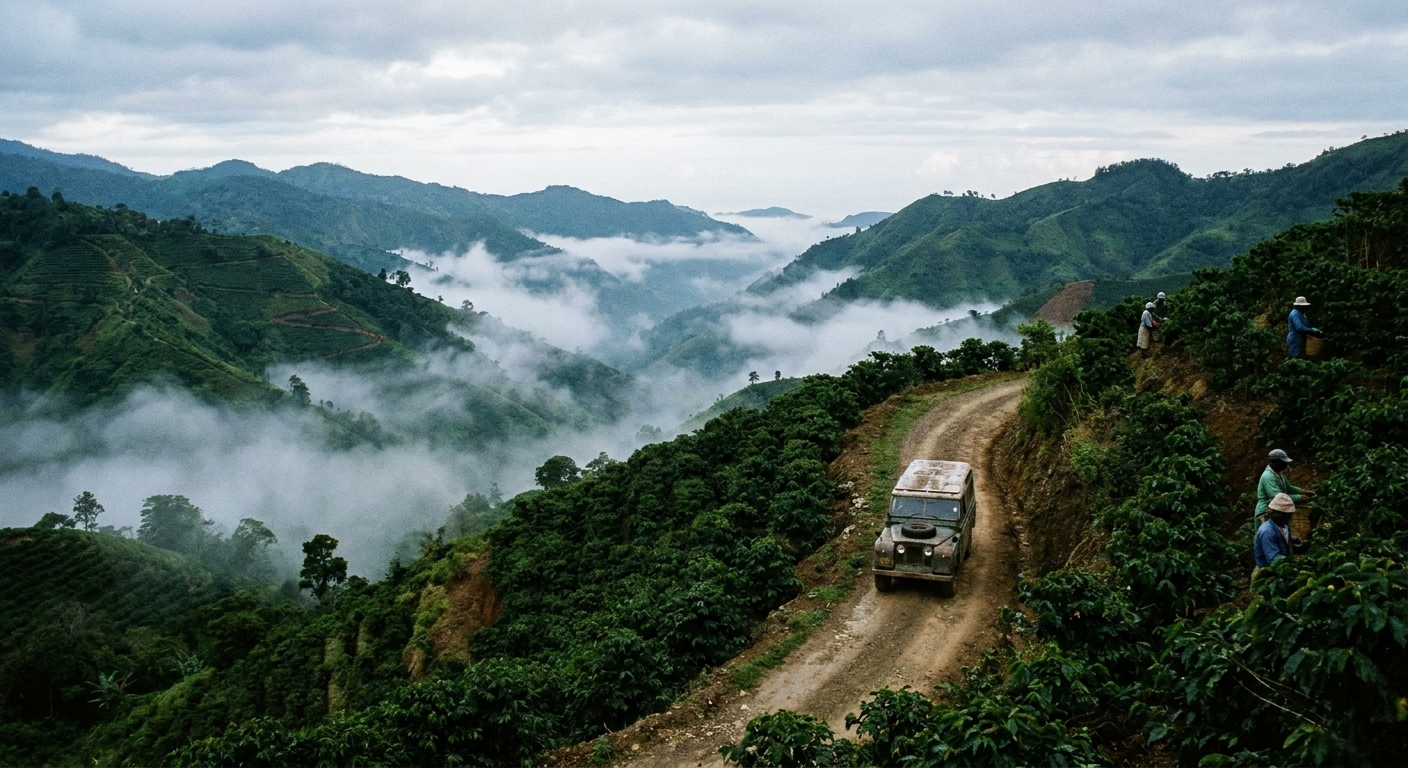
THE MONTH AT A GLANCE · BLUE MOUNTAINS · FEBRUARY
February has the fewest wet days from January through March at the summit cell and holds a cool 57.2°F by day, so come for the trails and bring real layers.
HIGH 57.2°F · LOW 49.0°F · 6.2 WET DAYS · ERA5 SUMMIT CELL
Go for: cool hiking weather, fewer wet days than January or March, and a UNESCO rainforest where half the flowering plants above roughly 3,000 feet are Jamaican endemics.
Think twice before: packing from a Kingston forecast. Every figure here comes from the cell over the 7,402-foot summit, and swimming belongs to the coast.
Climate: Open-Meteo / ECMWF ERA5 reanalysis, 1991-2020 · Light: sunrise-sunset.org · Park facts: UNESCO · full sources at the end
On this page
- Blue Mountains weather in FebruaryHighs of 57.2°F and 6.2 wet days
- How cold the summit gets at nightLows of 49.0°F and the frost question
- Crowds and prices in FebruaryBooking, lodging tax and guide fees
- Things to do in FebruaryBlue Mountain Peak, the Elfin Forest and Moore Town
- Two days in the Blue MountainsA summit day and a Maroon heritage day
- February vs January and MarchHow the three months compare on rain and warmth
- Is February a good time to go?Yes for hikers, no for swimmers
Every figure here is a model value for one grid cell, 18.0465°N by 76.5788°W, which sits over Blue Mountain Peak at 2,256 meters. The UNESCO property climbs from 850 meters to that summit, so a lodge or trailhead lower down will feel warmer than these numbers by an amount we did not measure. Dress for the summit when you hike to it.
The Blue Mountains weather in February: average highs, lows and rain days
| February normal, 1991-2020 | Summit grid cell |
|---|---|
| Average high | 57.2°F (14.0°C) |
| Average low | 49.0°F (9.4°C) |
| Precipitation | 1.93 in |
| Days with 0.10 in or more | 6.2 |
| Days with 1 in or more | 0.0 |
| Daylight on Feb 15 | 11 h 36 min |
| Sunrise and sunset, Feb 15 | 6:32 a.m. and 6:08 p.m. |
These normals come from ERA5, the reanalysis run by the European Centre for Medium-Range Weather Forecasts, averaged over 1991-2020 by Open-Meteo for the summit grid cell. A reanalysis is a weather model held close to observations, and we found no station thermometer on the peak to check it against. Read the 57.2°F high and 49.0°F low as a close sketch of the summit rather than a measured record.
An average February logs 6.2 days with at least a tenth of an inch of rain, roughly one day in every four or five, and no day at all reaching a full inch. Spread across those wet days, the month’s 1.93 inches works out to no more than about 0.31 inch each. Expect showers on a hike more often than washouts, and keep a shell in the daypack even on a clear dawn.
Only 8.2°F separates the average high from the average low, so no afternoon at the summit cell warms up enough for a T-shirt. Pack a fleece or light insulated jacket, a rain shell, long pants and a warm hat for pre-dawn starts, and plan to keep most of it on all day.
On February 15 the sun rises at 6:32 a.m. and sets at 6:08 p.m. Jamaica time, for 11 hours 36 minutes of daylight (sunrise-sunset.org, converted from UTC, with Jamaica on UTC-5 all year). Under the canopy the trail dims before the official sunset, so aim to be off any path by about 5:30 p.m. and carry a headlamp for dawn climbs.
How warm is the Blue Mountains in February?
At the summit cell, February averages a high of 57.2°F (14.0°C) and a low of 49.0°F (9.4°C), a spread of 8.2°F. January comes in at 56.9°F and 49.3°F, so February afternoons run 0.3°F warmer and its nights 0.3°F cooler, a gap no hiker will notice. We read no sea temperature for a cell that is land 7,402 feet up. For swimming water, look to Port Antonio on the coast below.
Morning and afternoon outfits barely differ. Start with a base layer, a fleece and a shell for the dawn chill near 49°F, then drop the fleece if the sun breaks through after lunch. Long pants stay on all day, and a dry pair of socks in the car makes the drive down far more pleasant.
Our sources carry no count of nights at or below freezing for the summit cell, so we cannot say how often frost forms in February. The average low of 49.0°F sits 17°F above freezing, yet an average hides its coldest nights. If you sleep high or start the summit climb in the dark, pack a warm hat and gloves anyway.
How busy is the Blue Mountains in February? Crowds and prices
We found no occupancy series and no monthly lodge rates for the Blue Mountains, so we place February nowhere in a yearly price ranking. For the island-wide pattern of busy and quiet months, see our best-time-to-visit guide, and for a daily budget, our Jamaica trip-cost guide.
Without occupancy data we give no lead time in weeks. Book the mountain nights first and fit the coast around them, choosing refundable rates so a rainy forecast can still move your dates. Flights into Kingston are covered in our US flights guide, and our after-Hurricane Melissa update is worth reading before you commit.
We could not verify a lodging-tax or guest-fee rate for mountain stays, so we give no amount. Ask your lodge for the total per night, taxes included, before you pay a deposit.
Spend more on one thing in February: a local guide who knows the summit trail in the dark and on wet mornings. We could not verify a guide rate or a park entrance fee. UNESCO describes the property without running visits, and we found no stable official page publishing either figure, so agree on the price in writing before the day.
Things to do in the Blue Mountains in February
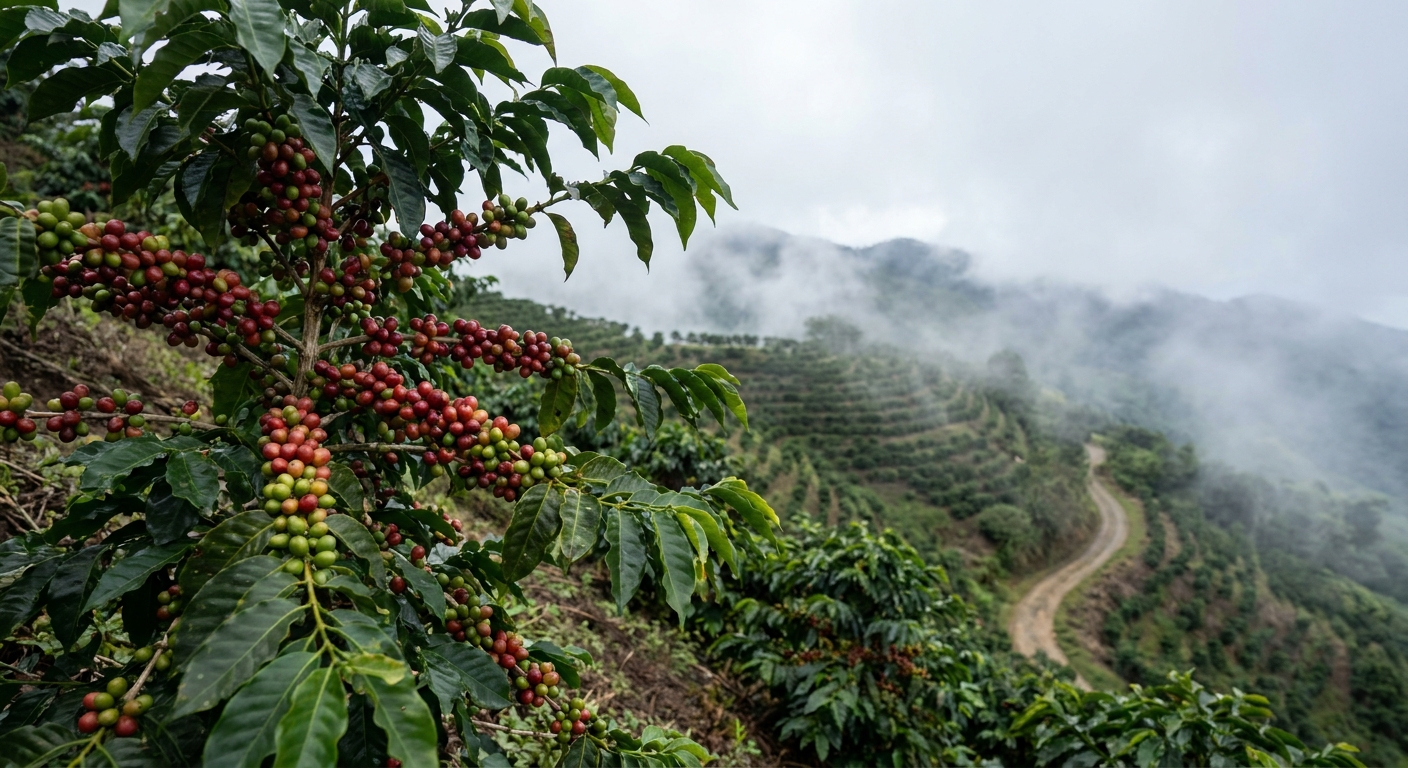
February opens the best window of late winter for a dry morning on the high trails, with fewer wet days than the weeks on either side. Cool air in the high 40s and 50s also suits a long, steep climb far better than coastal heat, and it keeps the walk to the top pleasant from the first switchback.
Blue Mountain Peak, at 2,256 meters (7,402 feet), crowns the Blue and John Crow Mountains, Jamaica’s first UNESCO World Heritage site, inscribed in 2015 across 26,251.6 hectares of tropical montane rainforest. Above 1,800 meters (5,906 feet) the trees grow stunted, and above 2,000 meters (6,562 feet) they become Elfin Forest, gnarled and hung with mosses, ferns and tiny orchids. The threatened hutia’s population is restricted to the John Crow Mountains. Maroon history runs along the Nanny Town Heritage Route of Windward Maroon trails and lookouts, and through Moore Town, whose Maroon heritage UNESCO listed in 2008.
The plant count does not change with the month: 1,357 flowering species, about 294 of them Jamaican endemics. What changes in February is the air around them and the bird list. Bicknell’s Thrush, one of the threatened species UNESCO names here, is a migrant that breeds far to the north, so the colder months are its season on the island. We could not verify its arrival and departure dates. Resident rarities such as the Jamaican Blackbird and the Yellow-billed and Black-billed Parrots are there year-round.
We could not verify an entrance fee for the national park or the heritage route, so we cannot say which parts cost nothing in February. The property lies inside the Blue and John Crow Mountains National Park, protected under the Natural Resources (National Park) Act of 1993. Ask your lodge for the current fee before you set out.
The Blue Mountains in February: a two-day itinerary
On day one, leave your lodge before the 6:32 a.m. sunrise, with the air near its 49.0°F average low, and walk toward Blue Mountain Peak with a guide and a headlamp. We could not verify how long the summit trail takes, so let your guide set the start time. Head down by early afternoon as the air climbs toward 57.2°F, eat a hot lunch lower on the slope, and be back under a roof before the 6:08 p.m. sunset.
Day two heads down the Portland side for Maroon history in Moore Town and along the Nanny Town Heritage Route, then a night near Port Antonio on the coast. If the morning opens on one of February’s 6.2 wet days, keep the forest walk short, linger in Moore Town, and move any summit attempt to a third morning. Drive the mountain roads in daylight and read our Jamaica driving guide before taking the wheel yourself.
The Blue Mountains in February vs January and March
| Summit grid cell, 1991-2020 | January | February | March |
|---|---|---|---|
| Average high | 56.9°F | 57.2°F | 58.1°F |
| Average low | 49.3°F | 49.0°F | 49.2°F |
| Day-night spread | 7.6°F | 8.2°F | 8.9°F |
| Precipitation | 2.59 in | 1.93 in | 2.73 in |
| Days with 0.10 in or more | 8.7 | 6.2 | 7.8 |
Across the three months the average high climbs just 1.2°F, from 56.9°F in January to 58.1°F in March, and the lows stay inside a 0.3°F band between 49.0°F and 49.3°F. Rain moves much more. February’s 1.93 inches is 0.66 inch below January and 0.80 inch below March, with 2.5 fewer wet days than January and 1.6 fewer than March. We read no sea temperature for any of the three months at this land cell, so swimming plans belong with Negril or Port Antonio.
Moving to January trades 0.3°F of afternoon warmth for 0.3°F of milder nights, and adds 0.66 inch of rain and 2.5 wet days. Moving to March buys 0.9°F on the average high and 0.2°F on the low, at the cost of 0.80 inch more rain and 1.6 more wet days (we did not read March sunrise and sunset times). You pack the same fleece and shell in all three.
Is February a good time to visit the Blue Mountains?
Yes, for hikers who want the fewest wet days of the January-to-March stretch and are happy in a 57.2°F afternoon. A summit attempt, birding in the upper forest and a Maroon heritage day all fit comfortably. No, for anyone whose idea of a Jamaica vacation is warm air and swimming, since nothing at the summit cell comes close. For that trip, pick a coastal base with our where-to-stay guide.
If the answer is no because of the cold, a new date will not fix it, as March runs only 0.9°F warmer at the top. Keep February and split the trip instead: two nights in the mountains, the rest by the sea, with our seven-day Jamaica itinerary for the coastal half. If rain is the worry, stay with February, because both neighbors are wetter.
Among January, February and March, only February pairs the summit’s cool trail weather with the fewest wet days, and that makes it the easiest of the three for planning a dawn climb.
The last word
Book the mountain nights before anything else and pack for 49°F at dawn, even if the rest of your suitcase is swimwear. Then slow down on the way up and look at the branches. The property holds 61 species of liverwort and moss, plus 11 lichens that are all endemic, and above 2,000 meters the mosses hang from the Elfin Forest in thick, dripping curtains that make every damp February morning worth the early alarm.
Sources & data for this guide
- February normals (57.2°F high, 49.0°F low, 1.93 in, 6.2 days at 0.10 in or more, 0.0 days at 1 in or more) · Open-Meteo / ECMWF ERA5, 1991-2020, grid cell 18.0465N 76.5788W over Blue Mountain Peak · model reanalysis, not a station reading · checked Sep 24, 2026
- January and March normals · same ERA5 source, cell and period · model reanalysis, not a station reading · checked Sep 24, 2026
- Daylight, sunrise and sunset on Feb 15 · sunrise-sunset.org, converted from UTC to Jamaica time (UTC-5) · checked Sep 24, 2026
- Inscription, area, elevations, forest zones, flora, mosses, hutia, birds, Maroon heritage and protection laws · UNESCO World Heritage Centre, property 1356 · checked Sep 24, 2026
- Trail times, entrance fees and guide rates · we found no stable official page publishing them, so we give none · checked Sep 24, 2026
- We found no occupancy series, lodge rates, lodging-tax rate, frost-night count or sea temperature for the summit cell, so we give none. Foot and acre-free conversions are our own arithmetic. Packing, timing and itinerary advice is editorial · check your lodge and guide when you book.
To plan your stay
- Things to Do in the Blue Mountains: Coffee Farms, the Peak Hike, Bike Descents and Short Trails
- Blue Mountains Wildlife: The Birds, the Hutia and What Lives Only Here
- Best Time to Visit the Blue Mountains: Rainfall, Cool Nights and the Quiet Months
- The Blue Mountains in January: Weather at the Peak, Rain Days, Crowds and a Two-Day Plan