
JAMAICA · THE BLUE MOUNTAINS IN MARCH · 18.05° N
Pack for Kingston and you will shiver on Blue Mountain Peak. The summit stands at 2,256 m (about 7,400 feet), and our March normals come from the grid cell directly over it: an average high of 58.1°F and an average low of 49.2°F. On an island most travelers pack for in sandals, that means a real jacket in the suitcase before you book the trip up.
The range joined the UNESCO World Heritage List in 2015, together with the John Crow Mountains, as Jamaica’s first World Heritage site. You have already picked the mountains. What remains is the date: how much rain, light and cold a March visit brings compared with February and April, and when a four-week shift would suit you better.
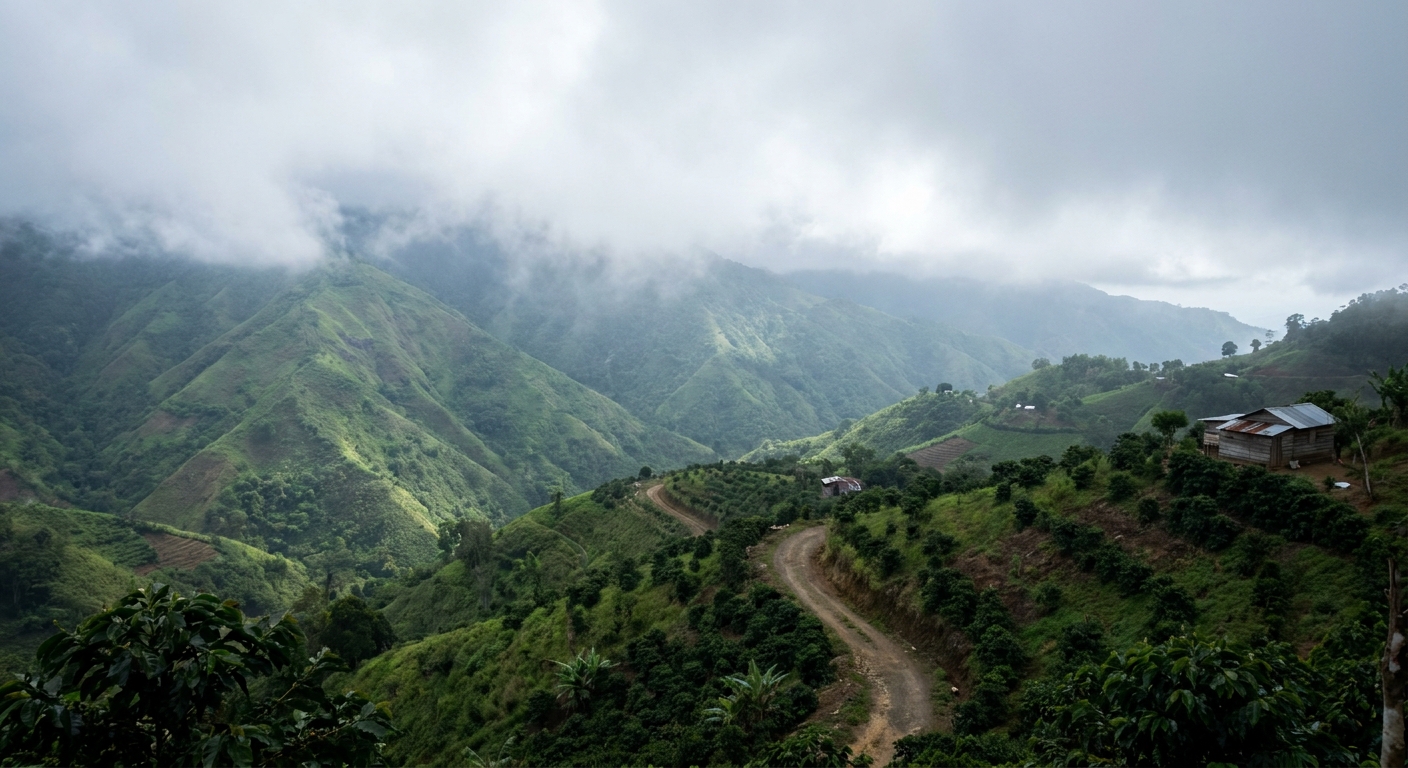
THE MONTH AT A GLANCE · THE BLUE MOUNTAINS IN MARCH
March on Blue Mountain Peak means 58.1°F afternoons, 49.2°F nights and rain on roughly one day in four: go with a warm layer, a rain shell and a spare day.
PEAK GRID CELL AT 2,256 M · ERA5 REANALYSIS 1991-2020 · WETTEST OF FEB, MAR AND APR
Go for: the Elfin Forest above 2,000 m, a flora with 87 flowering plants found nowhere else, and endemic birds such as the Jamaican Blackbird.
Think twice before: packing from a Kingston forecast or staking the trip on a single fixed summit day: 7.8 days in an average March record measurable rain.
Climate: Open-Meteo / ECMWF ERA5 reanalysis, 1991-2020 · Light: sunrise-sunset.org · Park: UNESCO World Heritage Centre · full sources at the end
On this page
- Blue Mountains weather in MarchHighs of 58.1°F, lows of 49.2°F, 7.8 wet days
- How cold the Blue Mountains get at nightThe 8.9°F day-night gap and what to wear
- Crowds, prices and lodging tax in MarchBooking order, lodging tax and park fees
- Things to do in the Blue Mountains in MarchBlue Mountain Peak, the Elfin Forest and the Nanny Town Heritage Route
- Two days in the Blue MountainsA summit day and a Maroon heritage day
- March vs February and AprilHow the three months compare on heat and rain
- Is March a good time to visit?Who should go, and when February or April suits you better
The trip starts with a flight into Jamaica and a road up from the coast. Our guide to flights from the US lays out the routes, the ride out of the terminal lives in our airport-transfers guide, and mountain roads get their own advice in our Jamaica driving guide if you plan to take the wheel. For a sea-level base with restaurants and museums, start with our Kingston guide.
The Blue Mountains weather in March: average highs, lows and rain days
| March normal, peak cell (1991-2020) | Value |
|---|---|
| Average high | 58.1°F (14.5°C) |
| Average low | 49.2°F (9.6°C) |
| Precipitation | 2.73 in |
| Days with 0.10 in or more | 7.8 |
| Days with 1 in or more | 0.2 |
| Daylight, March 15 | 12 h 05 min |
| Sunrise / sunset, March 15 | 6:12 a.m. / 6:17 p.m. |
Our March normals come from Open-Meteo’s ERA5 reanalysis, produced by ECMWF for 1991-2020 and computed on the grid cell at 18.0465° N, 76.5788° W, over Blue Mountain Peak. That is a model estimate for a square of terrain, not a thermometer in a station yard, and every figure here describes the summit zone rather than the whole range. On that cell, March averages a high of 58.1°F, a low of 49.2°F and 2.73 inches of precipitation. The protected property begins at 850 m, so the lower slopes you drive through likely run warmer, though we have no reading for them.
Measurable rain, 0.10 inch or more, falls on 7.8 days in an average March: roughly one day in four. Heavy days are rare, with 0.2 day reaching an inch, which works out to one such soaking about every fifth March. A wet March day on the peak is therefore far more often damp and gray than a washout, and the risk to a summit plan is slick footing and a lost view. Keep one day in reserve for the climb.
Between the 49.2°F low and the 58.1°F high sit only 8.9°F, so the chill holds all day. Pack in layers: a fleece or light insulated jacket, a waterproof shell, long pants, a warm hat and socks that stay warm when wet. Add a dry change of clothes for the ride down. The beach half of the suitcase is covered in our Jamaica packing list.
On March 15 the sun rises at 6:12 a.m. and sets at 6:17 p.m. Jamaica time (the island stays on UTC-5 all year), for about 12 hours 05 minutes of daylight. Twilight is short at 18° N, so plan to be off the high trails by late afternoon and carry a headlamp anyway.
How warm is the Blue Mountains in March?
March afternoons on the peak cell average 58.1°F at their warmest, and nights fall to an average 49.2°F: a gap of 8.9°F, or 14.5°C down to 9.6°C. The summit is inland and 2,256 m up, and we read no sea-surface temperature for it. For a swim, look to the coast and our Port Antonio guide.
Start a pre-dawn climb in everything you brought: base layer, fleece, shell and hat, plus gloves if your hands run cold. By early afternoon, with the air near 58°F and your legs working, a base layer and a light fleece are usually enough. Keep the shell at the top of the pack for the next shower.
We found no count of frost nights for the peak cell, so we cannot say how often March drops to freezing. The average low of 49.2°F sits 17.2°F above the freezing mark, and an average hides the coldest nights without ruling them out. If your bed is high on the mountain, sleep in the warm layer too.
How busy is the Blue Mountains in March? Crowds and prices
We found no occupancy series and no monthly room rates for lodgings in the Blue Mountains, so we rank no month as cheap or expensive. For where March falls in Jamaica’s travel calendar as a whole, our best-time guide sets out the seasons, and our trip-cost guide prices a vacation island-wide.
Without verified rates, we give no booking lead time in weeks. The order we would follow: secure the mountain night first, then the flight, and choose rates you can move by a day. With rain on 7.8 days in an average March, ask each lodge how date changes work before you pay.
We could not verify a lodging-tax rate for the Blue Mountains, so we give no percentage. Park access sits in the same gap: UNESCO describes the property but does not run visits, and we found no stable official page publishing an entrance fee, trail times or a guide rate. Confirm all three with your lodge or guide when you book.
Spend on an extra night before anything else. Two nights leave no margin if the summit day turns wet, while a third lets you move the climb instead of losing it. Our seven-day Jamaica itinerary shows how the mountain nights slot into a wider trip.
Things to do in the Blue Mountains in March
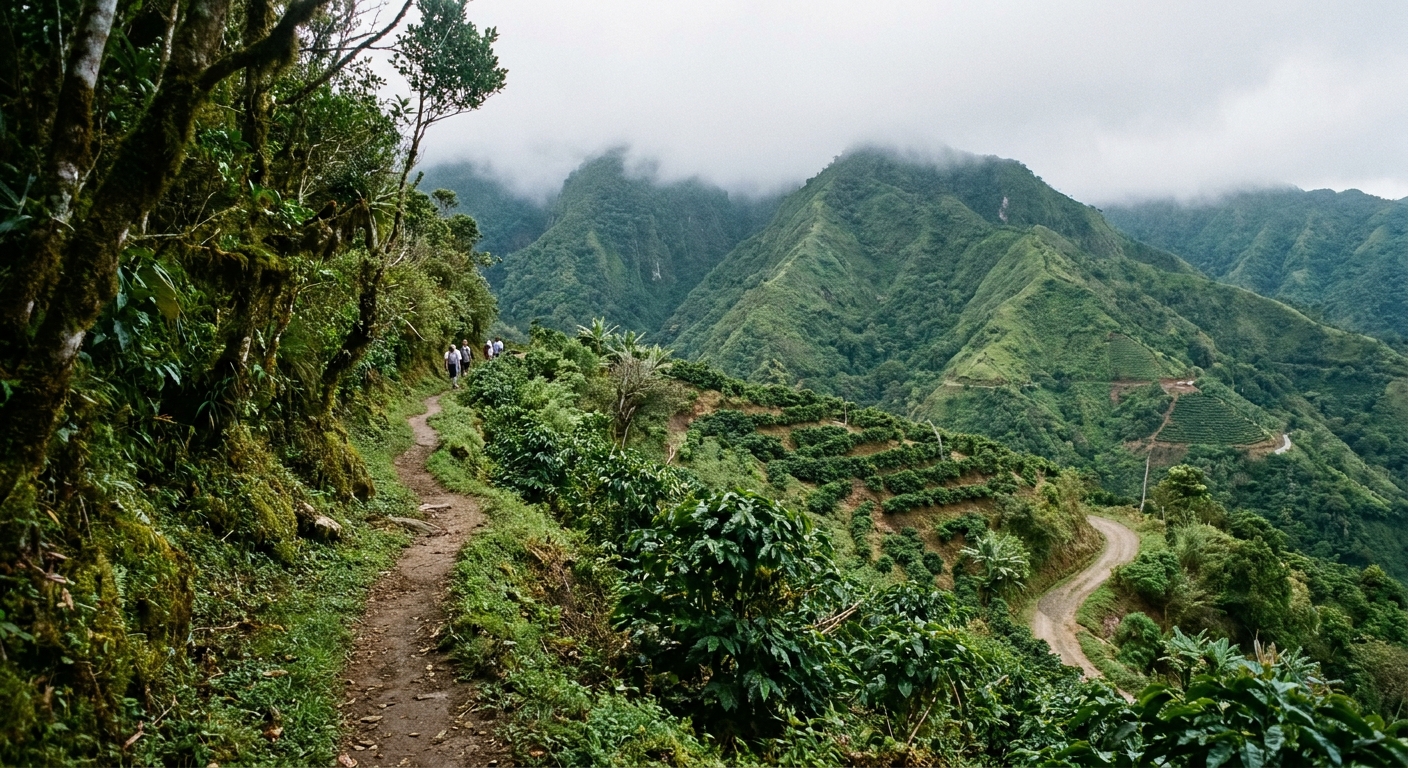
Of February, March and April, March is the wettest on the peak cell: 2.73 inches of precipitation, against 1.93 in February and 2.46 in April. Above 2,000 m that water lands on the Elfin Forest, where gnarled trees carry hanging mosses, ferns and tiny orchids. If the epiphytes are the reason for your trip, March puts you among them in the rainiest weeks of the three months.
Blue Mountain Peak tops the range at 2,256 m, the highest point of the UNESCO property. The Blue and John Crow Mountains World Heritage site covers 26,251.6 hectares of tropical montane rainforest inside a 28,494-hectare buffer zone, and runs from 850 m to the summit. Trees grow stunted above 1,800 m. On the history side, the Nanny Town Heritage Route follows the secret trails, settlements and look-outs of the Windward Maroons, and the Maroon heritage of Moore Town joined UNESCO’s intangible heritage list in 2008. We found no stable official page publishing trail times or entry fees for any of them.
The forest itself holds steady through the year: 1,357 species of flowering plant, about 294 of them Jamaican endemics and 87 found nowhere else, with half the flowering plants endemic above 900 to 1,000 m. Threatened birds here include the Jamaican Blackbird and the Yellow-billed and Black-billed Parrots. Bicknell’s Thrush is a migrant, and we could not verify its March dates. Only the air shifts: March highs of 58.1°F on the peak cell climb to 59.8°F in April, and lows move from 49.2°F to 50.6°F.
We could not verify whether any trail in the park is free to walk, or whether entry is charged at all, so we promise no free outing. Ask your lodge what access costs before you set off, and carry small Jamaican-dollar notes in case a fee is collected on site.
The Blue Mountains in March: a two-day itinerary
Day one. Be moving before the 6:12 a.m. sunrise, dressed for the 49.2°F end of the range, so the climb happens while you are fresh. We could not verify trail times, so let a local guide set the turnaround hour. Give the middle of the day, when the peak cell tops out near 58.1°F, to the Elfin Forest above 2,000 m, and aim to be back below the stunted-tree line at 1,800 m well before the 6:17 p.m. sunset.
Day two. Keep it for the Maroon story: the Nanny Town Heritage Route and the Moore Town heritage UNESCO recognized in 2008, on the Port Antonio side of the range (our Port Antonio guide covers that base). If rain wiped out day one, swap: climb on day two and save the heritage visit for later. If both days turn wet, head down to Kingston for the afternoon and keep the summit for another trip.
The Blue Mountains in March vs February and April
| Normal, peak cell (1991-2020) | February | March | April |
|---|---|---|---|
| Average high | 57.2°F | 58.1°F | 59.8°F |
| Average low | 49.0°F | 49.2°F | 50.6°F |
| Precipitation | 1.93 in | 2.73 in | 2.46 in |
| Days with 0.10 in or more | 6.2 | 7.8 | 7.7 |
| Day-night spread | 8.2°F | 8.9°F | 9.2°F |
On the same ERA5 grid cell and the same 1991-2020 period, March highs of 58.1°F sit 0.9°F above February’s 57.2°F and 1.7°F below April’s 59.8°F. Lows barely move from February (49.0°F to 49.2°F) and gain 1.4°F by April (50.6°F). March is the wettest of the three: 2.73 inches, 0.80 more than February and 0.27 more than April, over 7.8 wet days against 6.2 and 7.7. The day-night spread widens slowly, from 8.2°F to 8.9°F to 9.2°F. We read no sea temperature for the peak in any of the three months.
Moving four weeks earlier, to February, trades 0.9°F of afternoon warmth for 1.6 fewer wet days and 0.80 inch less rain. A shift to April adds 1.7°F to the high and 1.4°F to the low while the count of wet days stays almost level, 7.7 against 7.8. Neither move makes the summit warm: all three months stay below 60°F by day.
Is March a good time to visit the Blue Mountains?
Yes, if you want the high forest and can dress for 58.1°F days and 49.2°F nights: walkers, birders and anyone drawn to mosses and orchids will find the upper slopes at their wettest of the three months. No, if a dry summit day matters more than anything, or if cold nights spoil a vacation for you. With rain on roughly one day in four, plan two chances at the peak or pick another month.
If the answer is no, pick February for the drier sky: 1.93 inches over 6.2 wet days, the least rain of the three months, at the cost of highs 0.9°F cooler. If warmth matters more than rain, April’s 59.8°F high and 50.6°F low are the mildest of the three.
Of February, March and April, March puts the most rain, 2.73 inches, on a property that shelters 61 species of liverwort and moss and nine recorded ecological communities in its upper montane forest.
The last word
Pack for 49.2°F, hold a spare day for the peak, and choose March if a dripping, moss-hung forest is the point of the trip. East along the ridge, in the John Crow Mountains, lives the threatened Hutia, Geocapromys brownii, the property’s only land mammal that cannot fly, on two ranges that together cover about 20% of Jamaica.
Sources & data for this guide
- March normals (58.1°F high, 49.2°F low, 2.73 in, 7.8 and 0.2 rain days) · Open-Meteo / ECMWF ERA5, 1991-2020, grid cell 18.0465N 76.5788W over Blue Mountain Peak · model reanalysis, not a station reading · checked Sep 24, 2026
- February and April normals · same ERA5 grid cell and period · checked Sep 24, 2026
- Daylight, sunrise and sunset on March 15 (11:12 and 23:17 UTC, shown in local UTC-5) · sunrise-sunset.org · checked Sep 24, 2026
- World Heritage inscription, area, elevations, forest zones, flora, fauna, Maroon heritage and protecting laws · UNESCO World Heritage Centre, Blue and John Crow Mountains (1356) · checked Sep 24, 2026
- Trail times, entrance fees, guide rates, lodging tax and room prices · we found no stable official source and publish none · checked Sep 24, 2026
- Packing and pacing advice is editorial · confirm access and costs with your lodge or guide when you book.
To plan your stay
- Things to Do in the Blue Mountains: Coffee Farms, the Peak Hike, Bike Descents and Short Trails
- Blue Mountains Wildlife: The Birds, the Hutia and What Lives Only Here
- Best Time to Visit the Blue Mountains: Rainfall, Cool Nights and the Quiet Months
- The Blue Mountains in February: Weather, Summit Lows and Rain Days vs January and March