
PORTO AND THE NORTH · JULY · 41.2° N
Porto in July runs warm rather than hot. The 1991-2020 normal at the airport station gives a high of 75.7°F, a low of 59.9°F and 0.65 inches of rain spread across about three days. Granite that looked gray in April turns honey-colored at nine in the evening, the Douro terraces are green to the skyline, and the Atlantic sits close enough that the afternoons never behave like Seville.
That ocean is also the catch. The readings come from a thermometer on the coast, and the north is not one climate: drive inland up the Douro or into the Gerês hills and you leave the sea breeze behind. We name the station every time we give a figure, because packing here follows altitude as much as it follows the date.
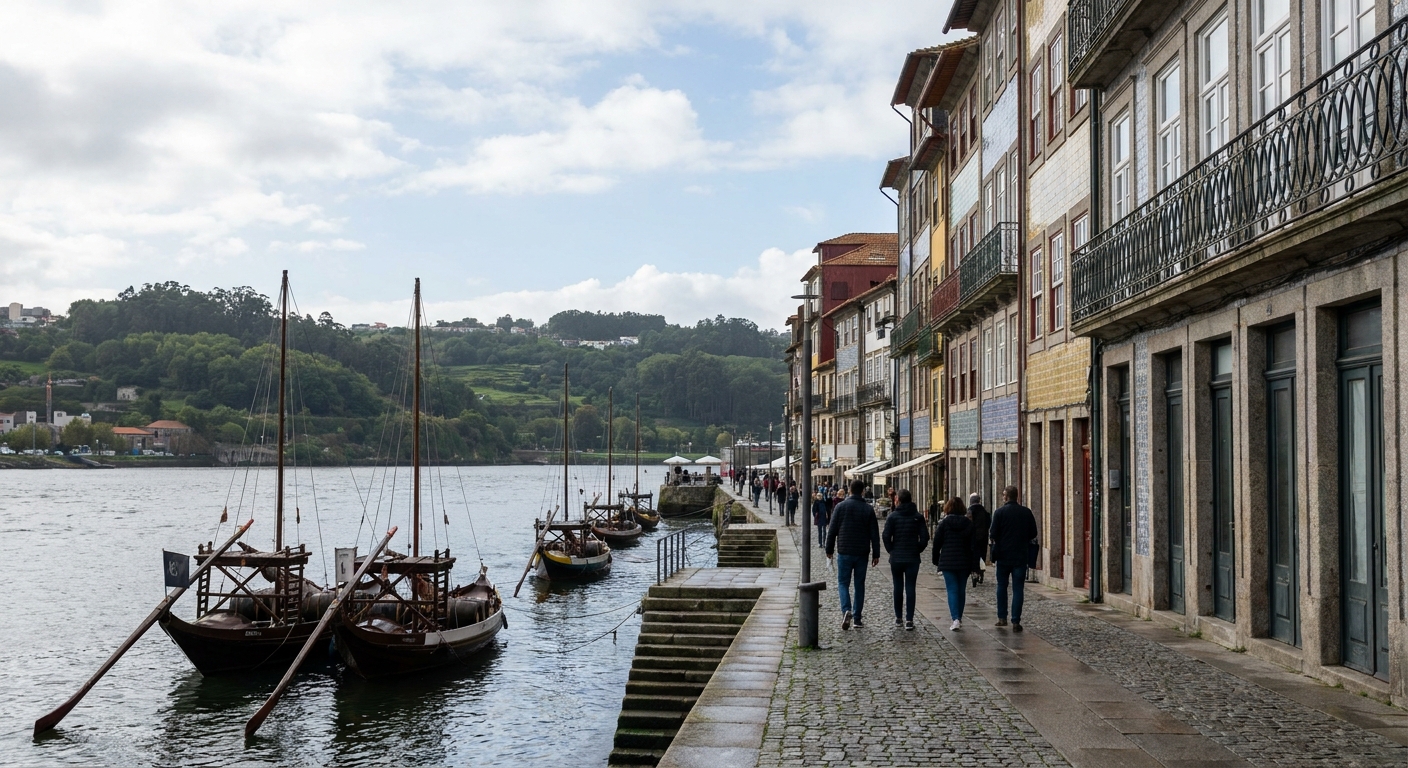
THE MONTH AT A GLANCE · PORTO IN JULY
July gives Porto the driest of its three summer months, 75.7°F afternoons and daylight until past nine, and asks for early booking and company in return.
AVG HIGH 75.7°F · 0.65 IN OF RAIN · 3.1 RAIN DAYS · LIGHT UNTIL 9:07 P.M.
Go for: dinner outdoors in full light, the lowest rainfall of the three summer months at the airport station, and nights near 60°F that make sleeping easy.
Think twice before: planning a midday walk in the Douro or the Gerês on these coastal numbers, and before expecting a bargain: we found no room-rate series for Porto and put no percentage on July.
Normals: IPMA station 545, Porto Pedras Rubras, 1991-2020 · Daylight: sunrise-sunset.org · full sources at the end
On this page
- July weather in Porto: highs, lows and rain days75.7°F days, 3.1 wet days, 0.65 inch
- How hot it gets on the coast, in the Douro and in the GerêsA 15.8°F swing, and why inland reads higher
- Crowds, booking and the tourist tax in JulyWhat we can measure, and what we cannot
- Things to do in JulyRibeira, Gaia, Foz, the Douro, Braga and Gerês
- A two-day plan built on 14 hours 54 minutes of lightDay one on the river, day two inland
- July vs June and AugustHow the three months compare, degree by degree
- Is July a good month to visit?Our verdict, and who should shift dates
Neighborhoods and tickets live in the Porto city guide, trains and metro in our getting-around guide, and a week’s budget in the trip-cost page. Every figure below is dated to July.
Porto and the North weather in July: average highs, lows and rain days
| July at Porto Pedras Rubras | 1991-2020 normal |
|---|---|
| Average high | 75.7°F (24.3°C) |
| Average low | 59.9°F (15.5°C) |
| Total precipitation | 0.65 in |
| Days with 1 mm (0.04 in) or more | 3.1 |
| Days with 10 mm (0.39 in) or more | 0.5 |
| Daylight on July 15 | 14 h 54 min |
| Sunrise and sunset, July 15 | 6:13 a.m. · 9:07 p.m. local |
Every figure here comes from IPMA, the Portuguese institute for the sea and the atmosphere, station 545 at Porto Pedras Rubras, the airport, 67.7 m above sea level. That is a real thermometer with a location, not a model grid cell averaged over a region, and the distinction matters when a reanalysis and a station disagree by a couple of degrees on the overnight low. The average July day there climbs from 59.9°F to 75.7°F, and the whole month collects 0.65 inches of rain.
An average July logs 3.1 days with at least 1 mm of rain, about 0.04 inch, and half a day with 10 mm or more, 0.39 inch. Those are IPMA’s thresholds, not the 0.10-inch bar American tables use, so the two counts do not swap. Read it as roughly one day in ten catching something measurable, usually coastal gray rather than a storm, and one July in two seeing a single soaking day. The other twenty-eight days are dry.
Days and nights sit 15.8°F apart, with the low arriving just before a 6:13 sunrise. That gap decides the bag: one long-sleeve layer for the riverfront at breakfast and again after dark, a shirt you can wear under sunscreen at midday, and shoes that grip wet granite, because Porto’s cobbles stay slick under morning cloud. A packable shell handles three days of drizzle. A full rain jacket in July is luggage you carry for nothing, as our packing guide argues for the season generally.
On July 15 the sun rises at 6:13 a.m. and sets at 9:07 p.m. local time, 14 hours 54 minutes of daylight. Sunrise-sunset.org publishes those as 05:13 and 20:07 UTC, and Portugal keeps clocks an hour ahead through the summer. Light holds over the river well past nine, which pushes dinner late and makes an 8 p.m. table feel like mid-afternoon. Plan the day around two ends of it rather than one long middle.
How warm does Porto and the North get in July? The coast, the Douro and the Gerês hills
Average afternoons reach 75.7°F, average nights drop to 59.9°F, and 15.8°F separates them. That is the coast talking. IPMA attaches its own caveat to the reading: station 545 sits by the Atlantic, while the inland and upland north runs hotter in summer and colder in winter, with high ground wetter still. An afternoon among the Douro terraces or on a Gerês trail is warmer than 75.7°F in July, and we have no station number for either, so we will not invent one.
In practice you dress for two days at once. Breakfast on a terrace near 60°F wants sleeves, and by two in the afternoon on the coast you are in a shirt with the breeze doing the work. Inland, that same hour is the one you spend under a vine canopy or inside a cellar rather than on an exposed slope. Come back toward the mouth of the Douro in the evening and the wind picks up again, which is when the layer you carried all day earns its place in the bag.
Freezing nights are not a July question here, and IPMA’s July page gives no count of them. One number we genuinely could not verify is the water: we found no July sea-surface series for the Porto coast. Where such tables do exist, they usually average daily maxima, which reads a little warmer than a true 24-hour mean, so even a borrowed figure would flatter the swim. We give no water temperature, and note only that this is the open Atlantic, not the Algarve.
How busy is Porto and the North in July? Crowds, prices and the summer peak
We found no occupancy series and no room-rate series for Porto, so we crown no month expensive and attach no percentage to a summer markup. What we can say is calendar rather than measurement: July sits inside the school holidays across Western Europe, and it is the driest of the three summer months on IPMA’s record, which is the combination that fills a compact historic center. The Ribeira waterfront and the Gaia lodges absorb that first, the inland towns later in the day.
Book the bed before the flight. Six to eight weeks (est.) is our working lead time for a central room in July, and it is editorial judgment rather than a measurement. Anything with a fixed departure deserves the same treatment: cellar tours, Douro river boats and the train seats that fill on Saturday mornings. Our where-to-stay guide sorts the bases, and the Douro Valley guide covers the valley end of the same booking.
Portuguese cities are allowed to levy a municipal tourist tax per person per night, collected by the property. We could not verify Porto’s current rate, or whether it varies by season, so we quote no amount. Expect a small nightly line at checkout, ask about it when you reserve, and treat any figure you read elsewhere as needing a date on it.
One upgrade changes July more than the rest: a room with working air conditioning and a window that actually opens. Nights average 59.9°F, cool enough to flush a room out, and old Porto buildings with sealed windows never get the benefit. After that, the money that changes the month is a car for a day inland, since the Douro and the Gerês are where July’s heat and light differ most from the coast. Our car guide covers tolls and pickup.
Things to do in Porto and the North in July: Gaia, Foz, the Douro and Gerês
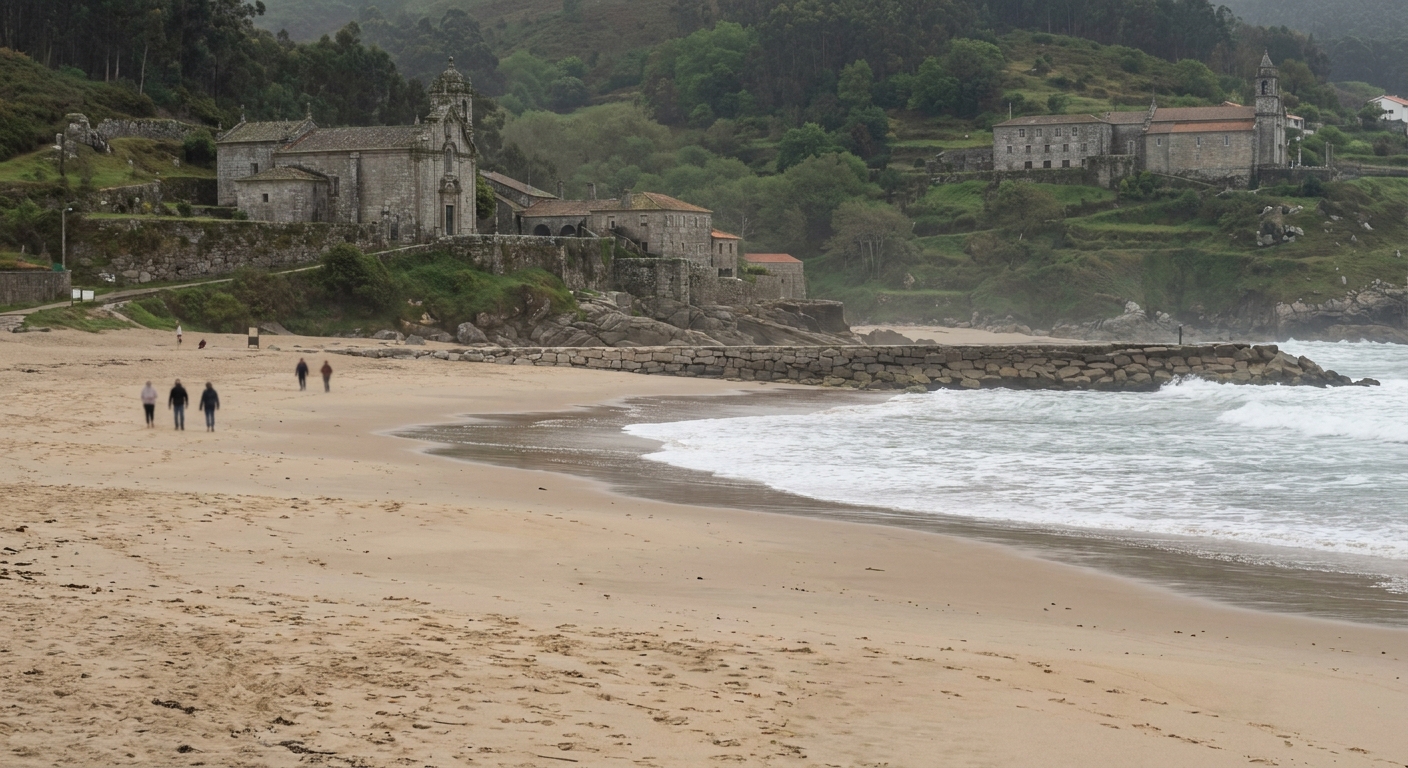
July buys two things the wetter months here cannot: dry granite and a usable evening. With 3.1 wet days in the average month, a hillside trail or a vineyard walk planned three days out usually survives, and light until 9:07 p.m. turns a late dinner outdoors into the default rather than a gamble.
The short list starts at the water: Ribeira, the upper deck of the Dom Luís I bridge, the port lodges across the river in Vila Nova de Gaia, and the walk downriver to Foz and the beaches beyond. Inland, the Douro around Peso da Régua and Pinhão, the baroque center of Braga, the old streets of Guimarães, and the trails of Peneda-Gerês. Cellar prices and monument hours were not something we could verify, so confirm them with the operator.
July does not change those places so much as it changes the hour you meet them. A port lodge is cool in any month by design, which makes midday its best slot rather than its worst. A Gerês river pool stays cold whatever the air does, and it is the 75.7°F air around it that makes the difference. Vineyard terraces, facing south and holding heat, want the first two hours after that 6:13 sunrise or the last three before sunset.
What costs nothing needs no ticket desk: the bridge’s upper deck, the riverside walk from Ribeira out to Foz, the beaches north of the mouth, and the viewpoints above the Douro gorge at the end of the day. We could not verify any free-admission hours at Porto’s museums for July, so we promise none. The city guide holds the detail on what is worth paying for.
Porto and the North in July: a two-day itinerary
Day one stays on the water. Out the door by eight, while the air is still near its 59.9°F low, for Ribeira and the bridge before the tour groups land. Cross to the Gaia lodges for the middle of the day, when the cellars are the coolest room in the city. Mid-afternoon, follow the river down to Foz for the sea wind, and hold dinner until 8:30: the sun does not set until 9:07, and the light on the granite is the whole point.
Day two goes inland, early, because that is where July’s heat is underreported by the airport thermometer. Take the Douro line or the car up the valley, eat a long lunch out of the sun, and be back on the coast for the evening breeze. If one of the month’s 3.1 wet days lands on you, the drizzle is usually a coastal affair: Braga and Guimarães work under cloud, and so does a slow afternoon in the lodges.
Porto and the North in July vs June and August
| IPMA normal, 1991-2020 | June | July | August |
|---|---|---|---|
| Average high | 72.9°F | 75.7°F | 76.6°F |
| Average low | 58.1°F | 59.9°F | 60.3°F |
| Precipitation | 1.33 in | 0.65 in | 1.15 in |
| Days with 1 mm (0.04 in) or more | 4.9 | 3.1 | 3.2 |
| What shifts | Against June | Against August |
|---|---|---|
| Daytime temperature | 2.8°F warmer in July | 0.9°F cooler in July |
| Rain total | Just under half of June’s | 0.50 inch less than August |
| Wet days | 1.8 fewer than June | Same count, lighter rain |
All three months come from the same IPMA station and the same 1991-2020 period, so the comparison is like for like. July runs 2.8°F warmer by day than June and 0.9°F cooler than August, with overnight lows within 2.2°F of each other across the whole summer. Rainfall is where the months separate: 0.65 inches in July against 1.33 in June and 1.15 in August. August matches July’s wet-day count at 3.2, so its extra half inch falls in the same few days, heavier. No sea-temperature series was available to us for any of the three.
Shift four weeks earlier and you trade 2.8°F of afternoon warmth for 1.8 extra wet days, with terraces greener and the river valley less baked. Shift four weeks later and you gain nine-tenths of a degree and almost double the rain, in cloudbursts rather than drizzle. Neither swap moves the crowd math in a way we can measure, and the school calendar covers both months. Our best-time guide sets the summer against the rest of the year.
Is July a good time to visit Porto and the North?
Yes, for most people, and with a clear reason: 0.65 inches of rain across 3.1 days is the most reliable weather the north hands out, and 14 hours 54 minutes of daylight is a lot of trip per day. Say no if crowds decide your mood, if you need a bargain you can verify in advance, or if your plan is built around swimming in an ocean we have no temperature for. Families tied to school dates have no choice, and July treats them fairly.
If the answer is no, September is the month to move to, and the reason is specific to the north: the Douro harvest happens then, and our harvest guide covers what the valley does while the grapes come in. Late spring is the other direction, with June’s 1.33 inches and 4.9 wet days as the price of thinner company. We have no occupancy data to promise you quieter streets in either.
Of the three summer months, only July pairs a 75.7°F afternoon with under three-quarters of an inch of rain, and that is the combination the north is short of the rest of the year.
The last word
The decision July really asks of you is not whether to come but whether to give one of your days to the interior, because the coastal thermometer that produced every number above stops describing the trip the moment you pass Peso da Régua. Book the car or the valley train early, keep midday for a cellar, and sleep with the window open: August nights average 60.3°F, a mere 0.4°F warmer than July’s, so this is as cool as a Porto summer night gets.
Sources & data for this guide
- July normals, high 75.7°F, low 59.9°F, 0.65 in · IPMA, climatological normals 1991-2020, station 545 Porto Pedras Rubras, altitude 67.7 m · checked Sep 24, 2026
- Rain-day counts, 3.1 days at 1 mm and 0.5 day at 10 mm, and IPMA’s own thresholds rather than the US 0.10-inch bar · same station and period · checked Sep 24, 2026
- June and August normals used in the comparison · IPMA, same station and period, measured values and not estimates · checked Sep 24, 2026
- Daylight of 14 h 54 min, sunrise 05:13 UTC and sunset 20:07 UTC on July 15, converted to local summer time · sunrise-sunset.org · checked Sep 24, 2026
- Scope caveat carried from IPMA: the station is coastal, and the inland and upland north runs hotter in summer, colder in winter and wetter at altitude
- We found no sea-surface temperature series for the Porto coast, no occupancy or room-rate data, no verified Porto tourist-tax rate and no dated July event for the north, so we give no water figure, no price ranking, no tax amount and no festival
- Cellar tours, monument hours and ticket prices change · confirm with operators when you book
To plan your stay
- Things to Do in Porto and the North: Port Lodges, Bom Jesus, Guimarães, Surf and Peneda-Gerês
- Best Time to Visit Porto and the North: Weather, Rain Days and the Quiet Months
- Porto and the North in June: Weather, Rain Days and How It Compares to May and July
- Porto and the North in August: Weather, Crowds and Rain Days