
PORTO AND THE NORTH · MARCH · 41.2° N
Porto in March smells of rain on granite and of coffee ground behind a marble counter. The month runs mild rather than warm: an average high of 62.6°F, an average low of 47.8°F, and 3.98 inches of rain spread across the thirty-one days. Nobody packs a swimsuit. Almost everybody ends up walking further than planned.
What the date buys you is light and air together. Daylight reaches 11 hours 59 minutes on March 15, the Douro terraces still show their stonework before the vines close over it, and Braga and Guimarães sit close enough to absorb a wet afternoon if you are based in the city. Our getting-around guide has the trains and the metro for all of that.
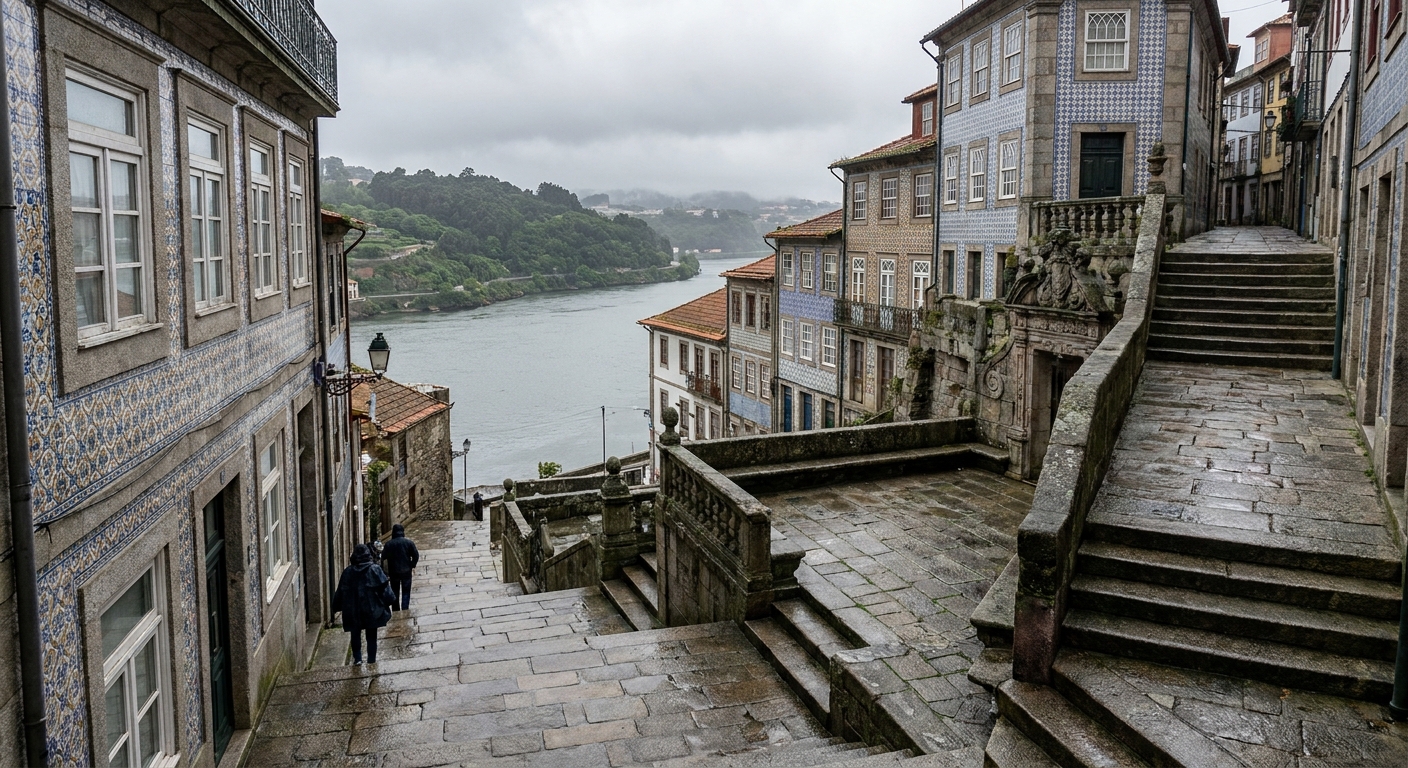
THE MONTH AT A GLANCE · PORTO AND THE NORTH
March gives Porto and the north 62.6°F afternoons, just under twelve hours of daylight and rain on about ten days: a walking month for the city and the valley, not a beach one.
IPMA 1991-2020 NORMALS · STATION 545 PORTO PEDRAS RUBRAS · COASTAL READING AT 67.7 M
Go for: river walking in the city, bare terraces and visible dry-stone walls in the Douro, and cathedral-and-castle afternoons in Braga and Guimarães when a squall comes through.
Think twice before: building a coast-and-swim week around these dates. We verified no sea temperature for this coast, and the air tops out at 62.6°F on an average day.
Normals: IPMA station 545 · Daylight: sunrise-sunset.org · full sources at the end
On this page
- Porto weather in March62.6°F highs and 9.9 rain days
- How cold the nights getLows of 47.8°F, and what we know about the water
- Crowds, prices and the lodging taxWhat we verified, and what we did not
- Things to do in MarchRibeira, the Douro terraces, Guimarães and Braga
- A two-day plan for PortoDay one and day two, hour by hour
- March or April?The three months side by side
- Is March a good time to go?Our verdict, for and against
Every figure here comes from two places: IPMA’s 1991-2020 normals for station 545, and a sunrise table read for March 15. Where we had nothing to read, we say so instead of filling the gap.
Porto And The North weather in March: average highs, lows and rain days
| March at Porto Pedras Rubras | 1991-2020 normal |
|---|---|
| Average high | 62.6°F (17.0°C) |
| Average low | 47.8°F (8.8°C) |
| Day-to-night spread | 14.8°F |
| Precipitation | 3.98 in |
| Days with 0.04 in or more | 9.9 |
| Days with 0.39 in or more | 3.2 |
| Daylight on March 15 | 11 h 59 min |
These numbers come from IPMA, Portugal’s national weather service, and from one instrument: station 545 at Porto Pedras Rubras, 67.7 m above sea level, out by the airport on the coast. Its 1991-2020 March normals read 62.6°F for the average high, 47.8°F for the average low, 3.98 inches of precipitation. That is a real thermometer rather than a model grid cell. It also describes the coast and only the coast: inland and up in the hills of the north, March runs colder and a good deal wetter, so pack for the trail if the trail is the plan.
Measurable rain falls on 9.9 days in an average March, roughly one day in three, and IPMA starts counting at 1 mm, or 0.04 inch. American tables usually start at 0.10 inch, so the two sets of rain-day counts are not interchangeable and should never be stacked against each other. On the ground it rarely means a whole gray day: more often the Atlantic sends a band through, the cobbles shine for twenty minutes, and the sky opens again. A hood beats an umbrella once the wind comes up the river.
Between the two ends of a normal day sit 14.8°F, from 47.8 at dawn to 62.6 in mid-afternoon. That makes March a layers month rather than a coat month: a sweater or fleece under a waterproof shell, and shoes with real grip, because Porto’s sidewalks are polished granite and they turn slippery the moment they are wet. Our packing guide carries the full list.
On March 15 the sun comes up at 6:43 a.m. local time and goes down at 6:42 p.m., giving 11 hours 59 minutes of daylight, one minute short of twelve. That is enough for a river walk, a museum and a second walk, and it means a west-facing viewpoint at six in the evening still has light in it. Dinner here starts late enough that sunset is not a deadline.
How warm is Porto And The North in March? Highs, lows and sea temperature
Mild is the right word, warm is not. The average afternoon reaches 62.6°F and the average night falls to 47.8°F, with 14.8°F of daily swing between them. Neither end is extreme, and neither end is beach weather.
In practice you leave the hotel at eight into air close to that 47.8°F figure and you want the fleece then. By three the shell is in the bag and the sleeves are pushed up on the climb from Ribeira to the cathedral. Old granite interiors stay cool all day, so the layer you shed outdoors goes straight back on inside a church or a port lodge.
IPMA’s March normals for station 545 carry no count of frost nights, so we give no number of nights at or below freezing. An average low of 47.8°F sits well clear of it on the coast, and IPMA’s own scope note says the high ground runs colder in winter than this station does. We also could not verify a sea-surface series for this stretch of coast, so we give no water temperature at all. If you read one elsewhere, check the method first: many tables average daily maxima, which runs a shade warmer than a true 24-hour mean.
How busy is Porto And The North in March? Crowds, prices and the lodging tax
Cards on the table before anything else: we found no occupancy series and no monthly room-rate series for Porto that we could check, so we crown no month cheap and no month expensive. What the calendar does fix is light and air, and on both counts March sits between a cooler February and a warmer April. For what a Portugal week actually costs at any season, our trip-cost guide prices it out.
We verified no data on how far ahead Porto fills in March either, so we name no number of weeks. What we would settle early is the shape of the trip rather than the rate: how many nights sit in the city, whether one of them moves upriver, and whether a car is involved. Our where-to-stay guide sorts the bases and the flights page covers the US routes in.
On lodging tax, we could not verify whether a municipal charge applies to March stays in Porto, or at what rate, so no per-night amount appears from us. Ask the property when you book and expect that sort of charge to be collected at the desk rather than through the booking site. Our know-before-you-go page handles the rest of the small print.
The one place extra money genuinely changes a March trip is mobility. IPMA is plain that the uplands run colder and far wetter than this coastal station, and a car turns a washed-out valley afternoon into Guimarães or Braga instead of a wait on a platform. Our car guide covers the tolls and the paperwork. Keep to the rail and metro spine if you would rather not drive at all.
Things to do in Porto And The North in March: Ribeira, the Douro Valley, Guimarães and Braga
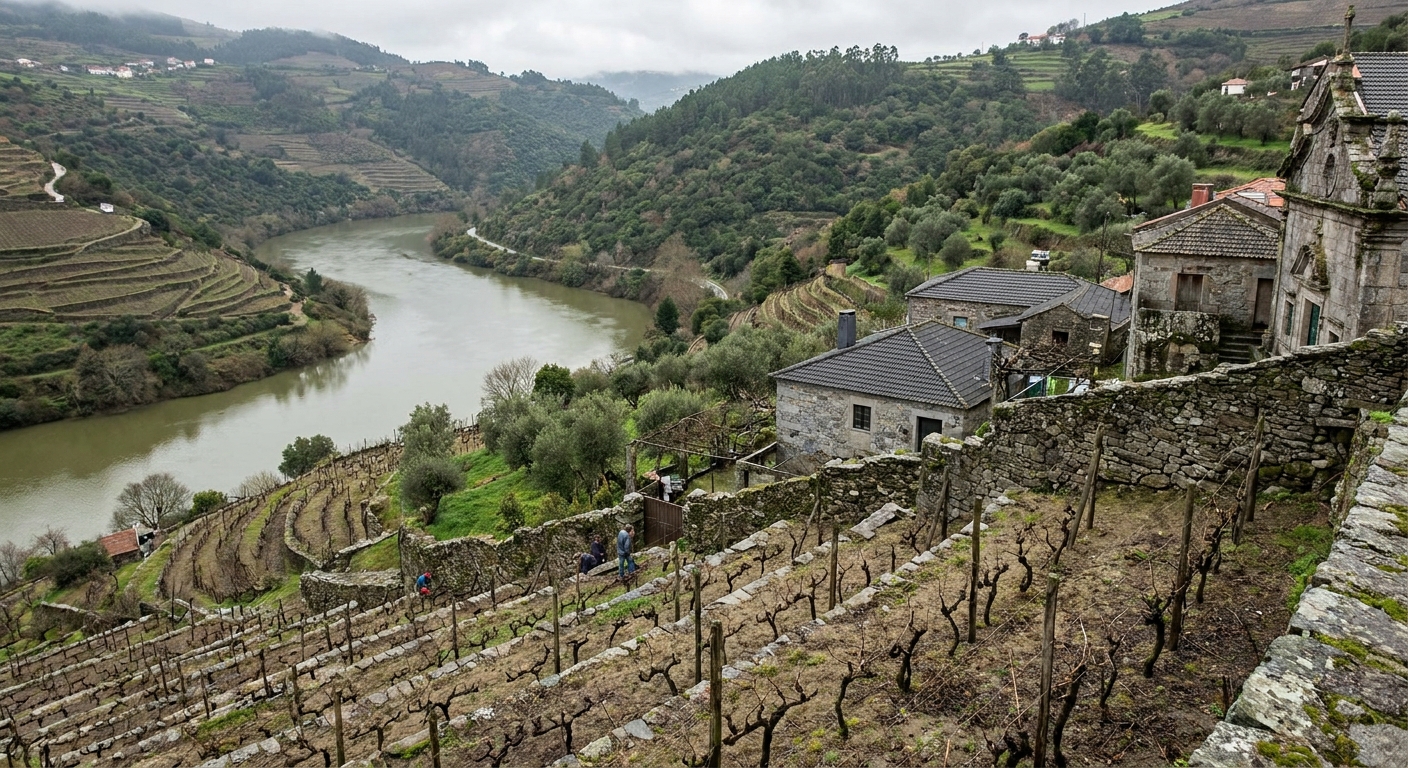
Twelve hours of daylight, near enough, and afternoons at 62.6°F: that combination lets you climb Porto’s streets without the summer’s heat, and walk a vineyard track upriver while the vines are still bare and every terrace wall is visible from the road above. Come back in August and you get more sun, fewer usable uphill hours, and a wall of green where the geometry was.
The places worth naming, with the caveat that we could not verify March opening hours or admission prices for any of them, so we quote none: the Ribeira quays and the upper deck of the Dom Luís I bridge in Porto, the port lodges facing them across the water in Vila Nova de Gaia, the terrace roads above Pinhão in the Douro Valley, the castle hill at Guimarães and the churches of Braga. Check each operator directly before you build a day around it. Our Porto guide handles the city end.
None of that stone changes with the month. The walking between it does. February hands the same hills an average high of 59.0°F and April hands them 64.6°F, so March’s 62.6°F is the first of the three where a long climb in a shell stops feeling like work. Upriver the same day runs colder than the coastal reading, which is the whole reason the valley wants one more layer than the city does.
Free, and dependent on no ticket office: the walk out to Foz do Douro where the river meets the Atlantic, the bridge deck at sunset, and the miradouros above Ribeira. We could not verify whether any Porto museum runs a free-entry day in March, so we promise none and would rather you asked at the desk.
Porto And The North in March: a two-day itinerary
Day one starts at 8:30, in air close to the night’s 47.8°F: coffee first, then the Ribeira quays while the sun is still low on the water. Keep one indoor hour loose rather than booked, since rain lands on 9.9 days in an average March and the plan that survives is the one with a museum in reserve. Lunch long. Give the warmest stretch, around 62.6°F, to the uphill streets and the bridge. Be on a west-facing viewpoint by 6:15 p.m.; the sun drops at 6:42.
Day two goes upriver, out early enough to have the terrace roads in morning light and back before the light goes at half past six. If the sky turns on you, trade the valley for Guimarães or Braga, where an afternoon runs happily under a roof, and keep the Douro for the next clear morning. That swap is the single best reason to leave one day of a Porto March unbooked.
Porto And The North in March vs February and April
| Measure | February | March | April |
|---|---|---|---|
| Average high | 59.0°F | 62.6°F | 64.6°F |
| Average low | 44.2°F | 47.8°F | 50.2°F |
| Precipitation | 3.85 in | 3.98 in | 3.76 in |
| Days with 0.04 in or more | 10.0 | 9.9 | 10.4 |
| Sea temperature | Not verified | Not verified | Not verified |
All three months come from the same IPMA series at the same station, so the comparison is clean. March runs 3.6°F warmer by day than February and 2.0°F cooler than April, with nights 3.6°F above February’s and 2.4°F below April’s. The rain line surprises people: March totals the most of the three at 3.98 inches, yet counts the fewest days at 0.04 inch or more, 9.9 against February’s 10.0 and April’s 10.4. Its rain falls in fewer, fatter episodes. No water temperature is verified for any of the three.
Shifting four weeks later buys you 2.0°F on the afternoon, 2.4°F on the night and half a rain day more per month, plus longer evenings for a valley drive. Shifting four weeks earlier costs you 3.6°F on both ends and saves nothing at all on the rain-day count. Between February and March, the month with the warmer afternoons is the obvious pick; between March and April, the gap is small enough that the price of your flight can decide it.
Is March a good time to visit Porto And The North?
Yes, if your trip is built on walking, eating and looking at things: 62.6°F afternoons and close to twelve hours of daylight are generous terms for a city of hills and a valley of stone terraces. No, if the point of the trip is the water. We verified no sea temperature for this coast, and an average daily peak of 62.6°F in the air makes the argument on its own.
If that rules March out, take April: 64.6°F by day, 50.2°F at night, marginally less total rain, at the cost of half a rain day more on the count. For anything involving swimming, look further along the year with our month-by-month verdict on Portugal, and read February before you talk yourself into going earlier.
One thing March holds alone in this trio: it is the month when the north’s daylight crosses twelve hours while the afternoon still averages under 63°F, so you get the long day without the climb turning into a sweat.
The last word
Book the city nights, leave one day unbooked for the river, and read the sky at breakfast rather than the forecast at midnight. IPMA counts 3.2 days in an average March dropping 0.39 inch of rain or more, and those are the ones to spend under Braga’s vaults instead of on a terrace road above Pinhão. The other twenty-eight will take you outside.
Sources & data for this guide
- March, February and April normals (highs, lows, precipitation, rain days) · IPMA, Instituto Portugues do Mar e da Atmosfera, 1991-2020 climate normals, station 545 Porto Pedras Rubras, altitude 67.7 m · checked Sep 24, 2026
- Rain-day thresholds of 1 mm (0.04 in) and 10 mm (0.39 in), which are IPMA’s own and not the 0.10-inch threshold of US tables · IPMA, same series · checked Sep 24, 2026
- Sunrise 06:43, sunset 18:42 and 11 h 59 min of daylight on March 15, converted to local time · sunrise-sunset.org · checked Sep 24, 2026
- We found no sea-surface temperature series, no occupancy or room-rate series, no lodging-tax rate and no confirmed March event dates for Porto, so we give no water figure, no price ranking, no percentage and no festival date.
- The normals describe the coast at airport level; the inland and upland north runs colder and wetter. Opening hours and admission prices change · check operators and your property when you book.
To plan your stay
- Things to Do in Porto and the North: Port Lodges, Bom Jesus, Guimarães, Surf and Peneda-Gerês
- Best Time to Visit Porto and the North: Weather, Rain Days and the Quiet Months
- Porto and the North in February: Weather, Rain Days, Crowds and Prices
- Porto and the North in April: Weather, Rain Days and What to Pack