
DOURO VALLEY · JUNE · 41.3° N
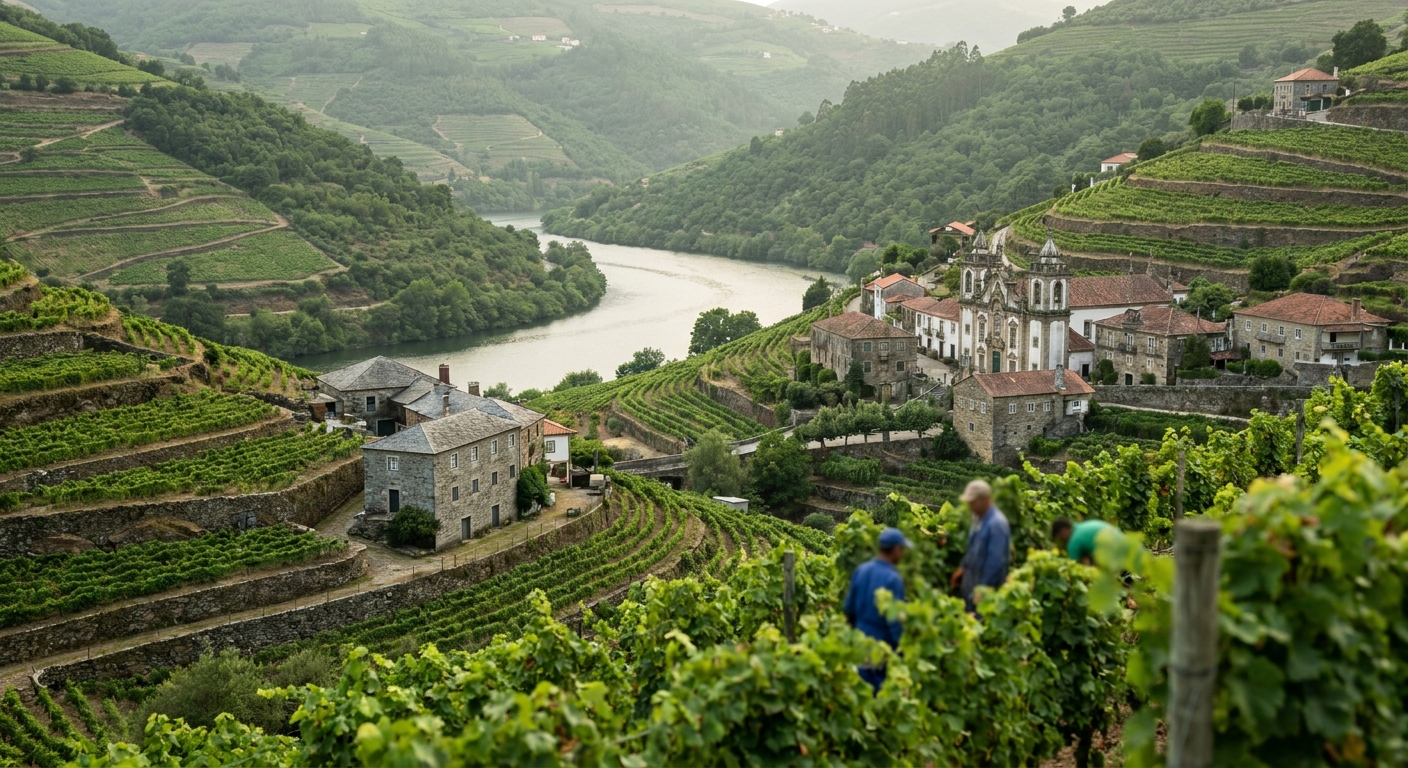
The Douro in June is a valley in full leaf: 24,600 hectares of terraced vineyard stacked above the river on slopes buttressed by schist walls. Wine has been made here by traditional landholders for some 2,000 years, and UNESCO inscribed the Alto Douro Wine Region in 2001 for the working landscape itself, walls, quintas, orange groves and all. By mid-month the sun is up before six in the morning and still out past nine at night.
June hands you the dry half of the year before the heat lands in full: an average high of 77.5°F, four days with measurable rain, 1.15 inches across the month. It does not hand you the vintage. The picking and the presses belong to September, and our harvest guide dates that trip. If your visit is about the vineyard rather than the vintage, June is the month to drive it, inland from Porto.
THE MONTH AT A GLANCE · DOURO VALLEY · JUNE
June is the easiest month to walk this valley: 77.5°F afternoons, four wet days and daylight to 9:07 pm, with July’s 83.8°F still four weeks away.
IPMA 1991-2020 NORMALS · VILA REAL STATION AT 561.5 M · 15H 12M OF DAYLIGHT ON JUNE 15
Go for: dry terraces you can walk at both ends of the day, 15 hours of light, and a valley green and worked months before the September presses.
Think twice before: planning midday on an unshaded terrace, or assuming a quinta takes walk-ins: we could not verify a single opening hour or tasting price.
Climate: IPMA station 567, Vila Real · Landscape: UNESCO file 1046 · full sources at the end
On this page
- Douro Valley weather in June77.5°F highs, 1.15 inches, 4 wet days
- How hot the afternoons getA 22.8-degree swing from dawn to 3 pm
- Crowds, booking and what June costsNights first, quinta visits second
- Things to do in the Douro Valley in JunePinhão, the Upper Corgo and the socalco terraces
- A two-day plan for the valleyTwo days built around 15 hours of light
- June vs May and JulyHow the three months compare, degree by degree
- Is June a good time to go?Who should book it, who should wait for September
Every figure here comes from one thermometer: IPMA’s station 567 at Vila Real, 561.5 meters up on the high ground north of the river. That matters more in the Douro than almost anywhere else in Portugal. The valley floor, down among the schist walls at the water, runs hotter than these numbers and far hotter than Porto, while the ground rising toward Marão and Montemuro is colder and wetter. Read the normals as the shoulder of the valley, then add heat as you drop toward the river.
The Douro Valley weather in June: average highs, lows and rain days
| June at Vila Real | 1991-2020 normal |
|---|---|
| Average high | 77.5°F (25.3°C) |
| Average low | 54.7°F (12.6°C) |
| Day-night spread | 22.8°F |
| Precipitation | 1.15 in |
| Days with 1 mm (0.04 in) or more | 4.0 |
| Days with 10 mm (0.39 in) or more | 0.8 |
| Daylight, June 15 | 15h 12m |
The numbers come from IPMA, Portugal’s national weather service, and its 1991-2020 normals for station 567: an average high of 77.5°F (25.3°C), an average low of 54.7°F (12.6°C), and 1.15 inches of rain over the month. That is a real thermometer at 561.5 meters, not a model grid cell averaged across a wide square, and reanalysis grids and station records do not always agree, least of all on overnight lows.
Four days in an average June record at least 1 mm of rain, 0.04 inch, and 0.8 of a day records 10 mm or more, 0.39 inch. In plain terms, most Junes give you a wet morning or two out of thirty, and a genuine soaking turns up in roughly four Junes out of five. Those thresholds are IPMA’s own. American tables usually count days at 0.10 inch, so the two sets of counts do not swap across one for one.
Between the low and the high sits 22.8°F of daily swing, and it decides the bag. An 8 am start on a terrace wants a fleece or a light jacket. By 3 pm that same terrace wants short sleeves, a hat and water, because the schist holds the sun and a vine row offers no shade at all. Our packing guide covers the rest of the country, but in the Douro the layer you use most is the morning one.
On June 15 the valley gets 15 hours and 12 minutes of daylight, sunrise at 5:55 am and sunset at 9:07 pm local time. Dinner starts in full light. The gain you feel is the last hour before sunset, when the low sun rakes across the terrace walls and a tributary road is still drivable in the last of it, well after most European valleys have gone dark.
How warm is the Douro Valley in June?
Set the two ends of the day side by side and June measures 77.5°F by afternoon against 54.7°F before dawn, 22.8 degrees apart. Both are month averages, not the hottest afternoon or the coldest dawn you might draw. And both are measured on the shoulder of the valley at 561 meters: down on the floor, close to the water and the stone, the air runs hotter than these figures on the same day.
So the day splits in two. Mornings to about 11 are shirt-and-fleece weather and the right slot for anything uphill, stairs between terraces included. Afternoons belong in shade or indoors: a cellar, a long lunch, a car with the windows down on a tributary road. The terraces come back around 7, with two workable hours of light behind them.
Freezing is not a June question at this station, since the average low of 54.7°F sits almost 23 degrees above it. We found no daily minimum series for Vila Real, so we count no cold nights and claim none. Take 54.7 as the average and expect the high ground toward Marão and Montemuro to run colder than the river on any given night.
How busy is the Douro Valley in June? Crowds, prices and the demand peak
June sits in the dry run-up to the vintage rather than in it. We found no occupancy series and no monthly room-rate series for the valley, so we crown no month cheap and none expensive. What is a matter of calendar rather than opinion is the timing: the picking and the presses happen in September, and the estates that open their doors for it publish those dates on their own. Everything June asks of a budget is ordinary, which is to say nights, a car, meals and tastings.
Book the nights first and fit the visits around them. Two or three nights in the valley is the usual shape, four if you fly into Porto and give the city a day at each end; flights from the US land at Porto or Lisbon, then it is a drive inland. We could not verify a single quinta’s opening hour or tasting price, so we quote none. Write to each estate before you fix the day, and treat a weekend visit as something to confirm rather than assume.
We could not verify a tourist-tax rate for the valley’s municipalities, so we give no percentage. Ask the property when you book, because that kind of charge tends to surface at checkout rather than in the online price. The broader picture, meals to fuel to car hire, sits in our trip-cost guide.
The inscribed property covers 24,600 hectares and its buffer zone another 225,400, nine times the size, which UNESCO itself calls difficult to manage. Spread over ground like that, the one expense that changes June is wheels: a rental car for the freedom, or a hired driver for the day you plan on tasting. Our car guide has the tolls and the insurance, and getting around Portugal covers the trains.
Things to do in the Douro Valley in June
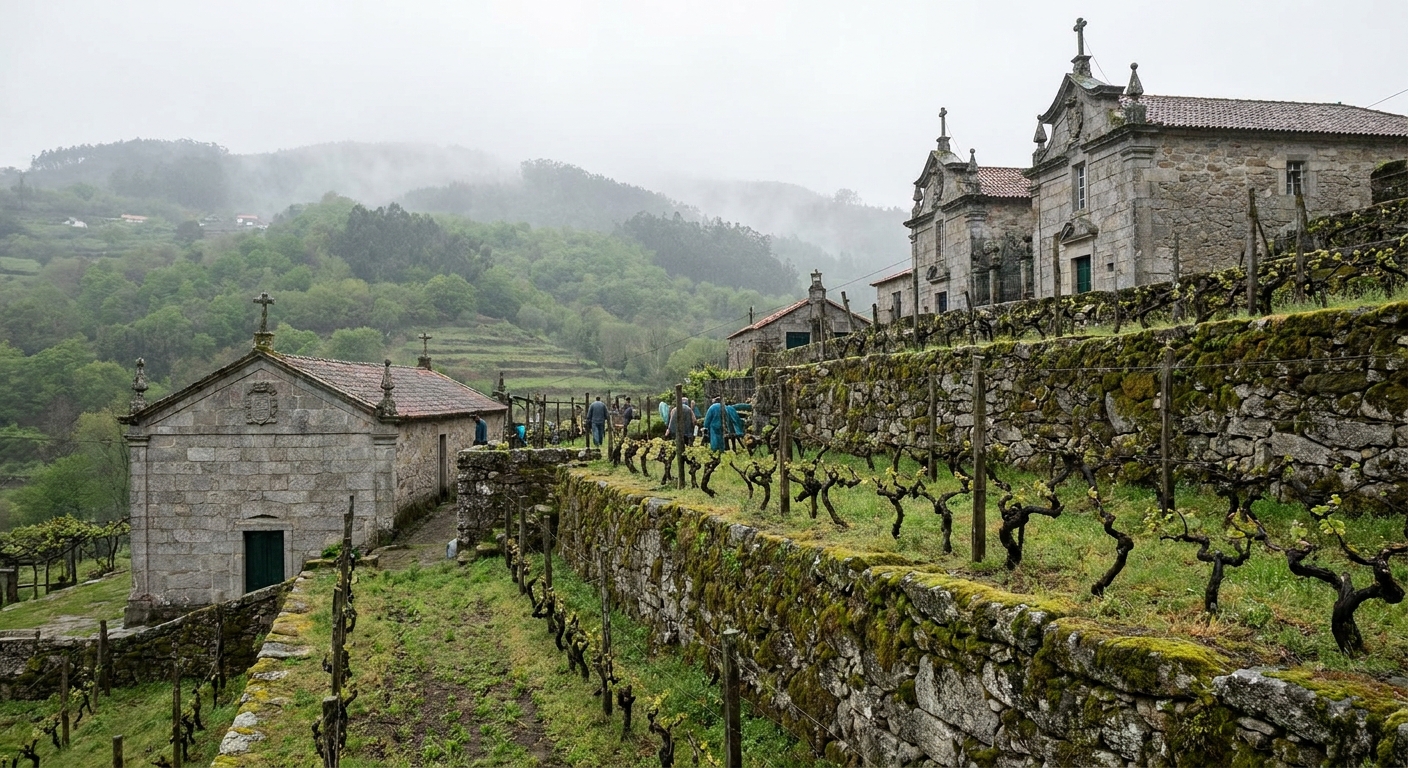
A full day outdoors is a reasonable plan in June at both ends of the clock, which is not true of its neighbors. May brings 8.5 wet days and 2.50 inches. July takes afternoons to 83.8°F. In between, June runs 4.0 wet days, 1.15 inches and 15 hours of light, so a morning on the terraces and an evening in a village square fit into one day without a weather gamble.
Two ages of terrace sit side by side, and you can read them from the road. The socalcos, older than the phylloxera of 1860, are narrow and irregular, buttressed by schist walls that need constant maintenance, each carrying only one or two rows of vines. The long, regular, slightly sloping terraces came with the replanting at the end of the 19th century and the start of the 20th, angled so the vines catch more sun. Their monumental walls changed the look of the valley. Quintas stand thickest in the Upper Corgo and the Upper Douro.
The stone does not change from month to month. The air does. June puts 77.5°F afternoons against May’s 70.2, and 1.15 inches of rain instead of 2.50, so the tracks between rows are dry and the tributary roads up the Varosa, Corgo, Távora, Torto and Pinhão are a pleasure rather than a slog. Shade is the variable to plan around, and a vine row has none.
Free in June, and worth the detour: the white-walled villages midway up the valley sides, each gathered around an often imposing 18th-century parish church, and the orange groves, some of them walled, along the lower banks and beside the hillside watercourses among brushwood, scrub and coppices. Old stone channels that once collected the water still run through parts of it. We could not verify an admission price for any site in the valley, so we quote none, and the drive itself costs fuel.
The Douro Valley in June: a two-day itinerary
Day one runs on the light. Out by 8, when it is still in the fifties, and take the climb first, a terrace path or the stairs between rows while the walls are cool. Late morning, drop to the river at Pinhão and follow the tributary inland. Lunch long and indoors from 1 to 3, the hottest stretch of the day. Back out at 6 for the Upper Corgo, and stay out: sunset is 9:07 pm, and the last hour on the walls is the one people drive here for.
Day two takes the villages and the water. Morning among the casais and the parish churches, afternoon on a boat or a train if you have booked one, the second evening on a quinta terrace. If one of the four wet days lands on you, expect hours rather than a washout, since only 0.8 of a day in an average June brings 10 mm or more. Swap the climb for cellars, drive the Távora, and pick the terraces back up when it clears.
The Douro Valley in June vs May and July
| Vila Real, 1991-2020 | May | June | July |
|---|---|---|---|
| Average high | 70.2°F | 77.5°F | 83.8°F |
| Average low | 49.5°F | 54.7°F | 58.5°F |
| Precipitation | 2.50 in | 1.15 in | 0.50 in |
| Days with 1 mm (0.04 in) or more | 8.5 | 4.0 | 2.3 |
Across the three months the daytime line climbs straight: 70.2°F in May, 77.5 in June, 83.8 in July, with nights at 49.5, 54.7 and 58.5. Rain runs the other way, 2.50 inches to 1.15 to 0.50, and wet days fall from 8.5 to 4.0 to 2.3. All twelve figures come from the same IPMA station and the same 1991-2020 period. We found no water-temperature series for the river in any of the three months, so we publish no swimming number.
Shift four weeks earlier and you gain 7.3 degrees off the afternoon and a greener valley, at the cost of more than double the wet days, 8.5 against 4.0. Our May page makes that trade in detail. Shift four weeks later and July gives you the driest of the three at half an inch, with afternoons near 84°F on unshaded stone and the picking still two months off.
Is June a good time to visit the Douro Valley?
Yes for most travelers, and the reason is arithmetic rather than mood: 4.0 wet days, 15 hours of light and afternoons topping out near 77.5°F make this the easiest month to walk a terraced landscape on foot. No if you came for the vintage, and no if a vineyard trip to you means standing in midday sun on stone with nowhere to step into shade.
If the answer is no, September is the month to want, because that is when the picking and the presses run, and the harvest guide carries the dates. If heat is the objection rather than the calendar, go in May and accept 8.5 wet days in exchange for 70.2°F afternoons. Portugal month by month lines up the whole year, and the north pairs easily with either.
One thing June alone gives: the longest days of the year inside a dry month, since July is drier still but already shorter and 6.3 degrees hotter by day.
The last word
Decide whether you want the vineyard or the vintage, then book. June gives you the vineyard: green terraces, four wet days, light past 9 pm, roads you can still drive after dinner. One fact worth carrying up the valley, because it explains the walls: port has been a defined and regulated quality since 1756, and the terraces holding those vines are fragile. Torrential rain in late January 2001 damaged them badly enough that UNESCO flagged the work needed to bring parts of the vineyard back into use, and a managing body, the Douro Mission, followed in 2006. Walk the paths, leave the walls alone.
Sources & data for this guide
- June normals: high 77.5°F, low 54.7°F, 1.15 in, 4.0 days at 1 mm or more, 0.8 day at 10 mm or more · IPMA, 1991-2020 climate normals, station 567 Vila Real, 561.5 m · checked Sep 23, 2026
- May and July normals used in the comparison · same IPMA station and same 1991-2020 period, not estimates · checked Sep 23, 2026
- Daylight of 15h 12m, sunrise 5:55 am and sunset 9:07 pm on June 15 · sunrise-sunset.org, converted from UTC to local time · checked Sep 23, 2026
- Inscription in 2001, 24,600 ha property and 225,400 ha buffer, terrace history, quintas, villages and orange groves, port regulated since 1756, January 2001 storm damage, Douro Mission 2006 · UNESCO World Heritage Centre, file 1046, Alto Douro Wine Region · checked Sep 23, 2026
- We could not verify any quinta opening hour, tasting price, boat or train fare, tourist-tax rate, or occupancy and room-rate series for the valley, so we quote none · reading note, Sep 23, 2026
To plan your stay
- Things to Do in the Douro Valley: Quinta Tastings, the River Train, Boats and Miradouros
- Douro Valley vs Alentejo: Monthly Temperatures, Rain Days and Daylight
- Best Time to Visit the Douro Valley: Month-by-Month Weather, Harvest Season and the Quiet Months
- The Douro Valley in May: Weather, Crowds, Prices and a Two-Day Plan