
COIMBRA · AUGUST · BENCANTA, 26.6 M
August in Coimbra reads off one thermometer in the Mondego valley: afternoons at 84.4°F, nights falling back to 60.3°F, and 0.58 inches of rain for the entire month, spread across barely two wet days. That is a summer with almost no weather in it, which is either the whole appeal or the whole problem, depending on how you feel about walking uphill in the sun.
And uphill is where the city keeps its reason for existing. The university has grown on the ridge above the town for more than seven centuries, and UNESCO inscribed it in 2013 as a serial property of two components, 36.2 hectares of core inside an 80.8-hectare buffer. August hands you 13 hours 48 minutes of daylight to cross it in. It also hands you the hottest hours of the three summer months we can compare.
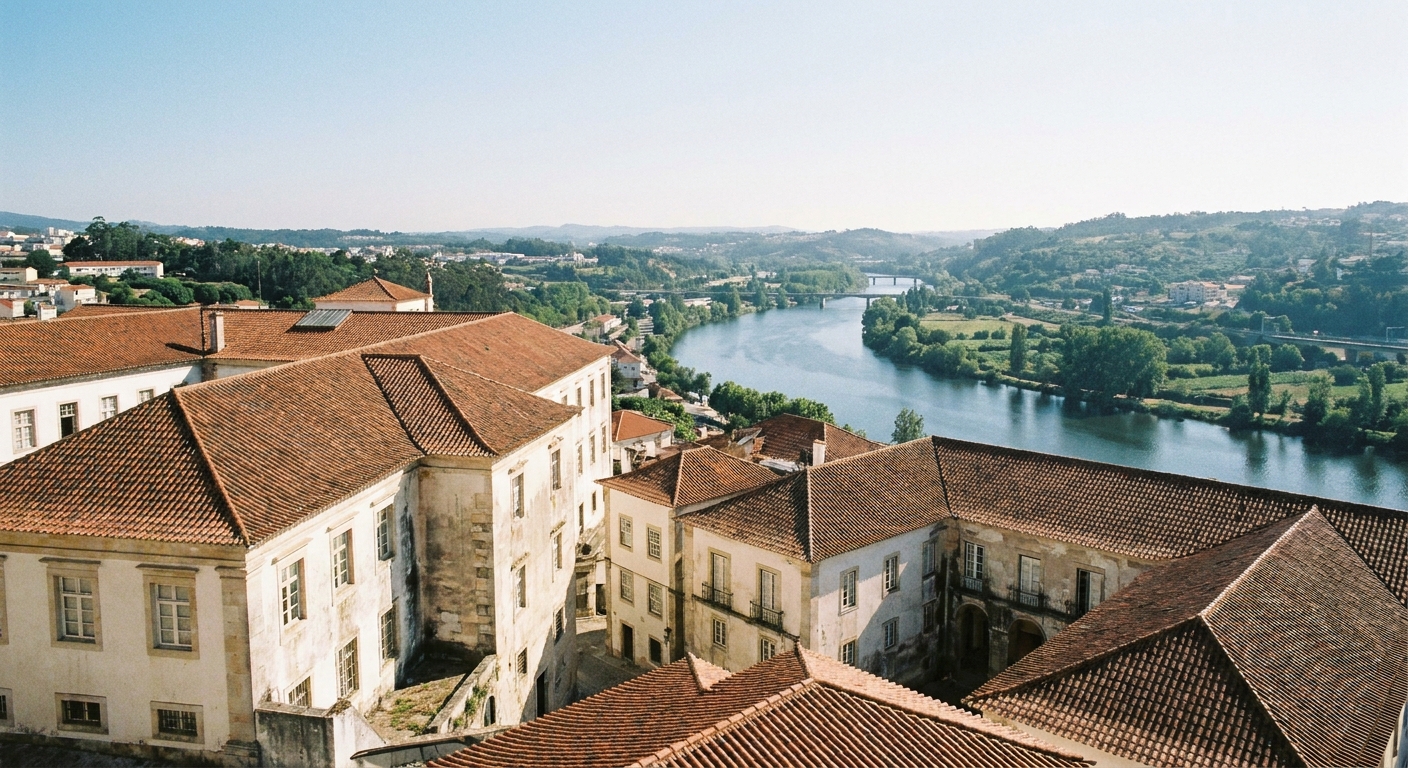
THE MONTH AT A GLANCE · COIMBRA · AUGUST
August gives Coimbra warmer afternoons than either July or September, only 2.2 days of measurable rain, and light until 8:32 p.m., at the price of a midday climb no plan makes cool.
HIGH 84.4°F · LOW 60.3°F · 0.58 IN OF RAIN · 2.2 WET DAYS · SUNSET 8:32 P.M.
Go for: long evenings on a UNESCO hill, a month that averages one wet day in fourteen, and stone interiors that hold the night’s cool while the valley sits at 84.4°F.
Think twice before: booking a bed that puts the Alta climb between you and every meal, or fixing a library day on our word: we could not verify a single opening hour or admission price.
Normals: IPMA station 707, Coimbra Bencanta · Daylight: sunrise-sunset.org · Heritage: UNESCO file 1387bis · full sources at the end
On this page
- Coimbra weather in August84.4°F highs, 0.58 in of rain, 2.2 wet days
- How hot the days get and how cool the nights are60.3°F lows and a 24.1°F spread
- Crowds and room prices in AugustWhat we verified, and what we could not
- Things to do in Coimbra in AugustThe Alta, Sofia Street and the Botanical Garden
- A two-day plan built around the heatHour by hour to the 8:32 p.m. sunset
- August or September in Coimbra?How the three months compare, in figures
- Is August a good month to come?Our verdict, and who should shift
Every climate figure below is a 1991 to 2020 normal from one valley station, and the heritage figures come from UNESCO’s own file on the property. Where our sources held nothing, we say so instead of guessing. For the country-wide calendar, our 12-month verdict on Portugal takes over.
Coimbra weather in August: average highs, lows and rain days
| August at Coimbra Bencanta | 1991–2020 normal |
|---|---|
| Average high | 84.4°F (29.1°C) |
| Average low | 60.3°F (15.7°C) |
| Day-to-night spread | 24.1°F |
| Total precipitation | 0.58 in (14.7 mm) |
| Days with 1 mm (0.04 in) or more | 2.2 |
| Days with 10 mm (0.39 in) or more | 0.4 |
| Daylight, August 15 | 13 h 48 min |
| Sunrise / sunset, August 15 | 6:44 a.m. / 8:32 p.m. |
Every figure here comes from a single instrument: IPMA, the national weather service, station 707 at Coimbra Bencanta, 26.6 meters up in the Mondego valley. The August normal for 1991 to 2020 reads 84.4°F by day, 60.3°F at night, 0.58 inches of rain across the month. That is a real thermometer in a real field, not a model grid cell averaged over a square of landscape. It also describes the valley and nothing more. High ground inland runs colder and far wetter, and the coast keeps weather of its own.
Rain arrives 2.2 days in an average August, counting every day that records at least 1 mm, which is 0.04 inch. Call it one day in fourteen. Heavier weather is rarer: 0.4 day reaches 10 mm (0.39 inch), a genuine soaking in roughly two Augusts out of five. One caution before you set these beside an American table. Those thresholds are IPMA’s own, while US summaries usually count days at 0.10 inch, and the two counts are not interchangeable.
Between the two normals sits 24.1°F, and that gap packs the bag. The hill at four in the afternoon, at 84.4°F, asks for the lightest thing you own; the same street at midnight, at 60.3°F, asks for a layer over it. Stone does some of the work, since the colleges and chapels of the Alta hold the night temperature well past lunch. Our packing guide handles the rest of the country, where that spread is not the same.
On August 15 the sun is up for 13 hours 48 minutes, rising at 6:44 a.m. and setting at 8:32 p.m. in Lisbon time (sunrise-sunset.org publishes both in UTC, and we converted them). Dinner begins in daylight all month. The useful hour is the one from 7 to 8:30 p.m., when the ridge is still lit, the paving has stopped radiating, and the walk down to Sofia Street costs nothing at all.
How warm is Coimbra in August?
The two August normals, 84.4°F and 60.3°F, stand 24.1°F apart. Both neighboring months run cooler by day: July’s high is 83.3°F, September’s 81.3°F, putting August ahead by 1.1 and 3.1 degrees. Nights, on the other hand, barely shift between July and August, 60.1°F against 60.3°F. So the month is not a heat spike. It is a broad, dry plateau of afternoons in the mid-80s with a genuine cool-down after dark.
In practice that means two wardrobes in one day. Mornings at 60-something degrees are shirt weather, and the climb to the Alta before 10 a.m. happens in air that has not warmed up yet. From about noon the valley delivers its full 84.4°F onto open stone with very little shade between colleges. Evenings hand the layer back: by the time the light goes at 8:32, the temperature is walking back toward 60.
Freezing nights are not a question in a month whose mean low is 60.3°F, and we did not read a frost-day count for the station, so we publish none. As for swimming, Coimbra sits inland on the Mondego and we found no sea-surface series we would stand behind, so we give no water temperature at all. If the Atlantic is the point of the trip, ask the coast: Nazaré and Ericeira are the pages for it.
How busy is Coimbra in August? Crowds and room prices
We went looking for an occupancy series and a monthly room-rate series for Coimbra and found neither, so we crown no month expensive and we quote no nightly figure. What the calendar carries is not in dispute: August is the school-holiday month across Western Europe, and the Portuguese coast absorbs most of it. Coimbra is not coast. It is an inland university town whose biggest August variable is the one thing nobody sells tickets for, the population of students.
On that population we have to be careful. UNESCO records that the university keeps its authenticity of use and that its ceremonial and student traditions have been kept alive through the ages, but we could not verify the academic calendar, so we promise nothing about capes, ceremonies or a term in session. Book the bed early if your dates are fixed, and price the trip with our Portugal cost guide rather than with a number we cannot support.
We could not verify a municipal tourist-tax rate for Coimbra either, so no per-night amount appears anywhere in our pages for this city. If a rate is charged at check-in, it will be on the hotel’s own confirmation.
One upgrade does change the month, and the 24.1°F spread explains why. Nights fall to 60.3°F, so a room that opens to the air handles the dark hours. Afternoons at 84.4°F are the ones that punish a bad address: a bed at the foot of the hill means climbing to the Alta twice a day, in the hours when the stone is hottest. Paying for position beats paying for almost anything else in August.
Things to do in Coimbra in August: the Alta, Sofia Street and the Botanical Garden
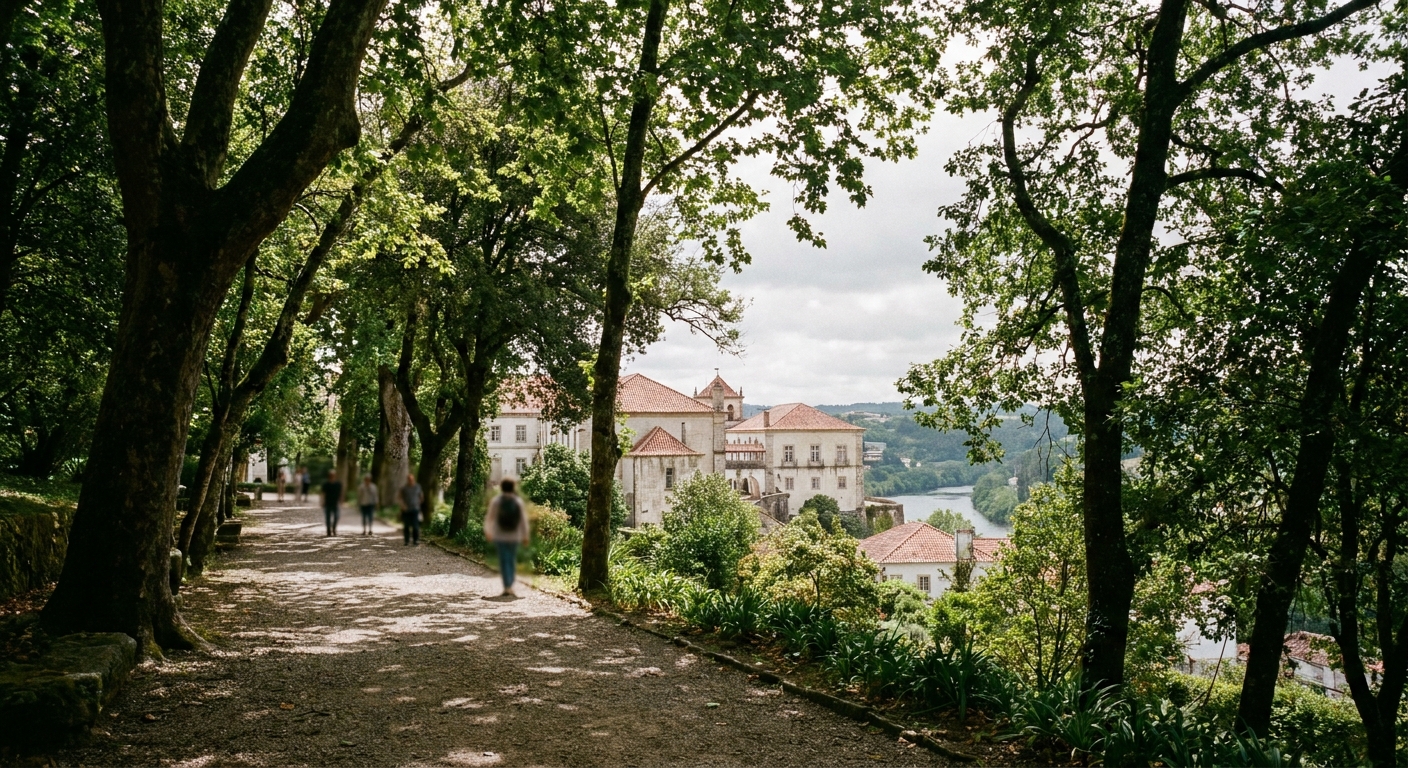
What August buys is an evening that behaves. With 2.2 wet days against September’s 5.2, and light holding to 8:32 p.m., an outdoor plan made at breakfast is still standing at dinner. September’s 1.96 inches of rain make that a gamble; August’s 0.58 inches rarely do. The trade is simple enough to state: you get the evening, and you surrender the middle of the day.
The inscribed property is compact, 36.2 hectares of core inside an 80.8-hectare buffer, in two components. Uphill is the Alta, with the Royal Palace of Alcáçova, where the university was installed in 1537, St Michael’s Chapel, the Joanine Library and its baroque interior, and the colleges of Jesus, Holy Trinity, St Jerome and St Rita. The second component is Sofia Street and its colleges, among them Holy Spirit, Our Lady of Carmel and the old Royal College of the Arts the Inquisition used. We could not verify one opening hour or admission price, so we quote none: ask the university’s ticket office when you fix the day.
None of that stone moves with the calendar. The air around it does, and 84.4°F is what August puts between one doorway and the next. This is where the 18th-century additions pay off, because the chemistry laboratories, the University Press and the Botanical Garden all sit in the Alta, and the garden is the only large piece of shade on the ridge. The 12th-century Cathedral of Santa Cruz stands among the university buildings, which keeps the indoor options close together.
Free is a shorter list than we would like, because our sources carry no admissions at all. Walking Sofia Street and its facades costs nothing, and so does the view from the ridge, which UNESCO itself flags as fragile: the visibility of the university as a citadel of learning depends on that hilltop position, and large-scale building in the surrounding landscape has already modified the setting.
Coimbra in August: a two-day itinerary
Start day one climbing, not strolling. Sunrise is 6:44 a.m., and by 8 the Alta is open air at something close to the night’s 60.3°F. Give the morning to the Royal Palace of Alcáçova, St Michael’s Chapel and the Joanine Library, in whatever order the ticket office allows. Eat indoors from about 1 p.m., when the valley reaches toward 84.4°F, and stay in the cool until 5. Take the Botanical Garden late, then hold the ridge for the 8:32 p.m. sunset and walk down to dinner after it.
Day two belongs at street level: Sofia Street and its colleges, the 12th-century Cathedral of Santa Cruz among the university buildings, and the University City built in the 1940s, which is inside the inscription and surprises people who came for medieval stone. If the sky turns, the odds say it will not last, since only 0.4 day in an average August reaches 10 mm. Swap the outdoor hour for an indoor one and keep the evening as planned.
Coimbra in August vs July and September
| Normal, 1991–2020 | July | August | September |
|---|---|---|---|
| Average high | 83.3°F (28.5°C) | 84.4°F (29.1°C) | 81.3°F (27.4°C) |
| Average low | 60.1°F | 60.3°F | 57.4°F |
| Precipitation | 0.35 in (8.9 mm) | 0.58 in (14.7 mm) | 1.96 in (49.8 mm) |
| Days with 1 mm or more | 1.7 | 2.2 | 5.2 |
Across the three months the temperature hardly argues: 83.3, 84.4, 81.3, a range of three degrees in the afternoon and under three at night. Rain is where they separate. July takes 0.35 inches over 1.7 days, August 0.58 over 2.2, September 1.96 over 5.2, more than three times August’s total on two and a half times as many wet days. Neither IPMA nor anyone else gave us a sea temperature for this inland station, so the water plays no part in the comparison.
Shift four weeks forward and the arithmetic is clear. September takes 3.1°F off the afternoon and 2.9°F off the night, which makes the climb easier and the evening cooler. It also adds three wet days and 1.38 inches of rain, which is the difference between a plan that holds and a plan that needs a roof. Shift four weeks back and July is drier still, at 0.35 inches, with an afternoon only 1.1 degrees below August’s.
Is August a good time to visit Coimbra?
Yes, if your trip is built around evenings and indoor heritage, and if you accept losing the middle of the day. The 0.58 inches of rain and the 8:32 p.m. sunset make this the most reliable outdoor evening of the three months. No, if you walk for hours at a stretch, travel with small children, or came expecting a cool northern city. A 36.2-hectare property on a ridge still has to be climbed, and August climbs it at 84.4°F.
If that is a deal-breaker, September is the shift to make. You trade 3.1°F off the afternoon for 5.2 wet days instead of 2.2, which is a fair swap when most of your list is indoors anyway. July changes very little, 1.1 degrees cooler by day and drier by 0.23 inch, so the case for moving a week or two earlier is thin. Our July page for Coimbra runs the same numbers.
No other month in this comparison puts 13 hours 48 minutes of daylight and barely two wet days on the same page, which is what lets both UNESCO components be walked in one long evening.
The last word
Decide one thing before you book anything else: where you sleep relative to the hill. Everything August does to this city, the 84.4°F afternoons and the 60.3°F nights, is felt on that slope, twice a day. And leave a slot for the part nobody arrives expecting, the University City raised in the 1940s, which belongs to the same inscription as the Joanine Library after the boundary was modified in 2019. Then plan the rest with our Coimbra month-by-month series.
Sources & data for this guide
- August normals: high 84.4°F, low 60.3°F, 0.58 in, plus the 1 mm and 10 mm day counts · IPMA, normais climatológicas 1991–2020, station 707 Coimbra Bencanta, 26.6 m · checked Sep 23, 2026
- July and September normals, same station and same 1991–2020 period · IPMA · checked Sep 23, 2026
- Daylight of 13 h 48 min, sunrise and sunset on August 15, converted from UTC to Europe/Lisbon · sunrise-sunset.org · checked Sep 23, 2026
- Inscription in 2013 under criteria (ii), (iv) and (vi), minor boundary modification in 2019, 36.2 ha core and 80.8 ha buffer, the two components, their colleges, the 18th-century additions and the 1940s University City · UNESCO World Heritage Centre, file 1387bis · checked Sep 23, 2026
- Our editorial admission: we could not verify opening hours or admission prices for the Joanine Library or any other building, and we found no occupancy series, no monthly room-rate series, no municipal tourist-tax rate and no sea-surface temperature series, so we quote none of them · check the operators when you book.