
COIMBRA · JULY · STATION 707, BENCANTA
July is the driest of Coimbra’s three summer months on the record we hold: 0.35 inches of rain across the whole month, against 1.02 inches in June. Afternoons average 83.3°F, nights fall back to 60.1°F, and on July 15 the sun is still up at 9:03 p.m. local time.
What the month asks in return is the middle of the day. The university stands on a hill, and that hill is stairs, sun and very little shade between one and five o’clock. Plan around that and July becomes a long-evening city; ignore it and you will spend the good light recovering in a café.
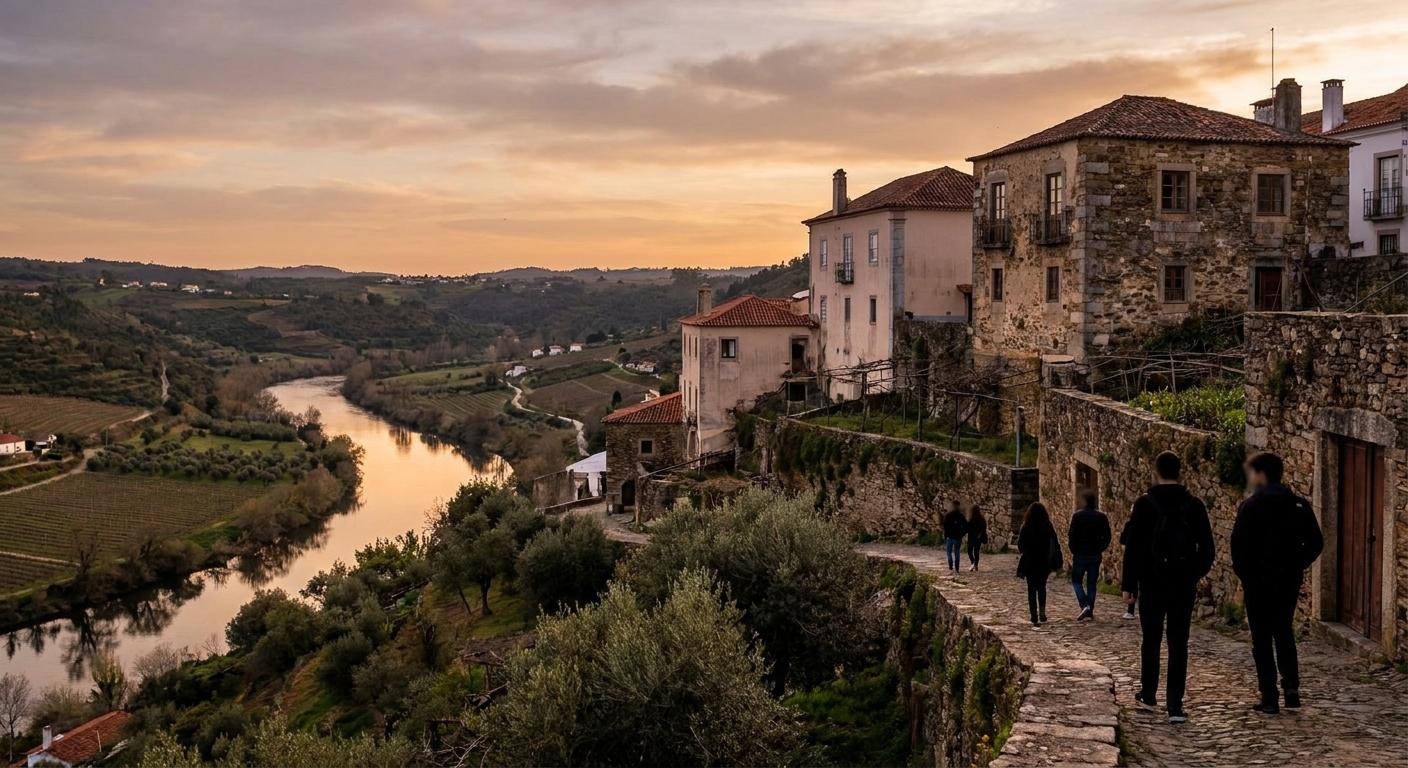
THE MONTH AT A GLANCE · COIMBRA IN JULY
July gives Coimbra its driest summer month and light until 9:03 p.m., on condition that you move the hill climbing to the morning and the late evening.
DRIEST OF THE THREE SUMMER MONTHS · 1.7 RAIN DAYS · LIGHT UNTIL 9:03 P.M.
Go for: a near-dry month, evenings long enough to walk the whole 36.2-hectare UNESCO core after dinner, and mornings cool enough for the climb to the Alta.
Think twice before: booking a midday visit to the hill. With highs at 83.3°F and the Alta short on shade, one to five o’clock belongs indoors or under the Botanical Garden’s trees.
Normals: IPMA station 707 Bencanta, 1991-2020 · Daylight: sunrise-sunset.org · Property: UNESCO file 1387bis
On this page
- Coimbra weather in July83.3°F highs, 0.35 inches of rain
- How hot the afternoons getA 23.2°F gap between day and night
- Crowds and prices in JulyBooking ahead, and the lodging tax we could not verify
- Things to do in Coimbra in JulyThe Alta, Sofia Street and the Botanical Garden
- Two days in Coimbra, hour by hourA plan built around a 9:03 p.m. sunset
- July vs June and AugustHow the three months compare on heat and rain
- Is July a good month to visit?Our verdict, and the month to swap for
Flights from the US, the train in from Lisbon or Porto and the choice of room belong elsewhere: our flights guide, the getting-around guide and where to stay in Portugal carry them. We answer the date.
Coimbra weather in July: average highs, lows and rain days
| July at Coimbra Bencanta | Normal, 1991-2020 |
|---|---|
| Average high | 83.3°F (28.5°C) |
| Average low | 60.1°F (15.6°C) |
| Precipitation | 0.35 in |
| Days with 1 mm (0.04 in) or more | 1.7 |
| Days with 10 mm (0.39 in) or more | 0.2 |
| Daylight on July 15 | 14h 48m |
| Sunrise / sunset, July 15 | 6:15 a.m. / 9:03 p.m. |
Every figure here comes from IPMA, Portugal’s national weather service, and specifically from its 1991-2020 normals at station 707, Coimbra Bencanta: a real thermometer at 26.6 meters in the Mondego valley, not a model grid cell. That matters for scope. The valley floor is not the region: higher ground nearby runs colder and far wetter, and the coast keeps its own weather, so do not pack for a hill walk on a valley reading.
Rain in July is close to a rumor. IPMA counts 1.7 days reaching 1 mm (0.04 inch), which works out to measurable rain roughly one day in eighteen, and 0.2 day reaching 10 mm (0.39 inch), a real soaking about one July in five. Note the thresholds: American tables usually count days at 0.10 inch, so these numbers are not interchangeable with the ones you may be comparing against.
The swing between afternoon and dawn is 23.2°F, which decides your bag more than the high does. A linen shirt covers the afternoon, but a light layer earns its place at 9 p.m. on a terrace and again at 7 a.m. Shoes matter as much: the Alta is cobbles and stairs. The full seasonal list sits in what to pack for Portugal.
Light is July’s real gift. On July 15 the sun rises at 6:15 a.m. and sets at 9:03 p.m. local time (05:15 and 20:03 UTC, converted), giving 14 hours 48 minutes of daylight. Dinner at eight happens in full sun, and the walk back through the old town afterward needs no phone flashlight.
How hot does Coimbra get in July? Days near 83°F, nights near 60°F
The month’s shape is a wide daily swing rather than relentless heat: 83.3°F by mid-afternoon, 60.1°F before dawn, 23.2°F apart. June’s gap is narrower at 21.7°F, August’s slightly wider at 24.1°F. Coimbra sits inland up the Mondego, and inland valleys cool off overnight in a way a beach town does not.
In practice that means two wardrobes in one day. At 6:15 a.m. a sweater is not absurd, and the walk up to the university before nine is comfortable. By four in the afternoon the stone is radiating and the shaded side of the street is the only side worth using. Averages also smooth out individual days, so treat 83.3°F as the middle of the range and not as the ceiling.
Frost is not a July question here: the IPMA normals we read carry no frost count for the month, and the average low sits 28 degrees above freezing.
How busy is Coimbra in July? Crowds, prices and booking ahead
We found no occupancy series and no monthly room-rate series for Coimbra, so we crown no month cheapest or dearest. What stands as a calendar fact is that July falls in the middle of the European summer holidays, which is when a university town with a World Heritage core and a station on the Lisbon-Porto line receives its summer visitors. Where July sits across the full twelve months of the country is argued in the best time to visit Portugal.
Book earlier than you would for a shoulder month. We hold no lead-time data for the city, so take this as editorial judgment rather than measurement: four to six weeks ahead (est.) for a central room, longer if your nights fall on a weekend. The same caution applies to a rental car, which you do not need inside Coimbra but will want for the Alentejo or the Douro afterward.
We could not verify a lodging-tax rate for Coimbra, so no percentage and no per-night amount appears here. Ask at the time of booking whether a municipal tax is added at check-in, and budget the rest of the trip with our Portugal cost guide.
One upgrade genuinely changes July: the address. A room inside the Alta or immediately below it removes the climb twice a day at 83°F, which is the single most tiring thing about visiting Coimbra in summer. Air conditioning is the other line worth paying for, given nights that only fall to 60.1°F.
Things to do in Coimbra in July: the Alta, Sofia Street and the Botanical Garden
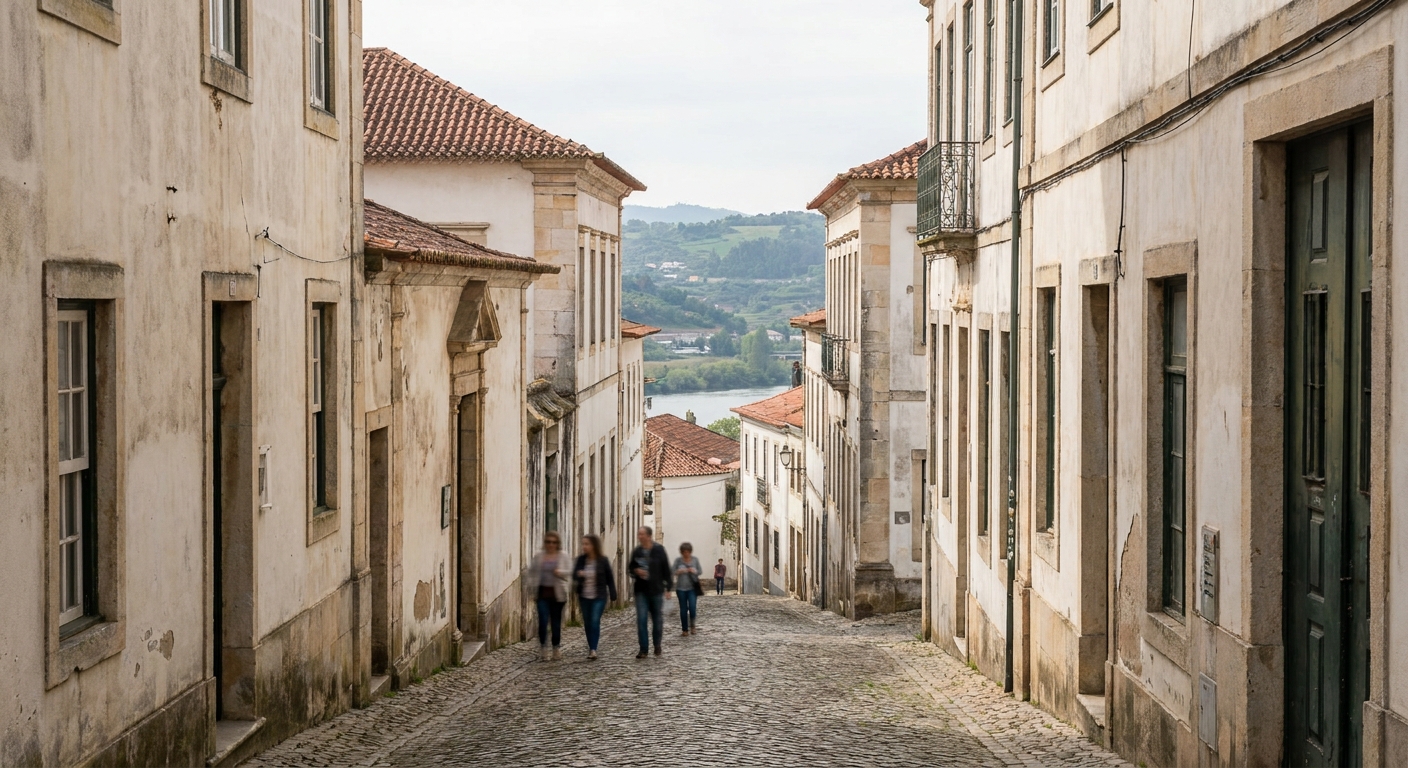
With 14 hours 48 minutes of daylight and 1.7 rain days on the record, July gives you something June cannot promise as reliably: an outdoor plan that rarely gets rewritten, and enough light after seven to cross the entire inscribed property on foot once the heat lets go. The core covers 36.2 hectares in two components, with an 80.8-hectare buffer zone around it.
Up on the hill, the Alta holds the Royal Palace of Alcáçova, where the university was installed in 1537, St Michael’s Chapel, the Joanine Library with its baroque decor, and six colleges: Jesus, Holy Trinity, St Jerome, St Benedict, St Anthony of the Quarry and St Rita. The 18th century added the chemistry laboratories, the University Press and the Botanical Garden. Down on Sofia Street stand nine more colleges, among them the old Royal College of the Arts used by the Inquisition. The 12th-century Cathedral of Santa Cruz stands among the university buildings.
July changes the air around these buildings, not the buildings. A baroque library reads the same in February; the climb to reach it does not. UNESCO also names a vulnerability worth knowing before you look for the view: the university’s visibility as a citadel of learning depends on its hilltop position, and large-scale building in the surrounding landscape has already modified that setting. The 1940s University City is part of the inscription too, so the ensemble you photograph is not only medieval and baroque.
On money, our cards are on the table: we hold no opening hour and no admission fee for the Joanine Library or for any other building in the property, because UNESCO describes a property and does not run visits. Check the university’s ticket office before you climb. The walking costs nothing either way, including Sofia Street end to end and the lanes of the buffer zone.
Coimbra in July: a two-day itinerary
Day one starts low and early. Walk Sofia Street and its nine colleges from about 8 a.m., while the stone is still cool, then climb to the Alta by ten for the Royal Palace of Alcáçova, St Michael’s Chapel and the Joanine Library, with hours confirmed the day before. From one to five, go indoors or into the Botanical Garden’s shade. Back up at seven for the hilltop view, dinner at eight in daylight, and a walk down after the 9:03 p.m. sunset.
Day two takes the Cathedral of Santa Cruz in the morning and the 1940s University City after lunch, which is flatter ground and a different century. If the month produces its one soaking day in five (0.2 day at 10 mm or more), reverse the order and spend the wet hours among interiors and the University Press quarter. A cooler, wetter version of the same two days sits in Coimbra in June.
Coimbra in July vs June and August
| IPMA normals, 1991-2020 | June | July | August |
|---|---|---|---|
| Average high | 79.3°F | 83.3°F | 84.4°F |
| Average low | 57.6°F | 60.1°F | 60.3°F |
| Precipitation | 1.02 in | 0.35 in | 0.58 in |
| Days with 1 mm (0.04 in) or more | 3.7 | 1.7 | 2.2 |
All three columns come from the same thermometer at Bencanta and the same 1991-2020 period, so the comparison is clean. July runs 4.0°F warmer than June by day and takes about a third of June’s rainfall, with two fewer wet days. August adds only 1.1°F to the high and 0.2°F to the low, but nearly doubles July’s total to 0.58 inch. No water temperature appears in any column, because we could not verify one.
Shift four weeks back and you gain afternoons at 79.3°F, cool enough to climb the Alta at noon, and you accept 3.7 rain days instead of 1.7. Shift four weeks forward and you keep nights that barely move, 60.3°F against 60.1°F, while your afternoons get hotter and your chance of an interrupted day rises. July is the middle term that happens to be the driest.
Is July a good time to visit Coimbra?
Yes if you can get up early and stay out late. Travelers who want a dry week, long evenings and a compact old town to walk are well served: 1.7 rain days is about as reliable as a European summer gets. No if your group cannot manage stairs in 83°F heat, or if you are set on a midday sightseeing rhythm, because the hill will beat that plan by the second afternoon.
If the answer is no, take June. You trade four degrees off the average high for double the wet days, and the climb from the lower town to the Joanine Library becomes an ordinary walk rather than an exercise in shade management. Families with small children in particular will find June’s 79.3°F afternoons easier to run on.
Of the three summer months we hold normals for, July is the only one that pairs the lowest rainfall, 0.35 inch, with daylight that lasts until 9:03 p.m.
The last word
Sleep in or just below the Alta and July solves itself: the climb stops being a daily decision, and the hours from one to five become someone else’s problem. One thing to carry up the hill with you, since it explains what you are looking at: the property was inscribed in 2013 under criteria (ii), (iv) and (vi), with a boundary modification in 2019, and it was Coimbra that set the institutional and architectural model for universities across the Portuguese-speaking world. Confirm the library’s hours before you go, then walk Sofia Street at nine at night, in light.
Sources & data for this guide
- July normals: high 83.3°F, low 60.1°F, 0.35 in, 1.7 days at 1 mm or more, 0.2 day at 10 mm or more · IPMA, station 707 Coimbra Bencanta, 26.6 m, 1991-2020 · checked Sep 23, 2026
- June and August normals, same station and same period · IPMA · checked Sep 23, 2026
- Daylight, sunrise and sunset on July 15 (05:15 and 20:03 UTC, converted to Europe/Lisbon) · sunrise-sunset.org · checked Sep 23, 2026
- Property perimeter, components, buildings, 2013 inscription and 2019 boundary modification · UNESCO World Heritage Centre, file 1387bis · checked Sep 23, 2026
- We hold no opening hour and no admission fee for the Joanine Library or any other building, no lodging-tax rate, and no occupancy or room-rate series for Coimbra · confirm hours, tickets and taxes with the university and your hotel before you travel.