
PORTUGAL · CASCAIS · MARCH
Cascais in March averages a high of 65.1°F and a low of 50.5°F, with 2.63 inches of rain spread across roughly seven wet days. That is a coast you walk rather than swim, and a month when the headlands above Guincho are green instead of burned.
The town is already chosen, so the only question left is the date. March gives daylight from 6:45 in the morning to 6:45 at night, afternoons in the mid-60s, and a seafront that is not fighting for tables. What it does not give is warm water or a settled sky. Either side of it sit February and April, and the countrywide view lives in when to visit Portugal.
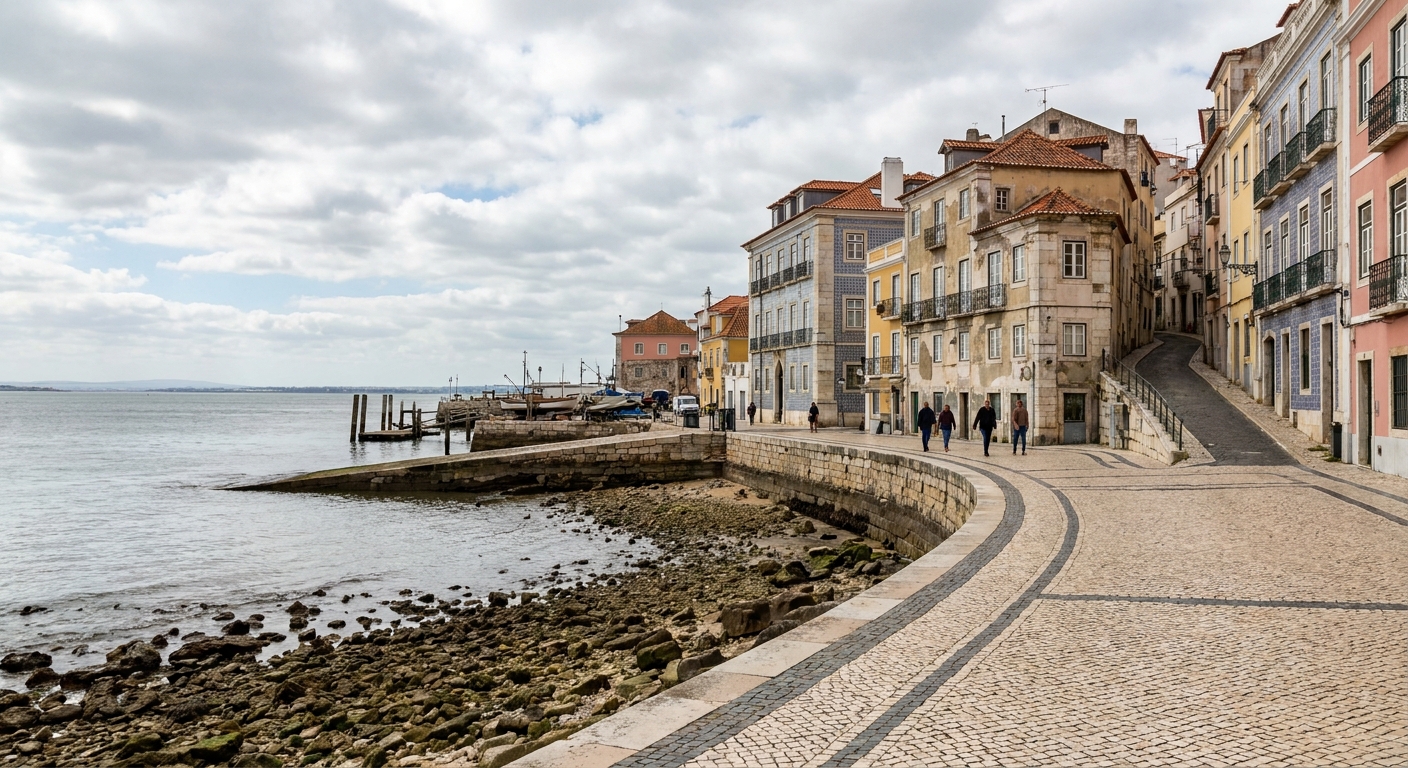
CASCAIS IN MARCH · AT A GLANCE
March buys a 65.1°F afternoon on the Sintra-Cascais coast and about twelve hours of light, at the price of roughly seven wet days out of thirty-one: a walking month, not a beach one.
IPMA 1991-2020 NORMALS · STATION 579, 341 FT · 7.2 RAIN DAYS · SUNSET 6:45 P.M.
Go for: coast and serra walking at 65.1°F, the Guincho-Oitavos dunes, Pedra Amarela at 1,332 feet, and a town that still has the train into Lisbon at its feet.
Think twice before: booking March for swimming. We could not verify a sea-surface temperature for Cascais, and rain falls on 7.2 days in an average month.
Normals: IPMA station 579 · Daylight: sunrise-sunset.org · Park: ICNF · full sources at the end
On this page
- Average highs, lows and rain days in MarchThe IPMA 1991-2020 normals
- What to wear morning and afternoonHighs near 65°F, nights near 50°F
- Crowds, booking and the lodging taxWhere March sits in the year
- Things to do in Cascais in MarchThe natural park, Cabo Raso and Guincho
- A two-day plan built on March daylightDay one on the coast, day two in the serra
- Cascais in March vs February and AprilHow the three months compare
- Is March a good time to visit Cascais?Who should shift the dates
Every figure here comes from IPMA, the Portuguese weather service, and specifically from station 579, Lisboa Gago Coutinho: a real thermometer 341 feet up at Lisbon’s airport, not a model grid cell. Cascais lies west of it on the open Atlantic and runs cooler and windier than that reading suggests. Behind the town the serra is colder again and far wetter, so a coastal normal is the wrong basis for packing a mountain trail.
Cascais weather in March: average highs, lows and rain days
| March at station 579 | Value |
|---|---|
| Average high | 65.1°F (18.4°C) |
| Average low | 50.5°F (10.3°C) |
| Precipitation | 2.63 in |
| Days with 0.04 in or more | 7.2 |
| Days with 0.39 in or more | 2.3 |
| Daylight on March 15 | About 12 hours |
IPMA’s 1991-2020 normals put March at 65.1°F by day and 50.5°F at night, with 2.63 inches of precipitation across the month. The period matters as much as the values: these are thirty-year averages for one station, not a forecast for the March you are booking.
Measurable rain falls on 7.2 days, counted at IPMA’s own threshold of 1 mm, which is 0.04 inch and a lower bar than the 0.10-inch one most US tables use. The two counts are not interchangeable. In practical terms, about one March day in four gets wet at some point, and 2.3 days reach 10 mm, or 0.39 inch, the kind of rain that ends a cliff walk rather than interrupting it.
IPMA’s normals carry temperature and rain, not wind, and the stretch from Cabo Raso to Guincho gets plenty of the second. Dress for the 50.5°F morning rather than the afternoon figure: a fleece under a shell, long pants, and one pair of shoes that survives a wet path. Our Portugal packing guide has the rest of the kit.
On March 15 the sun rises at 6:45 a.m. and sets at 6:45 p.m. local time, mainland Portugal still running on UTC in winter, for about twelve hours of usable light. Start the long coastal leg before four and you finish it in daylight with room for a drink afterward.
How warm is Cascais in March? Highs near 65°F, nights near 50°F
The month’s two anchor figures are 65.1°F by day and 50.5°F by night, a spread of 14.6°F. Neither is extreme, and both sit between the neighbors: February tops out at 60.3°F on average, April at 67.8°F, all three read off the same thermometer.
On the ground, mornings want a jacket and afternoons often do not. Lunch outdoors on the seafront works while the sun holds and stops working the minute it goes behind cloud, which is the whole character of an Atlantic March. A 65.1°F afternoon in full sun feels warmer than the number; the same afternoon with wind and cloud feels several degrees short.
Nothing here goes near freezing. The average low of 50.5°F sits eighteen degrees above it, and IPMA’s table gives us no frost-day count for this station, so we claim none. We also give no sea temperature: we could not verify a water series for Cascais, and the sea figures that circulate for this coast are usually averages of daily maxima, which read slightly warmer than a true 24-hour mean.
How busy is Cascais in March? Crowds, booking and the lodging tax
By the calendar, March falls outside Portugal’s summer season, ahead of the beach months and ahead of the school holidays that fill the Estoril line. We found no occupancy series and no monthly room rates for Cascais, so we crown no month cheap and no month expensive. What the weather does say is plain enough: 7.2 wet days is not what a sun-seeking crowd books for.
Booking follows that. A seafront room four to six weeks out (est.) is a calmer exercise than the same room in August, and two nights is the minimum that fits both days of the plan below. Compare bases in where to stay in Portugal, price the whole trip with our cost breakdown, and check transatlantic timing in flights from the US.
On the tourist tax, our cards are on the table: we could not verify a Cascais lodging-tax rate or a per-night amount, so we give no percentage and no euro figure. Ask the property to itemize it when you book, and read know before you go for the rest of the paperwork.
The one line where spending more genuinely changes March is mobility. Guincho, Cabo Raso and the serra behind them are a car’s territory when the sky turns, and a rental removes the wait at a bus stop in a shower. Tolls and insurance sit in our car-rental guide, and the train alternative from Lisbon is in getting around Portugal.
Things to do in Cascais in March: the natural park, Cabo Raso and Guincho
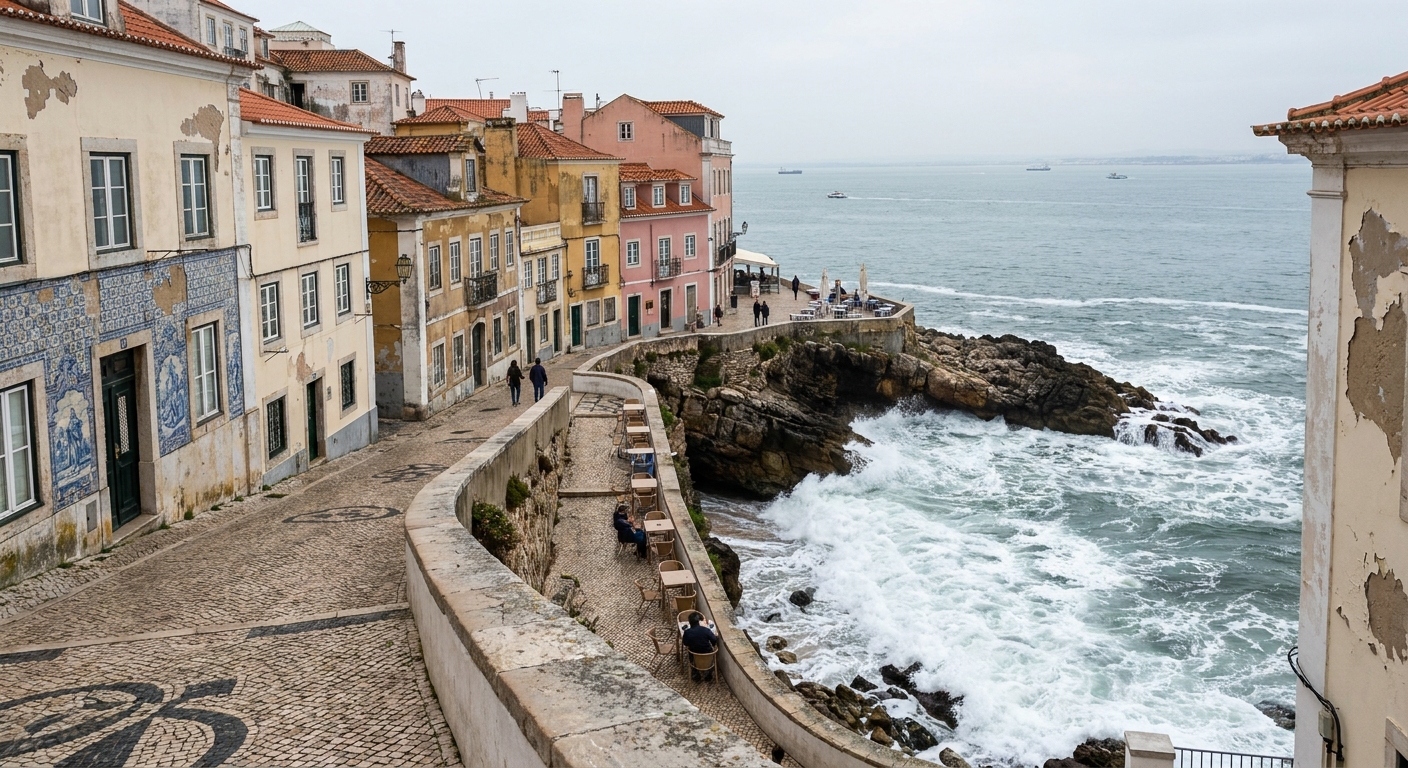
March allows the walking that summer heat makes a chore on this coast. At 65.1°F the climb into the serra and a long dune traverse are both comfortable in a fleece, the ground is green rather than parched, and about twelve hours of light on the 15th is enough to do the two in a single day when the sky cooperates.
The Sintra-Cascais Natural Park covers 14,583 hectares, about 36,000 acres, across the municipalities of Sintra and Cascais, in a region the ICNF itself describes as under heavy human pressure. Inside it are the coastal lapies, a karst relief running north of Cabo Raso, the Guincho-Oitavos dune system with the habitats that survive on it, and Pedra Amarela at 406 meters, 1,332 feet, in the serra behind the coast. Peregrine falcon and Bonelli’s eagle both nest in the park.
Rock does not change with the season and the air does. A 36,000-acre park at 65.1°F is a different proposition from the same park in August, and the winter rain that ends with these 2.63 inches is what keeps the remnant oak forest and its holly alive in the least accessible corners. Wet stone is the caution: 2.3 days a month bring 0.39 inch or more, and karst underfoot after that is slick.
What costs nothing in March costs nothing all year, which is the coast path, the dunes and the park tracks. We could not verify a March free-admission day at any Cascais museum, so we promise none. On the park’s northern side the Colares area sells its own agriculture instead: the reinette apple, the rose peach, the thick-skinned lemon and the pearl pear, alongside the wine that carries the name abroad.
Cascais in March: a two-day itinerary
Day one runs on the light. Coffee by 8:30, on the Guincho road by 9:30 while the air is still near that 50.5°F mark, and the dune system walked before lunch. Eat indoors between one and two and let the sky do what it does. The afternoon belongs to Cabo Raso and the lapies north of it, with the sun low by five and gone at 6:45. Dinner at eight lands inside the evening rather than at the end of it.
Day two climbs. Pedra Amarela’s 406 meters, 1,332 feet, make a real morning from the serra side, past the oak remnants and holly that hang on where nobody goes. If the weather turns, and it turns on 7.2 days in an average March, trade the ridge for the Colares vineyards or take the train into Lisbon. Sintra shares the same park and keeps its palaces indoors.
Cascais in March vs February and April
| Measure | February | March | April |
|---|---|---|---|
| Average high | 60.3°F | 65.1°F | 67.8°F |
| Average low | 47.1°F | 50.5°F | 53.2°F |
| Precipitation | 2.80 in | 2.63 in | 2.50 in |
| Days with 0.04 in or more | 7.8 | 7.2 | 7.7 |
| Sea temperature | Not verified | Not verified | Not verified |
Side by side, the three months move in small steps. February runs 60.3°F by day and 47.1°F at night, March 65.1°F and 50.5°F, April 67.8°F and 53.2°F. Rain barely sorts them: 2.80 inches, then 2.63, then 2.50, over 7.8, 7.2 and 7.7 days at the 0.04-inch threshold. We verified no sea-surface figure for any of the three, so we give no water temperature for any of them.
Shifting four weeks forward to April buys 2.7°F on both ends of the thermometer and 0.13 inch less rain, at the cost of half a rain day more. Shifting back to February costs 4.8°F by day and 3.4°F at night and adds 0.6 of a rain day, which is a poor trade unless the dates are fixed for you.
Is March a good time to visit Cascais?
Yes for walkers, birders and anyone who wants the Sintra-Cascais coast without summer heat or summer company. No for swimmers: we have no verified water temperature, and a 65.1°F air average promises nothing about the Atlantic. Families whose whole plan is beach days should read the same figures and decide against.
If the answer is no, April is the smallest useful shift: 67.8°F by day, 53.2°F at night and 2.50 inches of rain, for four weeks of patience. Anything warmer than that belongs to a different trip, and the countrywide calendar sets out which one.
March alone pairs about twelve hours of daylight with 65.1°F afternoons over ground that has had a full winter of rain to turn green.
The last word
Decide on the walking, not the water, and the month books itself: a room with a car if Guincho and the serra are the point, one indoor afternoon held back for the 2.3 days that bring 0.39 inch or more. And note what the coast owes to this month. The Sintra-Cascais Natural Park was reclassified from Protected Landscape to Natural Park by Regulatory Decree 8/94 of 11 March 1994, with its management plan approved the same day. The first protection, Decree-Law 292/81, dates from October 1981.
Sources & data for this guide
- March highs, lows, precipitation and rain-day counts · IPMA climate normals 1991-2020, station 579 Lisboa Gago Coutinho, 103.9 m (341 ft) · checked Sep 23, 2026
- February and April normals used in the comparison · same IPMA station and same 1991-2020 period, not estimates · checked Sep 23, 2026
- Sunrise 6:45 a.m., sunset 6:45 p.m. and daylight on March 15 · sunrise-sunset.org · checked Sep 23, 2026
- Park area of 14,583 hectares, Decree-Law 292/81 and Regulatory Decrees 8/94 and 9/94, Pedra Amarela at 406 m, coastal lapies, Guincho-Oitavos dunes, nesting raptors, oak and holly, Colares crops · ICNF brochure « Conheça o Parque Natural de Sintra-Cascais », icnf.pt · checked Sep 23, 2026
- We could not verify a sea-surface temperature, a beach figure, a trail length, an opening hour, an entry price or a Cascais lodging-tax rate. Where a figure is missing we say so rather than estimate it · noted Sep 23, 2026
- The station stands inland at Lisbon’s airport; Cascais faces the open Atlantic and runs cooler and windier, and the serra behind the town is colder and far wetter.