
On a March morning in Yokohama, steam rises from bamboo baskets in the lanes of Chinatown while a cold wind off Tokyo Bay pushes people toward the next warm doorway. Along the waterfront, the first buds are swelling on the cherry trees, and the harbor ships still sit under a pale winter sky. March here is the turning month, when coats come off for an hour at a time and the city starts to spend its days outdoors again.
What is the weather like in Yokohama in March?
March in Yokohama is cool and damp, a month that has left deep winter behind without fully reaching spring.
| Month | Average high (°F) | Average low (°F) | Precipitation (in) | Days with 1 mm or more of precipitation | Hours of sunshine | Daylight on the 15th |
|---|---|---|---|---|---|---|
| February | 51.4 | 37.6 | 2.55 | 5.4 | 167 | 10 h 53 min |
| March | 57.2 | 42.8 | 5.49 | 10.0 | 169 | 11 h 54 min |
| April | 66.0 | 51.3 | 5.63 | 9.5 | 181 | 13 h 03 min |
What this means for your bag is layers. A sweater under a light coat handles the middle of the day, and a scarf earns its place once you are standing on a pier after dark. The nights still feel like late winter, and a little sleet can show up in a cold spell, so leave the thin spring jacket for April.
Rain is the other thing to plan around. March is clearly wetter than February, with showers that can turn a harbor walk into a gray one, so a compact umbrella or a rain shell belongs in your daypack. The good news is that Yokohama has plenty of covered places to duck into, from shopping complexes to museums, and a wet afternoon rarely means a lost day.
The light is the quiet gift of the month. Days are growing fast, and by the middle of March there is a little more than eleven hours of daylight in the city, which lets you fit a late afternoon at the waterfront into the plan. Sunshine is about the same as in February, so expect a mix of bright spells and cloud rather than a dependable blue sky.
What to do in Yokohama in March
The things to do in Yokohama in March revolve around the harbor, Chinatown, the museums and the first cherry blossoms of the season. The city sits on Tokyo Bay, south of Tokyo, and travelers from central Tokyo can reach Yokohama Station on a JR train or a private railway line in about an hour.
March suits the waterfront and the covered streets equally well. Cool air makes a long walk along the bay pleasant when the sun is out, and the city has enough indoor stops to cover the wetter days. Add the first flowers near the end of the month, and the city feels like it is waking up.
The first cherry blossoms
The first flowers usually open around the end of the month, and full bloom usually arrives in the first days of April.
If you arrive in the last days of March, look for the Somei-Yoshino trees, the pale pink variety that most of Japan’s blossom forecasts are based on. People gather under them for hanami, the tradition of sitting beneath the blossom with a drink and something to eat. The parks and the waterfront paths are where you will find them, and a thermos of something hot is welcome on a chilly evening.
Earlier in the month, a few buds and the longer light are the hint of what is coming. This suits travelers who prefer a calm pace and do not mind that the trees are not yet in flower. Anyone who has their heart set on full bloom should aim for the start of April.
Chinatown and the food of the month
Yokohama Chinatown is the largest Chinatown in Japan, and March is a fine month for it because hot food tastes better in cool air. Streets are lined with stalls and restaurants selling nikuman (steamed buns filled with seasoned pork), fried dumplings, sesame balls and mango pudding. Walk in through one of the colorful gates and let your nose choose.
Visitors eat their way down the main lanes, a bun in one hand and a tea in the other, then sit down for a full meal of Cantonese or Sichuan dishes. Small shops sell tea, spices and sweets that make easy gifts. Between showers, the covered doorways and shop awnings give you somewhere to wait without breaking the mood.
Outside Chinatown, the city’s port history shows up on menus, with Western-style cafés, bakeries and old-fashioned coffee houses near the harbor. A hot drink and a pastry in one of them is a good way to spend a gray hour.
Minato Mirai 21 and the waterfront
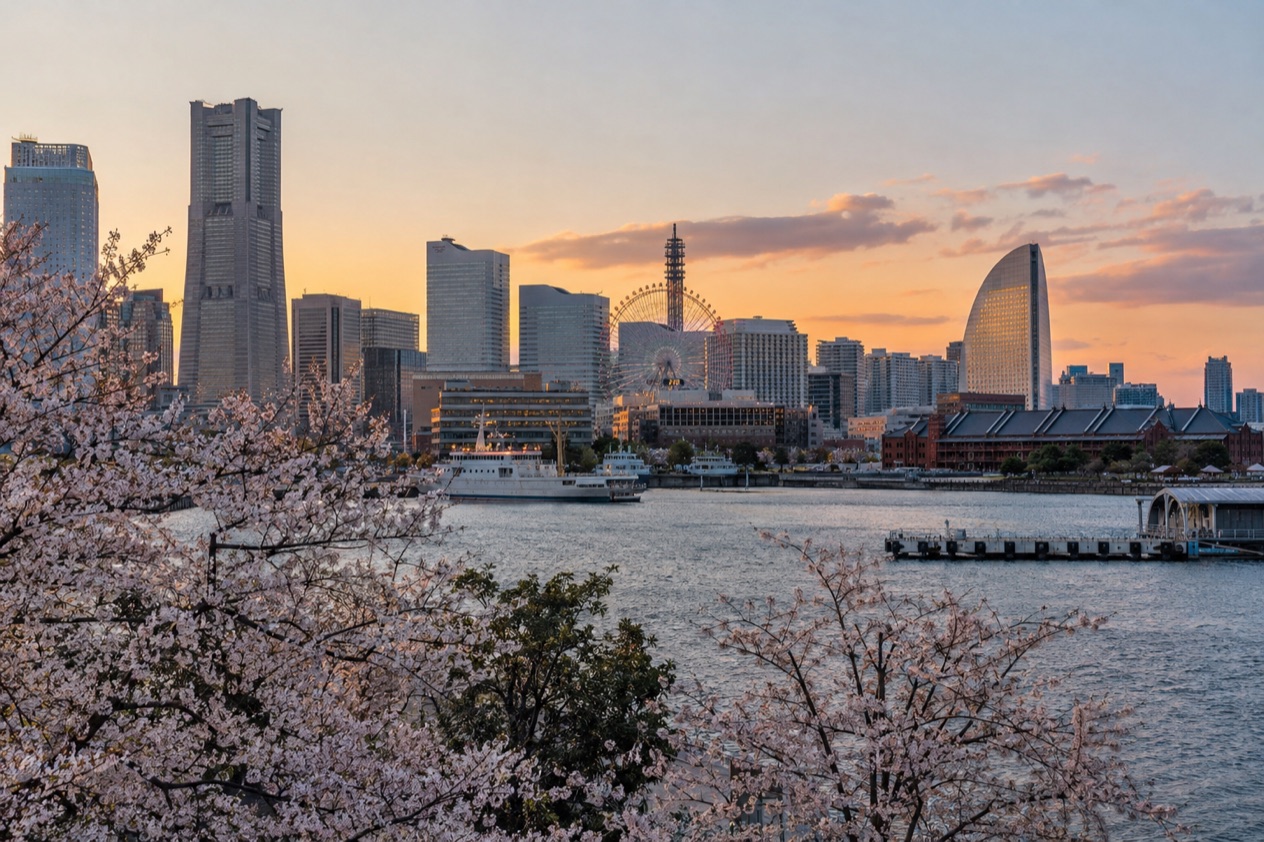
Minato Mirai 21 is the modern waterfront district, with construction that started in 1983 on land by the harbor. It holds towers, shopping malls, hotels and a big Ferris wheel, and the walking paths along the water link it to the older parts of the city. In March the air is cool enough for the walk, and the sunsets over the bay arrive at a civilized hour.
The port itself has a story worth knowing, because Yokohama was officially opened to foreign trade on June 2, 1859, and the streets near the water still carry that mixed Japanese and Western history. Red-brick warehouses, waterside parks and a long passenger pier give you something to look at while you walk.
At night the buildings light up and reflect in the water, which is the reason visitors stay for the evening. Dress warmly, because the wind at the waterfront feels colder than the temperature suggests.
Indoor stops for a wet day
The CupNoodles Museum Yokohama is a good rainy-day plan, built around the story of instant noodles. Visitors can learn about the invention and think about how a bowl of ramen became part of daily life around the world. It is the kind of place that works for families and for anyone curious about everyday food culture.
The big shopping complexes in Minato Mirai and around Yokohama Station fill the rest of a wet afternoon, with department stores, food halls and cafés under one roof. Wander the basement food floors for bento, pastries and sweets. Together these keep a gray March day from going to waste.
A two-day itinerary for Yokohama in March
Day 1 begins at the waterfront, with a coffee and a pastry from a harbor-side café before the walking starts. Spend the morning in Minato Mirai 21, strolling the paths by the water and looking at the towers and the old brick buildings. Lunch can be a bowl of noodles or a set meal in one of the shopping complexes, which keeps you warm and dry if the clouds close in.
In the afternoon, head to the harbor park and the waterfront promenade while the days are still growing longer. The light is soft at the end of the day, and you may catch the first pink buds if you are visiting late in the month.
As evening falls, return to the water to watch the buildings light up, then have dinner at a seafood place or a casual izakaya (a Japanese pub with small plates). If rain sets in, spend the afternoon at the CupNoodles Museum instead and push the park walk to the next dry hour.
Day 2 belongs to Chinatown. Arrive in the morning when the lanes are waking up, walk through the gates and sample steamed buns, dumplings and sweets from the stalls as you go. Take your time over a long lunch of Chinese dishes, which suits the cool air, then browse the tea shops and small stores for something to take home.
In the afternoon, choose a café near the harbor for a slow break, or walk through the streets near the port to see the Western-style buildings that recall the city’s trading history. If the sky is clear, a last stroll beside the bay is a good way to close the day, and a hot drink in your hand makes the chill pleasant. On a wet afternoon, the department stores near the station give you an easy covered finish, with food halls to explore.
Is Yokohama busy in March?
March in Yokohama builds slowly toward the cherry blossom season, so the month has a calmer beginning and a livelier end.
In the first weeks the city keeps its winter rhythm, with people hurrying between warm places and the waterfront walks feeling open. The first flowers usually appear at the end of the month, and that is when parks and paths start to draw more people who want to see them. If you want the blossom in your photos, the final days of March are the time to be there.
The mood shifts with the weather. A cold, wet day keeps people indoors, and the covered streets and malls fill up, while a clear afternoon brings everyone out to the harbor. Chinatown stays lively on dry days because eating there is the whole point.
For the pace of your trip, this means you can plan a relaxed first half of the month around museums, food and long walks, and save the hanami-style outings for the last days if you are there then. Early March suits people who like to wander without a fixed schedule.
What to pack for Yokohama in March
Pack for cool days that change with the clouds and for evenings by the water that feel colder than the daytime.
- A light coat you can button up, because the wind off Tokyo Bay cuts through thin jackets after sunset.
- A sweater or fleece for layering, since afternoons feel mild in the sun and cool again in the shade.
- A compact umbrella or rain shell, because March is a wetter month than February.
- Comfortable walking shoes that can handle a damp pavement along the harbor and in the park.
- A scarf and a pair of thin gloves for the waterfront at night.
- A small thermos or a reusable bottle for a hot drink under the cherry trees at the end of the month.
Good to know before you go
March in Yokohama is a wetter month than February, with rain on about a third of the days, and a little sleet can still turn up in a cold spell. Plan one indoor stop for each day, such as a museum or a food hall, so a gray afternoon never forces you to improvise. The city sits right on the water, so the air feels cooler by the harbor than a few blocks inland, and it is worth having an extra layer in your daypack for the evenings.
Cherry blossom timing changes from one spring to the next, so keep your plans loose if flowers are the goal. The first bloom is usually near the end of the month, and the full bloom tends to arrive just after.
Yokohama in March vs February and April
Moving the trip four weeks earlier puts you in February, which is colder, drier and a little brighter on the harbor in the winter light. The days are shorter, evenings come early, and there is no sign of cherry blossom, so the city feels more like a winter stop. Choose February if you prefer cold, clear weather and a calm waterfront, and do not mind that the flowers are still far off.
Moving four weeks later puts you in April, which is noticeably warmer and has longer days, and which is when the cherry blossom is in full flower. Rain is still around, but you can sit outside with less of a shiver, and the evenings by the bay are much more pleasant. April brings the full spring mood that March only hints at.
Who should choose which? Pick February for the coldest and calmest winter feel, March for a balance of cool weather and the first buds, and April if the blossom and the warmth are the priority. If you can only come in March, aim for the last days of the month for a taste of the flowers.
Is March a good time to visit Yokohama?
Yes, March is a good time to visit Yokohama for travelers who like a cool, changeable month and enjoy food, harbor walks and the first signs of spring.
You will love it if you want to eat your way through Chinatown, watch the lights come on over the bay, and spend a gray hour in a museum without feeling you have missed anything. Travelers who like to arrive just before the flowers will find that the last days of the month hold the first blossom. It also suits anyone who prefers to see a city before the biggest spring crowds arrive.
Choose another month if you want warm evenings on the water, a dependable dry spell, or full cherry blossom, because April does all three better. On arrival, start with the waterfront in Minato Mirai 21 to get your bearings, then keep Chinatown for a meal. In March the buds on the harbor trees are the sign that the season is turning, and that small moment of waiting is what makes the month feel special here.
Sources
- Japan Meteorological Agency (JMA), Normal values 1991-2020, monthly (https://www.data.jma.go.jp/stats/etrn/view/nml_sfc_ym.php?prec_no=46&block_no=47670), station Yokohama, elevation 39 m, checked October 11, 2026
- Computed from the date and the latitude of the place (sunrise equation, solar elevation -0.833 degrees), October 11, 2026
- Japan Meteorological Agency, cherry blossom first-bloom dates 2021-2026 and 1991-2020 normal (https://www.data.jma.go.jp/sakura/data/sakura003_07.html), checked October 11, 2026
- Japan Meteorological Agency, cherry blossom full-bloom dates 2021-2026 and 1991-2020 normal (https://www.data.jma.go.jp/sakura/data/sakura004_07.html), checked October 11, 2026
- Japan Meteorological Agency, sakura2020.pdf (https://www.data.jma.go.jp/sakura/data/sakura2020.pdf), checked October 11, 2026
- Japan National Tourism Organization, flowers by season: cherry blossom, plum, wisteria, hydrangea, where and when (https://www.japan.travel/en/see-and-do/flowers/), checked October 11, 2026
- Wikipedia, Prunus mume (https://en.wikipedia.org/wiki/Prunus_mume), checked October 11, 2026
- Japan National Tourism Organization, spring in Japan (https://www.japan.travel/en/guide/spring-guide/), checked October 11, 2026
- Japan National Tourism Organization, autumn in Japan (https://www.japan.travel/en/guide/autumn-guide/), checked October 11, 2026
- Japan National Tourism Organization, summer in Japan (https://www.japan.travel/en/guide/summer-guide/), checked October 11, 2026
- Wikipedia, Yokohama (https://en.wikipedia.org/wiki/Yokohama), checked October 11, 2026
- Wikivoyage, Yokohama (https://en.wikivoyage.org/wiki/Yokohama), checked October 11, 2026
- Japan National Tourism Organization, Yokohama (https://www.japan.travel/en/destinations/kanto/kanagawa/yokohama-and-around/), checked October 11, 2026
- Wikipedia, CupNoodles Museum (https://en.wikipedia.org/wiki/CupNoodles_Museum), checked October 11, 2026
- Wikipedia, Minato Mirai 21 (https://en.wikipedia.org/wiki/Minato_Mirai_21), checked October 11, 2026