
In November, the ginkgo trees along the avenues of Meiji Jingu Gaien turn a loud, buttery yellow, and drumbeats and dance calls carry across the city during the Dream Yosacoy Festival. Mornings turn crisp, the afternoon sun is gentle enough for hours on foot, and gardens begin to flare red. It is a month for walking Tokyo’s parks, shrines and shopping streets in comfortable air, for travelers who want color without the heat of summer.
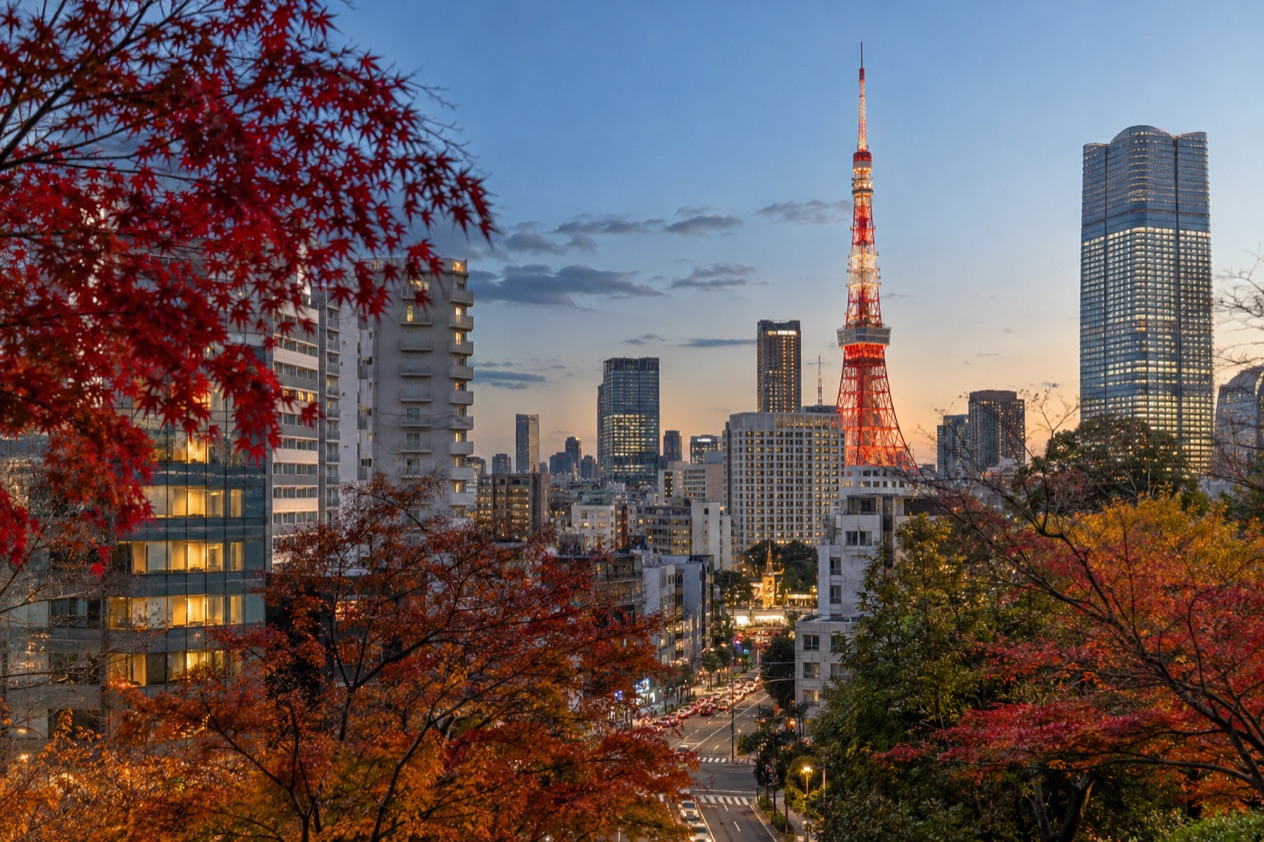
What is the weather like in Tokyo in November?
Tokyo in November is cool, bright and mostly dry, with crisp mornings and pleasant afternoons that suit a full day of walking.
| Month | Average high (°F) | Average low (°F) | Precipitation (in) | Days with 1 mm or more of precipitation | Hours of sunshine | Daylight on the 15th |
|---|---|---|---|---|---|---|
| October | 71.6 | 58.6 | 9.24 | 10.5 | 129 | 11 h 21 min |
| November | 62.1 | 47.8 | 3.79 | 7.4 | 150 | 10 h 19 min |
| December | 53.6 | 38.8 | 2.28 | 5.2 | 174 | 9 h 46 min |
Afternoons sit in the low 60s, which is sweater weather rather than coat weather, and you will likely take the sweater off while climbing the steps of a shrine in the sun. Mornings and evenings are properly cool, so a layer you can add or shed is more useful than one heavy jacket. Humidity has dropped since October, and the sticky feeling of early autumn is gone.
Rain is far less than in October, and it tends to arrive as a few gray, showery days rather than a steady season. Those days feel colder than the thermometer suggests, so a compact umbrella earns its place in the bag. Sunshine is generous, and the low autumn light makes ginkgo leaves and temple roofs glow.
Daylight is shrinking fast. The days are shorter than in October, and in winter the nights draw in around 17:00, so November evenings come early. Plan outdoor gardens and viewpoints for the daytime and keep the dark hours for food, shopping and museums.
What to do in Tokyo in November
November in Tokyo is about autumn color, and the city says so plainly: the autumn foliage is most vibrant this month, which makes it the time to see the colorful leaves. Ginkgo trees turn yellow first, and maples follow, so a walk can change character from one week to the next. Between the leaves, the month has a festival, warm food and long, comfortable days on foot.
Ginkgo avenues at Meiji Jingu Gaien
Icho Namiki in Meiji Jingu Gaien is lined with hundreds of massive yellow ginkgo trees, and in November it becomes one of the great photo spots of the season. The avenue turns into a tunnel of gold, and the fallen leaves carpet the pavement in a bright yellow that reflects up into your face. Locals and visitors stroll slowly, cameras in hand.
Pair it with Meiji Shrine, the Shinto shrine in Shibuya dedicated to the spirits of Emperor Meiji and Empress Shoken. The approach under tall trees is a calm way to start or end the outing, and the cool air suits the walk. Choose a clear day, since the yellow looks richest under sun, and keep a rainy afternoon for museums instead.
Gardens, maple color and Rikugien
That puts the best red in the last days of November and into early December, which matches what is said of Rikugien Gardens, where late November to early December is the best time to see the autumn leaves. Early in the month, the gardens show green with the first touches of red, so a visit in the first week is more about ginkgo than maple.
At Shinjuku Gyoen National Garden, bring a picnic mood but leave the bottle behind: drinking alcohol, smoking, sports equipment and musical instruments are prohibited. It is a place for slow circuits, benches and photographs, with lawns and trees that change color at their own pace. The leaves look best in direct sun, so a bright day is worth saving for the gardens.
Dream Yosacoy Festival
The Dream Yosacoy Festival is a dance festival held in Tokyo in early November and is one of Tokyo’s biggest annual events. Teams in bright costumes dance to energetic music, and the mood is more street party than formal ceremony. Any group that wishes to perform may do so, regardless of nationality, age or gender, which is why the lineup feels so mixed and enthusiastic.
If you land in the first days of the month, it is a lively way to see the city at play. Watching is free in spirit, with crowds clapping along and costumes worth a photograph. Afterward, wander toward a nearby food street for something hot, since the evening air is cool.
Temples, towers and city walks
Senso-ji in Asakusa is Tokyo’s oldest temple, and in cool air the shopping street leading to it is a pleasure to walk, with snacks like grilled rice crackers and sweet bean pastries to eat as you go. Tokyo Skytree in Sumida stands 634 meters tall and gives a wide view of the city on a clear autumn day. The two together make a good day for the east side of town.
For an evening, the districts of Roppongi and Akasaka are reached from Shibuya Station in about 10 minutes by train. Roppongi Station is served by the Hibiya Line and the Toei Oedo Line, Nogizaka Station by the Chiyoda Line, and Roppongi-Itchome Station by the Namboku Line. The Tokyo Metropolitan Government Building has projection mapping with two shows, OTONABLUE and TTTTOKYO, screened from August 23.
Food leans warm this month. Think steaming bowls of ramen, hot pot, oden simmering in convenience-store counters and izakaya menus full of grilled fish and sake served warm. Sweet potatoes roasted over stones and chestnut sweets appear in autumn, and they fit the cool air perfectly.
A two-day itinerary for Tokyo in November
Day 1 belongs to color. Start in the morning at Meiji Shrine, walking its tree-lined approach in the cool air, then continue to the ginkgo avenue at Meiji Jingu Gaien while the day is bright. Have lunch at a noodle or set-meal counter in the neighborhood, then spend the afternoon at Shinjuku Gyoen, where the low sun lights up the trees.
As the light fades early, head for the evening: the Roppongi and Akasaka area, reached from Shibuya Station in about 10 minutes by train, suits dinner at an izakaya and a night stroll. If rain comes, swap the gardens for a museum and keep the shrine for a drier moment.
Day 2 turns east. Begin at Senso-ji in Asakusa and graze along the approach street on snacks, then cross toward Tokyo Skytree in Sumida for the view over the city. Lunch can be a tempura or soba counter nearby, something warm to counter the cool air.
In the afternoon, pick one more garden if the maples are turning, such as Rikugien late in the month, and let the day end with a hot-pot dinner. On a wet day, stay under cover in the shops and food halls around the Skytree and keep the temple for the dry hours. Sunset comes early, so plan the views before dusk.
Is Tokyo busy in November?
The most vibrant foliage of the year is a reason many plan their trip for this month, so expect company wherever the color is strongest.
The pace depends on the week. Early in the month, the Dream Yosacoy Festival brings crowds and energy. Late in the month, as the maples turn, the gardens become the gathering places, and the mood is slower, with people pausing for photographs and benches in the sun.
Outside the color spots, the city simply carries on at its normal, busy rhythm. Streets, stations and shopping districts feel like any other lively month, and the cool air makes walking between them pleasant.
What to pack for Tokyo in November
November asks for layers and comfortable shoes, since most days are spent on foot between gardens, shrines and stations.
- A light sweater or fleece, for cool mornings and evenings.
- A medium jacket, because afternoons are mild but the dark hours turn crisp.
- A compact umbrella, for the few showery days.
- Comfortable walking shoes, for garden paths and long temple approaches.
- A camera or a charged phone, for ginkgo gold and red maples.
- A scarf, for the colder dawns and nights as the month moves toward December.
Good to know before you go
November falls in the middle of autumn, which in Tokyo runs from September through November, and the moderate temperatures are ideal for walking. Darkness comes early, so plan outdoor sights for the daytime. At Shinjuku Gyoen, remember that alcohol, smoking, sports equipment and musical instruments are not allowed. The New Year closures that affect many restaurants and attractions come later, in the winter holidays.
Tokyo in November vs October and December
Moving the trip four weeks earlier gives you a warmer, wetter Tokyo. October has more rain days and heavier rain, with afternoons in the low 70s, but the trees are still mostly green, so the ginkgo and maple color is not yet there. It suits travelers who want warmth over foliage.
Four weeks later, December is colder and brighter, with more sunshine, drier days and nights near freezing, and the earliest darkness of the three months. The maples of Rikugien are best in early December, and the city gets ready for winter lights. A little snow or sleet is possible but rare. The holiday closures come at the New Year.
Choose October for warmth and November for the balance of mild air and color. Choose early December if red maples matter more than comfortable afternoons, and layer up for the cold.
Is November a good time to visit Tokyo?
Yes, November is a very good time to visit Tokyo, especially for travelers who love walking, gardens and autumn color. The air is cool without being cold, the rain is modest and the sun is generous.
It suits photographers, garden lovers, food travelers and anyone who wants to spend long days outdoors. It is less ideal for those who want warm evenings or swimming weather, since the days are short and the nights cool. Anyone who wants peak maple red should aim for the last week.
On arrival, head for the ginkgo avenue at Meiji Jingu Gaien and Meiji Shrine first, while the yellow is fresh and the days are still bright. What makes November special in Tokyo is the sight of a huge city turning gold and red, with the whole population walking outside to look at it.
Sources
- Japan Meteorological Agency (JMA), Normal values 1991-2020, monthly (https://www.data.jma.go.jp/stats/etrn/view/nml_sfc_ym.php?prec_no=44&block_no=47662), station Tokyo, elevation 25 m, checked October 11, 2026
- Computed from the date and the latitude of the place (sunrise equation, solar elevation -0.833 degrees), October 11, 2026
- Japan Meteorological Agency, maple color-change dates 2025-2026 with difference from the 1991-2020 normal (https://www.data.jma.go.jp/sakura/data/phn_014.html), checked October 11, 2026
- Japan Meteorological Agency, kaede2020.pdf (https://www.data.jma.go.jp/sakura/data/kaede2020.pdf), checked October 11, 2026
- Japan National Tourism Organization, winter in Japan (https://www.japan.travel/en/guide/winter-guide/), checked October 11, 2026
- Japan National Tourism Organization, autumn in Japan (https://www.japan.travel/en/guide/autumn-guide/), checked October 11, 2026
- Japan National Tourism Organization, spring in Japan (https://www.japan.travel/en/guide/spring-guide/), checked October 11, 2026
- Japan National Tourism Organization, summer in Japan (https://www.japan.travel/en/guide/summer-guide/), checked October 11, 2026
- GO TOKYO, best things to do and see in Tokyo in November (https://www.gotokyo.org/en/story/guide/november/index.html), checked October 11, 2026
- Japan National Tourism Organization, Tokyo (https://www.japan.travel/en/destinations/kanto/tokyo/roppongi-and-akasaka-area/), checked October 11, 2026
- GO TOKYO, the official Tokyo travel guide (https://www.gotokyo.org/en/), checked October 11, 2026
- GO TOKYO, getting around (https://www.gotokyo.org/en/plan/index.html), checked October 11, 2026
- GO TOKYO, spots (https://www.gotokyo.org/en/spot/index.html), checked October 11, 2026
- GO TOKYO, Tokyo in autumn (https://www.gotokyo.org/en/story/guide/autumn/index.html), checked October 11, 2026
- Asakusa Kannon Sensoji (https://www.senso-ji.jp/english/), checked October 11, 2026
- Wikipedia, Sensō-ji (https://en.wikipedia.org/wiki/Sens%C5%8D-ji), checked October 11, 2026
- Wikipedia, Meiji Shrine (https://en.wikipedia.org/wiki/Meiji_Shrine), checked October 11, 2026
- Tokyo Skytree, official site (https://www.tokyo-skytree.jp/en/), checked October 11, 2026
- Wikipedia, Tokyo Skytree (https://en.wikipedia.org/wiki/Tokyo_Skytree), checked October 11, 2026