
In a Naha market hall, the smell of simmering pork, steamed sweet potato and fresh tofu drifts between stalls where women in aprons slice bitter melon and wave you toward a sample. Okinawa is the island most often named when people talk about long, healthy lives, and the clues are on the plate, in the street and in the way the day is paced. A visit here is less about one monument than about eating, walking and spending time the island way.
Is visiting Okinawa longevity worth it?
Yes, if you are curious about food, daily habits and a slower rhythm rather than a checklist of sights, and it suits couples, families and solo travelers who like to wander and taste. There is no gate and no single address. The longevity story is something you meet in markets, small restaurants, village squares and the conversations that happen over a meal.
The term Blue Zone is used for places where people are often described as living unusually long lives, and Okinawa is one of the regions most often mentioned. The explanation usually offered is a mix of things rather than one secret: vegetables and tofu at the center of the table, the habit of stopping before you are full, close ties with neighbors, and a sense of purpose that the Japanese word ikigai captures. None of that comes with a ticket, which is exactly what makes it pleasant to explore on your own terms.
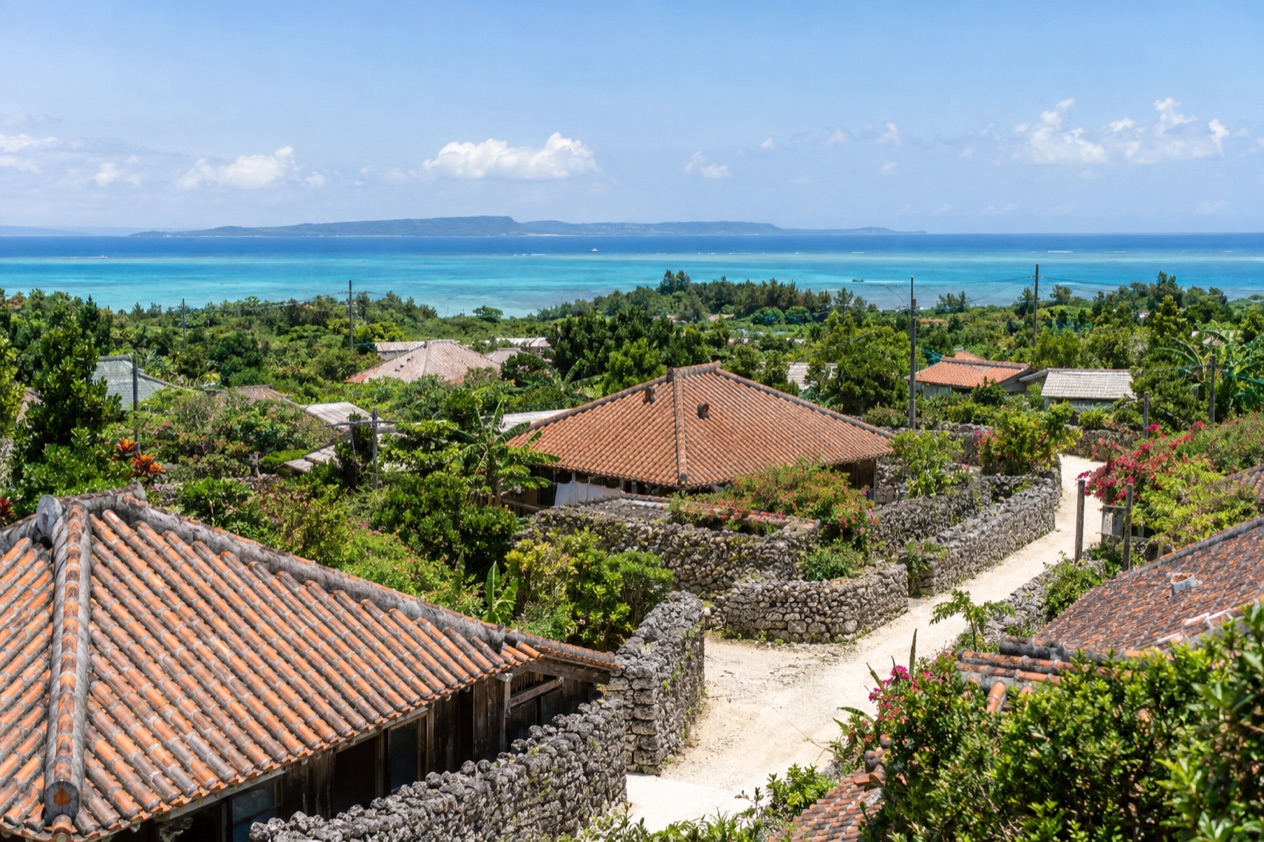
What sets it apart from other trips in Japan is the setting. Okinawa Prefecture is the southernmost and westernmost in the country, a chain of islands with a subtropical climate, its own music, its own cooking and the birthplace of karate. Where a visit to Kyoto is built around temples, here the culture is lived in food, song and festival, and the beach is never far from the market.
It also works as a gentle theme for a longer stay. Base yourself in Naha, eat your way through the local dishes, then add the aquarium, a beach day or a trip to a smaller island. The longevity thread ties it together without taking over the trip.
What to see at Okinawa longevity
There is no single longevity sight, so the visit is a set of places where the island’s habits show. Naha, the capital on Okinawa Island, is the natural starting point, and from there you can follow the food, the music and the coast.
Naha’s markets and the Okinawan table
Naha is the largest city in Okinawa, home to about a fifth of the main island’s residents, and its market streets are where the local diet is easiest to see. Look for goya, the knobby bitter melon stir-fried with egg and tofu in the dish called goya champuru. Look too for purple sweet potatoes, seaweed, firm Okinawan tofu and the slow-braised pork known as rafute.
Okinawa soba, made with wheat noodles in a pork and bonito broth, is the everyday bowl, and small home-style restaurants serve it alongside plates of vegetables and tofu. Awamori, the local distilled spirit, appears in the evening. The idea often quoted here is hara hachi bu, eating until you are about eight parts full, and you can see it in the modest portions of set meals.
Walk the market slowly and let the vendors explain what is on their counters. Many will be happy to tell you how a vegetable is cooked at home. It is the most direct way to understand why the island’s cooking is so often linked to long lives.
Sanshin, Eisa and karate: the social side
Longevity on Okinawa is often tied to community, and the island’s traditions show why. Okinawan music is built around the sanshin, a three-stringed instrument whose twanging, bright sound turns up in small bars, restaurants and village gatherings. Songs are sung together, and dancing often follows.
Eisa, the drumming and dancing festival of Okinawa, has gained popularity across Japan. Groups of dancers with hand drums and shouted calls move through the streets in summer, and the whole neighborhood watches. Karate was born on these islands, and its older, quieter forms are still practiced in local dojo as a discipline for body and mind.
Another habit often linked to the island is the moai, a circle of friends who support one another through life, in money and in company. You will not see one on a schedule, but the sense of neighbors who know each other well is easy to feel in a small town or a village restaurant.
Okinawa Churaumi Aquarium
Okinawa Churaumi Aquarium sits on Okinawa Island and fits a longevity trip as a break from food and culture. Its tanks show the sea life that surrounds the prefecture, and the aquarium has recently welcomed a new female Japanese sawshark in an effort to breed the species. Visitors are cautioned about bite-wound injuries from white-banded triggerfish during their breeding season, so keep that in mind around any shallow water.
Pair it with a lunch of local dishes and an hour on a nearby beach. The longevity theme stays in the background, but the day shows the sea the islanders have always lived beside.
Beaches of Okinawa Island
Okinawa Island has several beaches, including Manza Beach, Emerald Beach, Okuma Beach, Zanpa Beach, Moon Beach and Sunset Beach in Chatan-cho. Each has its own feel, from resort stretches with cafés to quieter sandy coves where the day is spent looking out at the water. A walk along the shore after a market lunch fits the island’s unhurried style.
In the summer months, swimmers are warned about venomous jellyfish and other dangerous sea creatures. If you plan to get in the water, ask locally about conditions that day. Otherwise the sand and the view are plenty.
When to visit Okinawa longevity
Okinawa has a subtropical climate with warm temperatures and high rainfall throughout the year, so there is no month without some chance of rain. The visit itself is flexible, since markets, restaurants and music are enjoyed in any season. Your choice of month mostly decides how much time you want to spend outdoors.
| Month in Naha | Average high (°F) | Average low (°F) | Precipitation (in) | Days with rain | Sunshine (hours) |
|---|---|---|---|---|---|
| January | 67.6 | 58.8 | 4.00 | 10.2 | 93 |
| April | 75.7 | 66.4 | 6.34 | 10.3 | 121 |
| July | 89.4 | 80.6 | 7.41 | 9.4 | 227 |
| October | 82.6 | 74.3 | 7.06 | 8.8 | 163 |
January is mild, mild enough for a light jacket in the evening and long market strolls, but it is gray more often than not and the sea is not an invitation. April brings warmth with a good amount of sunshine, a pleasant time to walk Naha’s streets and eat outdoors. Both months suit travelers who care more about food and culture than beach time.
July is hot and sunny, with plenty of light for the beach, though the heat, the humidity and the jellyfish warning call for a slower pace and plenty of shade. Eisa season takes place in the summer months, so the streets can be full of drumming.
Within a day, plan market visits and outdoor walks for the hours when the heat is gentler, and keep the middle of the day for a long lunch or the aquarium. Okinawa Churaumi Aquarium keeps these hours:
| Site | Open |
|---|---|
| Okinawa Churaumi Aquarium | 08:30 to 18:30 (last admission 17:30) |
Tips for your visit
Bring light, breathable clothes, a hat and sun protection, and a small umbrella that can double as shade, because humidity and sudden showers are part of the climate. Comfortable shoes help in the market streets and on beaches. If you plan to swim, bring a rash guard or swim shirt as an added layer against the sun.
Give the theme a couple of days rather than a single afternoon. Spend one day in Naha on markets, small restaurants and an evening with sanshin music.
Getting around from Naha
Naha Airport is the gateway to all of Okinawa’s islands, served by flights from dozens of cities across Japan, including low-cost carriers. Naha has Okinawa’s only public rail network, the Okinawa Urban Monorail, known as Yui Rail, which gives you a way to cross the city between the airport area and the center.
For the beaches and the aquarium you will be moving around Okinawa Island itself. Plan the day around the places you want to see, and leave time for meals. The island suits an unhurried schedule better than a packed one.
Combining it with nearby islands
Okinawa Prefecture is made of three main island groups, the Okinawa Islands, the Sakishima Islands and the Daito Islands, and of its 160 islands, 49 are inhabited. Taketomi, in the Sakishima group, has bullock carts that carry visitors through the village, a good change of pace after Naha.
Families will find the aquarium and the beaches the easiest hooks for children, and the markets are fun for older kids who like to point at unfamiliar vegetables.
Good to know before you go
Okinawa is far to the south of the Japanese mainland, about 398 miles (400 miles) from Kyushu, so give yourself time to settle in after the flight. Summer swimmers are warned about venomous jellyfish and other dangerous sea creatures, and the aquarium cautions visitors about white-banded triggerfish during their breeding season. Rain is possible in every month, so a light rain jacket belongs in the bag whenever you come.
Sources
- Wikipedia, Okinawa Prefecture (https://en.wikipedia.org/wiki/Okinawa_Prefecture), checked October 11, 2026
- Japan National Tourism Organization, Okinawa (https://www.japan.travel/en/destinations/okinawa/okinawa/naha-and-the-main-island/), checked October 11, 2026
- Okinawa Churaumi Aquarium (https://churaumi.okinawa/en/), checked October 11, 2026
- Wikipedia, Okinawa Island (https://en.wikipedia.org/wiki/Okinawa_Island), checked October 11, 2026
- Japan Meteorological Agency (JMA), Normal values 1991-2020, monthly (https://www.data.jma.go.jp/stats/etrn/view/nml_sfc_ym.php?prec_no=91&block_no=47936), station Naha, elevation 28 m, checked October 11, 2026
To plan your stay
- Best Time to Visit Okinawa: Weather by Month, Sea Temperatures, Festivals and Seasons
- Where to Stay in Okinawa: Naha, Chatan, the Aquarium Coast and Beach Resorts
- Okinawa from Tokyo: Flying to Naha, Why No Train Goes There and a First Day on the Island
- Know Before You Go to Okinawa: Entry, Money, Getting Around and Local Etiquette