
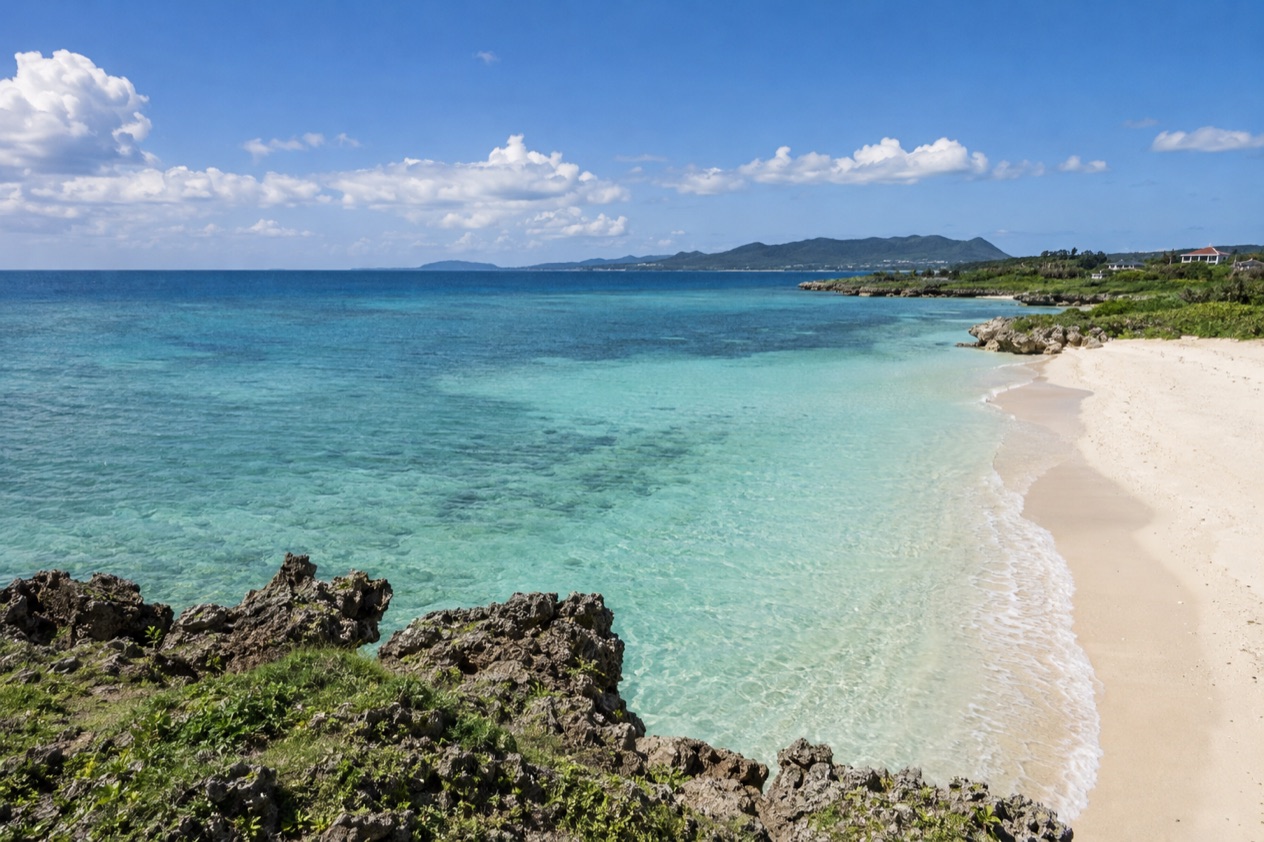
A beach on Okinawa Island begins with a change in the color of the water, from a deep blue offshore to a pale green over sand made of crushed coral and shell. The air is soft and salty, and the line of the reef sits somewhere out beyond where you stand.
Is visiting Okinawa beaches worth it?
Yes, if you want a Japan trip where the days are built around the shore rather than around temples and train platforms, and it suits couples, families and anyone who wants a slower rhythm between cities. Okinawa Island sits roughly 400 miles south of Kyushu, and the climate reflects that distance: humid subtropical, edging toward tropical rainforest, which is a different world from Tokyo or Kyoto.
What sets the island apart from the mainland is the choice. Manza Beach, Emerald Beach, Okuma Beach, Zanpa Beach, Moon Beach and Sunset Beach in Chatan-cho are all on the same island, along with Century Beach, so a stay can move from one stretch of sand to the next without a flight. Add the Okinawa Churaumi Aquarium, Pineapple Park, the Orion Beer Factory and Hiji Falls, and a beach week has options beyond the sand.
It also pairs with culture. Shuri Castle and Nakagusuku Castle are both UNESCO World Heritage Sites on the island, so a day on the sand can sit beside a morning among stone ramparts. For travelers who see a beach as the whole point of a vacation, the island gives plenty of names to choose from, and for those who want variety, it gives more than sand.
What to see at Okinawa beaches
Manza Beach, Emerald Beach and Okuma Beach
These three names appear again and again when people talk about Okinawa’s shoreline, and each gives a different mood to a day. Manza Beach is the name travelers know from the stretch of resort coast around it.
What you look for on any of them is the same: the shade of the water as the light changes, the pale sand underfoot, and the line where the reef breaks the surface. Walk the tideline and you find small pieces of white coral and shell, which are what the sand is made of. Bring time rather than a plan, because these are places for sitting, wading and watching.
Zanpa Beach, Moon Beach and Sunset Beach in Chatan-cho
Zanpa Beach, Moon Beach and Sunset Beach (in Chatan-cho) round out the list of well-named sands. Moon Beach and Sunset Beach carry names that point to the hours of the day, one to the night sky and the other to the end of the afternoon, so they suit travelers who like to stay on the shore as the light goes.
Sunset Beach is the one tied to a named town, Chatan-cho, which makes it easy to picture as part of a town visit and not only a beach stop. Zanpa Beach has a name that visitors link with a cape. On all three, the pleasure is in what the sky and the water do together, and an evening on the sand fits well after a day of sightseeing.
Century Beach
Century Beach is listed among the attractions of Okinawa Island, which sets it apart from the other beaches by name.
As with the others, the sensible way to enjoy it is to give it a stretch of the day and watch what the weather does. Pair it with a lunch of Okinawan dishes such as goya champuru (a stir-fry with bitter melon) or Okinawa soba, a wheat noodle soup, and you have a day that feels like the island rather than like a resort anywhere.
Okinawa Churaumi Aquarium
Okinawa Churaumi Aquarium was at one time the world’s largest aquarium, and it makes a natural companion to a beach week because it shows what lives below the surface you have been looking at. A new female Japanese Sawshark has arrived there in an effort to breed the species, which gives the visit a living, ongoing story.
It is a good plan for a gray or showery day, when the beach loses some of its pull. The aquarium cautions visitors about an increase in bite-wound injuries from white-banded triggerfish during their breeding season, a reminder that the sea around the island has animals with their own habits and their own territory.
Hours, tickets and rules
The beaches are open places, and the Okinawa Churaumi Aquarium is the one site with set hours, which run from morning to early evening with the last admission an hour before closing. The table gives them, and an admission amount is not part of what we can list here.
| Site | Open |
|---|---|
| Okinawa Churaumi Aquarium | 08:30 to 18:30, last admission 17:30 |
The aquarium warns of increased bite injuries from white-banded triggerfish during their breeding season.
How to get to Okinawa beaches
Most trips start at Naha Airport, which is the gateway to all of Okinawa’s islands and is served by flights from dozens of cities across Japan, including low-cost carriers. From the airport, the Okinawa Urban Monorail, known as the Yui Rail, runs to Tedako-Uranishi Station in Urasoe, via Akamine Station, which is Japan’s south-easternmost monorail station.
That monorail is Okinawa’s only public rail network, and it belongs to Naha. It is a way to move around the capital, but it does not carry you to the named beaches of the island, so plan on another mode for the shoreline itself. Naha is the largest city in Okinawa, home to about a fifth of the main island’s residents, which makes it the natural base for arrivals.
For the road north, the Okinawa Expressway is a toll road that runs from Naha to Nago, with a speed limit of 50 miles per hour, the highest on the island. Beyond that, no times or routes for the individual beaches are given here, so treat Naha as the starting point and the beach names as the destinations to look up on a map.
If you want to go beyond the main island, Tomarin Port in Naha has ferries to nearby islands such as Aguni, Tokashiki and Zamami. They are named here as places the port serves, and no schedules or crossing times are given.
When to visit Okinawa beaches
The beaches are most inviting in the hot, sunny months, and Naha’s figures for four months show how the year moves. July brings the highest heat and the most sunshine, October stays warm with fewer rainy days, and January is the mildest of the four. These are Naha’s own figures, so the shoreline elsewhere on the island may feel a little different.
| Month at Naha | Average high (°F) | Average low (°F) | Precipitation (in) | Days with rain | Sunshine (hours) |
|---|---|---|---|---|---|
| January | 67.6 | 58.8 | 4.00 | 10.2 | 93 |
| April | 75.7 | 66.4 | 6.34 | 10.3 | 121 |
| July | 89.4 | 80.6 | 7.41 | 9.4 | 227 |
| October | 82.6 | 74.3 | 7.06 | 8.8 | 163 |
In July, afternoons are hot enough that shade, a hat and a long pause at midday make sense, and the long hours of sun suit full days on the sand. Humidity is high in this month, so the air feels heavy even when the sky is clear. Evenings stay warm, which fits the names of Moon Beach and Sunset Beach well.
It is a time when a beach morning followed by an aquarium or castle afternoon works without much strain. Showers still come, so keep the rainy-day options in mind.
April sits between the two, and the island has a rainy season in late spring, so showers can be frequent as that season approaches. For the longest beach days, the sunniest stretch of the year is the one to aim for.
For the time of day, the names of the beaches themselves offer a clue, since Sunset Beach points toward the end of the afternoon and Moon Beach toward the evening. Opening hours at the aquarium run from morning to early evening, so a day can start there and end on the sand.
Tips for your visit
Plan a beach day around the weather rather than around a fixed list, because the island’s climate brings showers in every season. Keep one indoor option in reserve, and the Okinawa Churaumi Aquarium is the obvious one, with hours that run from morning until early evening. Pineapple Park, the Orion Beer Factory and Hiji Falls are other names the island gives for days when the sea does not cooperate.
What to bring comes from the climate more than from any rule. In the hot months, the air is humid and the sun is strong, so water, a hat and something for shade fit the setting. Light clothes suit July and October, and a layer is more sensible in January, when highs are in the upper 60s and lows in the upper 50s.
For combining places, the monorail and the expressway give two different frames. Stay in Naha and use the Yui Rail for city sights, then plan separate days for the shoreline, or travel the toll road to Nago and spend time on the beaches in that stretch. Shuri Castle and Nakagusuku Castle, both UNESCO World Heritage Sites, pair well with a beach week.
For families and for travelers who want an easy mix of activities, the aquarium and the sand together fill a day without much planning.
Good to know before you go
Okinawa has a rainy season in late spring, so showers are part of the calendar from then on, and the island’s humid subtropical climate means damp air in most months. October sits well outside that season, though rain still falls on about nine days in the month at Naha. Pack for sun first and for a passing shower second, and treat the sea with respect around the animals the aquarium warns about.
Sources
- Wikipedia, Okinawa Island (https://en.wikipedia.org/wiki/Okinawa_Island), checked October 11, 2026
- Japan National Tourism Organization, Okinawa (https://www.japan.travel/en/destinations/okinawa/okinawa/naha-and-the-main-island/), checked October 11, 2026
- Okinawa Churaumi Aquarium (https://churaumi.okinawa/en/), checked October 11, 2026
- Japan Meteorological Agency (JMA), Normal values 1991-2020, monthly (https://www.data.jma.go.jp/stats/etrn/view/nml_sfc_ym.php?prec_no=91&block_no=47936), station Naha, elevation 28 m, checked October 11, 2026
To plan your stay
- Best Time to Visit Okinawa: Weather by Month, Sea Temperatures, Festivals and Seasons
- Where to Stay in Okinawa: Naha, Chatan, the Aquarium Coast and Beach Resorts
- Okinawa from Tokyo: Flying to Naha, Why No Train Goes There and a First Day on the Island
- Know Before You Go to Okinawa: Entry, Money, Getting Around and Local Etiquette