
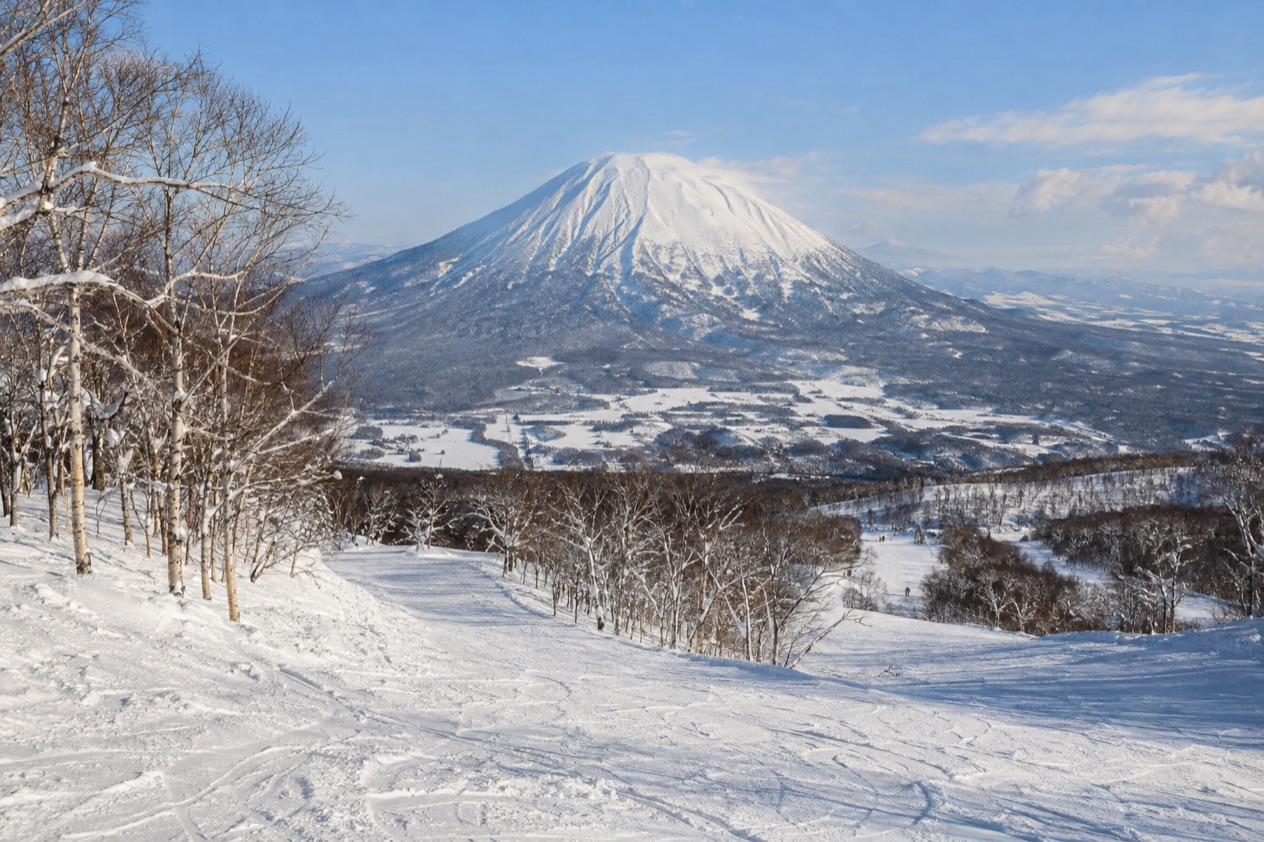
In the middle of winter, Niseko disappears behind falling snow, and the lifts of Grand Hirafu carry skiers up into white air while the izakaya at the bottom steam with grilled skewers and hot sake. When the snow melts, the same slopes turn deep green, the volcanic peaks come back into view, and the pace drops to hikers and quiet country roads. Niseko is a ski town in southwestern Hokkaido, and the calendar here splits cleanly between a long white season and a short, bright summer.
When is the best time to visit Niseko?
For skiing and snowboarding, the best months are December through March, and for walking, scenery and mild air, the best are June through September, with early October as a bonus for autumn color. Niseko is known across Japan as the ski area for powder snow, and it draws a large share of foreign visitors, so winter is the season the place was built around.
If sightseeing and photography are the goal, the months from late spring to early autumn give the most daylight and the clearest views of the mountains. June brings the longest days of the year, with light stretching deep into the evening, and the sunshine hours stay generous through May and June. Summer afternoons are warm without being fierce, which suits hiking, cycling, and a long lunch outside.
For food, the answer depends on what you crave. Winter is the season of hot pots, ramen, grilled meats and rich seafood, the kind of meals that taste better after a day in the cold. Summer and early autumn belong to fresh vegetables, corn, melons and the dairy of Hokkaido, eaten at farm stands and cafes among the fields.
Travelers who want quiet should look at the spring thaw, the weeks in May and June, and the stretch of late autumn between the leaves and the first real snow. Families with younger children may prefer the warm months for the open space and gentle pace, while families with older kids who ski can plan around the winter school breaks.
Niseko weather by month
At Kutchan, close to Niseko, the year runs from deep winter cold to a warm, humid midsummer.
| Month | Average high (°F) | Average low (°F) | Precipitation (in) | Days with 1 mm or more of precipitation | Hours of sunshine | Daylight on the 15th |
|---|---|---|---|---|---|---|
| January | 28.4 | 14.7 | 7.26 | 24.5 | 47 | 9 h 21 min |
| February | 30.2 | 15.1 | 5.09 | 21.3 | 65 | 10 h 31 min |
| March | 37.4 | 21.7 | 3.87 | 17.0 | 121 | 11 h 51 min |
| April | 49.6 | 32.2 | 2.64 | 11.0 | 173 | 13 h 21 min |
| May | 62.4 | 42.8 | 2.98 | 9.8 | 190 | 14 h 37 min |
| June | 69.6 | 52.3 | 2.36 | 8.0 | 170 | 15 h 19 min |
| July | 75.9 | 61.0 | 4.03 | 8.6 | 144 | 15 h 04 min |
| August | 77.7 | 62.1 | 6.03 | 9.9 | 150 | 13 h 59 min |
| September | 71.1 | 52.3 | 5.25 | 11.9 | 149 | 12 h 34 min |
| October | 59.0 | 40.1 | 5.05 | 14.3 | 128 | 11 h 08 min |
| November | 44.4 | 30.2 | 7.20 | 19.9 | 66 | 9 h 47 min |
| December | 32.0 | 19.8 | 8.57 | 24.7 | 39 | 9 h 03 min |
The shape of the year is simple. From December through February, highs hover around freezing and almost every day brings some precipitation, but it falls as snow, nearly a hundred inches in an average January. Sunshine is scarce in those months, and the short days mean daylight ends early in the afternoon. Insulated layers, waterproof outer shells, gloves and warm boots are the baseline.
Spring is the long thaw. April still sees some snow, and May warms into the low 60s by day while nights stay cool, so a fleece or light jacket is welcome.
June to August is the warm stretch, with afternoons in the 70s, mild nights, and fewer rainy days than winter, though August and September bring heavier rain when it comes. Autumn drops quickly: October needs a warm jacket, and by November the cold and the wet are back, with snow arriving as the month goes on.
What is there to do in Niseko in each season?
Niseko’s activities follow the snow line. Winter is for the slopes, summer and early autumn for the mountains and the countryside, and the weeks between are a time of waiting and quiet.
Winter and snow
Niseko United is described as one mountain with four resorts: Annupuri, Niseko Village, Grand Hirafu and Hanazono. That layout means you can ski one side in the morning and another after lunch, and the lift network is the heart of a winter stay. Niseko United publishes live lift and weather status for every resort on its website, and lift passes can be bought online.
Beyond the slopes, winter days finish in the hot springs and the restaurants of Hirafu, where the cold air makes every bowl of noodles and every cup of sake feel earned. December and January carry the heaviest snowfall in the figures, with February and March still deep in winter, so the whole stretch suits anyone who wants a full snow holiday. Snow can reach well into spring, and conditions change from day to day.
Spring thaw and the early summer months
April is a transition month, with some snow still falling and the days growing long. By May the air has warmed, sunshine peaks, and the hills start to green. Cherry blossoms are one of Japan’s great spring sights, but no bloom date is given for Niseko, so treat any blossom plans as a bonus rather than a fixed appointment.
June is the driest-feeling month in the table, with the fewest wet days of the year and the longest daylight. Much of the Niseko range lies within the Niseko-Shakotan-Otaru Kaigan Quasi-National Park, and that protected landscape of volcanic peaks and woodland is the draw once the snow is gone. It is a good time for slow drives, farm stops and views across the fields.
Summer and autumn leaves
July and August bring the warmest weather, with highs in the mid-70s and lows in the low 60s. Evenings are mild enough for dinner outside, and the humid air makes the green slopes look lush. August brings more rain than July, usually as showers rather than all-day gray, so a light rain jacket belongs in the bag.
September cools the air, and October turns the hillsides to color as the leaves change. No peak date is given for Niseko, so the timing of the colors varies from year to year. By late October the first flakes of snow are possible, which is a reminder that the winter season is never far away. Autumn is a good time for walks, hot springs and quiet meals.
When is Niseko least crowded?
The quietest stretches fall outside the ski season, mainly in May and June and again in late autumn, between the leaves and the first lasting snow. Niseko is especially popular with foreign visitors in winter, so the busy time follows the snow rather than the weather in the rest of Japan.
Japan’s national holiday periods shape travel everywhere, and they can touch Niseko too. Golden Week at the turn of April and May, Obon in mid-August and the New Year break are the weeks when many Japanese travelers are on the move. The New Year period lands in the middle of the snow season, so it combines two reasons to travel in the same days.
What that means in practice is a matter of timing. A stay in the thaw weeks of May or June fits a visitor who wants space and does not need a lift ticket, and the mountains and the park trails are the main draw.
A stay in early December or in March can feel different from the New Year weeks, though the snow itself shifts from year to year. Choose your dates around the holiday weeks if a calmer visit matters more than a specific day on the slopes.
Which months should you avoid in Niseko?
Avoid the months that match nothing you came for: November, when the snow has not settled and the days are short and wet, and the weeks of April when the slopes are thinning and the thaw makes the landscape muddy. Beyond those, it depends on your plans.
November is one of the grayest months in the table, with sunshine low, precipitation high, and snow falling on many days. The roads and trails are not yet in winter or summer shape, and the cold is damp. A trip then is about hot springs and food, not views or activities.
If you plan to ski, the heart of winter delivers, but the cold is serious and sunshine is limited, so December through February can feel dark and gray on the worst days. Late August and September bring the wettest summer stretch, with heavier rain when it does come. Typhoon season, as the Japan-wide calendar describes it, overlaps with late summer and early autumn, so storm-related changes to plans are possible then.
None of this rules out a good trip. Wet or cold days still have hot springs, restaurants and cafes, and the mountains are in their own way beautiful in every month. The point is to match the month to the activity, and to carry layers and rain gear in any season.
Festivals and events in Niseko through the year
The Japanese calendar is full of seasonal moments, and several of them shape a trip to Niseko even when they are not local festivals. These are the national rhythms most travelers meet.
Winter and New Year
New Year is the biggest holiday in Japan, running from December 31 into the first days of January. Families gather, shrines see the first visits of the year (hatsumode), and special New Year foods appear, including osechi boxes and bowls of zoni soup with rice cake. In a ski town, the holiday becomes a snow holiday, with the resort filled with festive energy.
The weeks after New Year are the deep-winter core, when the cold and snow are most dependable. Evenings are for izakaya, hot pots and onsen soaks, the traditions that make a snowy trip feel complete. Check the lift status on the Niseko United website for current conditions.
Spring and Golden Week
Golden Week, the cluster of national holidays at the end of April and the start of May, is when much of Japan travels. Spring also brings hanami, the custom of picnicking under blooming cherry trees, one of the best-loved seasonal rituals in the country. No bloom dates are given for Niseko, so the timing is a matter of watching the season.
In Hokkaido the spring arrives later than in southern cities, and the thaw is gradual. Walks along country roads, the first green on the slopes and the returning light make May a gentle season for those who like to see a place wake up.
Summer and autumn
Obon, in mid-August, is the summer festival of remembrance, when families honor their ancestors. Communities hold bon odori dances, with circles of people moving to drums and song, often in yukata (light cotton robes). It is also one of the main travel weeks of the Japanese year, and it falls in the warmest part of the Niseko summer.
Autumn is the season of koyo, the viewing of changing leaves, which follows a ritual much like hanami. As October moves on, the hills turn red and gold, and the air cools toward winter. Harvest foods fill the tables, from potatoes and squash to fresh seafood, and the quiet of the in-between weeks gives the season its own mood before the snow returns.
Sources
- Japan Meteorological Agency (JMA), Normal values 1991-2020, monthly (https://www.data.jma.go.jp/stats/etrn/view/nml_sfc_ym.php?prec_no=16&block_no=47433), station Kutchan, elevation 176 m, checked October 11, 2026
- Computed from the date and the latitude of the place (sunrise equation, solar elevation -0.833 degrees), October 11, 2026
- Japan National Tourism Organization, Niseko (https://www.japan.travel/en/destinations/hokkaido/hokkaido/niseko-and-nearby-ski-resorts/), checked October 11, 2026
- Niseko United, winter (https://www.niseko.ne.jp/en/winter/), checked October 11, 2026
- Wikipedia, Niseko (https://en.wikipedia.org/wiki/Niseko), checked October 11, 2026
- Wikivoyage, Niseko (https://en.wikivoyage.org/wiki/Niseko), checked October 11, 2026