
In October, Niseko is caught between two seasons. Birch and maple leaves turn on the slopes, steam rises from the outdoor onsen (hot spring) baths, and the farm stands of southwestern Hokkaido are heaped with potatoes, pumpkins and corn. Then a first dusting of snow can appear on the high ground. Niseko in October suits travelers who want hiking, hot springs and Hokkaido food at the moment the mountain changes from green to white.
What is the weather like in Niseko in October?
October in Niseko is cool and damp, a clear step down from September and a long way from the snow of November. At Kutchan, close to Niseko, the figures run as follows.
| Month | Average high (°F) | Average low (°F) | Precipitation (in) | Days with 1 mm or more of precipitation | Hours of sunshine | Daylight on the 15th |
|---|---|---|---|---|---|---|
| September | 71.1 | 52.3 | 5.25 | 11.9 | 149 | 12 h 34 min |
| October | 59.0 | 40.1 | 5.05 | 14.3 | 128 | 11 h 08 min |
| November | 44.4 | 30.2 | 7.20 | 19.9 | 66 | 9 h 47 min |
What this changes is mostly a matter of layers. Afternoons are mild enough for a fleece or a light jacket, while the nights drop to just above freezing, so a warm layer comes out as soon as you stop walking. Rain falls on more than every other day, usually as showers rather than a single long soak, and a waterproof shell earns its place in the bag.
Snow is no longer a stranger. Humidity stays high, so damp air makes the cold feel sharper than the thermometer suggests.
The light is shorter than in summer. Daylight has lost more than an hour since mid-September, and the sunshine hours are thinner, so plan outdoor walks for the hours you have and keep the evenings for baths and dinner.
What to do in Niseko in October
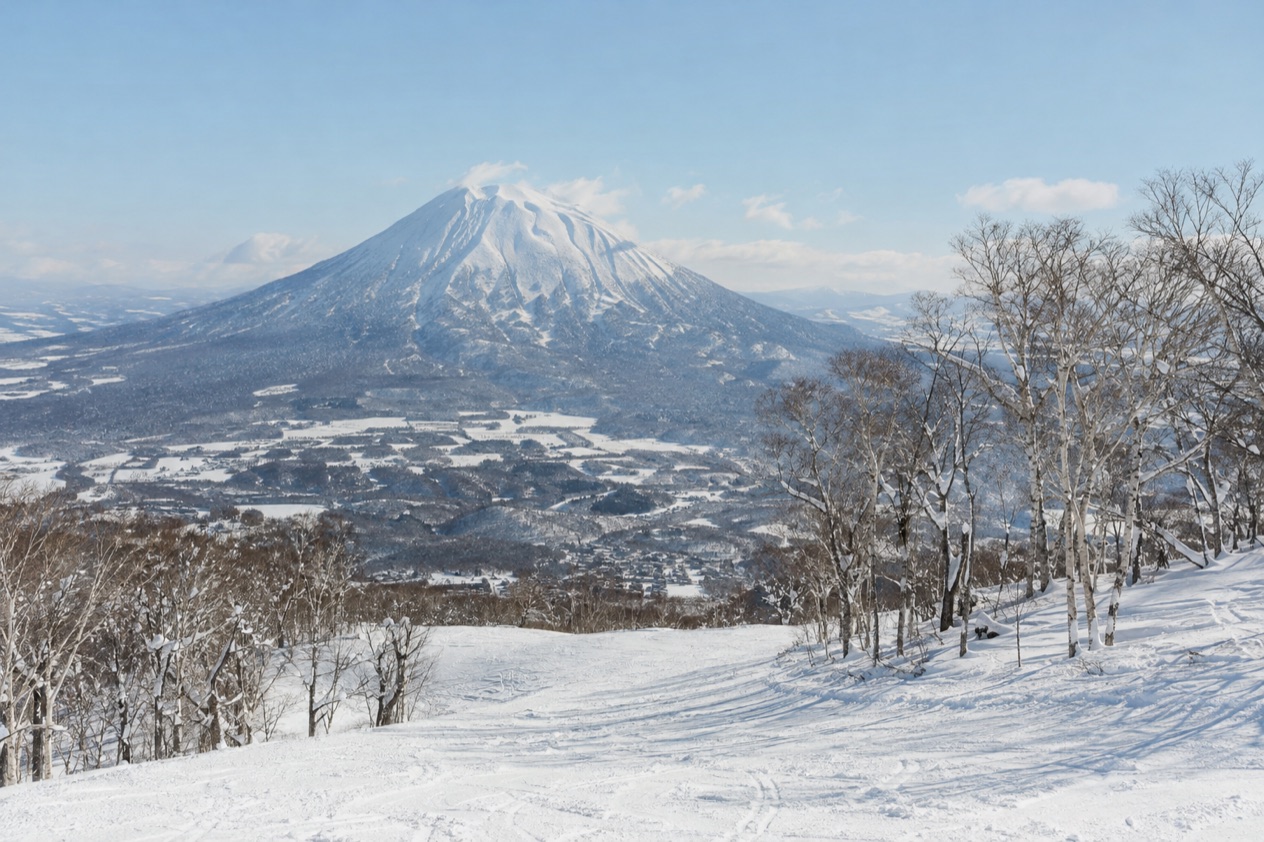
The main business of October here is the changing of the mountain. Niseko is a ski area in southwestern Hokkaido, described as the most famous in Japan and especially popular with foreign visitors, and in this month the same slopes and valleys belong to walkers, onsen lovers and people who come for the food. The big winter machinery is still waiting, and the area has a settled, in-between feel.
The four resorts of Niseko United (Annupuri, Niseko Village, Grand Hirafu and Hanazono) each have their own village, and in autumn they are a pleasant way to organize the days. You can stay in one and wander into another for lunch, a bakery or a bath. Niseko United posts live lift and weather status reports for every resort on its website, which tells you what is running on the day you arrive.
Leaf color is a chance rather than a promise, and it varies from one autumn to the next. When the birches and maples turn, the forests around the villages go yellow, orange and red, and the mountains behind them stand out against gray skies. A first snowfall on the summits can come in the same week.
Walking in the Niseko mountains
Much of the Niseko mountain range lies within the Niseko-Shakotan-Otaru Kaigan Quasi-National Park, and October is a month for trails that wind through beech and birch woods, past marshy meadows and up toward volcanic ridges. Annupuri forms the eastern part of the Niseko volcanic group, and the peaks around it give the walks their shape, with long views over farmland when the cloud lifts.
With mornings near freezing and damp air hanging in the trees, the best plan is a day built around layers, sturdy shoes and a thermos, with a bath waiting at the end. Because daylight is limited, it makes sense to start walking early and be back in the village before the light fades. Rain and fog can change the mood of a trail within an hour, so treat the lift status and weather reports as part of the plan.
Onsen evenings
Niseko is built for the hot bath, and October is when the idea makes the most sense. After a wet walk, an onsen with an outdoor pool lets you sit in steam while the air cools around your shoulders, and the sound of rain on the leaves does the rest. Hotels and ryokan (traditional inns) in the villages often have baths of their own, and some day visitors use them too.
Shoes come off at the entrance of a ryokan, and you move around in slippers and a yukata, a light cotton robe. Dinner at an inn is often a long affair of small dishes, served in courses, and it makes a natural end to a day outdoors. A late bath before bed rounds it off.
Eating the Hokkaido harvest
Hokkaido farmland feeds the table in autumn. Potatoes, corn, pumpkin and onions come from the surrounding fields, and the region is known for dairy, so you find soft-serve ice cream, cheese and milky soups in the villages. Soup curry, a spicy broth full of vegetables and chicken that began in Sapporo, is a Hokkaido dish that suits a cold, wet afternoon.
Seafood from the Hokkaido coasts turns up in izakaya (pubs serving small plates), and a bowl of ramen with butter and corn is a standard way to warm up after a hike. A cup of sake or a local beer finishes an evening. October is a good month for hearty food with a view of the mountain outside.
In the rain, the alternatives are the bakeries, cafés and bathhouses that fill the villages. A rainy afternoon in Niseko tends to turn into a long lunch, a slow coffee and an early dinner.
A two-day itinerary for Niseko in October
Day 1 begins with arrival in Niseko, southwest of Sapporo. By car, the trip from Sapporo or New Chitose International Airport takes about three hours. Spend the first hours in Grand Hirafu, walking the village and finding a café for a first coffee. At midday, a soup curry shop is the kind of place to head for, and the afternoon belongs to a trail in the quasi-national park while the daylight lasts.
By evening, return to your inn for a bath, then go out for dinner at an izakaya serving Hokkaido vegetables and seafood. If the weather turns, spend the afternoon in a bakery, a café or the hot springs, and let the walk wait for the next day.
Day 2 moves to the other villages. Start early in Annupuri with a short wander through the quiet streets, then continue to Niseko Village for the forest and the views around the resort. Lunch can be a farm-stand meal of potatoes, corn or cheese, or a bowl of ramen in a village shop.
In the afternoon, visit Hanazono, the fourth resort, and take in its slopes bare of snow. Finish with another onsen and a last dinner, perhaps the multi-course meal a ryokan serves. If rain is steady, a long lunch and an indoor afternoon of baths, reading and a slow dinner make the day.
Is Niseko busy in October?
Niseko’s reputation rests on winter, when it draws skiers from around the world, and October sits outside that season. The month belongs to a different kind of visitor, the walker, the onsen traveler and the person who wants the mountains without the snow.
The ski infrastructure is there, with four resorts under the name Niseko United, but the buzz of the winter lift lines belongs to another season. Niseko United encourages visitors to buy lift passes online to beat the lines and save money, advice that speaks of winter crowds rather than autumn ones.
What October gives you is a pace set by the weather. When the sun comes out, people walk, bathe and eat outdoors. When the rain comes, the villages slow down, and cafés and baths become the center of the day.
The Niseko Tourism Zone covers the three municipalities of Kutchan, Niseko and Rankoshi, and the towns around the mountain carry the autumn too. A trip here can include the village streets, the farmland and the forest trails in the same day.
What to pack for Niseko in October
Pack for cool, damp days that turn cold after dark, and for walking on wet ground.
- A waterproof jacket, because rain falls on many days of the month.
- A warm fleece or insulated layer for evenings that drop close to freezing.
- Sturdy, waterproof shoes for muddy forest trails.
- A hat and light gloves for the first cold mornings and the possibility of snow on high ground.
- A small daypack for a thermos and extra layers on longer walks.
- A headlamp or phone light, since daylight is shorter than in summer.
Good to know before you go
October is a month of changeable weather, with the first snow possible on high ground, so keep an eye on conditions. Niseko United posts live lift and weather status reports for every resort, and Japan’s weather agency issues Emergency Warnings when natural phenomena of extraordinary magnitude threaten. The Japan National Tourism Organization keeps a Japan Safe Travel Information page with safety tips and government information for travelers.
Niseko in October vs September and November
Going four weeks earlier gives you a warmer, longer day. In September the afternoons are noticeably milder, the sun shines more, and the trails are drier. The leaves have not yet turned, so you trade the color for comfort, and you still eat the same potatoes and corn.
Going four weeks later changes the mountain entirely. November brings a snowfall of 37.4 inches in an average year, snow or sleet on 16.5 days, and very little sun. The villages begin to prepare for winter, and the walking season is over for people.
October suits travelers who want the autumn color, the onsen and the harvest food, and who do not mind rain. Choose September for easier hiking and more daylight, and November only if you want to see the first snow settle in.
Is October a good time to visit Niseko?
Yes, for travelers who like autumn walks, hot baths and Hokkaido food, and who accept that the weather can be wet and cold. It is a month for people who want the mountain between its green and white seasons.
Those who come for skiing should choose another month, and so should anyone who wants warm, dry days outdoors. If you do come, start on arrival with the live lift and weather reports, then plan your walks around them and keep the evenings for the onsen. What is special about October in Niseko is the sense of a place caught between seasons, with the leaves turning, the first snow dusting the heights and steam rising from a bath after a wet walk.
Sources
- Japan Meteorological Agency (JMA), Normal values 1991-2020, monthly (https://www.data.jma.go.jp/stats/etrn/view/nml_sfc_ym.php?prec_no=16&block_no=47433), station Kutchan, elevation 176 m, checked October 11, 2026
- Computed from the date and the latitude of the place (sunrise equation, solar elevation -0.833 degrees), October 11, 2026
- Japan Meteorological Agency, Emergency Warnings (https://www.jma.go.jp/jma/en/Emergency_Warning/ew_index.html), checked October 11, 2026
- Japan National Tourism Organization, safety information (https://www.japan.travel/en/japan-safe-travel-information/), checked October 11, 2026
- Japan National Tourism Organization, weather and seasons in Japan (https://www.japan.travel/en/plan/weather/), checked October 11, 2026
- Japan Meteorological Agency, maple color-change dates 2025-2026 with difference from the 1991-2020 normal (https://www.data.jma.go.jp/sakura/data/phn_014.html), checked October 11, 2026
- Japan Meteorological Agency, kaede2020.pdf (https://www.data.jma.go.jp/sakura/data/kaede2020.pdf), checked October 11, 2026
- Japan National Tourism Organization, festivals and events (https://www.japan.travel/en/see-and-do/festivals-and-events/), checked October 11, 2026
- Wikipedia, Matsuri (https://en.wikipedia.org/wiki/Matsuri), checked October 11, 2026
- Wikipedia, Takayama Festival (https://en.wikipedia.org/wiki/Takayama_Festival), checked October 11, 2026
- Japan National Tourism Organization, Niseko (https://www.japan.travel/en/destinations/hokkaido/hokkaido/niseko-and-nearby-ski-resorts/), checked October 11, 2026
- Niseko United, winter (https://www.niseko.ne.jp/en/winter/), checked October 11, 2026
- Wikipedia, Niseko (https://en.wikipedia.org/wiki/Niseko), checked October 11, 2026
- Wikivoyage, Niseko (https://en.wikivoyage.org/wiki/Niseko), checked October 11, 2026