
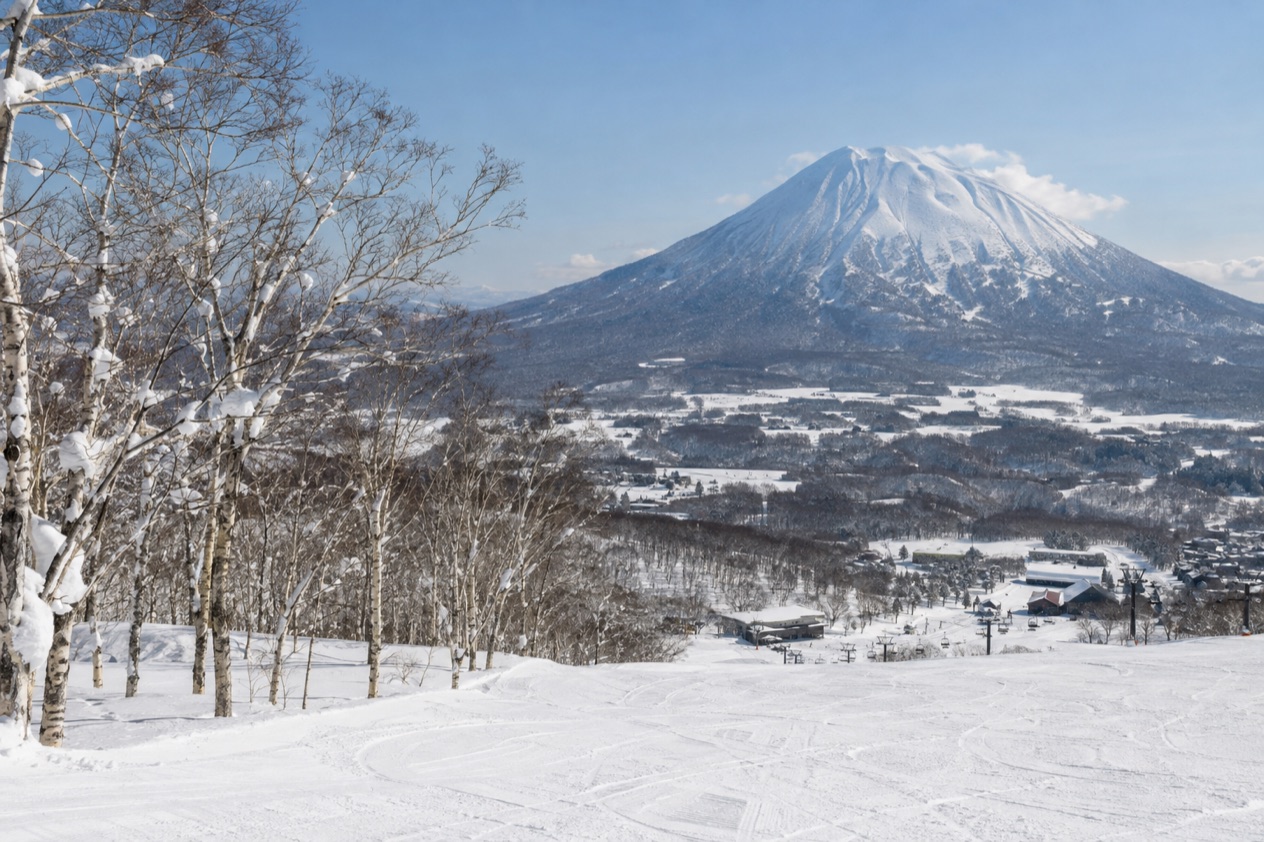
In January, Niseko disappears under snow that keeps falling while you sleep, and the streets of Hirafu fill with skiers in bright jackets clomping toward the lifts, boots in hand, steam rising from ramen shops and coffee windows. Evenings smell of woodsmoke and grilled meat, and the mountain is what everyone talks about at dinner. This is the heart of the ski season in southwestern Hokkaido, a month for powder days, hot baths and long warm meals.
What is the weather like in Niseko in January?
January in Niseko is deeply cold, gray and snowy, with snow falling on nearly every day of the month.
| Month | Average high (°F) | Average low (°F) | Precipitation (in) | Days with 1 mm or more of precipitation | Snowfall (in) | Hours of sunshine | Daylight on the 15th |
|---|---|---|---|---|---|---|---|
| December | 32.0 | 19.8 | 8.57 | 24.7 | 99.6 | 39 | 9 h 03 min |
| January | 28.4 | 14.7 | 7.26 | 24.5 | 99.6 | 47 | 9 h 21 min |
| February | 30.2 | 15.1 | 5.09 | 21.3 | 73.6 | 65 | 10 h 31 min |
Mornings are the coldest hours, and the snow that fills the sky is the dry, light kind Niseko is known for. Rain hardly figures here: nearly all the precipitation arrives as snow or sleet, which falls on almost every day of the month.
Sunshine is scarce, and when the clouds do break, the glare off fresh snow is strong. Daylight is short, so evenings begin early and the lifts and the dinner hour both feel the dark arriving. Humidity is high, which makes the cold feel damp, so layers matter more than one heavy coat.
A waterproof shell, insulated layers underneath, warm gloves, goggles for flat light and boots with a good grip cover most days. After the lifts close, the walk to dinner is cold, and a hat and a scarf are welcome.
What to do in Niseko in January
Skiing and snowboarding are the reason to come. Japan’s ski season generally opens in December and runs until April, and Hokkaido has peak season in January and February, when snowfall is most frequent. Niseko is the most famous ski area in Japan, known for its powder snow and welcoming atmosphere, and it is especially popular with foreign visitors.
The January mood has a rhythm. Lifts first, then a long lunch in a warm room, a last run, and then the onsen (hot spring bath) or a grill. The first days of the month carry the New Year holidays, when many restaurants and attractions are closed. Japanese families celebrate on January 1 with osechi, a selection of festive dishes, and you may see the holiday in the dining rooms of hotels.
One mountain, four resorts
Niseko United is described as one mountain with four resorts: Annupuri, Niseko Village, Grand Hirafu and Hanazono. Annupuri has an elevation of 1,308 meters and forms the eastern part of the Niseko volcanic group. Much of the range lies within the Niseko-Shakotan-Otaru Kaigan Quasi-National Park, so the slopes sit in a wider landscape of forested volcanic peaks.
Each resort has its own character, and choosing a base shapes your days: where you eat, how you walk to the lifts and what the evenings look like. Hirafu is the name you will hear most often in the context of après-ski, and you can sample the others by moving from one area to the next across the connected mountain.
Niseko United provides live lift and weather status reports for every resort on its website, which is useful on a month when snow can change the plan. Lift passes can be bought online to beat the lines and save money.
Hot springs and warm meals
After a day in the cold, an onsen is the natural reward. Soaking in hot mineral water while snow drifts onto the steam is one of the images people remember longest from a Hokkaido winter. Bathing habits are the same as elsewhere in Japan, with a wash before you step into the bath, and you leave towels outside the water.
Food leans toward the hearty. Bowls of ramen with a rich broth, hot pots, grilled meat, tempura and sweets made with Hokkaido milk are the dishes that suit a snowy night. Izakaya (Japanese pubs) serve small plates with beer or sake, and a long table of shared dishes is a good way to end a ski day.
Snowy days off the slopes
A day away from the lifts can still be a winter day. Walking through the snowy streets of Kutchan, browsing a few shops and stopping for coffee gives the town its local side. Shops in rural areas often close earlier, sometimes as early as 6:00 p.m., so errands are best finished while there is daylight.
Other ski areas in Hokkaido, such as Rusutsu, are among the recommended ski resorts in Japan, and Niseko sits in a region where snow dominates the landscape. If wind or low cloud closes upper lifts, lower runs and a day of baths and long meals make a fine substitute.
A two-day itinerary for Niseko in January
Day 1 starts with a check of the live lift and weather report, then breakfast and an early walk to the lifts, since daylight is short this month. Spend the morning on the runs of your home resort, getting used to the snow and the cold. Midday is for a hot lunch, a bowl of ramen or a curry in a mountain restaurant, with a warm drink to bring your hands back to life.
In the afternoon, ski as long as the light holds, then call it a day when the sky dims. Evening belongs to a hot bath and dinner at an izakaya or a grill, with small plates and something warm to drink. If the weather turns, stay indoors with a bath and a long meal.
Day 2 moves to a different resort on the connected mountain, so you see another part of Niseko United. Ride in the morning, eat lunch at a place near the slopes, and keep the afternoon loose, with a few more runs or a slow walk through town. In the evening, finish with a meal of hot pot or tempura and a second soak.
If snow is heavy or the wind closes upper lifts, shift to lower runs, a cafe stop and an early onsen. The pace of a ski trip is set by the mountain, and January days reward flexibility.
Is Niseko busy in January?
Yes, January is peak season in Niseko. Hokkaido has its peak season in January and February, when snowfall is most frequent, and the Christmas and New Year holidays, as well as early February, attract the largest number of skiers to the slopes.
Niseko is especially popular with foreign visitors, so English is part of the soundtrack in Hirafu, in the lift lines and on restaurant terraces. Lift lines can be shorter for those who buy passes online, which also saves money. Many restaurants and attractions are closed during the New Year holidays, so the first days of the month are quieter on the dining side even when the slopes are full.
Later in the month, once the New Year holidays are behind you, the rhythm settles into the steady pace of a ski resort in its best season, with groups heading out each morning and coming back each evening for baths and dinner.
What to pack for Niseko in January
Pack for deep cold and frequent snow, with layers you can add or remove between the lifts and the dining room.
- Waterproof ski jacket and pants, because snow falls on nearly every day.
- Thermal base layers and a fleece, since highs stay below freezing.
- Goggles for flat light and glare off the snow.
- Warm gloves and a spare pair, for wet hands after falls.
- Insulated boots with a good grip for icy walks to dinner.
- Hat, scarf and neck warmer for the evening cold.
Good to know before you go
The New Year holidays bring closures, since many restaurants and attractions are shut in the first days of January. Shops in urban areas are generally open from 10:00 a.m. to 8:00 p.m., while in rural areas they often close earlier, sometimes as early as 6:00 p.m. When a national holiday falls on a Sunday, the next working day becomes a public holiday, which can shift opening days.
Niseko is in southwestern Hokkaido, southwest of Sapporo. By car, it is about a three-hour drive from both Sapporo and New Chitose International Airport, the nearest airport. The live lift status on the Niseko United website is worth a look before each day on the mountain.
Niseko in January vs December and February
Moving the trip to December means a shorter day, with about nine hours of daylight in mid-month, and a season that is just opening. Snowfall totals are the same as in January in the figures, but the ski season generally opens in December and the exact dates are set by each resort. The Christmas and New Year holidays bring the largest crowds of skiers.
February brings more sunshine and longer days, with a little less snow and fewer rainy days. It is still peak season, and early February attracts large numbers of skiers. Skiers who want a little more light for the slopes, and slightly milder cold, may prefer it.
Choose December if you want the start of the season and the holiday mood, January for the deepest cold and the heart of the season, and February for brighter days. If you want to avoid the holiday crowds, the middle of January is the place between them.
Is January a good time to visit Niseko?
Yes, January is a good time for skiers and snowboarders who want deep winter, and for anyone who loves snowy landscapes, hot baths and hearty food. It suits people who enjoy being outside in the cold and do not mind gray skies.
It is a poor fit for travelers who dislike the cold, who want sunshine or who plan to be away from the snow. Without skis or a taste for winter, the days can feel short and the evenings long.
On arrival, check the live lift and weather report, then pick a resort as your base and settle in. January in Niseko is a month of snow that keeps falling, steam rising from the onsen and a mountain that gives you something new each morning.
Sources
- Japan Meteorological Agency (JMA), Normal values 1991-2020, monthly (https://www.data.jma.go.jp/stats/etrn/view/nml_sfc_ym.php?prec_no=16&block_no=47433), station Kutchan, elevation 176 m, checked October 11, 2026
- Computed from the date and the latitude of the place (sunrise equation, solar elevation -0.833 degrees), October 11, 2026
- Japan National Tourism Organization, shop and attraction hours, national holidays (https://www.japan.travel/en/plan/business-hours-and-holidays/), checked October 11, 2026
- Wikipedia, Japanese New Year (https://en.wikipedia.org/wiki/Japanese_New_Year), checked October 11, 2026
- Wikipedia, Public holidays in Japan (https://en.wikipedia.org/wiki/Public_holidays_in_Japan), checked October 11, 2026
- Japan National Tourism Organization, winter in Japan (https://www.japan.travel/en/guide/winter-guide/), checked October 11, 2026
- Japan National Tourism Organization, skiing and snowboarding in Japan: regions, resorts, seasons (https://www.japan.travel/en/sports/snow/), checked October 11, 2026
- Wikipedia, Climate of Japan (https://en.wikipedia.org/wiki/Climate_of_Japan), checked October 11, 2026
- Japan National Tourism Organization, weather and seasons in Japan (https://www.japan.travel/en/plan/weather/), checked October 11, 2026
- Japan National Tourism Organization, skiing guide (https://www.japan.travel/en/guide/skiing/), checked October 11, 2026
- Wikipedia, List of ski areas and resorts in Japan (https://en.wikipedia.org/wiki/List_of_ski_areas_and_resorts_in_Japan), checked October 11, 2026
- Japan National Tourism Organization, flowers by season: cherry blossom, plum, wisteria, hydrangea, where and when (https://www.japan.travel/en/see-and-do/flowers/), checked October 11, 2026
- Wikipedia, Prunus mume (https://en.wikipedia.org/wiki/Prunus_mume), checked October 11, 2026
- Niseko United, winter (https://www.niseko.ne.jp/en/winter/), checked October 11, 2026
- Japan National Tourism Organization, Niseko (https://www.japan.travel/en/destinations/hokkaido/hokkaido/niseko-and-nearby-ski-resorts/), checked October 11, 2026
- Wikipedia, Niseko (https://en.wikipedia.org/wiki/Niseko), checked October 11, 2026
- Wikivoyage, Niseko (https://en.wikivoyage.org/wiki/Niseko), checked October 11, 2026