
Snow falls on Niseko in thick, quiet curtains, and skiers in bright jackets stamp their boots at the foot of the lifts while steam rises from cups of something hot. Later the lights come on in the village streets and the talk drifts between English, Japanese and a few other languages. This is a ski town in southwestern Hokkaido, built around a mountain with four resorts, and it suits anyone who measures a trip in snowy runs and warm evenings.
Where is Niseko and what is it like?
Niseko sits in southwestern Hokkaido, southwest of Sapporo, on the northern island of Japan. It is both a town and a ski resort, and the name covers a whole cluster of villages strung along the base of a volcanic mountain range. The government-recognised Niseko Tourism Zone takes in three municipalities: Kutchan, Niseko and Rankoshi.
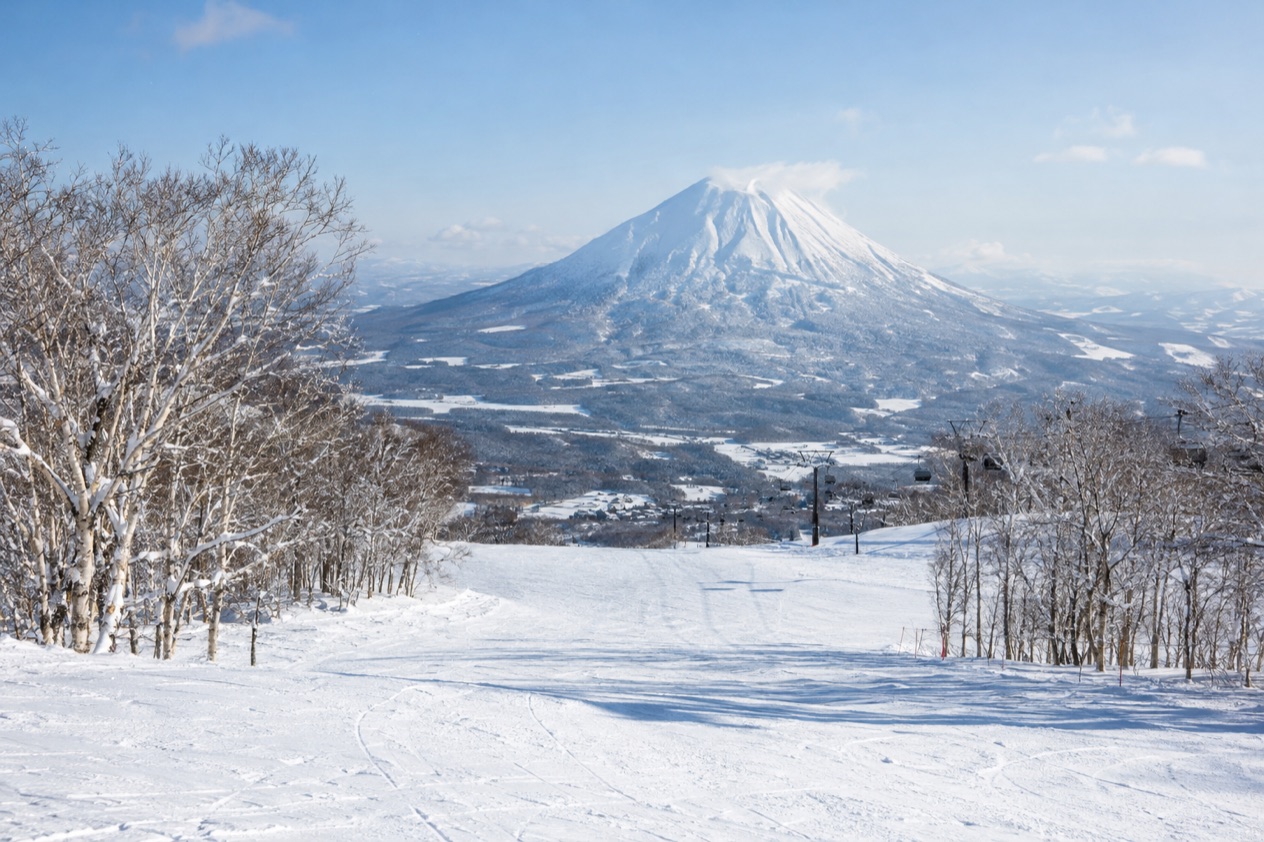
The mood is that of a mountain resort that has grown up around its snow. Niseko is described as the most famous ski area in Japan, known for its powder snow and a welcoming atmosphere that has drawn foreign visitors in particular. You hear that in the village streets, where menus, signs and conversations move easily between languages, and where an après-ski evening feels as natural as it would in the Alps or the Rockies.
Around the resorts the landscape is wide and green or white, depending on the season. Much of the Niseko mountain range lies within the Niseko-Shakotan-Otaru Kaigan Quasi-National Park, and the volcanic peaks, with Niseko Annupuri forming the eastern part of the group, give the area its silhouette. Hokkaido farmland, with its potatoes, dairy and vegetables, fills the valleys, so a meal here often tastes of the surrounding fields.
Niseko rewards people who like to organize a day around the mountain: lifts in the morning, a hot meal at midday, a bath and a long dinner at night. It may feel too resort-like for travelers who want the old streets and temples of Kyoto or the crowds and neon of Tokyo. Think of it as a place to settle into one valley rather than a city to tick off.
What is there to do in Niseko?
Skiing and snowboarding come first, and everything else fits around them. Beyond the slopes, Niseko offers hot spring baths, Hokkaido cooking and the wide mountain scenery of its park. What sets it apart from other Japanese resorts is that four resorts share one connected mountain, so a single trip can mean several different bases and several different moods.
Skiing and snowboarding on Niseko United
Niseko United is the largest ski complex in Niseko, and its official line is one mountain, four resorts: Annupuri, Niseko Village, Grand Hirafu and Hanazono. A trail map covers all four, which lets you plan a day that starts at one and ends at another. Live lift and weather status reports for every resort are posted on the Niseko United website, a useful habit on mornings when the wind or the snowfall changes the plan.
Ski and snowboard equipment can be rented on site at specialty shops in Niseko, so you can arrive with a bag of clothes and leave the rest to the village. Niseko United also takes part in the Mountain Collective Pass program, which matters to travelers who already hold that pass.
Lift passes can be bought online, and the website says doing so beats the lines and saves money. An All Mountain Season Pass exists too, though it is mostly for those who stay a long time.
Backcountry and the Niseko Rules
The terrain beyond the groomed runs draws strong skiers, and Niseko has written rules for it. On Niseko Annupuri, ground beyond the controlled ski-area boundaries may be reached only through designated gates. Crossing boundary ropes, or going into the backcountry while the gates are closed, is prohibited.
In practice this means that the off-piste side of Niseko is a matter of gates, signs and open or closed status, not of simply following tracks into the trees. Watch the gate notices as carefully as the weather, and read the rules before you go near a rope.
Mountain scenery and the park around it
Annupuri rises to 1,308 meters and anchors the eastern end of the volcanic group, the kind of peak that dominates the view from the village below. The range lies largely inside a quasi-national park, so the scenery goes well beyond the lift lines. Away from the ski season, the same slopes and valleys are the setting for the area’s farms and mountain views.
A day spent looking at the mountain rather than climbing it still has plenty in it. You can wander a village, stop for a bowl of soup curry or a plate of Hokkaido potatoes and dairy, and finish with a soak in a hot spring bath. That rhythm of mountain, table and bath is what makes Niseko feel different from a city break.
How many days do you need in Niseko?
A long weekend gets you a taste of Niseko, but a week lets the place settle in. Travelers coming from far away will spend a good part of the first day just getting to the resort, so the days of actual skiing begin later than the calendar suggests.
With three or four days you can ski two of the four resorts, rent your gear on site, and still have an evening for a long dinner and a hot bath. The first day tends to go to finding your legs, checking the lift status and learning how the trail map links the resorts. By the second day you can choose a base and let the weather decide the rest.
A full week changes the pace. You can ski all four resorts of Niseko United, return to the one you liked most, and leave a day for resting your legs in the village. A snowy day, when lifts may slow or the wind picks up, becomes a day for baths, long lunches and a walk through the streets, not a lost day.
With more time, the Niseko Tourism Zone gives you other places to see. Kutchan and Rankoshi are two of its three municipalities, and Sapporo, southwest of which Niseko lies, makes a natural stop at either end of the trip for a city meal or a night before a flight. Plan the days around the mountain first, and add the rest as a counterweight.
Where to stay in Niseko
The main areas to stay are the four resorts themselves: Hanazono, Grand Hirafu, Niseko Village and Annupuri. Niseko Village was formerly called Higashiyama, a name you may still see on older maps and in older writing. Each resort is a base on the same mountain, so the question is mostly which lifts you want at your door in the morning.
Choosing a base comes down to how you like to spend your day. Staying at the resort where you ski most means less time spent traveling between your bed and the first chair. Annupuri forms the eastern part of the volcanic group, which gives it a distinct position on the mountain, while Grand Hirafu and Hanazono are two of the other bases you can look at on the trail map.
Because the four resorts are linked under Niseko United, sleeping in one does not lock you into skiing only there. Travelers pick one base for the trip and ski the others by day, using the trail map to plan the loop. Staying in the villages gives you a place to eat and bathe after the lifts close, which is much of the point of a stay in Niseko.
Rental shops for skis and snowboards operate in Niseko, so your lodging does not need to hold equipment for you. When you compare places, think about the bath after the slopes, a kitchen if you like to cook Hokkaido produce yourself, and how close the lifts and the village are to your door.
How do you get to Niseko and get around?
The nearest airport is Sapporo’s New Chitose Airport, which receives flights from all over Japan and from some international destinations. From there, the bus to Niseko takes 3½ to 4 hours, depending on road conditions. By car the drive is about three hours, from both Sapporo and New Chitose.
By bus and rail from Sapporo
A long bus ride from New Chitose carries you to the resort, and road conditions in a snowy region can lengthen it, which is why the stated duration is a range. On the rail side, the rapid Niseko Liner runs directly from Sapporo station to Kutchan station in the evenings. Kutchan is one of the three municipalities of the Niseko Tourism Zone, so it puts you in the right area.
If you land in Sapporo and want to spend a night in the city first, that evening service is one way to reach Kutchan afterward. The Niseko Liner is a rapid train, and what is given is that it runs in the evenings, so plan your arrival around that fact.
By car and around the resorts
A rental car matches the three-hour drive from Sapporo or New Chitose and gives you the freedom to move between the four resorts and the villages. In winter conditions on a mountain road can change the length of the trip, so the drive is quoted as about three hours and nothing more.
Once you are in Niseko, the layout is built around the resorts: Annupuri, Niseko Village, Grand Hirafu and Hanazono. Because the four share a single connected mountain, you can move between them on skis as you follow the trail map. Check the live lift and weather status for each resort on the Niseko United website before you set out in the morning.
When is the best time to visit Niseko?
For snow, January is the month to name. At Kutchan, close to Niseko, an average January brings about 99.6 inches of snow, and highs hover around 28 degrees, with lows in the mid-teens.
Spring thins the snow. In April, Kutchan sees highs near 50 degrees and a much smaller snowfall, around 6.7 inches, with more sunshine than in midwinter. It is a month of melting, mud and longer light, and it suits travelers who prefer softer weather to a deep-winter setting. Snowy days still come, about ten of them in an average April.
Summer is warm without being hot. July highs at Kutchan average in the mid-70s, with lows around 61, and it is humid, with rain on fewer days than in autumn. This is the season when the mountains and the park are green rather than white, and it fits travelers who want walking and scenery more than lifts.
Autumn is cooler and wetter. In October, Kutchan sees highs near 59 degrees and lows just above 40, with rain on more than half the days and the first light flurries of snow, mostly a trace. Annual snowfall at Kutchan reaches 363 inches in a year, which tells you how long the snow season lasts and why winter dominates the calendar.
Good to know before you go
Niseko is a resort built for visitors from abroad, but this is still rural Hokkaido, and the weather decides much of each day. Winter conditions can change the lift schedule and the length of a drive, so keep an eye on the live status reports from Niseko United and leave room in your plans. In the backcountry, follow the Niseko Rules and the gate notices, since going past the boundary ropes is prohibited.
Rental shops in the villages handle skis and snowboards, so travel light and fit your gear on arrival. The mountain, a hot meal and a bath will carry most of the trip.
Sources
- Japan National Tourism Organization, Niseko (https://www.japan.travel/en/destinations/hokkaido/hokkaido/niseko-and-nearby-ski-resorts/), checked October 11, 2026
- Niseko United, winter (https://www.niseko.ne.jp/en/winter/), checked October 11, 2026
- Wikipedia, Niseko (https://en.wikipedia.org/wiki/Niseko), checked October 11, 2026
- Wikivoyage, Niseko (https://en.wikivoyage.org/wiki/Niseko), checked October 11, 2026
- Japan Meteorological Agency (JMA), Normal values 1991-2020, monthly (https://www.data.jma.go.jp/stats/etrn/view/nml_sfc_ym.php?prec_no=16&block_no=47433), station Kutchan, elevation 176 m, checked October 11, 2026
All our pages
When to go
- Best Time to Visit Niseko: Powder Season, Green Summers and Autumn Color
- Niseko in January: Powder Snow, Four Resorts and What to Wear
- Niseko in February: Powder Snow, Weather and Winter Days on the Mountain
- Niseko in March: Late-Winter Snow, Four Resorts and What to Pack
- Niseko in April: Spring Snow, Changing Weather and What to Do
- Niseko in May: Spring Weather, Golden Week and What to Do
- Niseko in June: Green Mountains, Mild Weather and Things to Do
- Niseko in July: Weather, Green Mountains, Hokkaido Flavors and a Two-Day Plan
- Niseko in August: Green Slopes, Hokkaido Produce, Onsen and Weather
- Niseko in September: Green Season Weather, Hot Springs and Hokkaido Food
- Niseko in October: Weather, Autumn Hikes, Onsen and a Two-Day Plan
- Niseko in November: Early Snow, Weather and What to Do Before the Ski Season
- Niseko in December: Early-Season Snow, Four Resorts and What to Pack