
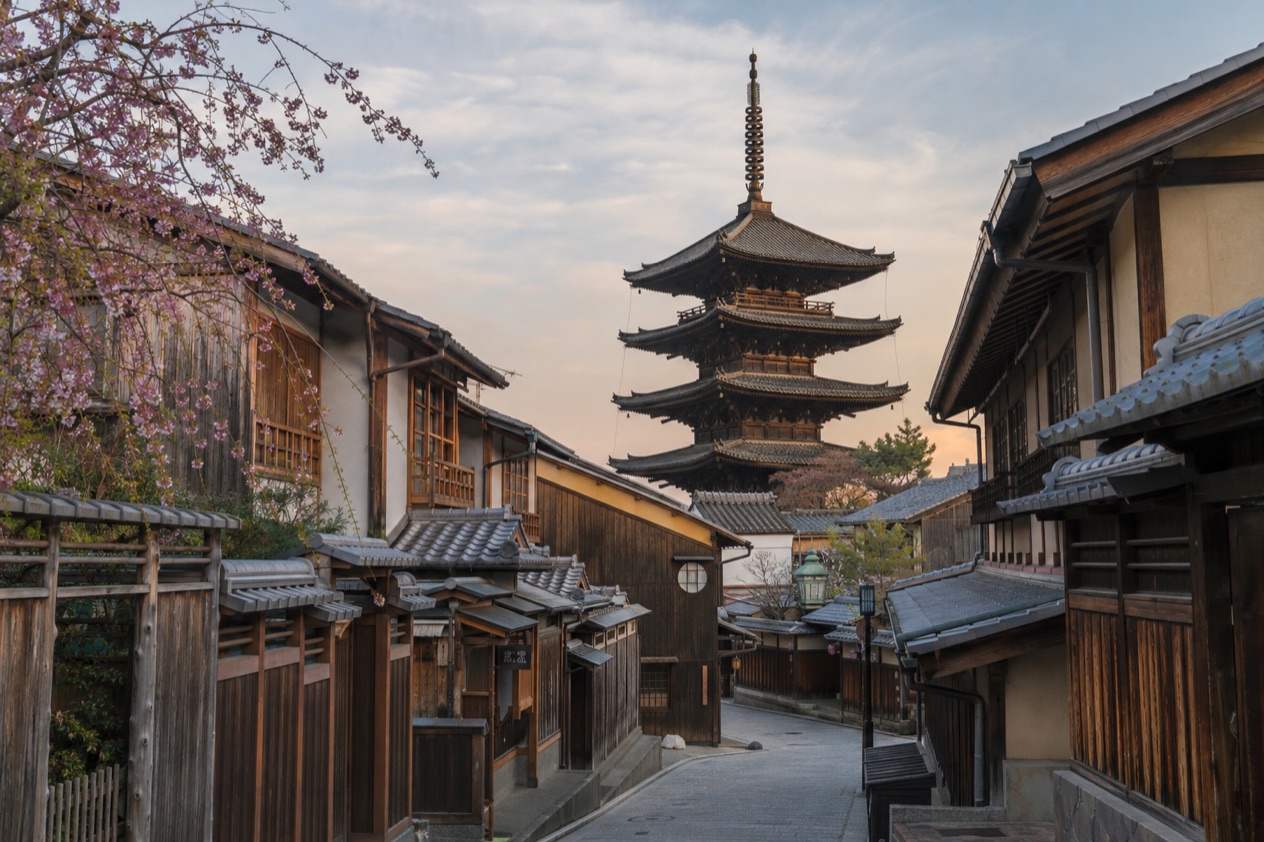
The first morning in Kyoto often starts with the sound of a temple bell drifting over rooftops, and with the smell of grilled tofu and green tea from a shop that has just lifted its shutters. Wooden machiya townhouses line the lanes, and the grid of the old capital makes it easy to feel your way around. Three days is enough to build a rhythm here: a castle and a hillside temple, a golden pavilion and a bamboo grove, and a shrine of red gates with sake and tea to follow.
Is three days enough in Kyoto?
Three days is enough for a first visit, especially for travelers who like to see the big names at an unhurried pace and still leave room for a long lunch. It suits first-timers, couples and friends who want a clear shape to their time and are happy to return someday for the rest. It is less suited to anyone hoping to read every temple plaque or to see Kyoto and several other cities in the same stretch.
In these days you can cover the central and eastern parts of the city, the temples and bamboo of the western side, and the south with its shrine, its sake district and its tea town. That already gives you the castle of the shoguns, a palace of the emperors, a hillside temple, a gilded pavilion and the feel of the geisha districts after dark.
What it leaves out is the north, with the countryside of Keihoku and Miyama and, farther up, the sandbar of Amanohashidate and the boat houses of the fishing village of Ine. It also leaves out the Takao mountains with their temples, and the hot springs and gardens of Ohara. With a fourth or fifth day, those are the places to add, along with a farm stay or a slower afternoon in a teahouse.
Kyoto has a cultural heritage that has grown over the past 1,200 years, and the city was the seat of the emperor for more than a thousand. That depth is the reason to keep each day to a few places rather than a long list.
Day 1 in Kyoto
Begin in the middle of the city with Nijo Castle, a flatland castle built by Tokugawa Ieyasu, the first shogun of the Edo period, in 1603. Inside, the so-called nightingale floors answer every footstep with a bird-like chirp, an old alarm system meant to warn the guards of intruders.
Outside, a landscaped garden and an orchard of ornamental plum trees surround the walls, and the many maples take on exceptional colors in autumn. From there you can continue to the Kyoto Imperial Palace, the home of Japan’s emperors from 1331 to 1869. The Gosho, as it is also called, has stood unoccupied since 1868, when Kyoto lost its status as capital to Tokyo, and its grounds make a good place to slow down before lunch.
For lunch, look for a noodle shop or a small set-meal restaurant in the grid of central streets, a layout modeled on Chang’an, the Tang dynasty capital. In the afternoon, travel to the east side for Kiyomizu-dera, which stands halfway up Mt. Otowa in the Higashiyama range and was founded over 1,250 years ago.
It is part of the Historic Monuments of Ancient Kyoto World Heritage Site. Kyoto City buses and the subway both serve Kiyomizu-dera and Gion, so you can choose between them. Along the lanes that lead up to the temple you will pass shops selling pickles, sweets, ceramics and matcha ice cream, so leave yourself time to browse on the way down.
Evening belongs to Gion, one of the hanamachi districts where geisha live and work. Walk its lanes of dark wooden facades and lantern light, and look for a small restaurant serving kaiseki (a multicourse meal of seasonal dishes) or an izakaya (a casual pub) for grilled skewers and cold beer. Japan’s tourism office suggests visiting shrines at less crowded times, early morning or late in the evening when they are illuminated, so a stop at a shrine after dinner can be a good way to end the day.
Day 2 in Kyoto
Day 2 moves to the temples and bamboo of the west and the hills above the city. Start at Kinkaku-ji, officially Rokuon-ji, where the top two floors of the Golden Pavilion are covered in pure gold leaf and the building doubles itself in the pond in front.
It is one of the seventeen Historic Monuments of Ancient Kyoto on the World Heritage list. Walk the garden path around the pond at your own speed, and finish with a cup of green tea and a sweet at the tea stand near the exit.
Continue to Arashiyama for the afternoon. The Arashiyama Bamboo Grove, also called the Sagano Bamboo Forest, is the walk everyone pictures: tall green stalks that rustle and filter the light.
A rickshaw tour is also on offer around Arashiyama for those who would rather be pulled through the lanes than walk them. For lunch, the lanes here are full of tofu restaurants, soba shops and stands selling croquettes and sweet dumplings, and a bowl of yudofu (simmered tofu) suits the temple setting well.
A bowl of ramen, a tray of tempura or an izakaya meal near your hotel fits well. If you have energy left, Kyoto Tower, a few steps from the main entrance of Kyoto Station and visible across the entire city, makes a simple landmark to aim for. Some travelers use this evening to try a short experience in town, such as a kimono rental in Eastern Kyoto, a session turning your name into kanji and carving a stamp in Central Kyoto, or a samurai experience at Myokakuji Temple with sword fighting taught by a professional actor.
Day 3 in Kyoto
Day 3 heads south, by rail, to a shrine of red gates and two towns of drink. Fushimi Inari Taisha stands at the base of Mount Inari in Fushimi-ku, was established in 711, and is the head shrine of all Inari shrines in Japan.
The trails up the mountain run for 2.5 miles and take about 2 hours to walk up, so you can choose how far to climb. A guided tour of the shrine by DMO Kyoto is a featured activity for those who want some context along the way. Because Japan’s tourism office suggests visiting shrines early in the morning or late in the evening, this is a good place to start the day.
Afterward, southern Kyoto offers two tastes. Fushimi is one of Japan’s three main sake brewing areas, and tasting traditional sake there is part of the visit. Uji is where you drink Japanese tea, often with a dessert of matcha, red beans and soft rice dumplings. Between the two, you have a day that is mostly about slow sipping and walking. Stay as long as you like in either place, then return to the city.
The evening is a good time to stay near Kyoto Station, where a full floor of the station building is given over to ramen restaurants. Isetan department store, a theater and a Granvia hotel share the building, so you can stroll, shop for last gifts and eat in one place after the day’s walking. If you have a little time left, step outside to look up at Kyoto Tower lit against the night sky, then finish with a final walk through the lanes near your hotel.
Where to stay for three days in Kyoto
For this plan, the area around Kyoto Station makes the most practical base. The station is served by the Tokaido Shinkansen, so arrival and departure are simple, and the building itself holds a floor of ramen restaurants, a department store and a theater, which means dinner and a few last purchases are never far. Kyoto Tower stands a few steps from the main entrance, which gives you a landmark to find your way back at night.
Kyoto is split into five main areas: Central, Eastern, Northern, Southern and Western Kyoto, and each has a different mood. If your priority is the evening atmosphere of lantern-lit lanes, Eastern Kyoto, with Gion and the road toward Kiyomizu-dera, is where you might prefer to sleep, and a machiya townhouse or a ryokan (a traditional inn with tatami rooms and often dinner served in your room) suits that mood.
Central Kyoto, with its grid of streets, puts you close to Nijo Castle and the Imperial Palace. Western Kyoto around Arashiyama is for travelers who want mornings among the bamboo and a slower pace, and the Ohara area suits those after rural scenery and hot springs, though it asks for a longer commute into the sights of this plan. For a first visit with three full days, the station area keeps everything within reach and spares you from changing hotels.
What to skip if you only have three days in Kyoto
The first thing to leave for another trip is the far north. Amanohashidate, the sandbar near the Sea of Japan, and the boat houses of Ine fishing village are a long way from the temples of the city, and they would take most of a day just to reach. Spend that day instead on the hills and gardens closer in, where you will see more and rush less.
Second, skip adding a second city. Kyoto connects to major cities across Japan by shinkansen, and the temptation to squeeze in one more name is strong. A single extra day away from Kyoto usually costs you the slower moments, such as a pause in a teahouse or an unplanned walk through a quiet lane, that make the city memorable.
Third, avoid trying to see every temple on the list. Kyoto has so many that the later ones blur together. It works better to choose a few, such as Kiyomizu-dera, Kinkaku-ji and Fushimi Inari, and give each real attention. Use the extra time for a meal you linger over or a stroll through Gion in the evening.
Fourth, hold back on the countryside outings of Keihoku, with its farm stays, and the three Sanbi mountains of Takao. They reward a longer stay with more time and fewer plans. Leave them for a return visit, when you can sleep near them and take the days as they come.
Getting around Kyoto in three days
Much of Day 1 is spent on foot, with a bus or the subway to bridge the gaps. Kyoto City buses and the subway give access to Kiyomizu-dera, Gion and Ginkaku-ji.
The city also runs a Sightseeing Limited Express Bus for visitors, the Kyoto Okazaki Loop Bus, and a sightseeing route called Raku Bus, so the choice of line depends on where you want to go. Visitors holding a JR-WEST RAIL PASS can use the Subway & Bus 1-Day Pass in Kyoto.
For Day 2, the trip to Arashiyama is made by rail or bus, and once there you walk through the grove and the lanes. For Day 3, the trip south to Fushimi, Uji and the sake district is made by rail. Inside the sites themselves, walking is the way to move, and the trail on Mount Inari is the longest stretch of the three days on foot.
An IC card can be used on trains, buses and boats, as well as in vending machines, convenience stores and some taxis. Although most regions have their own cards with different names and characters, these cards can be used throughout Japan.
This means one card can carry you through all three days without stopping at ticket machines. The Japan Rail Pass, offered jointly by six companies of the JR group, is another way to travel by train across the country.
If you arrive from Tokyo, the most direct shinkansen takes about 2 hours and 20 minutes from Tokyo Station to Kyoto. Kyoto Station, served by the Tokaido Shinkansen, is the point where your three days begin and end.
Good to know before you go
Spring and autumn bring pleasant air for walking, with highs in the low 70s in October, while July is warmer and more humid, with more rainy days. A light layer is useful in cooler months, and in winter Kyoto can see snow. Carry a small amount of cash for temple entrances and small shops, and keep an IC card topped up for buses and trains.
Dress for temples that ask you to take off your shoes, and plan a pair of socks that are easy to slip off. For visits to shrines and temples, early in the morning or late in the evening is the time that Japan’s tourism office suggests for less crowded visits.
Sources
- Japan National Tourism Organization, Kyoto (https://www.japan.travel/en/destinations/kansai/kyoto/), checked October 11, 2026
- Kyoto City Official Travel Guide, activities (https://kyoto.travel/en/activities), checked October 11, 2026
- Kyoto City Official Travel Guide, areas (https://kyoto.travel/en/areas), checked October 11, 2026
- Kyoto City Transportation Bureau, bus and subway guide (https://www2.city.kyoto.lg.jp/kotsu/webguide/en/), checked October 11, 2026
- Fushimi Inari Taisha, official site (https://inari.jp/en/), checked October 11, 2026
- Wikipedia, Fushimi Inari-taisha (https://en.wikipedia.org/wiki/Fushimi_Inari-taisha), checked October 11, 2026
- Wikipedia, Kinkaku-ji (https://en.wikipedia.org/wiki/Kinkaku-ji), checked October 11, 2026
- Kiyomizu-dera Temple, official site (https://www.kiyomizudera.or.jp/en/), checked October 11, 2026
- Wikipedia, Kiyomizu-dera (https://en.wikipedia.org/wiki/Kiyomizu-dera), checked October 11, 2026
- Wikipedia, Arashiyama (https://en.wikipedia.org/wiki/Arashiyama), checked October 11, 2026
- Wikipedia, Nijō Castle (https://en.wikipedia.org/wiki/Nij%C5%8D_Castle), checked October 11, 2026
- Wikipedia, Kyoto Imperial Palace (https://en.wikipedia.org/wiki/Kyoto_Imperial_Palace), checked October 11, 2026
- Japan Meteorological Agency (JMA), Normal values 1991-2020, monthly (https://www.data.jma.go.jp/stats/etrn/view/nml_sfc_ym.php?prec_no=61&block_no=47759), station Kyoto, elevation 41 m, checked October 11, 2026
- Japan National Tourism Organization, IC cards, Suica, Pasmo, ICOCA, how to use (https://www.japan.travel/en/plan/ic-card/), checked October 11, 2026
- Japan National Tourism Organization, Japan Rail Pass and regional passes (https://www.japan.travel/en/plan/jr-rail-passes/), checked October 11, 2026
To plan your stay
- Best Time to Visit Kyoto: Cherry Blossoms, Autumn Leaves, Weather by Month and Festivals
- Where to Stay in Kyoto: Kyoto Station, Central and Eastern Districts, and Ryokan Stays
- Kyoto from Tokyo: Shinkansen Trains, Nozomi vs. Hikari and Kodama, and a First Day in Kyoto
- Know Before You Go to Kyoto: Entry, Money, Getting Around and Local Etiquette