
In the first days of January, the New Year’s table in a Hiroshima home is laid with osechi, small lacquered boxes of dishes that each carry a wish for the year ahead. Out in the streets, the trams of Hiroden rattle past bare trees and the river glints under a pale winter sky. Hiroshima in January is a city of memorials, hot griddles and cold-weather comfort food, with the Peace Memorial Park and Miyajima Island at their most contemplative.
What is the weather like in Hiroshima in January?
January in Hiroshima is cold but not harsh, the coldest of the three winter months in the table, with mostly modest rain and the odd flurry of snow or sleet.
| Month | Average high (°F) | Average low (°F) | Precipitation (in) | Days with 1 mm or more of precipitation | Hours of sunshine | Snowfall (in) | Daylight on the 15th |
|---|---|---|---|---|---|---|---|
| December | 53.8 | 39.2 | 2.13 | 5.7 | 141 | 0.8 | 9 h 53 min |
| January | 49.8 | 35.6 | 1.82 | 5.5 | 139 | 1.2 | 10 h 05 min |
| February | 51.6 | 36.3 | 2.52 | 6.9 | 140 | 1.2 | 10 h 56 min |
Afternoons sit in the upper 40s, which is jacket weather with a hat and gloves for long walks along the river. Nights fall to just above freezing, so evenings call for a real coat and a scarf, especially if you linger outdoors after dinner. Rain is less frequent than in February, so pack a compact umbrella for wet days.
Snow or sleet appears on 12 days of an average January, yet the total that settles is small. Snow or sleet can occur, but average total snowfall remains small. Shoes with grip are wiser than fashion boots on wet pavement, and you will want layers you can peel off in heated trams, museums and restaurants.
The sun shines for a respectable stretch of the month, and daylight is short but already growing again after the winter solstice. With about ten hours of daylight, start outdoor sightseeing early and check the museum’s January hours before arranging the day.
What to do in Hiroshima in January
The month opens with the Japanese New Year, celebrated on January 1 since the country adopted the Gregorian calendar. Families eat osechi, a selection of festive dishes packed in tiered boxes, and many visit a shrine in the first days of the year. It is also a stretch when many restaurants and attractions are closed, so the first days of January ask for a flexible plan, with later days returning to full routine.
Winter is when the city turns inward toward warm food and slower walks. Plum trees are the first blossoms of the calendar, as Prunus mume typically flowers from January until late February across East Asia, a faint promise of spring while the air is still cold. Cherry blossoms and autumn color belong to other months, so January is about atmosphere rather than a seasonal spectacle.
The Peace Memorial Park and Museum
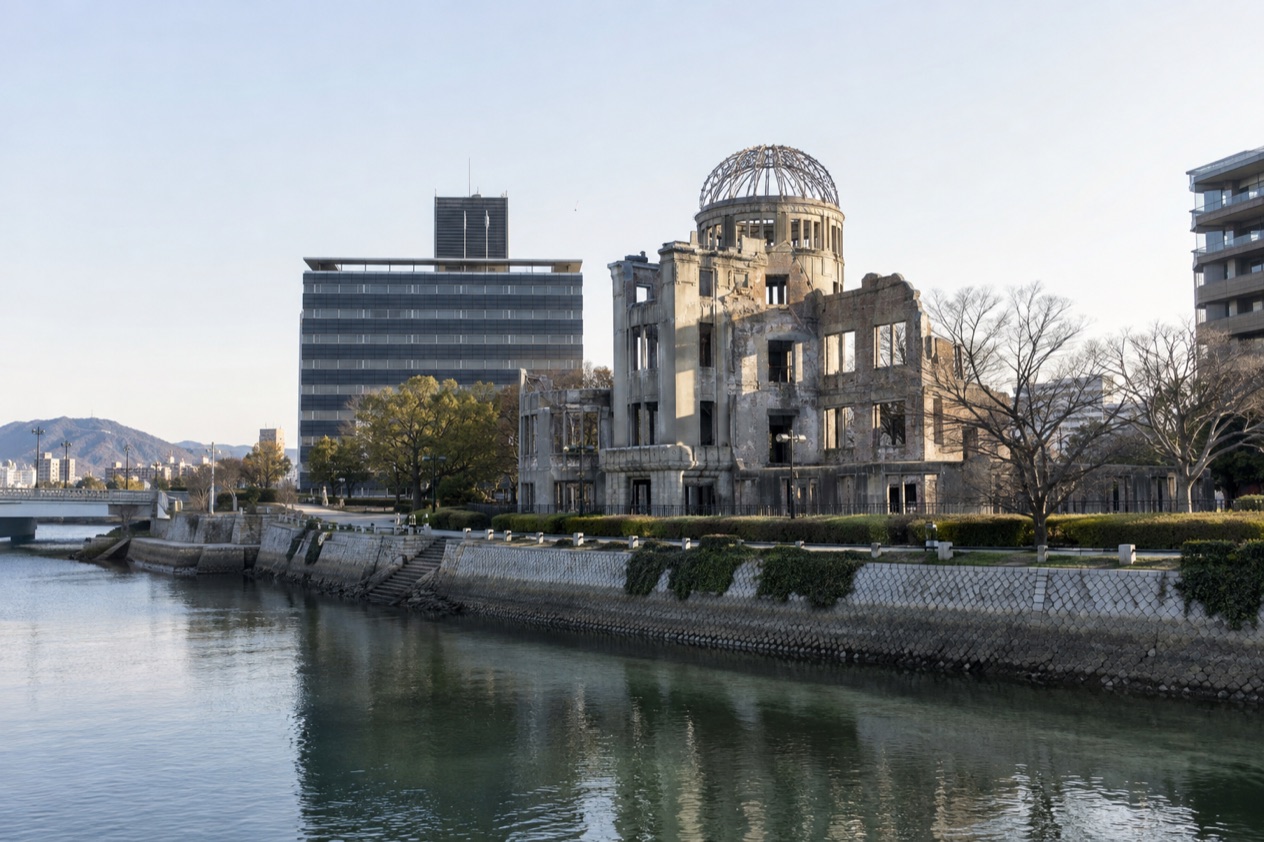
The Peace Memorial Park sits in central Hiroshima and contains the Atomic Bomb Dome, a UNESCO World Heritage Site. The Dome stands within the park and can only be viewed from the outside, which suits a slow walk around its fenced edge on a gray January afternoon, when bare branches frame the skeletal dome.
The Peace Memorial Museum, on Nakajima-cho in the park, conveys the horrors and inhumanity of nuclear weapons through belongings left by victims, A-bombed artifacts and survivor testimonies. The message it spreads is “No More Hiroshimas.” It is a serious visit that takes emotional energy, and in winter it has the added virtue of being indoors when sleet blows in off the street.
| Site | Admission |
|---|---|
| Hiroshima Peace Memorial Museum | ¥200 adults, ¥100 high school students |
Miyajima Island in winter
An excursion to Miyajima Island is the day trip from Hiroshima. Itsukushima Shrine, registered as a World Heritage Site in 1996, has its red torii gate standing in the sea, and the island’s deer wander among visitors on the paths near the shrine. In January the setting reads differently, with winter light on the water and the wooded slopes behind the shrine.
Dress warmly, because the walk between the shrine, the shoreline and the village streets is open to the wind. Hot food is part of the island’s charm in the cold, from grilled seafood to the maple-leaf-shaped cakes called momiji manju, which are sold warm in shops along the lanes.
Okonomiyaki, oysters and winter comfort food
The local version of okonomiyaki is a reason to come at any time of year, and in January a hot griddle counter is the best seat in town. Hiroshima style layers a thin crepe with cabbage, bean sprouts, pork, and noodles, all topped with a fried egg and a sweet-savory sauce. You sit shoulder to shoulder with locals and watch the cook shape each one with a metal spatula.
Oysters from the Seto Inland Sea are a winter specialty of the region, served grilled, fried, in hot pots or stirred into rice. Pair them with warm sake or a cup of hot tea, and finish with a sweet bean treat. Izakaya, the casual Japanese pubs, are the natural place for an evening of small plates when the temperature drops.
Between sights, the Hiroden streetcars are a pleasure in themselves. The company is known as the Moving Streetcar Museum because its fleet includes trams manufactured across Japan and Europe, so riding through the city is a small tour of rolling stock as well as a way to get around.
If you have the energy for a second excursion, Okunoshima is known for its wild rabbits. Visitors there must not chase or pick up the rabbits and should provide appropriate food only in a safe place, a rule that suits a gentle, observing sort of day.
A two-day itinerary for Hiroshima in January
Day 1 stays in the city center. Start at the Peace Memorial Park, dressed in warm layers. Start at the Peace Memorial Park and spend the first part of the morning among its monuments, then walk around the outside of the Atomic Bomb Dome. By midday you will be ready for the museum, which keeps you indoors when the cold sets in, and the visit calls for a slow pace and time to absorb it.
For lunch, find a griddle counter serving Hiroshima-style okonomiyaki, because a hot meal makes the cold afternoon easier. Afterward, hop on a Hiroden streetcar and ride for the pleasure of the old and new trams. Winter daylight is short, so plan to be back indoors by dusk, with an izakaya dinner of grilled oysters and small plates to finish.
Day 2 is for Miyajima Island. Spend the morning at Itsukushima Shrine and the torii standing in the sea, then wander the village lanes among the deer and stop for something hot, such as grilled oysters or a warm momiji manju. The light is soft in winter and the paths are open to the wind, so keep your scarf and gloves close.
If the weather turns to sleet or steady rain, the rain card is easy. Linger over a long lunch, browse the covered shopping streets back in the city, or duck into the museum if you saved it. A sit-down tea and a seasonal sweet in a café can make a gray afternoon feel planned rather than lost.
Is Hiroshima busy in January?
January is a winter month in Hiroshima, without the cherry blossoms of spring or the autumn color that draw crowds to Japan’s cities in other seasons. The mood in the streets is cold-weather steady, with locals out shopping, eating and visiting shrines after the New Year.
The one real disruption is the New Year holiday itself, when many restaurants and attractions are closed. That affects the first days of the month most, and the best approach is to check each place you plan to visit when you build your dates. Once the holiday passes, the usual rhythm returns, with urban shops generally open from 10:00 a.m. to 8:00 p.m. every day.
Japan’s public holiday rules also shape the calendar. When a national holiday falls on a Sunday, the next working day becomes a public holiday, and a day between two national holidays becomes a holiday of its own. These small rules can add a day off for locals and change the pace of a week, so a plan with a little slack works well.
What to pack for Hiroshima in January
Pack for cold, damp days spent outdoors between warm interiors, with layers you can add and remove easily.
- A warm coat, because evenings fall to just above freezing.
- Thin layers and a sweater, for heated trams, museums and restaurants.
- Gloves, a hat and a scarf for the park and the island paths.
- A compact umbrella for light rain and wet sleet.
- Shoes with grip, since flurries and slush can turn pavements slick.
- Easy slip-on shoes, because shoes often come off at the entrance of a ryokan or a restaurant.
Good to know before you go
January falls well outside the typhoon season, but winter has its own character in Hiroshima, with cold nights, light rain and the occasional dusting of snow. The New Year holiday brings closures at many restaurants and attractions, so the opening days of the month deserve a flexible plan and a few backup meals. Public holidays can also shift days off when they fall on a Sunday, and shops outside the cities may close earlier, sometimes as early as 6:00 p.m.
Hiroshima in January vs December and February
Moving the trip four weeks earlier brings milder afternoons, a little more rain and the New Year period, when many restaurants and attractions close. December has the shortest daylight of the three months, while January already begins to add minutes to each day.
Moving four weeks later means more rain days and longer daylight, with the plum blossoms still flowering, since Prunus mume typically blooms until late February. February keeps the winter food, including the oysters, and the New Year closures are long behind you, so it is easier to plan restaurant visits.
Travelers who want to see the city when it is cold and uncluttered by holiday closures might shift to February. Anyone who wants to witness the New Year traditions, with the osechi table and the shrine visits, should stay with early January. Those who prefer the mildest afternoons for walking the park might choose December.
Is January a good time to visit Hiroshima?
Yes, January is a good time to visit Hiroshima for travelers who like cold, thoughtful sightseeing and warm meals, and who do not need blossoms or leaf color to enjoy a city.
It suits travelers who want to devote time to the Peace Memorial Park and Museum between warming meals. It also suits food lovers, with okonomiyaki, oysters and hot izakaya dishes all at home in the cold. Anyone who dislikes cold evenings or wants a beach-and-sunshine trip should look at another month.
On arrival, start with the park and the Dome, then decide on the museum and Miyajima according to the day’s weather. January in Hiroshima has the feel of a city that goes about its winter in a measured way, with steaming griddles, a torii in winter light and a plum branch coming into flower.
Sources
- Japan Meteorological Agency (JMA), Normal values 1991-2020, monthly (https://www.data.jma.go.jp/stats/etrn/view/nml_sfc_ym.php?prec_no=67&block_no=47765), station Hiroshima, elevation 4 m, checked October 11, 2026
- Computed from the date and the latitude of the place (sunrise equation, solar elevation -0.833 degrees), October 11, 2026
- Japan National Tourism Organization, shop and attraction hours, national holidays (https://www.japan.travel/en/plan/business-hours-and-holidays/), checked October 11, 2026
- Wikipedia, Japanese New Year (https://en.wikipedia.org/wiki/Japanese_New_Year), checked October 11, 2026
- Wikipedia, Public holidays in Japan (https://en.wikipedia.org/wiki/Public_holidays_in_Japan), checked October 11, 2026
- Japan National Tourism Organization, winter in Japan (https://www.japan.travel/en/guide/winter-guide/), checked October 11, 2026
- Japan National Tourism Organization, skiing and snowboarding in Japan: regions, resorts, seasons (https://www.japan.travel/en/sports/snow/), checked October 11, 2026
- Wikipedia, Climate of Japan (https://en.wikipedia.org/wiki/Climate_of_Japan), checked October 11, 2026
- Japan National Tourism Organization, weather and seasons in Japan (https://www.japan.travel/en/plan/weather/), checked October 11, 2026
- Japan National Tourism Organization, skiing guide (https://www.japan.travel/en/guide/skiing/), checked October 11, 2026
- Wikipedia, List of ski areas and resorts in Japan (https://en.wikipedia.org/wiki/List_of_ski_areas_and_resorts_in_Japan), checked October 11, 2026
- Japan National Tourism Organization, flowers by season: cherry blossom, plum, wisteria, hydrangea, where and when (https://www.japan.travel/en/see-and-do/flowers/), checked October 11, 2026
- Wikipedia, Prunus mume (https://en.wikipedia.org/wiki/Prunus_mume), checked October 11, 2026
- Japan National Tourism Organization, Hiroshima (https://www.japan.travel/en/destinations/chugoku/hiroshima/), checked October 11, 2026
- Visit Hiroshima, the official guide (https://visithiroshima.net/), checked October 11, 2026
- Hiroshima Peace Memorial Museum (https://hpmmuseum.jp/?lang=eng), checked October 11, 2026
- Wikipedia, Hiroden (https://en.wikipedia.org/wiki/Hiroden), checked October 11, 2026
- Wikipedia, Hiroshima Peace Memorial Park (https://en.wikipedia.org/wiki/Hiroshima_Peace_Memorial_Park), checked October 11, 2026
- Wikipedia, Hiroshima Peace Memorial (Genbaku Dome) (https://en.wikipedia.org/wiki/Hiroshima_Peace_Memorial_(Genbaku_Dome)), checked October 11, 2026
To plan your stay
- Things to Do in Hiroshima: Peace Memorial Park, Miyajima, Okonomiyaki and Day Trips
- Where to Stay in Hiroshima: Peace Park, Station Area, Castle District and Miyajima Island
- Hiroshima from Osaka: Shinkansen, Local Trains and a Day at the Peace Park
- Know Before You Go to Hiroshima: Entry, Money, Getting Around and Local Etiquette