
In July, Hakone is wrapped in a warm, damp haze, and the steam rising from the sulphur vents at Owakudani blends into the low cloud that drifts over the ridges. Cedar slopes drip, cold noodles replace hot bowls at lunch, and a soak in an outdoor onsen (a natural hot spring bath) feels like a small act of defiance against the humidity. This is a mountain resort town in Kanagawa Prefecture at the height of its green season, and the month suits travelers who like lakes, ropeways, art and baths over blue skies and long views.
What is the weather like in Hakone in July?
July in Hakone is hot, humid and wet, with warm days at the foot of the mountain and noticeably heavier rain higher up.
| Month | Average high (°F) | Average low (°F) | Precipitation (in) | Hours of sunshine | Daylight on the 15th |
|---|---|---|---|---|---|
| June | 77.4 | 64.4 | 8.63 | 130 | 14 h 31 min |
| July | 84.2 | 71.6 | 8.50 | 163 | 14 h 20 min |
| August | 87.1 | 73.4 | 6.58 | 202 | 13 h 32 min |
At Odawara, nights stay warm enough that you never reach for a sweater once the sun is down, and the humidity means a walk uphill leaves your shirt damp. Summers across Honshu are sultry, and Hakone is no exception, so it helps to plan the day around a few stops where you can cool off indoors, in a museum, a café or a bathhouse.
The rain is the real story of the month. On the mountain side of Hakone, a July can bring more than 16 inches, about double what falls at the foot of the hills.
Expect drizzle, long gray spells and the occasional downpour, and expect cloud to settle over the crater lake and the ridges. A good umbrella or a light rain jacket matters more than a sunhat, although the sunshine totals show that bright stretches do arrive.
The light is long in July. The evenings stretch well past dinner, which leaves time for a late stroll around the lake or a final soak before bed. Dress in thin, quick-drying layers for the heat and carry one light layer for the higher, cloudier spots along the ropeway, where the air feels cooler than in town.
What to do in Hakone in July
Hakone is built around a loop of lake, volcano, train and ropeway, and July suits it because most of the loop moves you through green, cloud-draped scenery that looks best when it is damp. The town is known for its hot springs and for views of Mount Fuji, which are a bonus here rather than a promise, since summer haze and cloud sometimes hide the peak. Mount Fuji’s own climbing season opens at the start of July, so the mountain is in the conversation all month, even when you only glimpse it from a window.
The food of the season is cool and light. Look for chilled soba and somen noodles with dipping sauce, shaved ice flavored with syrup, and bottled fizzy ramune from a gift shop.
Hakone-Yumoto, the gateway town, is known for its many restaurants and gift shops, and it is a pleasant place to browse for yosegi-zaiku, the geometric wooden marquetry that the region is known for. Odawara, at the foot of the hills, is associated with kamaboko, the steamed fish paste sold in neat loaves.
Lake Ashi and the sightseeing cruise
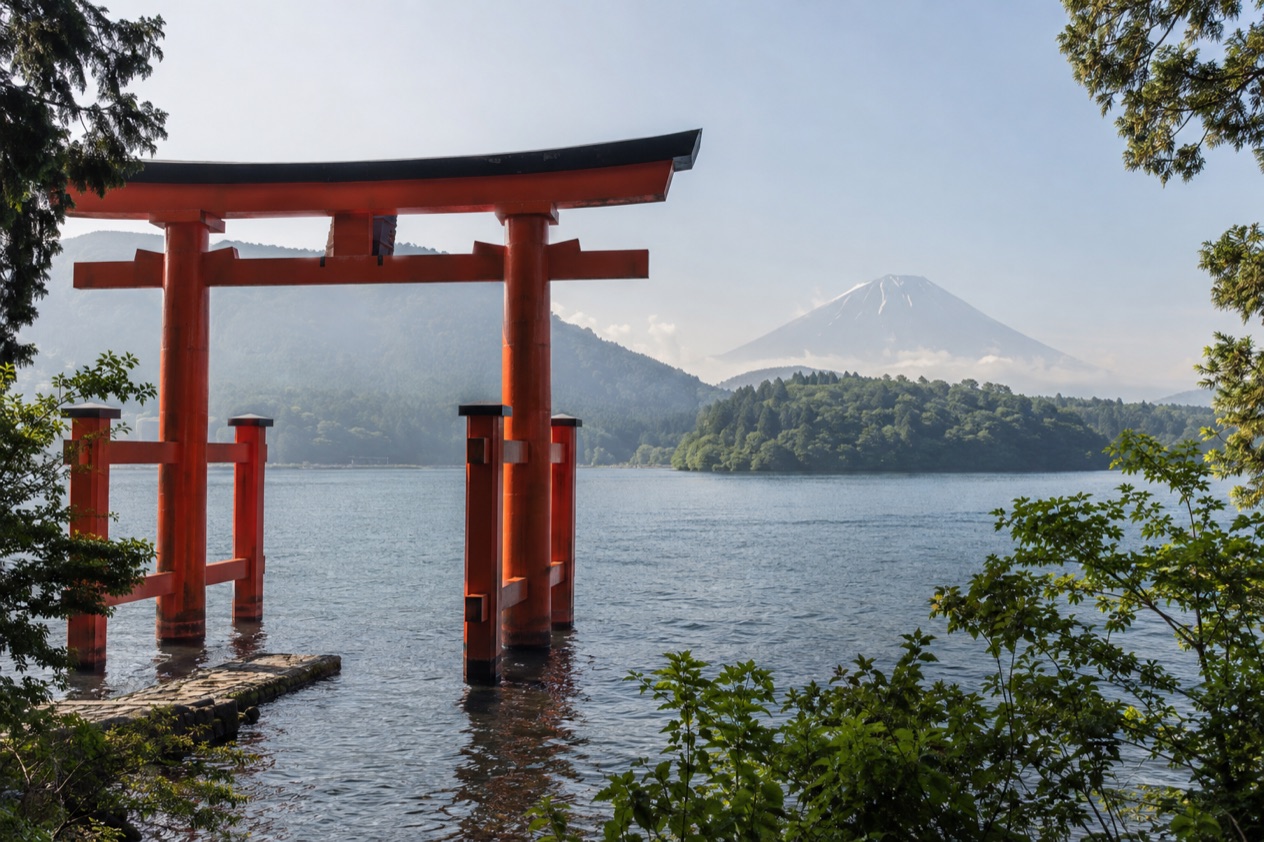
Lake Ashi, a crater lake in the heart of the national park, is the scenic center of Hakone, and a boat is the obvious way to see it. The Hakone Sightseeing Cruise is one of the eight forms of transport covered by the Hakone Freepass, and the vessels are styled like old sailing ships, which children tend to love. On the water you drift past wooded shores, with the red torii of Hakone Shrine standing at the edge of the lake.
In July the lake takes on the mood of the weather. On a clear stretch the surface is bright and the shoreline sharp, and on a gray day the hills fade into layered silhouettes, almost like an ink painting. Either way the deck is a cool place to spend a humid hour. Bring a light jacket, because the breeze across the water can feel cooler than the town.
Toward the end of July, Hakone Shrine is associated with a lake festival, with lanterns set on the water in the evening. If your dates match, it adds a quiet, luminous moment to the trip. Even without it, the shrine’s cedar grounds are a shady place to walk when the sun is out.
Owakudani and the Hakone Ropeway
Owakudani is a volcanic valley with active sulphur vents and hot springs, and it is the most dramatic sight in Hakone. The Hakone Ropeway links Sounzan and Togendai by way of Owakudani, so the valley appears under your feet as you glide over it. You smell the sulphur before you see the steam, and the bare yellow and gray ground contrasts sharply with the green hills around it.
The local snack is the black egg, boiled in the hot spring water until the shell turns dark. Visitors say it prolongs life, and eating one has become a ritual of the stop. In July, the warm air makes the steam feel heavier, and cloud can drift through the valley and veil the vents, so the scene shifts from minute to minute. When the weather clears, the ropeway can offer wide views toward the mountains.
Art museums in the rain
A wet July afternoon is the right moment for Hakone’s museums. The Hakone Open-Air Museum, Japan’s first open-air museum, opened in 1969 and sets sculpture across green hillsides. The grounds look lush in summer, and a passing shower only deepens the colors of the bronze and steel. Sengokuhara, a district filled with art museums, offers more rooms to duck into when the sky closes in.
Pair a museum visit with a break at a café, then a walk through the nearby fields and slopes when the rain eases. This combination gives the day an unhurried rhythm, with indoor and outdoor hours alternating. It suits couples, solo travelers and families whose children get restless in a long onsen afternoon.
Soaking in an onsen in summer
Hakone is renowned for its natural hot springs, and a soak is still the point of the trip, even in July. In summer, people often keep the bath brief, then cool off on the veranda with a glass of cold barley tea. Outdoor baths open to the sound of rain on leaves and the smell of wet cedar, which many travelers find more atmospheric than a dry evening.
A stay in a traditional ryokan adds a multi-course dinner served in the room or dining hall, a yukata (cotton robe) to wear around the building, and futons laid out on tatami while you are at dinner. The Hakone Freepass “Hako Ticket” Plus pairs the transport pass with access to applicable art museums, hot springs and activity facilities.
A two-day itinerary for Hakone in July
Day 1 is the classic loop. Start in Hakone-Yumoto with a coffee and a look at the gift shops, then board the Hakone Tozan Train into the hills.
The mountain railway climbs through forest that glows green in July, and if hydrangeas are still hanging on from the rainy season, you may see a few along the line. Aim to be at the Open-Air Museum by late morning, while you have energy for the outdoor sculptures.
After a lunch of cold noodles near the museum, ride the ropeway from Sounzan across Owakudani, stopping for black eggs and the smell of sulphur. Continue to Togendai and take the lake cruise.
Because July evenings stay light, you can finish with a slow walk along the shore, then dinner at your ryokan or a restaurant in town. If the rain sets in, spend the afternoon in the museum and skip the open stretches of the loop.
Day 2 turns to the lake’s edge and the art districts. Begin at Hakone Shrine and its red torii, a calm start for a humid morning, then wander the cedar-lined path nearby. Lunch can be a bowl of chilled soba at a small restaurant in town, followed by Sengokuhara, where the art museums give you a cool, covered stretch in the heat.
Spend the late afternoon in an onsen, either at your ryokan or at a bathhouse, and finish with a quiet dinner. For a rainy day, build the whole of day 2 around the museums and baths, and add a stop for yosegi-zaiku crafts in Hakone-Yumoto before heading home.
Is Hakone busy in July?
Hakone is a popular destination for its hot springs, views of Mount Fuji and closeness to Tokyo, and July sees visitors drawn by the green season and the start of the Mount Fuji climbing season. The humidity and rain shape the pace more than any single event, so days tend to be built around indoor stops rather than rushed sightseeing.
The Hakone Freepass offers unlimited rides on eight modes of transport, including the Hakone Tozan Train, the Hakone Ropeway and the sightseeing cruise. The “Hako Ticket” Plus version is valid for 2 days or 3 days, which matches the way most itineraries here break into a loop and a second, slower day. A version with an Odakyu Line ticket includes one return trip between the departure station and Odawara Station.
In July, the sense of the place is quiet and misty when the clouds come down, then suddenly bright when they lift. Walking around the lake or through Sengokuhara you may find stretches of road to yourself. The transport loop is the part of the trip that feels busiest, because everyone is moving between the same few stops.
What to pack for Hakone in July
Think in terms of heat, humidity and showers, with a few comforts for the baths and boats.
- A compact umbrella or a light rain jacket, since showers are common on the mountain side.
- Thin, quick-drying clothes, which cope with the humid air and a damp walk.
- One light layer for the ropeway and the lake, where the breeze feels cooler.
- A sunhat and sunscreen for the brighter spells.
- Comfortable shoes with grip for wet paths and museum grounds.
- A small towel for hot spring visits and for wiping off after rain.
Good to know before you go
July is a humid, wet month in Hakone, so plan for rain at any point and keep an indoor backup for each day. Visitors staying at a traditional ryokan should plan to arrive at least one day after landing in Tokyo, to avoid missing dinner or being locked out at curfew time. Mount Fuji’s climbing season typically runs from the beginning of July to about the first week of September, and the climbing season for Mt. Fuji ends on September 10th, so the mountain’s own season is just opening as July begins.
Hakone in July vs June and August
Moving the trip four weeks earlier, to June, brings cooler days, less sunshine and a similar amount of rain at the foot of the hills. The mountain still has its green, damp feel, and any hydrangeas along the rail line are more likely to be in bloom. It is a good choice for travelers who prefer a milder, moodier atmosphere over heat.
Moving four weeks later, to August, brings the hottest and sunniest of the three months, with less rain at the foot of the hills, shorter days and the summer festival season in full swing, including fireworks over the lake. The extra sunshine helps lake and ropeway views, but the heat is more intense, so it suits travelers who cope well with warm weather.
Choose July if you want the middle ground, with warm days, a mix of cloud and sun, and the start of Mount Fuji’s climbing season. Shift to June for cooler air and to August for sunshine and fireworks.
Is July a good time to visit Hakone?
Yes, July is a good time for travelers who enjoy lakes, hot springs and art and who are comfortable with humid, changeable weather. It rewards people who treat the rain as part of the scenery, and who like to alternate a ropeway ride or a lake cruise with a museum and a long soak.
It is less suited to travelers who need guaranteed clear views of Mount Fuji, or who dislike heat and damp. If that describes you, another month will serve better. On arrival, start with the loop of train, ropeway and cruise while the sky allows, and save the museums and baths for the wetter hours. What makes July in Hakone special is the way the mountain gets hidden and revealed, with steam from Owakudani merging into low cloud and then clearing to show green hills.
Sources
- Japan Meteorological Agency (JMA), Normal values 1991-2020, monthly (https://www.data.jma.go.jp/stats/etrn/view/nml_amd_ym.php?prec_no=46&block_no=1008), station Odawara, elevation 14 m, checked October 11, 2026
- Computed from the date and the latitude of the place (sunrise equation, solar elevation -0.833 degrees), October 11, 2026
- Japan National Tourism Organization, weather and seasons in Japan (https://www.japan.travel/en/plan/weather/), checked October 11, 2026
- Wikipedia, Climate of Japan (https://en.wikipedia.org/wiki/Climate_of_Japan), checked October 11, 2026
- Japan National Tourism Organization, summer in Japan (https://www.japan.travel/en/guide/summer-guide/), checked October 11, 2026
- Japan National Tourism Organization, festivals and events (https://www.japan.travel/en/see-and-do/festivals-and-events/), checked October 11, 2026
- Wikipedia, Hanabi (https://en.wikipedia.org/wiki/Hanabi), checked October 11, 2026
- Wikipedia, Gion Matsuri (https://en.wikipedia.org/wiki/Gion_Matsuri), checked October 11, 2026
- Japan National Tourism Organization, Mount Fuji guide (https://www.japan.travel/en/fuji-guide/), checked October 11, 2026
- Official website for Mt. Fuji climbing, about the climb (https://www.fujisan-climb.jp/en/about/), checked October 11, 2026
- Wikipedia, Tanabata (https://en.wikipedia.org/wiki/Tanabata), checked October 11, 2026
- Japan National Tourism Organization, Hakone (https://www.japan.travel/en/destinations/kanto/kanagawa/hakone-and-around/), checked October 11, 2026
- Hakone Tourist Information (https://www.hakonenavi.jp/international/en/), checked October 11, 2026
- Wikipedia, Hakone, Kanagawa (https://en.wikipedia.org/wiki/Hakone,_Kanagawa), checked October 11, 2026
- Wikivoyage, Hakone (https://en.wikivoyage.org/wiki/Hakone), checked October 11, 2026
- Wikipedia, Hakone Open-Air Museum (https://en.wikipedia.org/wiki/Hakone_Open-Air_Museum), checked October 11, 2026
- Wikipedia, Hakone Ropeway (https://en.wikipedia.org/wiki/Hakone_Ropeway), checked October 11, 2026
- Wikipedia, Ōwakudani (https://en.wikipedia.org/wiki/%C5%8Cwakudani), checked October 11, 2026
- Wikipedia, Lake Ashi (https://en.wikipedia.org/wiki/Lake_Ashi), checked October 11, 2026
To plan your stay
- Things to Do in Hakone: Lake Ashi, Owakudani, Open-Air Museum and Hot Springs
- Where to Stay in Hakone: Hakone-Yumoto, Lake Ashi, Sengokuhara and Ryokan Stays
- Hakone from Tokyo: Romancecar, Shinkansen, Local Trains and the Hakone Freepass
- Know Before You Go to Hakone: Getting There, the Freepass, Weather and Etiquette