
A June day in Hakone can begin with mist lying in the folds of the hills and the smell of sulfur drifting off the volcanic slopes. Steam rises from outdoor baths, the little mountain train winds through green cuttings, and the plants along the track look washed and glossy. Hakone is a spa town and national park west of Tokyo, and June suits travelers who like soft light, long soaks in hot water and museums to duck into when the clouds come down.
What is the weather like in Hakone in June?
June in Hakone is warm and damp, and clearly wetter than May, with summer heat arriving by the end of the month.
| Month | Average high (°F) | Average low (°F) | Precipitation (in) | Hours of sunshine | Daylight on the 15th |
|---|---|---|---|---|---|
| May | 73.0 | 56.8 | 7.17 | 182 | 14 h 00 min |
| June | 77.4 | 64.4 | 8.63 | 130 | 14 h 31 min |
| July | 84.2 | 71.6 | 8.50 | 163 | 14 h 20 min |
Up on the mountain side of Hakone, an average June brings about 16.55 inches of precipitation. That is the number to keep in mind when you plan a ropeway ride or a lakeside walk, because the hills catch cloud and rain that the lowland town only partly feels. Bring a rain jacket or a compact umbrella and treat a dry stretch as a bonus.
June is also the dimmest of the three months for sunshine, so the light tends to be soft and silvery rather than bright. That softness flatters the green of the cedar forests and the surface of the lake, though a view of Mount Fuji is a chance and not a promise. Daylight lasts well into the evening, which leaves room for a late stroll after dinner.
Dress in light layers: a cotton shirt for the warm lowland, a thin sweater or fleece for the hills, and shoes that handle wet pavement and damp stone steps. Humidity is part of the month, so quick-drying fabrics beat heavy denim.
What to do in Hakone in June
June is the month when Japan’s damp weather turns the landscape lush, and Hakone is a place built for it. Hydrangeas, a flower tied to the wet months in Japan, suit the mood of the hillsides, and the national park around Lake Ashi looks its greenest. Hydrangea serrata even gives its name to ama-cha, a sweet herbal tea made from its leaves, a small local-flavored curiosity if you come across it in a shop or tea room.
The month rewards a slow rhythm: a soak, a museum, a boat ride, a long dinner. The pattern of rain and cloud makes indoor stops welcome, and Hakone has many of them. Hakone-Yumoto, the town where many visits begin, is known for its restaurants and gift shops, a good place to wander when a shower passes through.
Hot springs and ryokan evenings
Hakone is known for its natural hot springs, and June is a fine month to use them. Warm mineral water feels especially good when the air has a damp edge, and an outdoor bath under a gray sky, with rain tapping on the leaves, is one of the month’s real pleasures. Views of Mount Fuji from a bath are part of the area’s reputation, though the mountain keeps its own schedule.
A night in a traditional ryokan is the classic way to fit this in. Guests change into a yukata (a light cotton robe), shoes come off at the entrance, and dinner is a multicourse meal of seasonal dishes served in the room or a dining hall. Ryokan have their own dinner and curfew times, which is why visitors staying in one are advised to arrive at least a day after landing in Tokyo.
Lake Ashinoko and the transport that crosses it
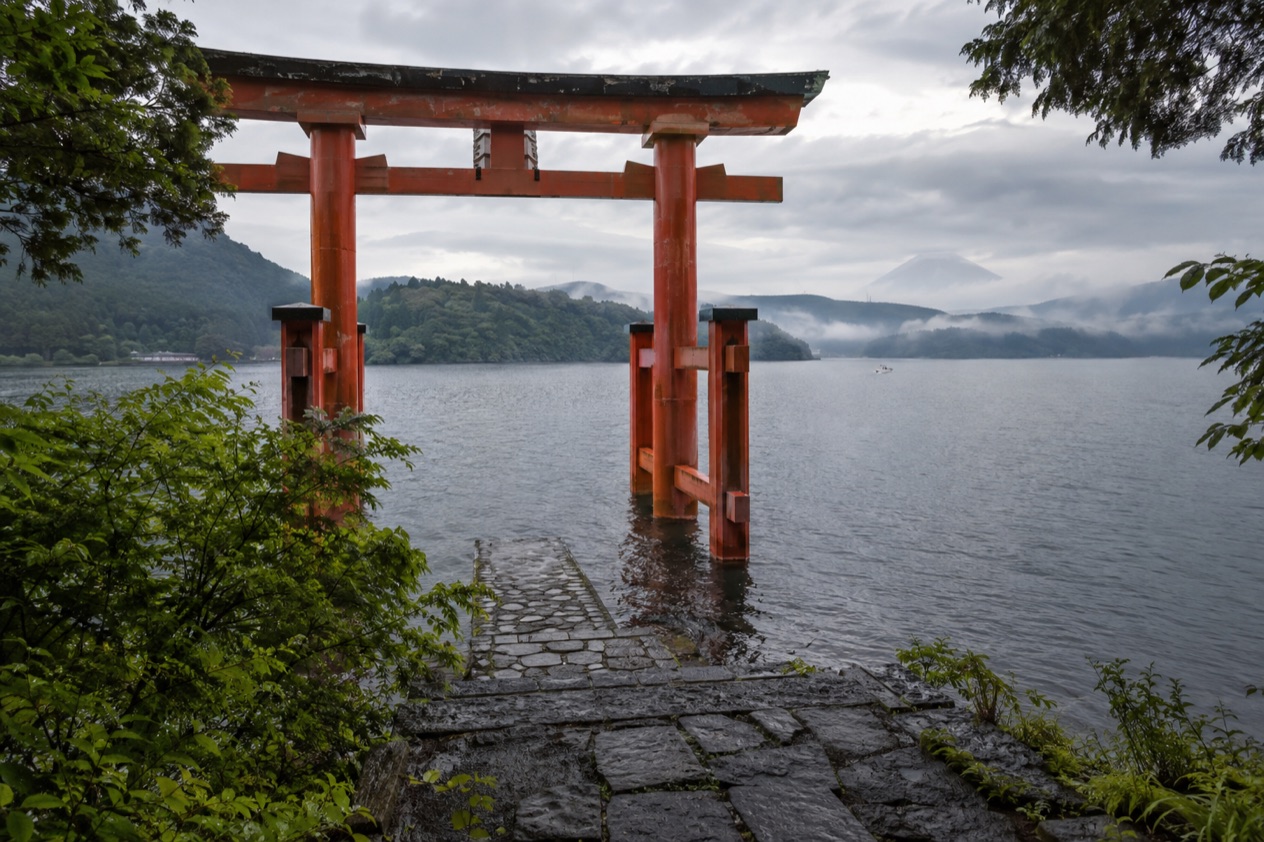
Lake Ashinoko, also called Lake Ashi, is the center of the national park, and exploring it by boat is one of the signature Hakone outings. The Hakone Sightseeing Cruise is one of the eight modes of transport covered by the Hakone Freepass, alongside the Hakone Tozan Train and the Hakone Ropeway. In June the shoreline is thick with green, and cloud often sits low on the surrounding ridges, which gives the lake a moody, painterly look.
The Freepass gives unlimited rides on those eight kinds of transport, so you can hop between train, ropeway and boat as the weather changes your mind. The Hako Ticket Plus adds unlimited use of applicable art museums, hot springs and activity facilities, and is valid for 2 days or 3 days. A version with an Odakyu Line ticket includes one return trip between the departure station and Odawara Station.
Owakudani and the volcanic landscape
Hakone sits within the volcanically active Fuji-Hakone-Izu National Park, and Owakudani is where that fact becomes visible and smellable. Visitors come to taste Owakudani’s black eggs, boiled in the hot springs until the shell turns dark, and said to prolong life. Eating one, with its slight sulfur note, is a small ritual that most people enjoy more for the story than for the flavor.
Clouds and steam can mingle here, so a June visit may feel more like walking through a stage set than looking at a postcard. Wear shoes with grip, keep a layer in your bag, and treat any clear view as a gift.
Art museums and the open-air museum
Rainy hours are well spent in Sengokuhara, a district filled with art museums. Galleries, sculpture and quiet cafés make it a natural counterpart to the outdoor sights, and June’s softer light is kind to the gardens around them.
Hakone is also home to what is described as Japan’s first open-air museum, where art installations stand in the open air. Walking among them in a damp, green month means the sculptures are framed by wet leaves and mist, a very different feeling from a bright day. Bring a light waterproof layer and plan to be outdoors between showers.
A two-day itinerary for Hakone in June
Day 1 begins in Hakone-Yumoto, where the area’s trains and shops gather. Wander the restaurants and gift shops while the day warms, then ride the Hakone Tozan Train up into the hills. Spend midday and the early afternoon around Lake Ashinoko, on a boat cruise, with a light lunch from a lakeside café or noodle shop. If cloud sits low, the lake still looks atmospheric, and the Freepass lets you switch plans.
With daylight lasting well into the evening, you have time for a slow return to your lodging, a hot-spring soak and a ryokan dinner. If rain sets in for the whole afternoon, trade the boat for a museum stop and go straight to the baths.
Day 2 turns to the volcanic side of Hakone. Start with Owakudani and its black eggs, then take the Hakone Ropeway, which is one of the eight transport modes in the pass. Midday suits a meal among the art museums of Sengokuhara, a district that keeps you indoors if showers arrive.
In the afternoon, visit the open-air museum and walk its sculptures between showers. End the day with a last soak or a leisurely dinner in town. If the weather is heavy, stay with galleries and a long bath, and let the rain do the scenery.
Is Hakone busy in June?
Hakone draws steady visitors in June, since it is extremely popular for its closeness to Tokyo and its views of Mount Fuji. The month does not bring the headline draw of cherry blossoms or autumn leaves, so the mood is that of a working spa town in its green season, with the damp weather shaping the pace.
Rain tends to thin the number of people walking the lakeshore and ridge paths, while the indoor places, such as museums, restaurants and baths, keep their rhythm. Mount Fuji’s climbing season typically begins at the start of July, so June comes just before that rush in the wider region.
Ryokan are where timing matters most. Visitors staying in a traditional inn are advised to arrive at least a day after landing in Tokyo, to avoid missing dinner or being locked out at curfew time. That habit of the ryokan, with fixed dinner hours and a closing time at the door, sets the evening rhythm in Hakone more than any crowd does.
What to pack for Hakone in June
Pack for warm, damp days with cooler pockets in the hills, and for moving between outdoor views and indoor stops.
- A light rain jacket or compact umbrella, because the mountain side of Hakone gets heavy rain.
- Quick-drying shirts, since humidity makes cotton and denim cling.
- A thin sweater or fleece for the hills, the lake and cooler evenings.
- Shoes with grip for wet stone steps and steaming volcanic ground at Owakudani.
- A small towel for the baths and for wiping off after showers.
- A light bag with a waterproof liner for your camera or phone.
Good to know before you go
June is damp, and the mountain side of Hakone gets far more rain than Odawara at its foot, so build in indoor stops and keep your days loose. Staying in a ryokan means dinner at a set time and a closing time at the door, so arrive with room in the schedule. Hakone-Yumoto is known for its restaurants and gift shops, a useful place for a meal or a purchase before heading up into the hills.
Hakone in June vs May and July
Moving the trip to May means drier, brighter days, with considerably more hours of sunshine and noticeably cooler nights. The hills are less sodden, and the lake and ropeway are less likely to disappear into cloud. You lose the hydrangea-and-mist mood of June, and the evenings are a little shorter.
July is hotter and sultrier, in line with the humid summers of Honshu, with high temperatures in the mid-80s at the foot of Hakone. The mountain side stays about as wet as in June. Mount Fuji’s climbing season typically begins around the start of July, which adds a reason to be in the region for those with that goal.
Choose May if you want clearer skies and cool walking weather. Choose June for green hillsides, soft light and an unhurried spa trip built around baths and museums. Choose July if you want the full warmth of summer and the start of Fuji’s climbing season, and you don’t mind humidity.
Is June a good time to visit Hakone?
Yes, June is a good time for travelers who like a gentle, damp-green mood and are happy to build a trip around hot springs, museums and boat rides. It suits people who treat a gray sky as part of the scenery and who enjoy a ryokan evening more than a checklist of viewpoints.
Choose another month if clear Fuji photographs are the main goal, or if you dislike humidity and a wet-weather plan B. On arrival, sort out your transport first: the Hakone Freepass covers eight modes of transport, including the Tozan Train, the Ropeway and the Sightseeing Cruise, so you can change plans with the weather.
What makes June in Hakone its own is the combination of steam and mist. Hot water, wet green hills and a lake half hidden in cloud give the month a quiet, atmospheric character that sunnier seasons don’t share.
Sources
- Japan Meteorological Agency (JMA), Normal values 1991-2020, monthly (https://www.data.jma.go.jp/stats/etrn/view/nml_amd_ym.php?prec_no=46&block_no=1008), station Odawara, elevation 14 m, checked October 11, 2026
- Computed from the date and the latitude of the place (sunrise equation, solar elevation -0.833 degrees), October 11, 2026
- Japan National Tourism Organization, weather and seasons in Japan (https://www.japan.travel/en/plan/weather/), checked October 11, 2026
- Wikipedia, Climate of Japan (https://en.wikipedia.org/wiki/Climate_of_Japan), checked October 11, 2026
- Japan National Tourism Organization, flowers by season: cherry blossom, plum, wisteria, hydrangea, where and when (https://www.japan.travel/en/see-and-do/flowers/), checked October 11, 2026
- Wikipedia, Hydrangea (https://en.wikipedia.org/wiki/Hydrangea), checked October 11, 2026
- Japan National Tourism Organization, summer in Japan (https://www.japan.travel/en/guide/summer-guide/), checked October 11, 2026
- Japan National Tourism Organization, Hakone (https://www.japan.travel/en/destinations/kanto/kanagawa/hakone-and-around/), checked October 11, 2026
- Hakone Tourist Information (https://www.hakonenavi.jp/international/en/), checked October 11, 2026
- Wikipedia, Hakone, Kanagawa (https://en.wikipedia.org/wiki/Hakone,_Kanagawa), checked October 11, 2026
- Wikivoyage, Hakone (https://en.wikivoyage.org/wiki/Hakone), checked October 11, 2026
To plan your stay
- Things to Do in Hakone: Lake Ashi, Owakudani, Open-Air Museum and Hot Springs
- Where to Stay in Hakone: Hakone-Yumoto, Lake Ashi, Sengokuhara and Ryokan Stays
- Hakone from Tokyo: Romancecar, Shinkansen, Local Trains and the Hakone Freepass
- Know Before You Go to Hakone: Getting There, the Freepass, Weather and Etiquette