
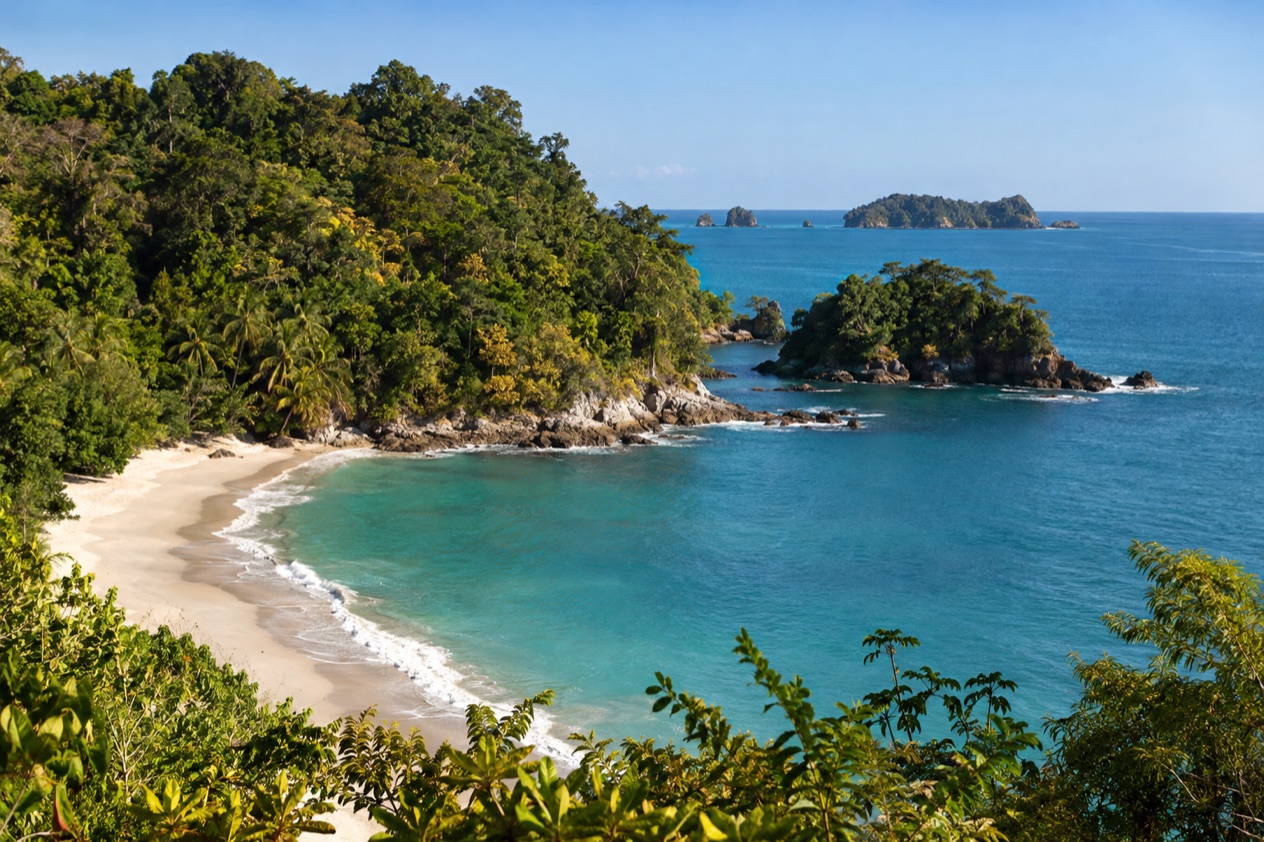
At first light, ahead of the building warmth, howler monkeys croak and toucans clatter in the woods back of Manuel Antonio, while gold light angles down past the trees to the sand. February is one of the drier months of the year here, with the worst of the rains behind and the sea warm enough to walk into without a thought. It suits travelers who want beach mornings, wildlife walks and long evenings on a hillside terrace.
What is the weather like in Manuel Antonio in February?
February sits deep in the season that runs roughly December to April, when rain arrives as short showers or the odd wetter spell. The table puts it between a wetter January and a slightly warmer March.
| Month | Average high (°F) | Average low (°F) | Rain days | Sea (°F) |
|---|---|---|---|---|
| January | 80.4 | 71.1 | 19.6 | 85.7 |
| February | 81.7 | 72.3 | 12.7 | 86.8 |
| March | 82.7 | 73.4 | 14.6 | 87.2 |
Mornings are the best hours for anything that involves walking. The air is warm but not yet heavy, the trails in the park are most alive, and the light on the beaches is clear and bright. By midday the sun is strong and the humidity builds, which is the moment to be in the water or in the shade of a restaurant terrace.
Rain in February is far less of a daily event than it was a month earlier. When it comes, it tends to arrive as a short shower or a late-afternoon cloudburst over the hills, and most days still leave long stretches of sun.
Rain days are fewer, and a downpour of an inch or more is rare. Evenings stay warm enough for shorts and a light shirt, and nights are mild enough to eat outside.
Dress for sweat and sun: light, quick-drying clothes, a hat, and sunscreen. Daylight lasts nearly twelve hours in mid-February, so sunrise comes early and dusk falls by early evening, a rhythm that favors early starts and an unhurried sunset drink.
Can you swim in Manuel Antonio in February?
Yes, you can take your time and enjoy a lingering, easygoing dip in water that is comfortably warm, and stepping in won’t require you to steel yourself. In recent years, the surface water has felt like the mid-80s, just like the sea.
Outside the park gate, the long public beach of Playa Espadilla is wider and more open, with more room for walking, surfing lessons and a spot under the almond trees. Conditions change with tides and swells, so the water may be gentle one day and livelier the next.
Rip currents pose a serious threat, leading to multiple drownings among U.S. tourists annually, while lifeguards and warnings about hazardous conditions are absent at most beaches. Ask locally about the day’s conditions, stay near other swimmers, and keep children close at hand. Bring a rash guard for sun.
What to do in Manuel Antonio in February
The month belongs to the outdoors. With fewer rainy afternoons than January, the park trails, the beaches and the viewpoints above the bay all come into their own, and the days have a natural rhythm: forest early, sea at midday, sunset from a hillside.
Walking in Manuel Antonio National Park
The park sits just south of Quepos and is one of the most visited in the country, which is no accident. Short forest trails wind from the entrance down to small beaches, and white-faced capuchin monkeys, squirrel monkeys, raccoons and sometimes sloths turn up along the way. Wildlife is a chance, never a promise, but the odds improve with a naturalist guide whose trained eyes pick out a sloth curled in a canopy.
Go early. The cooler hours are better for walking, animals are more active, and the heat of midday is better spent at the water. Reserve your park entry through SINAC before you map out your day.
The walk reaches beaches inside the park, where a rest under the trees makes a welcome reward. Pack water, a hat and a small dry bag for your phone.
Beach days at Playa Espadilla
Outside the park gate, Playa Espadilla is a long, open beach where surf schools set up along the sand and vendors sell fresh coconut water. It is where you go for a wide-open afternoon: a surf lesson in the morning when the water is often friendlier, a long beach walk, then a cold drink in a beach bar.
The shore is long and the water has a pull, so swim near other people and mind the flags where there are any. Sunset here turns the sky orange behind the headlands and draws a modest crowd every evening.
Food, drink and the hillside evenings
February is a good month for eating outside. Ask for a casado, the standard Costa Rican midday meal, which comes with rice, beans, plantain, salad and your pick of fish, chicken or beef. Along the coast, fresh ceviche, whole fried fish and pineapple and mango smoothies suit the heat. Gallo pinto, the rice and beans mixed with spices, is the breakfast to match a morning walk.
Restaurants strung along the road between Quepos and the park open onto the forest, and a table at dusk gives you both a view and the sound of the jungle waking up for the night. Quepos itself has a busy waterfront and a Saturday market feel, with fruit stands and small sodas, the family-run eateries that serve the most honest meals.
A festival down the coast
The Envision Festival, a music, art and yoga gathering at Uvita, usually takes place in late February, and dates change every year. It draws a crowd down the coast, so rooms and roads in the area can feel busier around it. Many travelers combine it with a few days at the beach in Manuel Antonio. If a festival is not what you came for, the same weekend is a reason to book early and to plan driving or shuttle days with a little slack.
A two-day itinerary for Manuel Antonio in February
Day 1 begins early, with a walk in the national park. Be at the gate for the first hours, when the forest is cool and the animals are moving. Follow the main trail, stop for the monkeys and the birds, and finish on a small beach inside the park for a swim before the sun is high.
Lunch is a casado at a small soda in Quepos or a terrace along the road, followed by a long pause in the shade. In the late afternoon, go to Playa Espadilla for a stroll and stay for the sunset, which falls in the early evening. Dinner is fresh fish on a hillside terrace with the sounds of the forest.
Day 2 starts slowly, with gallo pinto and coffee, then a surf lesson or a paddle on the open beach while the morning light is soft. Late morning is for a hotel pool or a hammock, since the sun is at its strongest and the heat builds.
In the afternoon, wander the waterfront in Quepos, browse its markets and take a snack of tropical fruit. Evening is for a final dinner and a night walk or a quiet drink. If the weather turns, a cloudburst is usually short, so wait it out in a restaurant or café, or spend the time at a cooking class or a spa.
Is Manuel Antonio busy in February?
Yes, February is a lively month, because the drier weather draws visitors from North America who want sun in winter. The park, the beach and the restaurants along the road all feel the traffic, and the busiest hours cluster in the middle of the day.
Rooms, rental cars and dinner tables fill faster than in the wetter months, particularly for weekends and any holiday week. Book rooms early, and reserve a car or a shuttle well before you travel if you want a particular dates. Restaurants with the best views are the first to fill at sunset, so a reservation or an early arrival helps.
The late-February festival at Uvita adds to the weekend crowds down the coast. If you want quiet, choose weekdays, start the park walk at the opening, and keep the middle of the day for the water.
What to pack for Manuel Antonio in February
Pack for heat, humidity and a little rain, with gear that dries fast and protects you from the sun.
- Lightweight, quick-drying clothes, because the air is humid and you will sweat on the trails.
- Bring sunscreen and a hat, because the beach sun beats down hard at noon.
- A light rain jacket for the occasional afternoon shower.
- Sturdy sandals or walking shoes with grip for muddy forest paths.
- A swimsuit and a rash guard for the warm sea and the sun.
- A refillable water bottle and a small dry bag for the beach and the park.
Good to know before you go
The U.S. State Department rates Costa Rica Level 2, ‘Exercise increased caution,’ due to crime; it says petty crime is common throughout Costa Rica and that violent crime also affects tourists, including armed robbery, homicide and sexual assault.
February falls well after the Atlantic hurricane season, and on the Pacific coast it is the drier part of the year, so storms are not the question. What matters more is timing: rooms and cars fill up, the park is busiest in the middle of the day, and the late-February festival at Uvita draws a crowd down the coast. Roads between the coast and the interior can be slower than the map suggests, so build in extra time for travel days.
Manuel Antonio in February vs January and March
Moving a month earlier brings a wetter, greener Manuel Antonio, with many more rain days and afternoons that can turn gray. The forest looks lush and the sea is a touch cooler, but you will need to plan around showers more often.
Moving a month later brings slightly warmer air and sea, a touch more rain than February but still a drier stretch. Heat builds, so mornings matter even more and the middle of the day is for the water. The late-February festival is behind you, so the coast is a little calmer on weekends.
Choose February if you want the balance: green hills, warm sea and fewer rainy afternoons. Shift earlier if you prefer a lusher forest and fewer visitors, and later if you like the heat and want a more settled dry spell.
Is February a good time to visit Manuel Antonio?
Yes, February is a very good time for beach lovers, wildlife watchers and anyone who wants warm water with less rain than the start of the year. Mornings are made for the park, middays for the sea and evenings for a long dinner outdoors.
It suits couples, families with older children, surfers at the beginner level and travelers who like early starts. It is less suited to people who dislike heat and humidity, who want empty beaches, or who cannot book ahead, since popular rooms and tables go early.
On arrival, spend the first morning in the park, when the forest is most alive, then give the afternoon to the beach. What makes February special here is the light on the sea and the green hills just after the rains, with the howler monkeys calling over a bay that is warm, bright and ready for a swim.
Sources
- Open-Meteo / ECMWF ERA5, normals 1991-2020 computed for the grid cell at 9.392N 84.1366W, checked October 8, 2026
- Open-Meteo Marine API, average 2015-2024, checked October 8, 2026
- sunrise-sunset.org, sunrise and sunset calculated for the 15th of the month, checked October 8, 2026
- U.S. Department of State, Costa Rica Travel Information, Safety and security (https://travel.state.gov/content/travel/en/international-travel/International-Travel-Country-Information-Pages/CostaRica.html), checked October 8, 2026
- U.S. Department of State, Costa Rica Travel Advisory, issued April 1, 2026 (https://travel.state.gov/content/travel/en/traveladvisories/traveladvisories/costa-rica-travel-advisory.html), read via the State Department open data API on October 8, 2026
To plan your stay
- Things to Do in Manuel Antonio: National Park Trails, Beaches, Day Trips and Food
- Where to Stay in Manuel Antonio: Quepos, the Hill Road and the Beach End
- Day Trips from Manuel Antonio: Carara Macaws, Tarcoles Crocodiles, Jaco and Quepos
- 3 Days in Manuel Antonio: Park Trails, Beaches and a Slow Final Day