
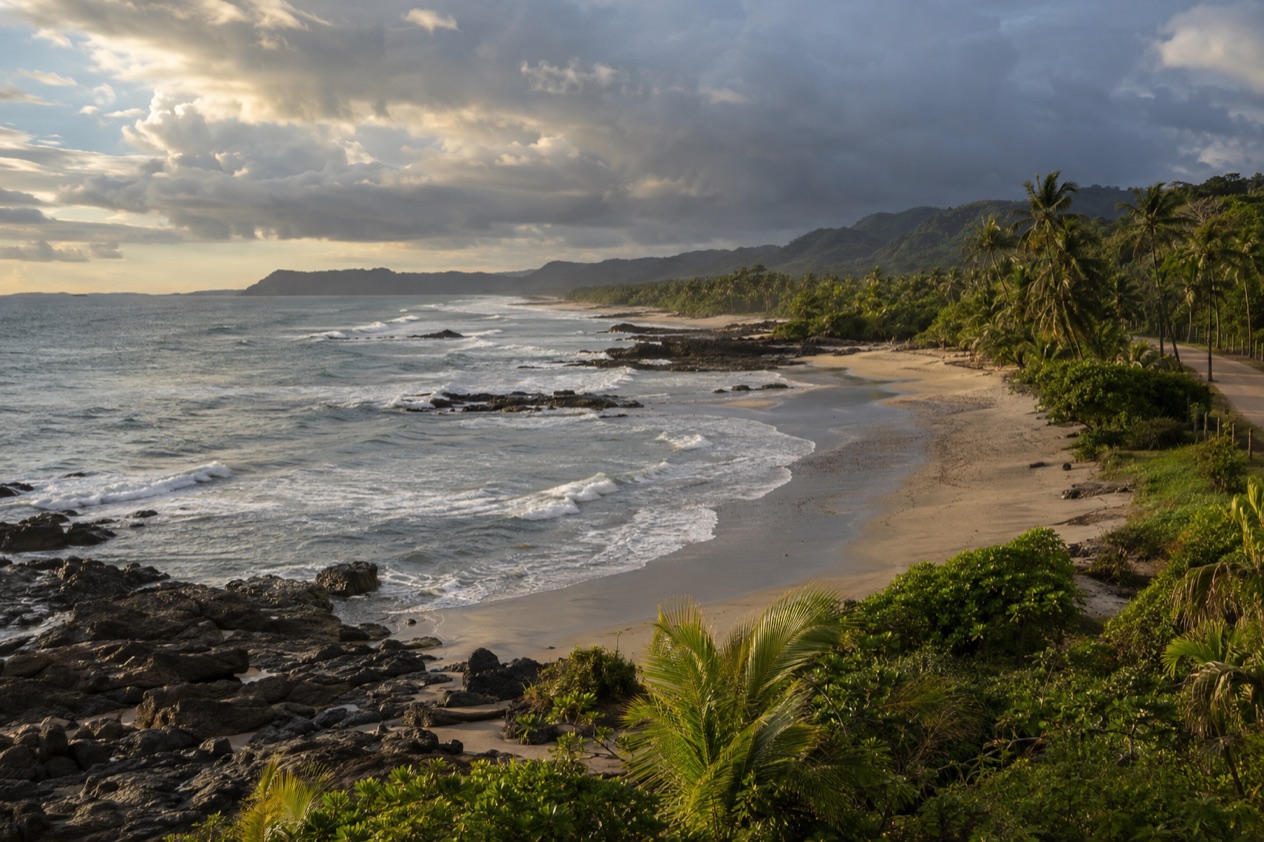
On the evening of September 14, children walk the dirt road with paper lanterns glowing in their hands, and the surf shops, taco stands and yoga studios pause to let them pass. The jungle behind the beach is at its greenest, the afternoon sky builds up gray over the Nicoya Peninsula, and the Pacific is still warm. Santa Teresa in September is a quiet, wet, lush version of the surf town, for travelers who like their beach days with a rain plan.
What is the weather like in Santa Teresa in September?
September is hot, humid and very wet: this is the heart of the green season, and showers are part of nearly every day.
| Month | Average high (°F) | Average low (°F) | Rain days | Sea (°F) |
|---|---|---|---|---|
| August | 81.9 | 76.1 | 25.1 | 85.7 |
| September | 81.5 | 75.7 | 26.5 | 86.0 |
| October | 80.9 | 75.4 | 25.6 | 85.5 |
Mornings are often the best part of the day. The light is soft and clear, the air is warm before it turns heavy, and this is when surfers, joggers and horseback riders have the beach to themselves. Rain is frequent in September, so keep outdoor plans flexible.
Rain falls on this whole Pacific tip, and more than fourteen inches arrive over the month. The dirt road through town turns muddy, puddles form in front of the cafes, and the forest smells of wet earth. Between showers the sky can open up to a brilliant blue, so plan the outdoor hours early and keep the later ones flexible.
Once the sun goes down, a T-shirt and sandals still feel right, since daytime and nighttime temperatures barely differ. You need a light rain jacket, not a sweater. Clothes dry slowly in the humidity, so quick-dry fabrics earn their place in the bag.
Can you swim in Santa Teresa in September?
The water is warm, but whether it is safe to swim depends on the surf and currents.
The beach in front of town is long, open and made for waves. In September the swell is often lively and the water is brown near the river mouths after heavy rain. Most visitors come to surf, bodyboard or splash in the shore break rather than float calmly. Mornings usually bring friendlier conditions than late afternoon, and low tide uncovers rocky pools and flat sand that are pleasant to walk.
Rip currents cause several drownings of U.S. tourists in Costa Rica each year, and most beaches have no lifeguards or warnings about unsafe conditions. Look for flags, ask your hotel or surf school which way the current runs, and if you are not a strong swimmer, remain at the water’s edge to wade, float or play.
Families with small children and nervous swimmers will often prefer the calmer corners of a sheltered cove or the pool at the hotel. Bring a rash guard, since sun and surf wear skin quickly.
What to do in Santa Teresa in September
The big date is September 15, Independence Day. On the evening of September 14, the Desfile de Faroles sends children through town with paper lanterns, and the next day brings school bands and flags. It is a small-town celebration, loud with drums and full of families, and a sweet contrast with the barefoot surf scene. Stand along the road, watch the lanterns bob past, and follow the band to wherever it ends up.
The rest of the month is about surf, food and forest in the gaps between showers. Waves during the rainy season frequently turn this into a great moment for those hoping to learn or get better, and the main road is lined with schools and board rentals.
Humpback whales that migrate from the south are sometimes seen offshore in these months, a chance rather than a promise. Feast on just-caught fish, ceviche, casado (rice, beans, salad and a main on one plate) and gallo pinto, the breakfast rice and beans, then sip coconut water right out of the shell.
Surf lessons and the morning break
Santa Teresa is one of the best-known surf towns in the country, with beach breaks stretching along the road and a few reef spots toward Mal Pais. Beginners usually start with a lesson at a stretch of sand where the instructor can see the whole group. Advanced surfers drive the dirt track to find the peaks that change with the tide and the swell.
The best hours are early, when the wind is light and the water cleaner. Go out right after sunrise, rest and eat by midday, and leave the afternoon to the rain. Choose a school that explains the currents before the first wave, and follow its advice on where to paddle.
Yoga, cafes and the barefoot town
The town is strung along a dirt road behind the beach, and in the green season the pace slows even more. Yoga studios hold morning classes in open-air shalas with the jungle at their edge, and a drop-in class is an easy way to spend a wet morning. Smoothie bowls, strong coffee and fresh baked bread are the standard breakfast.
In the evening, small restaurants serve grilled fish, tacos, pizza from wood ovens and vegetarian plates, often with a candle on the table when the power flickers in a storm. When the dry season comes the road turns dusty, and in the green season it turns muddy, so bring sandals you will not mind getting dirty and keep a flashlight with you after dark.
Mal Pais, Cabo Blanco and the wet forest
South of town, the road continues to Playa Carmen and Mal Pais, a slightly more spread-out version of the same scene, with more surf shops and a few coves where the tide pools are good for wandering at low tide.
Cabo Blanco, the nature reserve at the very tip of the peninsula, protects dense forest and a long trail to a quiet beach. In September the trail is wet and slippery, and the walk is rewarded with birdsong and the occasional monkey. Since rules and access can change, check the park’s official page before planning a visit, and bring a poncho and waterproof shoes.
A two-day itinerary for Santa Teresa in September
Day 1 is for the beach and the town. Rise early, since the day has a little over twelve hours of daylight and the best weather comes first.
Kick things off with a surf lesson or a long sunrise walk on the sand, then eat gallo pinto, eggs and fresh fruit for breakfast at a little cafe beside the road. Late morning is for a swim or a rest in the shade, before the clouds roll in.
When the afternoon rain arrives, duck into a yoga class, a massage room or a bookshop-cafe and wait for it to pass. Around sunset, if the sky has cleared, walk back to the beach to watch the light turn orange over the water.
Dinner can be grilled fish at a casual restaurant with a view of the road. If September 14 falls on this day, find a spot along the road for the lantern parade.
Day 2 heads south. Ride or taxi to Playa Carmen and Mal Pais in the morning, browse the surf shops and wander the tide pools at low tide. Check Cabo Blanco’s official information before deciding whether to include the reserve in your day. A walk among the wet trees takes the whole afternoon.
If the rain settles in, stay in a cafe with a book, take a cooking or smoothie workshop, or book an indoor spa treatment. Evenings are for a last dinner of ceviche and a cold drink at a table under cover, with the sound of rain on a tin roof.
Is Santa Teresa busy in September?
No, September is one of the quieter months here, with the town noticeably slower than in the dry season.
Many visitors stay away because of the rain, so beaches have room, restaurants have free tables and the surf lineups are less crowded. The people you do meet are mostly surfers, yoga students and long-stay travelers, along with some Costa Rican families around the Independence Day weekend. Finding a place to stay is simpler than during the crowded winter season, and during the quietest weeks a few of the smaller businesses close down or cut back their hours.
As a habit, book early for the Independence Day days and a little later for the rest of the month. A rental car or a transfer is worth arranging before you arrive, since roads are slow when wet.
Dinner tables rarely need advance booking, though a favorite small restaurant may fill on a night when the rain keeps everyone in one place. If you plan a visit to a park such as Cabo Blanco, check the park’s official page for the current rules before you go.
What to pack for Santa Teresa in September
Pack for heat, wet and mud, and keep everything light so it dries quickly.
- A light rain jacket or poncho, for the afternoon downpours
- Quick-dry shirts and shorts, since clothes dry slowly in the humidity
- Sandals with a good grip, for the muddy road and slippery trails
- A rash guard and sunscreen, for long hours in the surf
- A small flashlight or phone light, for unlit roads at night
- A dry bag, to protect your phone and passport from sudden rain
Good to know before you go
The U.S. State Department rates Costa Rica Level 2, ‘Exercise increased caution,’ due to crime; it says petty crime is common throughout Costa Rica and that violent crime also affects tourists, including armed robbery, homicide and sexual assault.
Getting around is the main practical question in the green season. Because the dirt route in town gets muddy, give yourself more time and plan on a rough ride. Most beaches do not have lifeguards, so ask locals about the current before you swim. Bring cash and keep your phone charged. Keep passports and valuables in your hotel’s safe, and carry only what you need to the beach.
Santa Teresa in September vs August and October
Moving a month earlier, to August, brings a very similar picture: warm water, frequent showers and a quiet town. The sea is a touch cooler, rain is a little lighter and the dry-season crowds are still far off. You also miss the lanterns of Independence Day, and the surf feels much the same.
Moving a month later, to October, brings even more rain, and the road gets muddier and the clouds heavier. The air is a shade cooler, and the town is at its quietest, with some small businesses closing for a break. If you want empty beaches and don’t mind gray skies, October delivers, but rainfall is heavier overall.
Choose September if you want the lantern parade, a lush landscape and warm water with a fair chance of sunny mornings. Shift to August if you prefer slightly drier days, or to October if you want the town to yourself and accept more weather.
Is September a good time to visit Santa Teresa?
Yes, for travelers who like surf, forest and slow days and who are happy to plan around the rain. It is a poor choice for anyone who needs a dry beach week or guaranteed sunsets.
Surfers, yoga students, birdwatchers and couples who want quiet will find the town as relaxed as it gets. Families with small children can enjoy it too, with early beach mornings, calm hotel pools and indoor activities for the afternoon. Travelers who plan every hour outdoors will be frustrated.
As soon as you arrive, drop your luggage, make your way to the sand, and ask your hotel or surf school how the currents are running that day. Then find a cafe, order a coffee and watch the clouds build over the ridge. September in Santa Teresa belongs to the green jungle, the warm sea and the children’s lanterns on the evening of September 14.
Sources
- Open-Meteo / ECMWF ERA5, normals 1991-2020 computed for the grid cell at 9.6458N 85.1698W, checked October 8, 2026
- Open-Meteo Marine API, average 2015-2024, checked October 8, 2026
- sunrise-sunset.org, sunrise and sunset calculated for the 15th of the month, checked October 8, 2026
- U.S. Department of State, Costa Rica Travel Information, Safety and security (https://travel.state.gov/content/travel/en/international-travel/International-Travel-Country-Information-Pages/CostaRica.html), checked October 8, 2026
- U.S. Department of State, Costa Rica Travel Advisory, issued April 1, 2026 (https://travel.state.gov/content/travel/en/traveladvisories/traveladvisories/costa-rica-travel-advisory.html), read via the State Department open data API on October 8, 2026
- U.S. Department of State, Costa Rica Travel Information, Entry and exit requirements (https://travel.state.gov/content/travel/en/international-travel/International-Travel-Country-Information-Pages/CostaRica.html), checked October 8, 2026
To plan your stay
- Things to Do in Santa Teresa: Surf, Yoga, Beaches and Day Trips
- Where to Stay in Santa Teresa: Beach Areas, Boutique Stays and How to Choose
- Best Time to Visit Santa Teresa: Dry Season, Green Season, Weather by Month and Festivals
- Santa Teresa in August: Green-Season Surf, Rain Patterns and Two Days Plan