
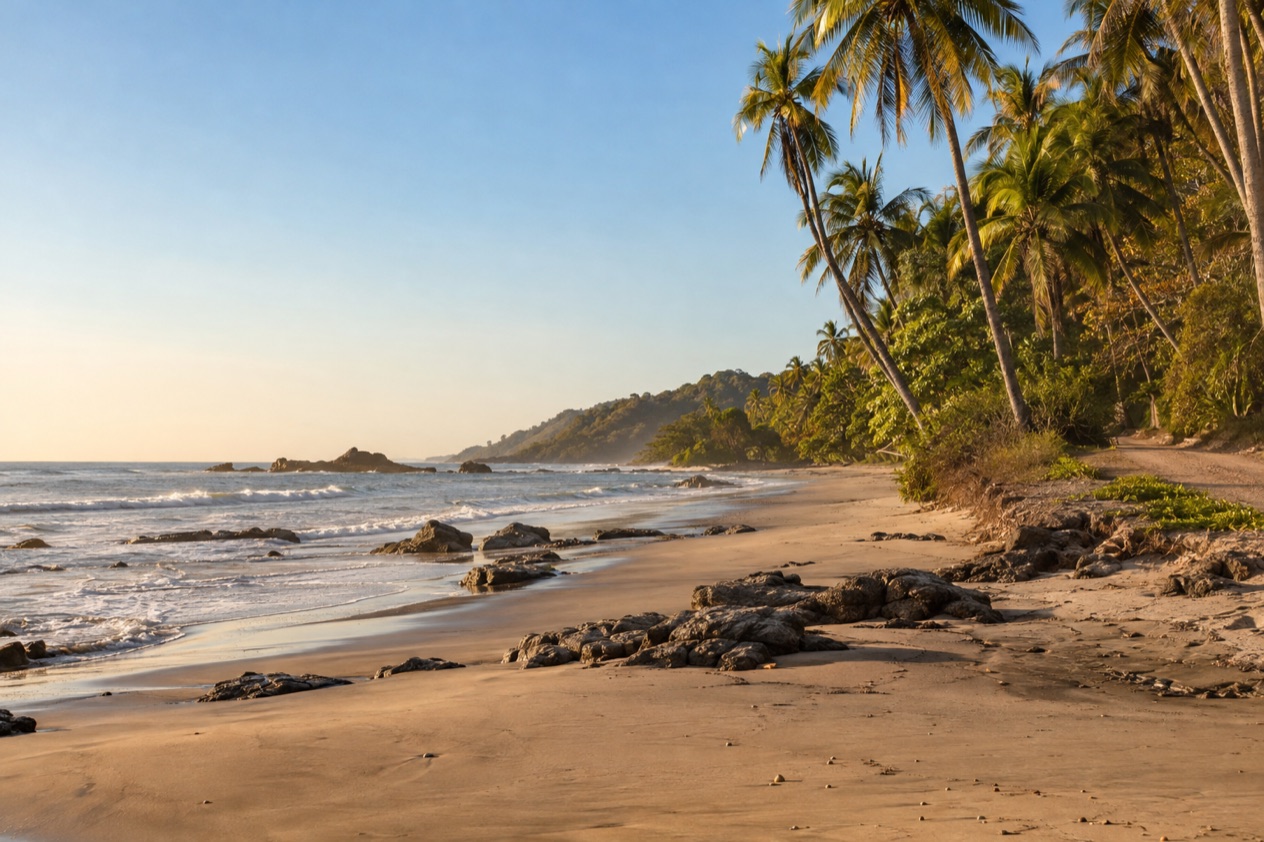
Early in the morning, the dirt road through Santa Teresa is still cool and quiet, with surfers walking boards toward the water and the smell of fresh coffee drifting out of open-air cafes. By late afternoon the dust hangs gold over the road and everyone drifts toward the sand to watch the sun drop into the Pacific. January is the heart of the dry season on this tip of the Nicoya Peninsula, a month for surf, yoga, sunsets and long barefoot days.
What is the weather like in Santa Teresa in January?
Santa Teresa in January is hot, sunny and almost entirely dry, with only the occasional passing cloud. The wet season has let go by now, and the town settles into steady blue skies from morning to night.
| Month | Average high (°F) | Average low (°F) | Rain days | Sea (°F) |
|---|---|---|---|---|
| December | 82.5 | 76.0 | 4.9 | 84.7 |
| January | 84.2 | 76.5 | 1.2 | 85.5 |
| February | 85.9 | 77.1 | 0.6 | 85.8 |
Mornings start warm and bright, which is the best time for anything physical: a surf lesson, a run on the hard sand at low tide, a hike. By midday the sun is strong enough that most people retreat to a shaded porch, a hammock or a smoothie bar, and the road empties for a while. Light cotton and a hat make more sense than anything else.
Rain is the exception rather than the rule. When a shower does come, it is usually brief and in the afternoon, and the sun is back soon after. The evenings stay warm enough for dinner outside in a T-shirt, with a light breeze off the water and no need for a jacket.
The light is the real pleasure. Daylight lasts a little under twelve hours, and the last hour before sunset turns the beach copper and pink, with the surfers still out as silhouettes. The dry season also means dust on the unpaved road, so expect a fine film on everything by the end of the day.
Can you swim in Santa Teresa in January?
Yes, the sea is warm enough for a long swim, with water about as warm as a lukewarm bath that you can wade into without a gasp. Warmth is not the same as calm, though, and Santa Teresa is above all a surf beach.
The long stretch of Playa Santa Teresa has steady Pacific waves that draw surfers all day, and the shore break and currents can be strong. Along this coast, rip currents pose a serious hazard, and every year they lead to multiple drownings of tourists from the United States, while lifeguards and warning signs are absent at most beaches in the area. Look at the water before you go in, ask at your hotel or a surf school where people are swimming that day, and follow any flags you see.
Beginners and anyone nervous in waves often do better wading at the edge or joining a lesson with an instructor who reads the water. Before floating or wading anywhere along this coast, ask at your hotel or a surf school about the day’s conditions and follow any warnings you see. Bring a rash guard, sunscreen and a bottle of water for the walk back.
What to do in Santa Teresa in January
January is when Santa Teresa is at full pace. Costa Rican schools are on their long summer break, so the beaches fill with families from the Central Valley alongside travelers escaping a northern winter. New Year’s Day on January 1 is a national holiday, and the first days of the month have a festive, slightly sleepy mood, with long beach lunches and music drifting from the bars at sunset.
Food leans fresh and simple. Go for ceviche, the fish grilled fresh each day, a casado (the traditional combination of rice, beans, salad, plantain and a protein) and gallo pinto at breakfast, that mix of rice and beans made with onion and cilantro. Cold coconut water straight from the husk, tropical fruit smoothies and smoothie bowls are the daytime habit, and many kitchens cook over open flame in the evening.
It is a very different, deeply Costa Rican scene from the beach-town mood here, and one for travelers who want a taste of rural festival life rather than surf and sunsets.
Surfing and surf lessons
Most visitors come for the surfing, and steady Pacific swell reaches multiple breaks along the coast during the dry season. Santa Teresa itself has beach breaks that suit beginners at the right tide, with stronger waves for experienced surfers on bigger days. Surf schools and board rentals sit all along the main road, and instructors usually point out where the currents run.
Dawn and early morning are the best moments, with lighter wind, glassier water and cooler air. By midday the wind and sun can make it harder going. Wear a rash guard, apply sunscreen often, and respect lineup etiquette: priority goes to the surfer closest to the breaking part of the wave, not the most experienced surfer.
Yoga, wellness and slow mornings
Yoga is as much a part of the town as surfing, with open-air studios set among palms and trees, many facing the sea or the forest. Classes at sunrise or in the late afternoon suit the heat of January, and a lot of visitors pair a morning surf with an evening stretch. Massage, breathwork and sound sessions are easy to find too.
The dry season is also good for simply being outside: reading on a porch, swinging in a hammock, or watching the monkeys and birds in the trees behind the beach. It suits travelers who want a restful rhythm rather than a packed list of sights, and who like their days built around the sun and the tide.
Cabo Blanco and the southern tip
At the far southern end of the peninsula, Cabo Blanco Absolute Nature Reserve protects forest that runs down to a wild beach. Walking its trails under the canopy is a cool contrast to the sunny coast, with a chance of monkeys, birds and other wildlife, though sightings are never promised. Because park rules and access can change, visit the official page for the park before you go.
Go early, wear closed shoes and bring plenty of water, since the trails can be hot and humid even in the dry season. It suits anyone with a free morning who wants a green walk, and a stop afterward in Mal Pais for a late lunch or a swim fits naturally into the day.
Sunsets, tide pools and beach hopping
Sunset is the daily appointment, and the town gathers on the sand for it. Playa Hermosa, just north, has quieter stretches and rock pools at low tide that are fun to explore, while Playa Carmen and Mal Pais to the south have a different feel, with more surf schools and small restaurants right behind the beach.
Bring a light layer for after sunset, since the breeze can feel cooler once the light fades, and a small flashlight for the walk home.
A two-day itinerary for Santa Teresa in January
Day 1 starts at dawn with the surf. Take a lesson or a quiet paddle at Playa Santa Teresa while the air is still cool, then have gallo pinto and fresh fruit at a beachside breakfast spot. Spend the hottest hours in the shade, in a hammock or at a yoga class, since January middays are strong.
In the afternoon, walk north to Playa Hermosa when the tide is going out and explore the pools and quieter sand. Stay for the sunset, then eat grilled fish or ceviche at a casual place on the main road. If a shower does arrive, it tends to be short, so wait it out in a cafe or a covered studio.
Day 2 heads south to Cabo Blanco in the morning, while the forest is at its coolest. Walk the trail, watch for birds and monkeys, and then turn toward Mal Pais for lunch at a simple spot near the water, perhaps a casado or a plate of fish. The beach there is a good place to wade, float or play if you ask the hotel or a surf school about the day’s conditions, never swim alone, and keep children within arm’s reach.
Spend the afternoon at Playa Carmen with a smoothie, a short surf or a massage, then watch the sun go down from the sand. For dinner, choose a different kind of place from the night before, such as a wood-fired pizza or a vegetarian kitchen, both easy to find. If clouds roll in, a long meal, a bookshop corner or a spa session fills the hours.
Is Santa Teresa busy in January?
Yes, January is one of the busiest months here, especially in the first half. Costa Rican families on school break share the beaches with visitors from North America and Europe who come for the dry season, and the town hums from early morning until late evening.
The holiday weeks around New Year’s Day are the tightest, with rooms filling quickly and restaurants busy at sunset and dinner. Book lodging early for those dates, and reserve tables for popular places on the evenings you care about. Later in the month the pace softens a little as families head home, and rooms become easier to find, though the surf and sun stay the same.
Getting from San Jose typically takes up most of a day, since you drive and then take a car ferry from Puntarenas to Paquera, then ride a long way on roads that are partly unpaved, so reserve your rental cars and transfers ahead of time. Another option is a brief flight into a close-by airstrip, and during a busy month you will want to reserve those seats well ahead.
Ask surf schools, yoga studios and restaurants about availability during this busy month. Mornings on the beach and the walk to a quieter cove are the easiest ways to find breathing room. Park visits like Cabo Blanco are best planned by checking the park’s official page for current rules.
What to pack for Santa Teresa in January
Think light, sun-proof and ready for dust and salt. Most days are spent in swimwear and shorts, with a few layers for evenings and trails.
- Sunscreen and a wide-brimmed hat, because the January sun is strong from mid-morning.
- A rash guard or surf shirt, for sun protection in the waves.
- A refillable water bottle, since days are hot and active.
- Closed shoes for the Cabo Blanco trails and sandals for the dusty road.
- A light layer for after sunset, when the sea breeze cools things down.
- A small flashlight or phone light, for the unlit road after dark.
Good to know before you go
The U.S. State Department rates Costa Rica Level 2, ‘Exercise increased caution,’ due to crime; it says petty crime is common throughout Costa Rica and that violent crime also affects tourists, including armed robbery, homicide and sexual assault.
The dry season falls in January, and from January through the end of May wildfires are a regular occurrence, hitting Guanacaste and the northern region, so if your plans take in that part of the country, smoke could be a concern. Getting to Santa Teresa takes planning, since the last stretch is long and partly unpaved, and dust and bumpy road are part of the experience.
Book rooms and transport first, then fill in surf, yoga and dinners once you arrive. Many beaches have no lifeguards, so check the water carefully before swimming.
Santa Teresa in January vs December and February
Going four weeks earlier, in December, brings a greener landscape and a slightly higher chance of a rainy afternoon, with the sea a touch cooler. The holiday rush is at its peak around Christmas and New Year’s, so rooms are tight, but the first days of the month can be quieter. Travelers who like lush scenery and fewer people before the holidays may prefer it.
Moving four weeks later, to February, gives hotter, drier days and the warmest sea of the three months. School break ends in early February, so the family crowds thin out and rooms and tables become easier to find, though the dry-season dust and heat build. It suits surfers and beach lovers who want sun and fewer holiday crowds.
Choose January if you want the lively holiday mood and reliably sunny weather, and are happy to book early. Shift to December for green hills and a calmer start, or to February for the driest, hottest beach days with more breathing room in town.
Is January a good time to visit Santa Teresa?
Yes, January is an excellent time for anyone who wants sun, warm water and a lively beach town, and it suits surfers, yogis, couples and families who like an active holiday pace. It is less ideal for travelers who dislike crowds, dust or heat, or who need a rainy-season green landscape.
On arrival, drop your bags, walk to the beach at low tide and look at the water before you decide where to swim or surf, since currents are strong along this coast. Then book your first surf lesson or yoga class for the next morning, when the air is cool and the sea is at its friendliest.
What makes January special in Santa Teresa is the rhythm of the dry season: dawn surf, a shaded midday, and an evening when the whole town gathers on the sand to watch the sun go down into a clear Pacific horizon.
Sources
- Open-Meteo / ECMWF ERA5, normals 1991-2020 computed for the grid cell at 9.6458N 85.1698W, checked October 8, 2026
- Open-Meteo Marine API, average 2015-2024, checked October 8, 2026
- sunrise-sunset.org, sunrise and sunset calculated for the 15th of the month, checked October 8, 2026
- U.S. Department of State, Costa Rica Travel Information, Safety and security (https://travel.state.gov/content/travel/en/international-travel/International-Travel-Country-Information-Pages/CostaRica.html), checked October 8, 2026
- U.S. Department of State, Costa Rica Travel Advisory, issued April 1, 2026 (https://travel.state.gov/content/travel/en/traveladvisories/traveladvisories/costa-rica-travel-advisory.html), read via the State Department open data API on October 8, 2026
- U.S. Department of State, Costa Rica Travel Information, Entry and exit requirements (https://travel.state.gov/content/travel/en/international-travel/International-Travel-Country-Information-Pages/CostaRica.html), checked October 8, 2026
To plan your stay
- Things to Do in Santa Teresa: Surf, Yoga, Beaches and Day Trips
- Where to Stay in Santa Teresa: Beach Areas, Boutique Stays and How to Choose
- Best Time to Visit Santa Teresa: Dry Season, Green Season, Weather by Month and Festivals
- Santa Teresa in February: Dry Weather, Surf, Envision Festival and Two Days on the Beach