
At first light in January, the forest behind Manuel Antonio fills with the hoarse calls of howler monkeys while capuchins work their way along the branches above the beach path. The mornings are bright, the hills are still green from the long rains, and the Pacific looks like it was made for a day of swimming. This is the month when the rain comes as short showers and a wetter spell on the central Pacific coast, and the monkeys, sloths and beaches are all within a short walk of each other.
What is the weather like in Manuel Antonio in January?
January is hot, humid and much drier than December, though not fully dry: showers still show up on most days, usually brief and often late in the day.
| Month | Average high (°F) | Average low (°F) | Rain days | Sea (°F) |
|---|---|---|---|---|
| December | 79.6 | 70.4 | 25.7 | 84.4 |
| January | 80.4 | 71.1 | 19.6 | 85.7 |
| February | 81.7 | 72.3 | 12.7 | 86.8 |
Mornings are the best part of the day. The air is warm from sunrise, the light is clear and golden, and the park trails are most pleasant before the heat builds. By midday it is properly hot under the trees, and shade, water and a slow pace matter more than any plan. Daylight lasts nearly twelve hours, so you have a full day, and the sun sets early in the evening.
Rain in January tends to come as a passing shower or a gray spell, more often in the afternoon than at dawn, and heavy downpours are the exception. Hardly any days bring a real soaking, which means a shower rarely cancels a plan, it just moves lunch indoors for an hour. Compared with December, the skies open up noticeably and the hillsides are still lush from the wet months.
Evenings stay warm enough to eat outside in a T-shirt, with a cool breeze at most on the ridge restaurants. Light, breathable clothes work all day. The sea is as warm as the air, which makes a late-afternoon swim a pleasure.
Can you swim in Manuel Antonio in January?
Yes, the sea is warm in January, but check conditions before entering and stay out when currents are present.
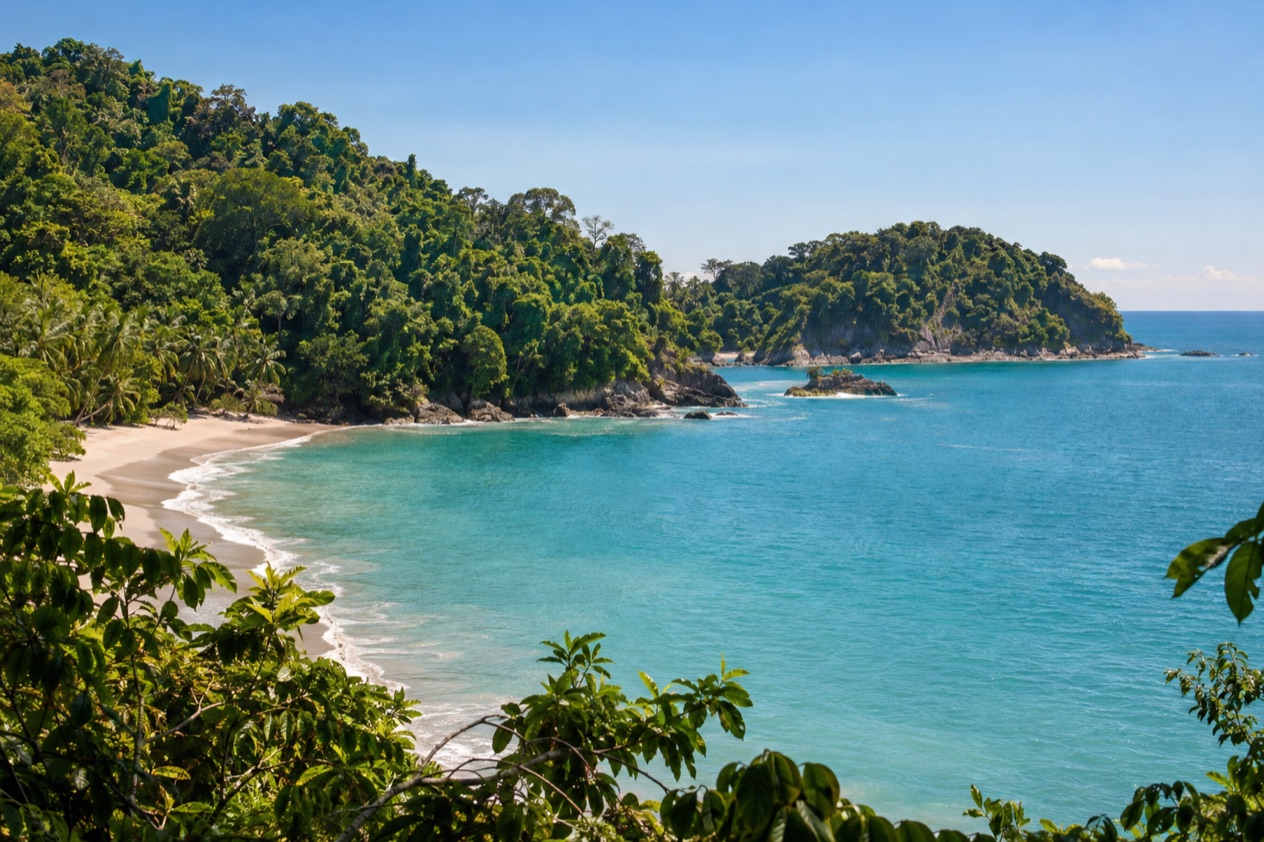
The beaches inside and next to the national park are the classic choice: sheltered coves with sand backed by forest, where monkeys sometimes watch from the trees. Families and casual swimmers tend to prefer the coves, while confident surfers head to the longer, more open beaches near Quepos.
Along Costa Rica’s Pacific coast, rip currents pose a serious hazard, and every year they lead to multiple drownings among tourists from the United States. Lifeguards are absent at most beaches, and you will rarely see warnings about dangerous water, so check for flags, inquire at your hotel about that day’s conditions, and stay out of the water when conditions are unsafe. Bring a mask for the calmer coves, a towel and sunscreen, and keep food away from the monkeys, which will happily raid a bag left on the sand.
What to do in Manuel Antonio in January
The big draw is the national park and its wildlife, and January is a comfortable month to walk it. Squirrel monkeys, white-faced capuchins, iguanas, raccoons and sloths turn up regularly inside the park and around it too, so you should not feed them. Seeing an animal is never guaranteed, but the odds are good, especially with a guide who knows where to look.
The calendar adds a few things. New Year’s Day on January 1 is a national holiday, and the school break that runs into early February keeps families on the beaches and the town lively. Farther north in Guanacaste, the Fiestas Civicas of Santa Cruz fill that town in mid-January with bull-riding, parades and street food, though that is a long trip from here and belongs on a different itinerary.
Walking the national park
The park’s trails run through tall forest down to a string of small beaches. The ideal time for this is a walk in the morning, when wildlife is at its busiest and the temperature remains pleasant. Expect to share the path with other visitors in January, and keep your voice low, because the quieter you are the more you tend to see.
Walk the trails slowly and pause in the shade. A guide helps with spotting sloths, which are easy to miss high in the canopy, and a pair of binoculars makes a real difference. Before your trip, consult the park’s official SINAC page for current entry and reservation rules.
Beach days and the Quepos side
Outside the park, the beaches along the road between Quepos and Manuel Antonio offer a simpler day: sand, umbrellas, fresh fruit sold by vendors and a restaurant within reach. The sea is warm and January mornings are usually the calmest time to get in.
A real working town, Quepos has a marina and a market, plus little restaurants where casados are served, that plate of rice, beans, plantain, salad and a protein which stands as the everyday lunch all over Costa Rica. Try gallo pinto, the rice and beans fried together, at breakfast, and a cold fresh fruit juice afterward.
Sunsets and the hillside restaurants
The hills above the beaches are lined with open-air restaurants and bars that face west over the water. In January the sun drops into a clear horizon often enough to make a sunset drink a regular habit, and the evenings are warm enough to stay out. Choose a table facing the ocean and arrive a little before dusk.
After dark the air fills with the sound of insects and frogs, and the forest feels close. Wildlife tours at night, boat outings and kayaking are also on offer in the area, and a short rain is a reason to stay under a roof with a plate of ceviche rather than call it off.
A two-day itinerary for Manuel Antonio in January
Day 1 belongs to the national park. Arrive at the entrance early, while the light stays soft and the trails remain cooler, then give the morning over to a slow walk, pausing anytime monkeys or a sloth show up. Swim at a cove when the heat arrives, then eat a casado at a simple restaurant near the entrance rather than rushing back.
In the afternoon, rest. The hottest hours are better spent in the shade or at the hotel pool, and a shower, if one comes, will pass. Near sunset, head up to one of the hillside restaurants for a drink and dinner, with the sun going down over the Pacific.
Day 2 moves to the Quepos side. Start with gallo pinto and coffee in town, then take a boat or kayak outing along the coast if the sea is calm, or spend the morning on one of the open beaches, watching the surf. Midday is for fresh fish at a beachfront place and a long pause.
If the weather turns gray, find a covered restaurant and adjust the plan. Finish with a late swim if the water looks gentle and the flags allow it, and dinner in town.
Is Manuel Antonio busy in January?
Yes, January is a busy month, because rain arrives mostly as short showers between sunny stretches and the long school break runs from December into early February.
Families from across Costa Rica come to the beaches, and visitors from abroad arrive to escape winter, so the park trails, the beach coves and the restaurants fill up, especially around New Year’s Day. The first days of the month are the busiest, with the pace easing slightly toward the end, though the weekends stay lively.
What that means in practice is that rooms with a view and rental cars are the first things to go, and good tables at the hillside restaurants fill at sunset. Book lodging and transport early, especially for the holiday weeks, and settle for later arrangements only if you are visiting in the quieter final stretch of the month.
To beat the crowds, go to the park first thing, eat lunch a little early or late, and keep the evenings flexible. Even in a full month, a quiet cove or a table with a view is usually possible if you move against the crowd.
What to pack for Manuel Antonio in January
Think light, quick-drying and comfortable for walking in the heat, with something for a passing shower.
- Light, breathable clothes, because the days are hot and humid.
- A compact rain jacket for the short showers that can arrive in the afternoon.
- Sturdy sandals or walking shoes for the wet park trails.
- Sunscreen and a hat, since the sun is strong even through thin cloud.
- A swimsuit and a mask for the warm sea and the calmer coves.
- Binoculars to find sloths and birds high in the trees.
Good to know before you go
The U.S. State Department rates Costa Rica Level 2, ‘Exercise increased caution,’ due to crime; it says petty crime is common throughout Costa Rica and that violent crime also affects tourists, including armed robbery, homicide and sexual assault.
January is a peak month, so book rooms, cars and any guided walks first, and give yourself extra time on the coast roads around the holiday weeks. New Year’s Day on January 1 is a national holiday, and some businesses may close or run on a reduced schedule.
For entry, a valid passport for the duration of your stay is required, and you must hold a return ticket or proof of onward travel. Authorities may allow a stay of up to 180 days without a visa, but this is not guaranteed.
Manuel Antonio in January vs December and February
Moving a few weeks earlier, into December, means a greener and wetter coast, with rain on most days and a sea a little cooler. The holiday crowds are at their heaviest around Christmas and New Year, so the early part of the month can feel busier and the forest lusher.
Moving a few weeks later, into February, brings a drier and slightly hotter coast, with the sea at its warmest and the school break ending early in the month. Crowds thin as it goes on, which makes the trails and coves feel more relaxed.
Travelers who want green hills and do not mind showers might lean toward December, while those who want the driest weather and a quieter park will find February easier. January sits between the two, with warm water, a good chance of sun and a lively atmosphere.
Is January a good time to visit Manuel Antonio?
Yes, January suits travelers who want warm water, bright mornings and an easy chance at the wildlife, and who do not mind sharing the beaches with other visitors.
It is a good fit for families on a school break, for first-time visitors who want the classic park-and-beach trip, and for anyone escaping winter. It is less ideal for people who want empty trails and a quiet shoreline, or who dislike humid heat, and they may prefer a later month.
As soon as you get there, spend the early morning hours in the national park, when wildlife is on the move and the light is gentle, then save the beach for later in the day. January in Manuel Antonio is the month when the forest is still green from the rains, the sea is warm and monkeys are commonly seen in and around the park.
Sources
- Open-Meteo / ECMWF ERA5, normals 1991-2020 computed for the grid cell at 9.392N 84.1366W, checked October 8, 2026
- Open-Meteo Marine API, average 2015-2024, checked October 8, 2026
- sunrise-sunset.org, sunrise and sunset calculated for the 15th of the month, checked October 8, 2026
- U.S. Department of State, Costa Rica Travel Information, Safety and security (https://travel.state.gov/content/travel/en/international-travel/International-Travel-Country-Information-Pages/CostaRica.html), checked October 8, 2026
- U.S. Department of State, Costa Rica Travel Advisory, issued April 1, 2026 (https://travel.state.gov/content/travel/en/traveladvisories/traveladvisories/costa-rica-travel-advisory.html), read via the State Department open data API on October 8, 2026
- U.S. Department of State, Costa Rica Travel Information, Entry and exit requirements (https://travel.state.gov/content/travel/en/international-travel/International-Travel-Country-Information-Pages/CostaRica.html), checked October 8, 2026
To plan your stay
- Things to Do in Manuel Antonio: National Park Trails, Beaches, Day Trips and Food
- Where to Stay in Manuel Antonio: Quepos, the Hill Road and the Beach End
- Day Trips from Manuel Antonio: Carara Macaws, Tarcoles Crocodiles, Jaco and Quepos
- 3 Days in Manuel Antonio: Park Trails, Beaches and a Slow Final Day