
Late in the afternoon, the sand at Jaco turns the color of wet slate and the surfers paddle back in with boards under their arms, while the first bars along the main strip put their tables out and the music begins. Pelicans skim the break, a vendor walks the beach with cold coconuts, and the Pacific keeps rolling in long and steady. This is Costa Rica’s easygoing surf town, a place for first-time board riders, beach lovers and anyone who wants nights out and jungle within reach of the same hotel.
Where is Jaco and what is it like?
Jaco sits on the central Pacific coast of Costa Rica, about two hours by road from San Jose, between the Tarcoles River and Carara National Park to the north and the quieter beaches and the Manuel Antonio area to the south. It is a lively beach town with a long strip of dark sand, a steady surf break, and a main street packed with restaurants, bars, surf shops and small hotels.
The pace is relaxed in the morning and louder after dark. Early risers find the beach almost empty, with joggers, a few anglers and surfers reading the waves. By midday the shade of the almond trees fills with people, and in the evening the town leans toward music, cocktails and late dinners. Jaco is a town, not a secluded lodge, so you hear traffic, motorbikes and bar speakers.
It suits travelers who like having choices within walking distance: a taco stand, a surf lesson, a sushi dinner, a late drink. Couples, groups of friends, young families and solo travelers all find their corner. Those who want deep quiet, pristine empty coves or a village feel may prefer the smaller beaches farther along the coast, using Jaco as a day-trip base rather than a home.
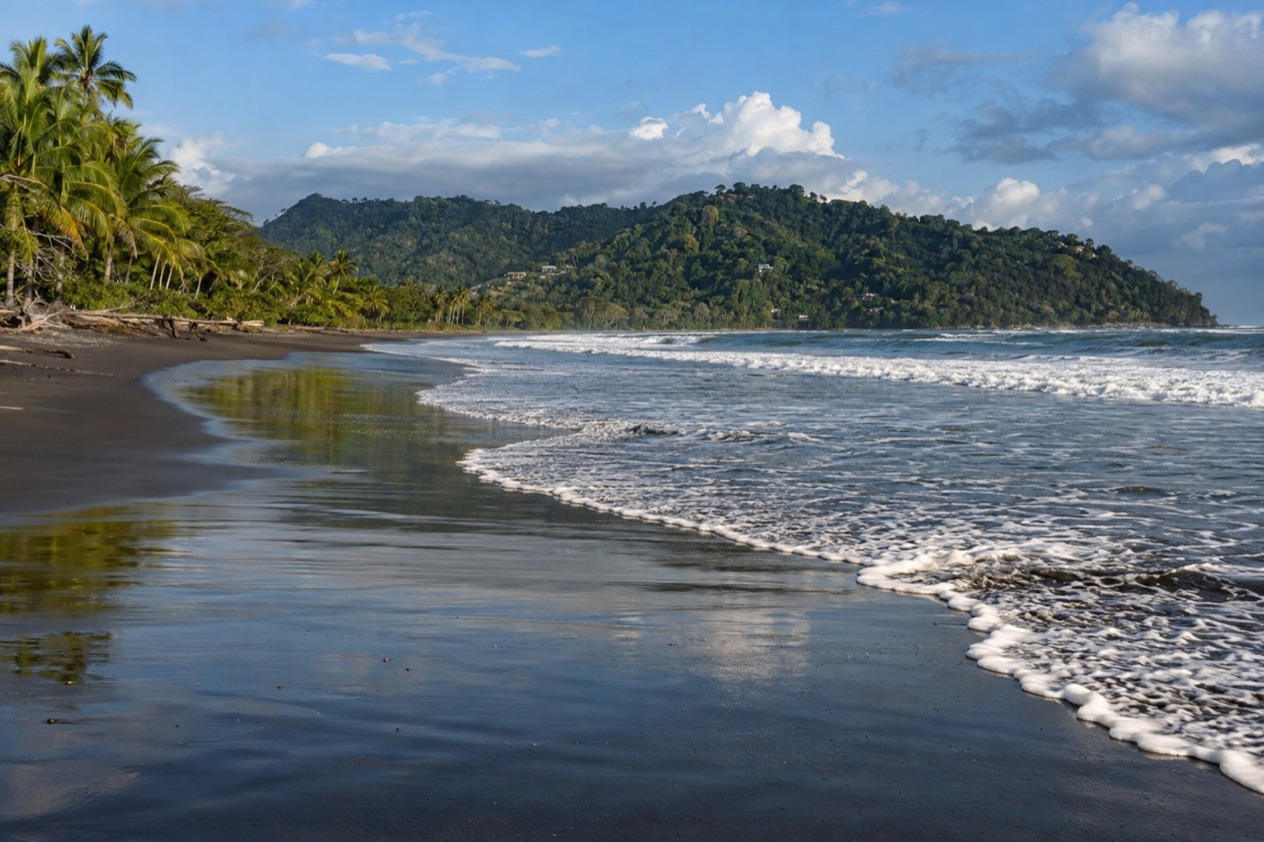
The beach itself is wide and gently curved, with sand that looks gray to almost black, especially when wet. The color comes from volcanic minerals, and it gets hot underfoot at noon, so sandals matter. Behind the sand, the hills rise green and often wrapped in cloud, a reminder that jungle begins just beyond the last street.
One thing to carry in mind from the first day is the water. Rip currents are very dangerous along this coast and cause several drownings of U.S. tourists each year, and most beaches do not have lifeguards or posted warnings about unsafe conditions. Rip currents are very dangerous, and most beaches do not have lifeguards or posted warnings, so ask your hotel or surf school about conditions and follow any flags.
What is there to do in Jaco?
Surfing, wildlife in Carara, beach days with sunsets and nightlife, and a few jungle adventures make up the big reasons to come. What sets Jaco apart from its neighbors is the mix: you can learn to surf in the morning, look for macaws the next day and still dine well in town that night, without changing hotels.
Surf lessons and board rentals
The beach break works for beginners as well as experienced surfers, which is why Jaco is a classic first surf stop. Lessons start on the sand, with a short lesson on paddling and popping up, then you wade into the whitewater with an instructor close by. Most schools line up along the beach and the main street, and board rentals are easy to find if you prefer to go on your own.
Ask the surf school which time and part of the beach suit your level and that day’s conditions. Stronger surfers look for the bigger sets and often head to neighboring breaks when Jaco is crowded or small. A rash guard saves your chest from board wax and sun, and a good sunscreen is worth packing. Because of the rip currents, listen to the instructor about where to paddle.
Carara National Park and the Tarcoles bridge
A short drive north, Carara National Park protects a patch of transitional forest where dry-country and rainforest species overlap. It is known for scarlet macaws, which are often seen flying at dawn and dusk, their red, yellow and blue feathers flashing over the canopy and their loud calls carrying far. Walking the trails with a naturalist guide is how most visitors spot motmots, trogons, monkeys and the occasional sloth, though sightings are chances and never guaranteed.
On the way, the bridge over the Tarcoles River is a well-known place to look down at crocodiles resting on the sandbanks. Many travelers stop for a few minutes of photos, and boat trips on the river offer a closer, quieter view of herons, egrets and other birds. Plan the park and river as a combined outing, and check Carara’s current entry and reservation rules on the official SINAC site before you go.
Beach days, sunsets and nights out
Not everything here needs a plan. Many days in Jaco are a long walk on the sand, a fresh fruit smoothie and a hammock afternoon. Toward evening, the sky over the water goes orange and pink, and people gather along the beach with a drink to watch it fade, while surfers take the last waves of the day.
After dark the town shifts gears. Restaurants serve grilled fish, ceviche, casados (the classic plate of rice, beans, salad and a choice of meat or fish) and plenty of international dishes, and bars along the main road keep the music going late. If you want something calmer, many places sit a block or two back from the strip, where the noise drops and the tables are quieter.
Jungle outings from town
The hills behind Jaco hold the usual Costa Rican adventure menu: zip lines through the canopy, horseback rides, waterfall hikes and all-terrain vehicle tours along dirt tracks. Ask operators whether transportation is included and how long the outing takes. They tend to be most enjoyable early, before the afternoon rain and heat build.
They suit active travelers, families with older children and anyone who wants more than the beach. In the green season the forest looks its most lush, with waterfalls running full and trails muddy, so closed shoes and a light rain jacket are better than sandals. Ask the operator how the weather affects that day’s route.
How many days do you need in Jaco?
A long weekend is enough to enjoy Jaco, and a week lets you use it as a relaxed base for the whole central Pacific coast. With a few days you can take a surf lesson, spend one morning at Carara and the Tarcoles bridge, and still leave time for the beach and a couple of good dinners.
On a short stay, think in half days. Mornings suit the active things, like a lesson, a forest walk or a canopy tour, because the sea is usually friendlier and the sky clearer before the afternoon clouds roll in. Afternoons are for the shade, a long lunch, a nap or a slow wander through the shops. Evenings belong to the sunset and the strip.
With five days or more, the pace changes. You can spend a second morning in the surf to really improve, explore the quieter beaches to the south, such as Playa Hermosa, known for its stronger waves, or take a longer day trip to the Manuel Antonio area, where forest meets beach and monkeys wander near the trails. Early starts make these outings feel easy.
A week also leaves room for rain. In the green months, an afternoon downpour can cancel a beach plan, and having spare days lets you swap the day’s order rather than lose an activity. Add a lazy day for a spa treatment, a long breakfast or reading in a hammock, and the trip becomes a vacation rather than a checklist.
If Jaco is one stop on a longer Costa Rica trip, two nights is the minimum that feels worthwhile, and three is more comfortable. Combine it with the mountains or a volcano on the same trip for contrast, since the town gives you the beach and the nightlife while other regions give you cooler air and cloud forest.
Where to stay in Jaco
The center of town, around the main strip and the beachfront, suits first-timers, surfers and anyone who wants to walk to restaurants, bars and surf schools. Staying here means noise at night, especially on weekends, but it also means you can leave the car or the shuttle behind and do everything on foot. Light sleepers should ask for a room facing away from the road.
The northern end of the beach and the streets a few blocks back are calmer, with a mix of small hotels, apartments and guesthouses. They suit couples and families who want the beach close but prefer to sleep in quiet, and who do not mind a short walk or a quick taxi ride to dinner. Many have pools, which are welcome after a hot afternoon.
Farther out, in the hills above town and along the coast to the south, you find villas, lodges and resort-style stays with views over the water or the forest. These are better for travelers who want space, birdsong and a more secluded setting, with the town a short drive away. Plan on a ride for meals and outings, and check how the access road is in the rain.
Budget travelers will find hostels and simple rooms in the middle of town, where surfers share boards, stories and tips. Longer stays often make sense in an apartment with a kitchen, especially for families. In the dry months, when the most visitors arrive, rooms in the best locations fill early, while the green season usually brings more choice.
How do you get to Jaco and get around?
Most visitors arrive through Juan Santamaria International (SJO), near San Jose in the Central Valley, and continue by road for about two hours to the coast. Daniel Oduber Quiros International (LIR), at Liberia in the northwest, is the closest airport for the Guanacaste beaches, so it is the farther choice for Jaco and makes sense mainly when your trip also covers the north.
Check current ground-transport options from the airport before booking. Shuttles and private cars take you straight to your hotel, which is the easiest option after a flight, while buses are the budget route and drop you in town. The road descends from the mountains toward the coast, and traffic on weekends and holidays can slow the drive.
Once in Jaco, the center is easy to walk. The beach, the main strip, the surf schools and dozens of restaurants sit within a few blocks of one another, and many hotels are an easy stroll from the sand. Walking at night is part of the town’s life, but stay on the main, well-lit streets and keep your phone and wallet out of sight, as petty theft happens in any busy beach town.
For longer distances, confirm transportation with your hotel or tour operator before setting out. Some travelers get around on bicycles or scooters along the flat main road. Carara and the Tarcoles bridge are a short drive north, and organized tours or a taxi can take you there and back, so you do not have to arrange everything yourself.
When is the best time to visit Jaco?
The best months for beach weather are from about December to April, the dry season on this part of the Pacific coast. January is the pleasant example: warm days and nights, a sea in the mid-80s, and rain that still falls on some days but in short spells. These are the months when most travelers come, so the beach, the restaurants and the roads are at their busiest, especially around the year-end holidays.
From about May to November the country turns green. April is the transition, hot and humid, with showers on most days as the season turns.
By July and October, rain shows up almost every day, usually as an afternoon downpour, but October is one of the wettest months of the year, with heavy rain that can last for hours and sometimes spoil a beach plan. Mornings are often bright, and the sea stays warm enough to swim in, though the surf can be rougher.
The green season has its charms. The forest is lush, waterfalls run full, the town is quieter and rooms are easier to find, which suits flexible travelers who do not mind a shower. Plan outdoor activities for the morning, keep the afternoon for a long lunch, and carry a light rain jacket. Beginner surfers may find the waves bigger and the currents stronger at times, so ask the school before heading out.
If you can choose, aim for the dry months when you want predictable beach days, and the green months when you prefer lush scenery, fewer people and an easier pace. Whatever the month, the sea off Jaco stays warm, and the sun is strong when the clouds break, so sunscreen and a hat belong in the bag all year.
Good to know before you go
The U.S. State Department rates Costa Rica Level 2, ‘Exercise increased caution,’ due to crime; it says petty crime is common throughout Costa Rica and that violent crime also affects tourists, including armed robbery, homicide and sexual assault.
The Costa Rican currency is the colon, but U.S. dollars are widely accepted in tourist areas, and many hotels, tours and restaurants quote prices in dollars, with change often handed back in colones. Keep a little local cash for small purchases. As in any busy beach town, petty crime is a reality, so lock valuables out of sight, leave nothing on the sand while you swim, and take a taxi for late-night rides home.
Sources
- Open-Meteo / ECMWF ERA5, normals 1991-2020 computed for the grid cell at 9.6145N 84.6285W, checked October 8, 2026
- Open-Meteo Marine API, average 2015-2024, checked October 8, 2026
- Costa Rica Tourism Board (ICT), Carara National Park (https://visitcostarica.com/where-to-go/protected-areas/carara-national-park), checked October 8, 2026
- U.S. Department of State, Costa Rica Travel Information, Safety and security (https://travel.state.gov/content/travel/en/international-travel/International-Travel-Country-Information-Pages/CostaRica.html), checked October 8, 2026
- U.S. Department of State, Costa Rica Travel Advisory, issued April 1, 2026 (https://travel.state.gov/content/travel/en/traveladvisories/traveladvisories/costa-rica-travel-advisory.html), read via the State Department open data API on October 8, 2026
- U.S. Department of State, Costa Rica Travel Information, Entry and exit requirements (https://travel.state.gov/content/travel/en/international-travel/International-Travel-Country-Information-Pages/CostaRica.html), checked October 8, 2026
All our pages
When to go
- Best Time to Visit Jaco: Dry Season, Green Season, Surf and Sea Temperatures
- Jaco in January: Dry-Season Surf, Warm Sea and What to Do
- Jaco in February: Weather, Surf, Sea Conditions and What to Do
- Jaco in March: Weather, Surf, Beach Days and Carara Macaws
- Jaco in April: Weather, Surf, Holy Week and Things to Do
- Jaco in May: Green Season Rain, Warm Surf and Rainforest Day Trips
- Jaco in June: Green Season Weather, Surf and Day Trips to Carara
- Jaco in July: Green-Season Weather, Surf and What to Do
- Jaco in August: Green-Season Weather, Warm Sea, Surf and a Two-Day Plan
- Jaco in September: Rainy-Season Weather, Surf, Independence Day Lanterns and Things to Do
- Jaco in October: Green Season Surf, Afternoon Rain and What to Do
- Jaco in November: Green-Season Surf, Rain Patterns and What to Do
- Jaco in December: Weather, Beach Conditions, Festivals and a Two-Day Plan