
Early on a March morning in Jaco, surfers are already paddling out over the dark sand while pelicans skim the first swells and the smell of coffee and frying plantains drifts from the open-air sodas along the main road. By midday the sun is high and hard, the town slows to a hammock pace, and the evening brings cooled-down streets, fresh fish on grills and music from the bars. March here is a beach month, a warm and bright stretch on the central Pacific coast for surfing, swimming and day trips into the forest.
What is the weather like in Jaco in March?
March in Jaco is hot, bright and mostly sunny, with a few light showers that tend to arrive later in the day and rarely spoil more than an hour or two.
| Month | Average high (°F) | Average low (°F) | Rain days | Sea (°F) |
|---|---|---|---|---|
| February | 84.0 | 76.1 | 7.8 | 87.4 |
| March | 84.9 | 77.0 | 11.5 | 87.7 |
| April | 83.8 | 77.0 | 21.5 | 87.9 |
Mornings are the best part of the day. The air is already warm at breakfast, the light is clear and golden, and the beach is easy to walk before the sand gets too hot underfoot. Midday is for shade, a cold drink and a swim. Plan any hiking, surf lessons or long walks for the early hours, because the afternoon sun is strong and a hat matters more than a jacket.
Rain comes as short showers or a brief gray spell, usually in the afternoon or evening, and a heavy downpour is unusual. Some days stay dry from dawn to dusk, and others bring a passing shower that cools the town for a little while. Compared with the weeks ahead, March still feels like the tail end of the drier part of the year, and the greener, wetter months are close behind.
Evenings stay warm enough to eat outside in a T-shirt, and nights are mild enough that a fan or air conditioning matters more than a blanket. You get roughly twelve hours of light, which means sunset arrives early in the evening and you can begin dinner plans with a walk on the beach at dusk. Bring light cotton clothes, sunscreen and a thin rain layer for the afternoon.
Can you swim in Jaco in March?
Yes, the sea is as warm as a bath, so you can stay in the water for a long time without getting cold, though currents and waves are the real question here.
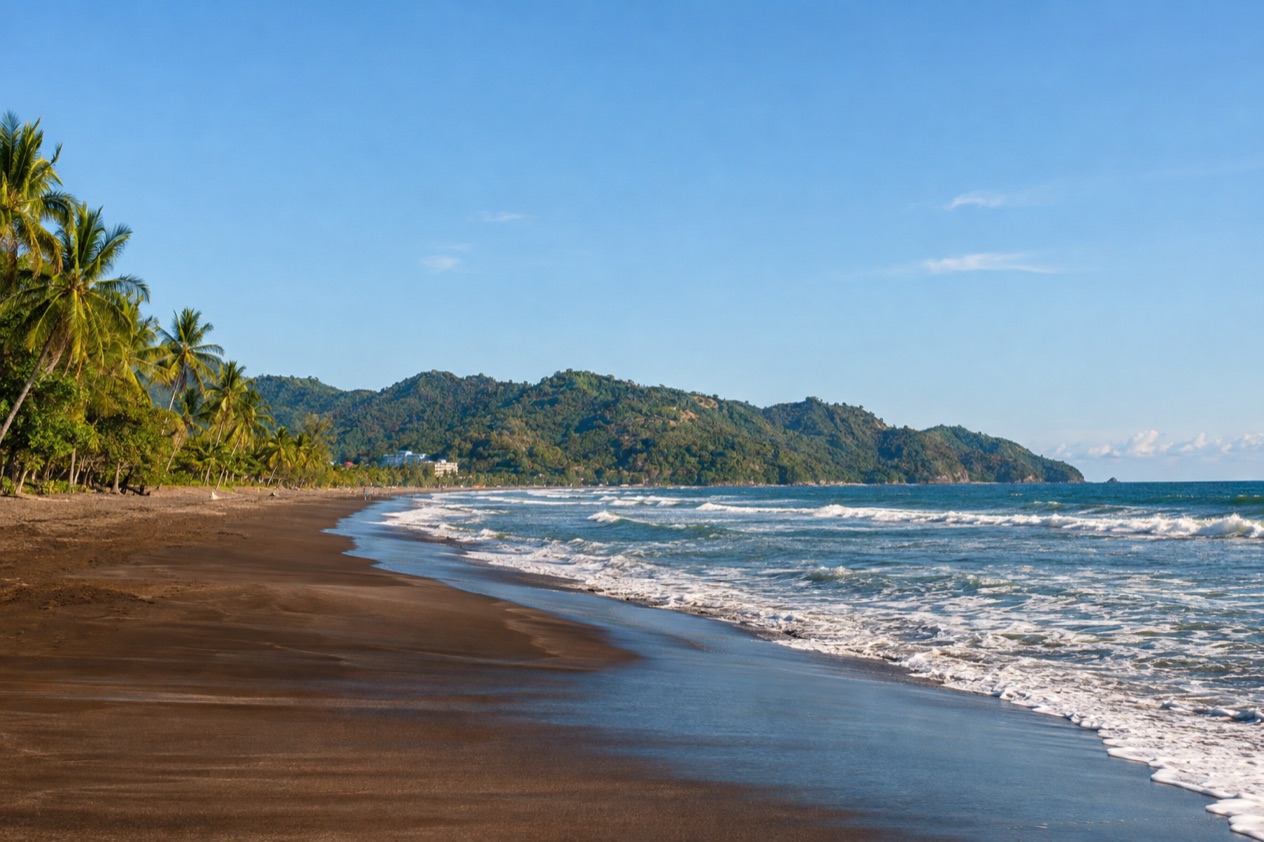
Jaco Beach is long, wide and made of dark sand, with steady waves that make it one of the best-known surf towns on this coast. Beginners take lessons close to shore, while stronger surfers head to the more powerful breaks along the beach. The waves are often big enough that this is more a place for playing in the surf than for floating quietly, and families with small children usually stay at the water’s edge.
Every year, rip currents create a grave danger here, and several U.S. tourists lose their lives. Most Costa Rican beaches have no lifeguards and no warnings about dangerous water, so check with the hotel or a surf school about that day’s conditions, obey flags wherever they exist, always swim with someone else, and keep kids within arm’s reach at the edge of the water, a spot to wade, float or play.
If you are a nervous swimmer, a hotel pool is a good companion to the beach. Bring a rash guard for the sun, a hat and plenty of water, and a mask if you want to try snorkeling on a day trip to a calmer cove along the coast.
What to do in Jaco in March
March is a month for the outdoors. The mornings are made for surf and forest walks, the afternoons for shade and cold drinks, and the evenings for the town’s restaurants and bars.
Nothing here depends on one big festival, and the one national event on the March calendar, the Dia del Boyero, takes place in Escazu near San Jose on the second Sunday of the month. It is a parade of painted oxcarts honoring the drivers who once hauled coffee to the coast, and it is a colorful reason to remember how this coast was once linked to the highlands.
Surfing and beach life on Jaco Beach
The beach is the center of town life. Surf schools set up along the sand in the morning, boards lean against palm trunks, and the water fills with beginners trying their first waves on soft boards. Lessons suit most adults and older children who are comfortable in the sea, and you can also simply rent a board and practice on your own if you have the experience.
Late afternoon is the pleasant hour for a walk along the beach, when the heat eases and the light turns amber over the water. The sunsets here can be striking, and vendors sell fresh coconut water, fruit and cold drinks. Watch the waves before you go in, and remember that conditions change through the day.
Carara National Park and the Tarcoles River bridge
A brief drive north of town brings you to Carara National Park, famous for its scarlet macaws, which you can usually spot early in the morning, when the forest is cooler and the birds are at their most active. Most visitors count on a guided walk to find birds, monkeys and other wildlife, and sightings are never guaranteed, only possible. Wear closed shoes, bring water and use insect repellent.
Just up the same road, the Tarcoles River bridge is a famous spot where people pause to peer down at crocodiles lounging on the muddy banks underneath. The stop is short, and many people pair it with the park into a half-day outing from Jaco. Before you head out, look at the park’s official page for the latest rules.
Food and nights in town
Eating is simple and good. The casado is the classic plate, a midday meal with rice, beans, salad, plantains, and your pick of fish, chicken, or beef, while gallo pinto, the rice and black bean mix, with eggs and fried plantains, is often what breakfast brings. Along a coast like this one, fresh ceviche and grilled fish are natural choices, usually with a cold drink or a fresh fruit juice.
After dark, Jaco turns livelier. Restaurants fill, bars play music and the main road is busy with people strolling. It is a town where nightlife is easy to find, and a quieter evening is just as easy if you stay by the beach with a late dinner. Use the usual city sense with your belongings and walk with company.
A two-day itinerary for Jaco in March
Day 1. Start at the beach early, before the heat builds, with a surf lesson or a long walk on the sand while the light is soft. Have a casado or gallo pinto at a small local soda for breakfast or lunch, then rest in the shade or by a pool through the hottest hours.
In the late afternoon, return to the shore for a swim near other people and a stroll toward sunset. You can have fresh fish for dinner at an open-air restaurant on the main road, then finish the night with a drink at a beach bar. If a shower rolls in, shift to a café, a craft shop or a long table lunch and wait for the sky to clear.
Day 2. Go to Carara National Park in the early morning, when the forest is coolest and birds are most active, ideally with a guide. Next, pause at the bridge over the Tarcoles River to peer down at the crocodiles, and afterward return to town for a late lunch of ceviche or the plate of the day.
Spend the afternoon on a calm, unhurried activity such as a market stroll, a swim in the hotel pool or souvenir shopping. In the evening, find a table at a restaurant you have not tried and finish with a walk along the street. If the weather turns gray, a long café stop and a visit to a local gallery or shop keep the day easy.
Is Jaco busy in March?
Yes, March is a lively month in Jaco, with steady crowds of surfers, weekend visitors from San Jose and North American travelers on spring break.
The drier, sunnier weather draws people, so the beach is busy, restaurants fill at dinner, and the main road hums in the evening. Weekends are the liveliest, when families from the capital arrive, while weekdays feel calmer. Surf lessons and guided outings are popular, so they are easier to arrange when you ask a day or two ahead.
As a habit, book rooms early if your dates fall around school breaks or holiday weeks, and a little later if you are traveling in a quieter stretch. A rental car, if you want one for Carara and the coast, is also easier to secure with notice. For the national park, look at the park’s official page for any current reservation rules before you plan your morning.
Dinner tables on a Friday or Saturday evening are the first to go, so choose a time before the rush or arrive early. Midweek, you will find the town more relaxed and the beach less crowded, and that is when a long, slow day by the water feels most like a vacation.
What to pack for Jaco in March
Pack for heat, sun and the occasional afternoon shower, with clothes that dry quickly and shoes that handle sand and forest paths.
- Light cotton or quick-dry clothes, because the days are hot and humid
- Sunscreen, a hat and sunglasses for the strong sun on the beach
- A thin rain jacket for brief afternoon showers
- A rash guard and swimsuit for surf and sea days
- Closed shoes and insect repellent for the forest at Carara
- A refillable water bottle for hot mornings and long outings
Good to know before you go
The U.S. State Department rates Costa Rica Level 2, ‘Exercise increased caution,’ due to crime; it says petty crime is common throughout Costa Rica and that violent crime also affects tourists, including armed robbery, homicide and sexual assault.
The drive from San Jose to Jaco takes roughly two hours, though weekend congestion leaving the capital can make it longer. In town, most things sit along the main road and the beach, so you can walk to restaurants and shops. Book your room first, then any surf lesson or guided outing to Carara, since those fill earlier than a dinner table.
Jaco in March vs February and April
Going four weeks earlier, in February, brings fewer rainy days and the sunniest feel of the three months. The sea is a touch cooler but still very warm, the beach is busy, and the forest outings are pleasant. If you want the most settled weather, February is the safer pick.
Going four weeks later, in April, the shift is clear. Rain becomes a near-daily event, mostly in the afternoon, the countryside turns greener, and the sea warms a little more. The mood is quieter and the town can feel less crowded, which suits travelers who do not mind a wet afternoon and who want a looser pace.
March sits in between. Choose it if you want strong beach weather with only a few showers, and choose February if you want the most dependable sunshine. Pick April if green scenery and a calmer town matter more than a dry afternoon.
Is March a good time to visit Jaco?
Yes, March is a good time to visit Jaco for anyone who wants sun, surf and easy beach days with a touch of forest on the side.
Surfers, families who like a lively beach town, and travelers who want a mix of ocean and wildlife will enjoy it most. If you want a silent, empty beach or a month with no chance of an afternoon shower, another time of year fits better. Nervous swimmers should plan their water time with care, given the rip currents.
On arrival, walk the beach before anything else, watch where people swim and where the waves break, and then plan your first morning around surf or Carara. What makes March in Jaco memorable is the pairing of a warm, glowing sea at the end of the day with macaws overhead in the early forest, a combination that fits into a single weekend.
Sources
- Open-Meteo / ECMWF ERA5, normals 1991-2020 computed for the grid cell at 9.6145N 84.6285W, checked October 8, 2026
- Open-Meteo Marine API, average 2015-2024, checked October 8, 2026
- sunrise-sunset.org, sunrise and sunset calculated for the 15th of the month, checked October 8, 2026
- U.S. Department of State, Costa Rica Travel Information, Safety and security (https://travel.state.gov/content/travel/en/international-travel/International-Travel-Country-Information-Pages/CostaRica.html), checked October 8, 2026
- U.S. Department of State, Costa Rica Travel Advisory, issued April 1, 2026 (https://travel.state.gov/content/travel/en/traveladvisories/traveladvisories/costa-rica-travel-advisory.html), read via the State Department open data API on October 8, 2026